June 30, 2026
Why Plutarch Paired Alexander with Caesar
Plutarch paired Alexander the Great with Julius Caesar, and the pair reads as two studies of the same ambition from opposite starting points. Alexander inherited a kingdom at twenty, with an army his father had made the best in Greece, and set out to conquer the known world. Caesar inherited only an old, faded family name, in a republic that had outlawed kings, and spent thirty years building his power, through elections, alliances, huge debts and nearly a decade of war in Gaul, until he held Rome itself.
Who was Alexander the Great?
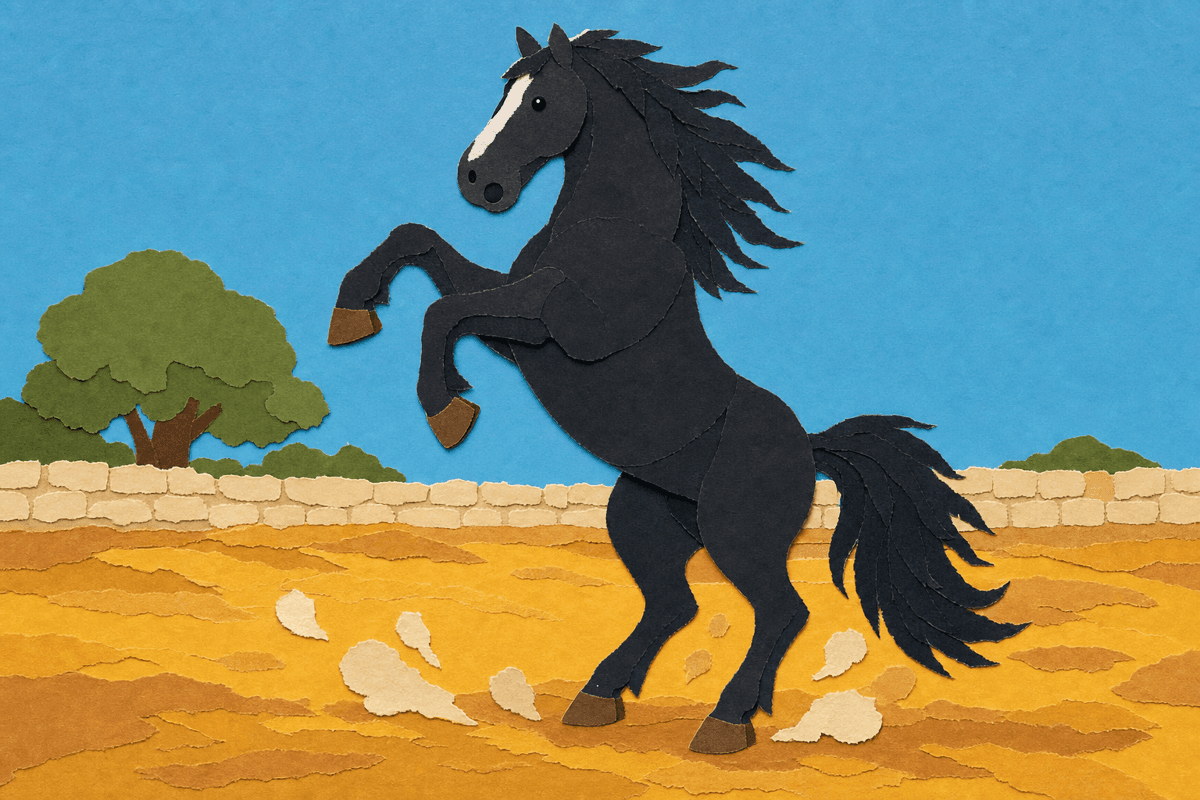
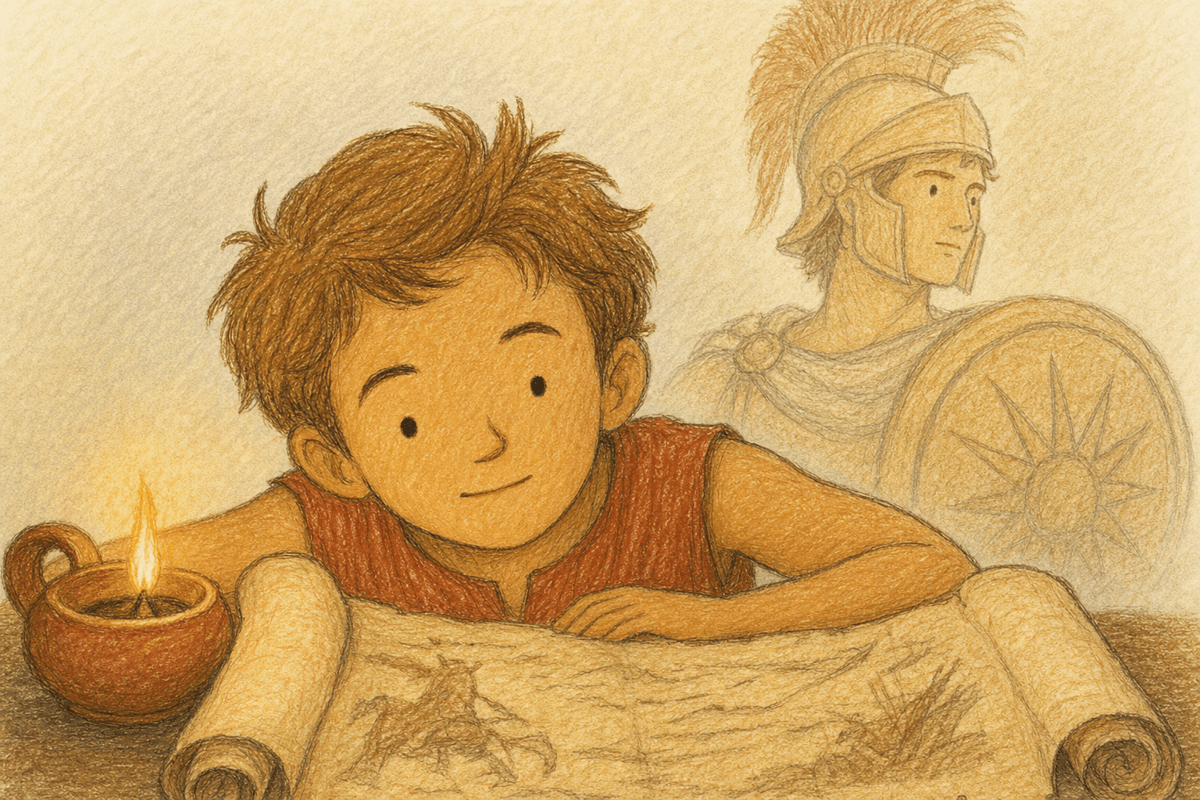
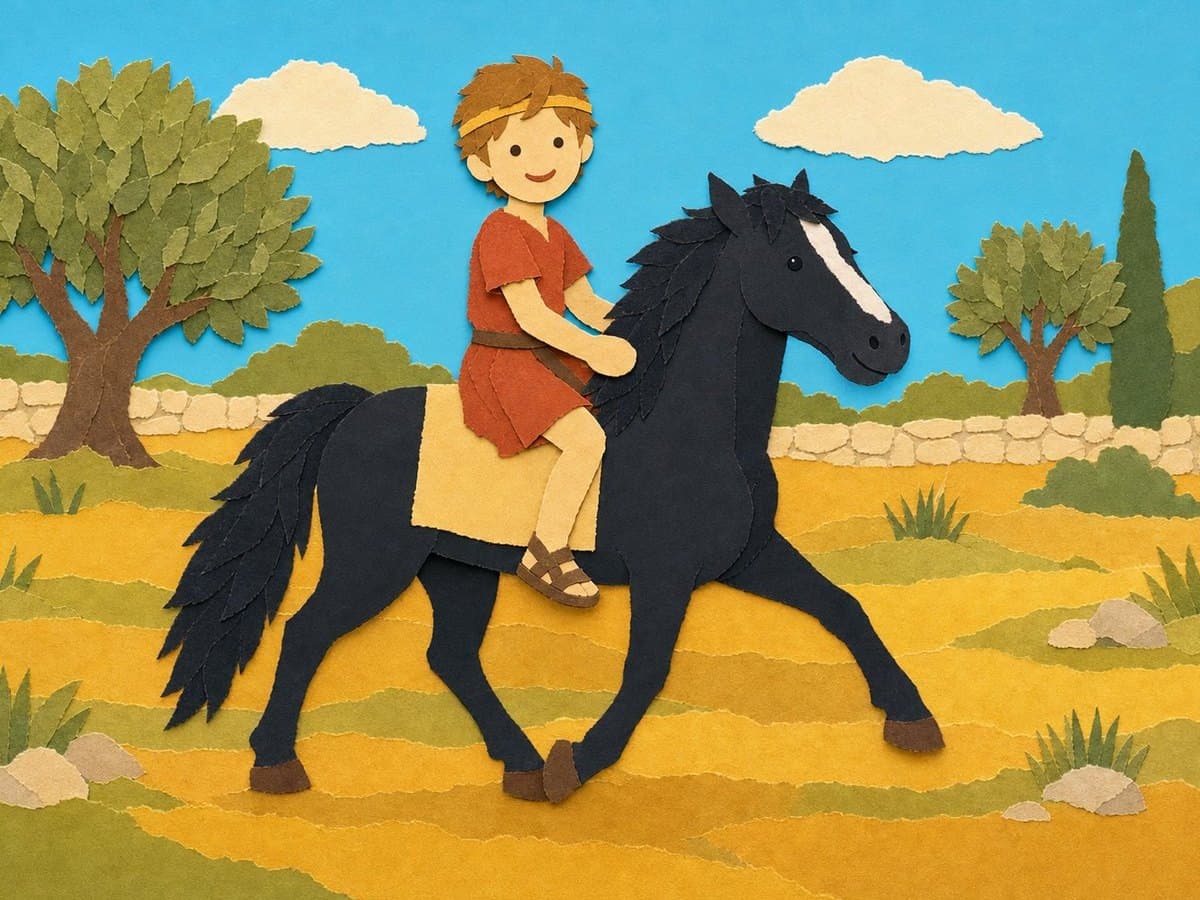
Alexander the Great was king of Macedon, in northern Greece, from 336 BC until he died in 323 BC, aged thirty-two. The philosopher Aristotle taught him as a boy. He became king at twenty after his father, Philip II, was murdered, and in little more than ten years he conquered the Persian Empire and marched his army into what are now Pakistan and India, founding cities as he went, among them Alexandria in Egypt. Plutarch tells a story from Alexander's boyhood about a horse no one could ride. The young Alexander saw what the grown men had missed: Bucephalus was frightened of his own shadow. He turned the horse's head toward the sun, calmed him, and rode him. His father, Plutarch says, told him to find a kingdom big enough for him, because Macedon was too small.
Every topic, its own book at each reading level
History, philosophy, and classic literature for kids ages 0–14.
What did the two men have in common?
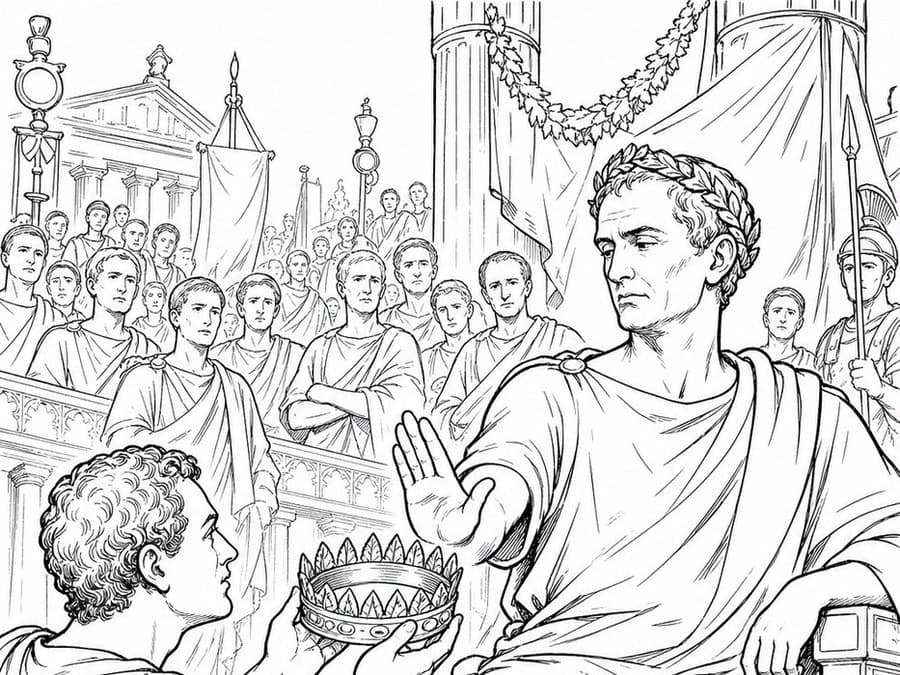
Neither could stop. Alexander kept marching until his own army refused to go any farther, at the Hyphasis River in India. Caesar kept climbing until he was named dictator for life, a few weeks before he was killed. Alexander wept, the story goes, on hearing there were countless worlds, because he had not yet conquered even one; Caesar, reading about Alexander, wept because at the same age he had done so little. Plutarch collected moments like these. At the start of his Life of Alexander he says that a remark or a joke can show a man's character better than a battle where thousands die.
How were they different?
Alexander was a king's son with a head start; Caesar was a politician who built his own power in a system designed to prevent it. One question runs under the whole pair: is it greater to use a magnificent gift magnificently, or to build your power yourself, from an old name and a mountain of debt?
From the books
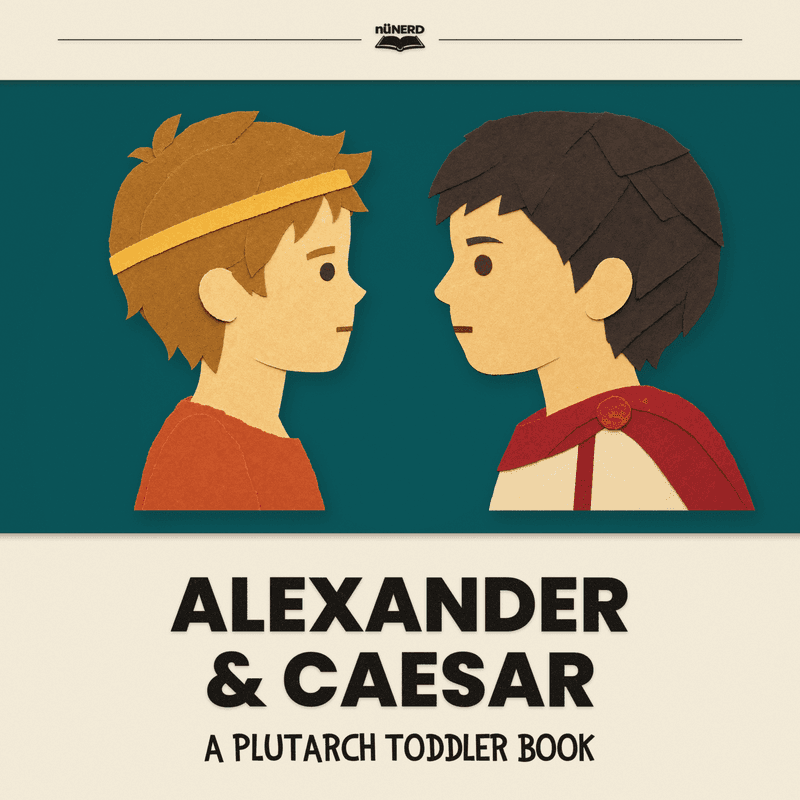
Toddler book, ages 0–4

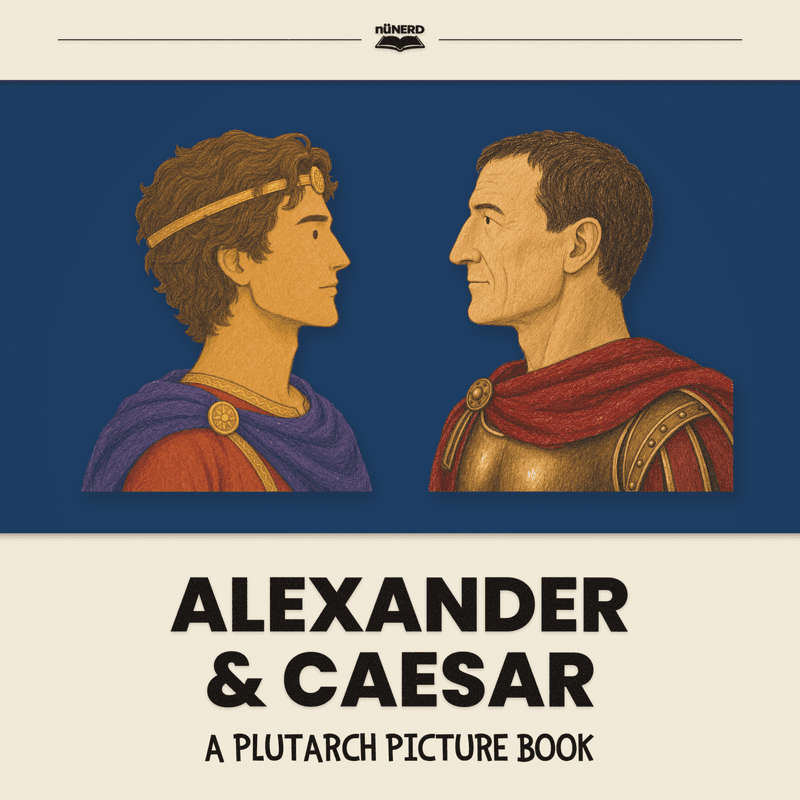
Picture book, ages 3–7
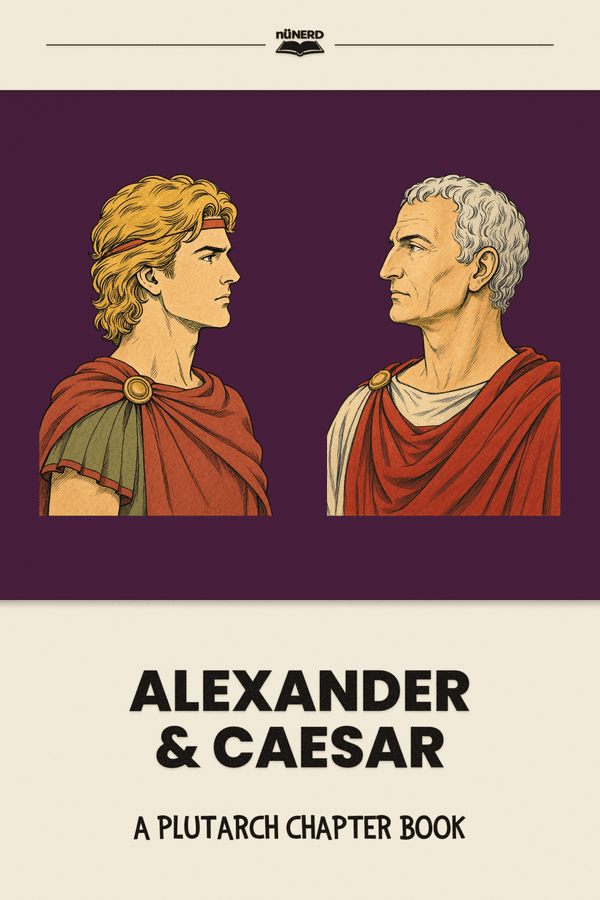
Chapter book, ages 6–10
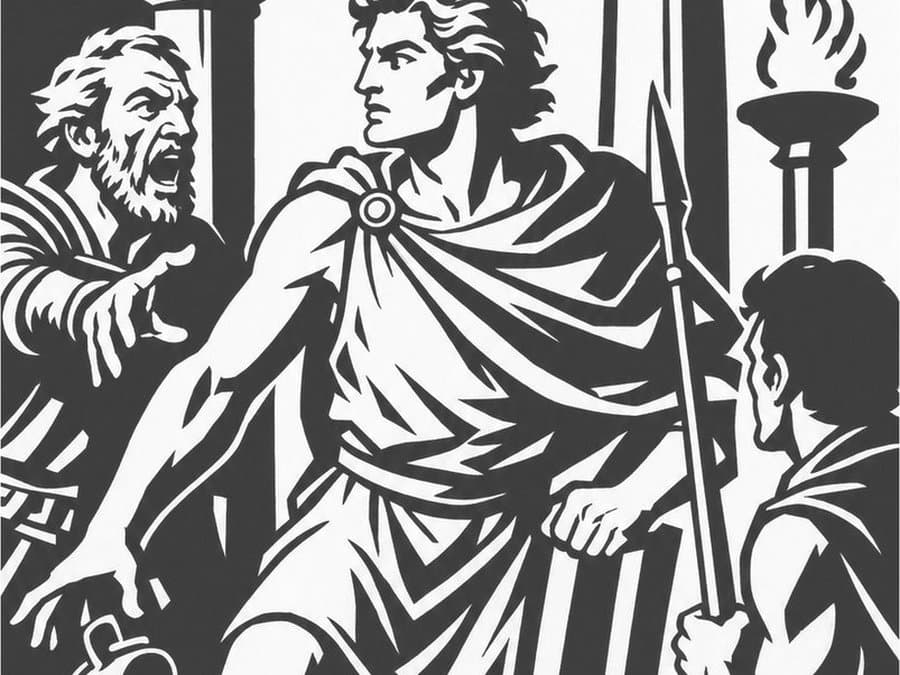
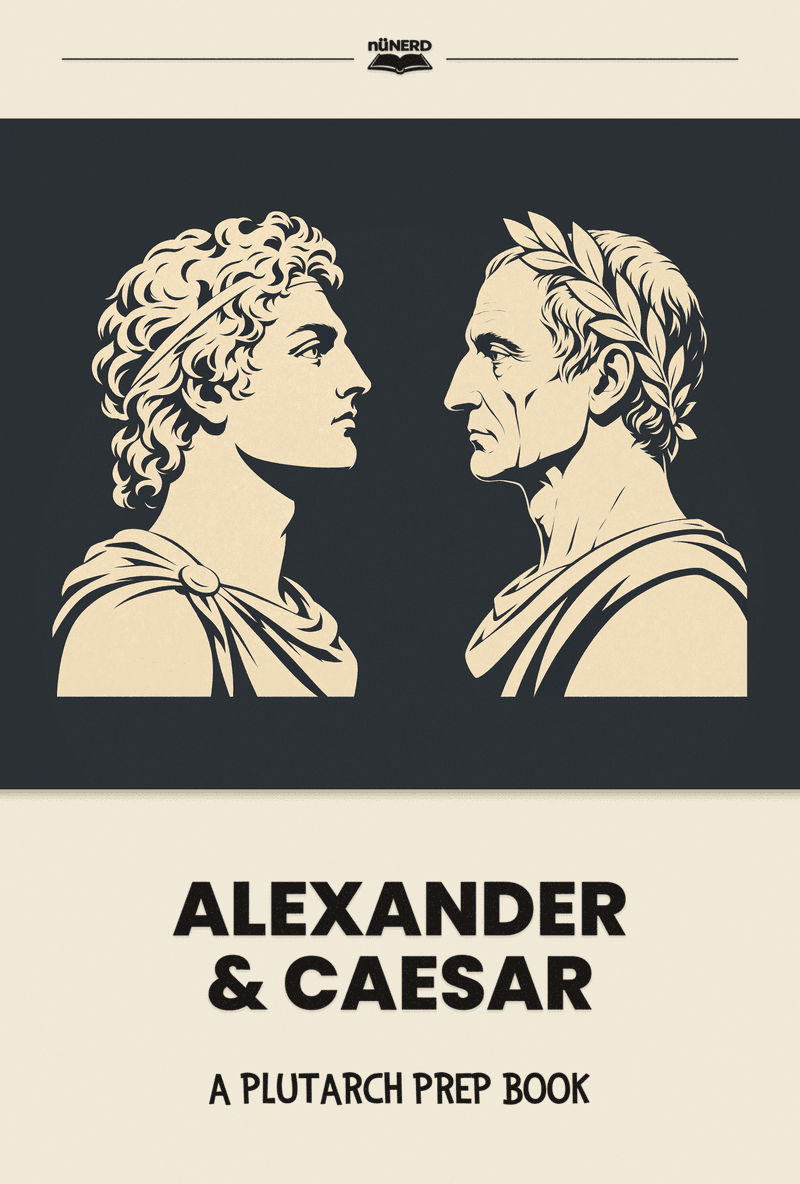
Prep book, ages 10–14
The missing verdict
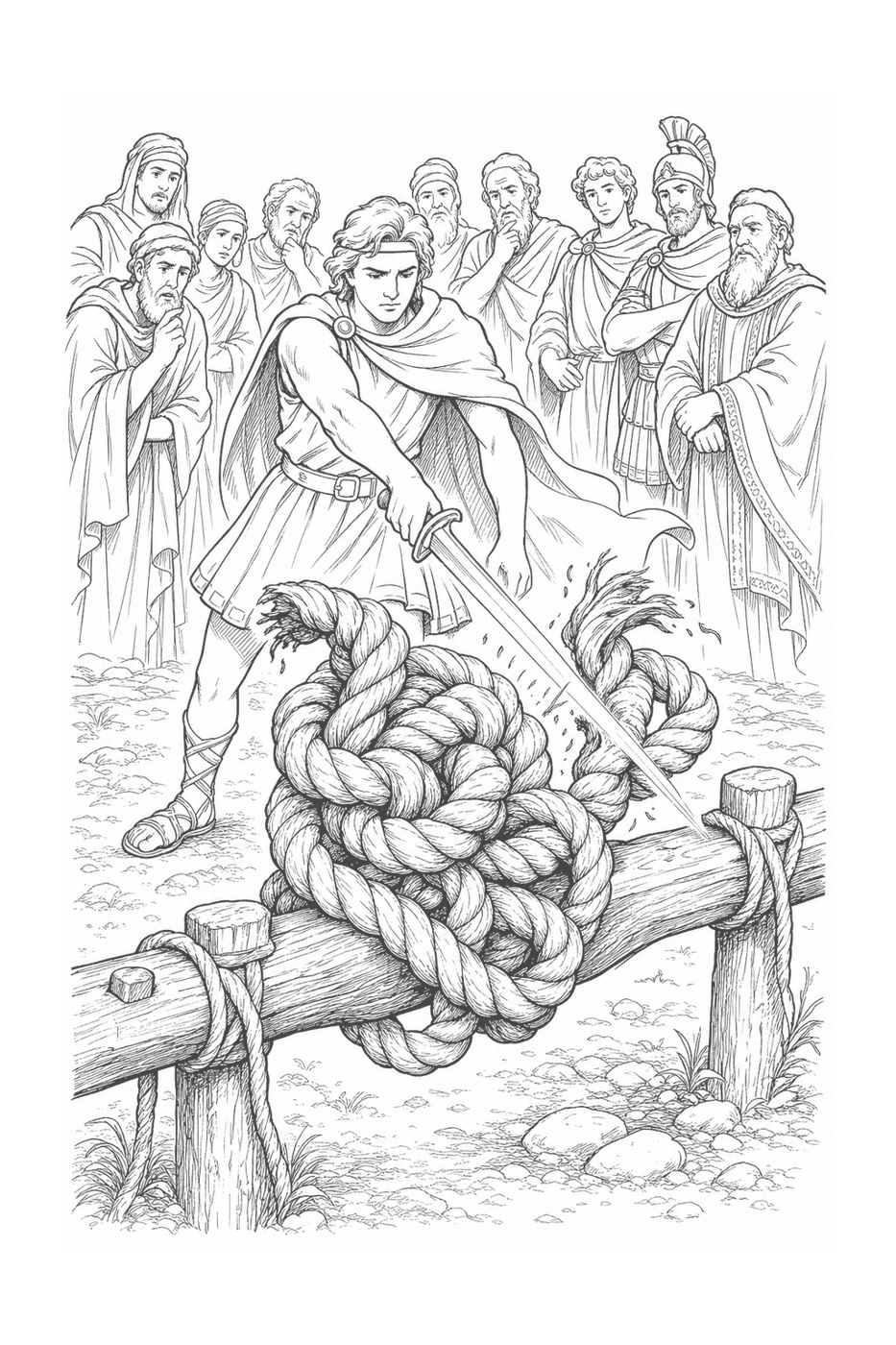
Plutarch ended most of his pairs with a synkrisis, a short chapter weighing the two men. For Alexander and Caesar, that chapter is lost. With no verdict to read, the reader has to reach one.

Meeting them with your kids
nüNERD's first Plutarch pair is Alexander & Caesar, built at four reading levels, ages 0 to 14. The toddler and picture books give a child the scenes that stick: Alexander taming the horse, Caesar laughing at his pirate captors. The chapter book tells both lives and then does the weighing itself, since Plutarch's is lost. And the prep book gives older readers the job the lost synkrisis would have done: they write the verdict.
For Plutarch's own text, free translations and audiobooks are collected on our Plutarch resources page.
Like the Plutarch pairs, our classic-literature books give each reading level its own book: Don Quixote and Beowulf each come as a toddler book, a picture book and a chapter book.
The books
Alexander & Caesar on Amazon
Frequently asked questions
Why did Plutarch compare Alexander and Caesar?
Both chased power without limit from opposite starting points, which makes them a natural pair for a study of ambition.
Did Alexander and Caesar ever meet?
No. Caesar was born more than two centuries after Alexander died, but Caesar admired and consciously measured himself against him.
Is Plutarch's comparison of Alexander and Caesar lost?
Yes. The two biographies survive, but the closing synkrisis weighing them did not. It is one of four comparisons in the Parallel Lives that were lost.
Who was Alexander the Great?
The king of Macedon from 336 to 323 BC. Taught as a boy by Aristotle, he became king at twenty, conquered the Persian Empire, and led his army past the Indus to the Beas River, in what is now northern India, before he died at thirty-two.
How did Alexander the Great die?
He died in Babylon in 323 BC, at thirty-two, after a fever that lasted about ten days. Plutarch reports the rumor that he was poisoned and doubts it; the cause is still debated.