June 14, 2026
Why We Made Beowulf for Kids
Beowulf is an Old English poem about a warrior who fights three monsters: Grendel, who raids a king's feasting hall at night; Grendel's mother, who comes for revenge; and, fifty years later, a dragon that kills Beowulf when he is an old king. nüNERD tells it in three books: a toddler book for ages 0–4, which ends with the dragon beaten and Beowulf tired and hurt but alive; a picture book for ages 3–7; and a prose chapter book for ages 6–10. The picture book and the chapter book both include Beowulf's death and his funeral.
We made Beowulf for kids because the poem follows one hero from youth to old age. The young Beowulf sets his sword aside to fight Grendel, because Grendel carries none. The old king goes out to the dragon knowing he probably will not come back. That last fight is why we wanted children to have the story through to its end.
What does each of our Beowulf books keep?
Every topic, its own book at each reading level
History, philosophy, and classic literature for kids from toddlers to teens.
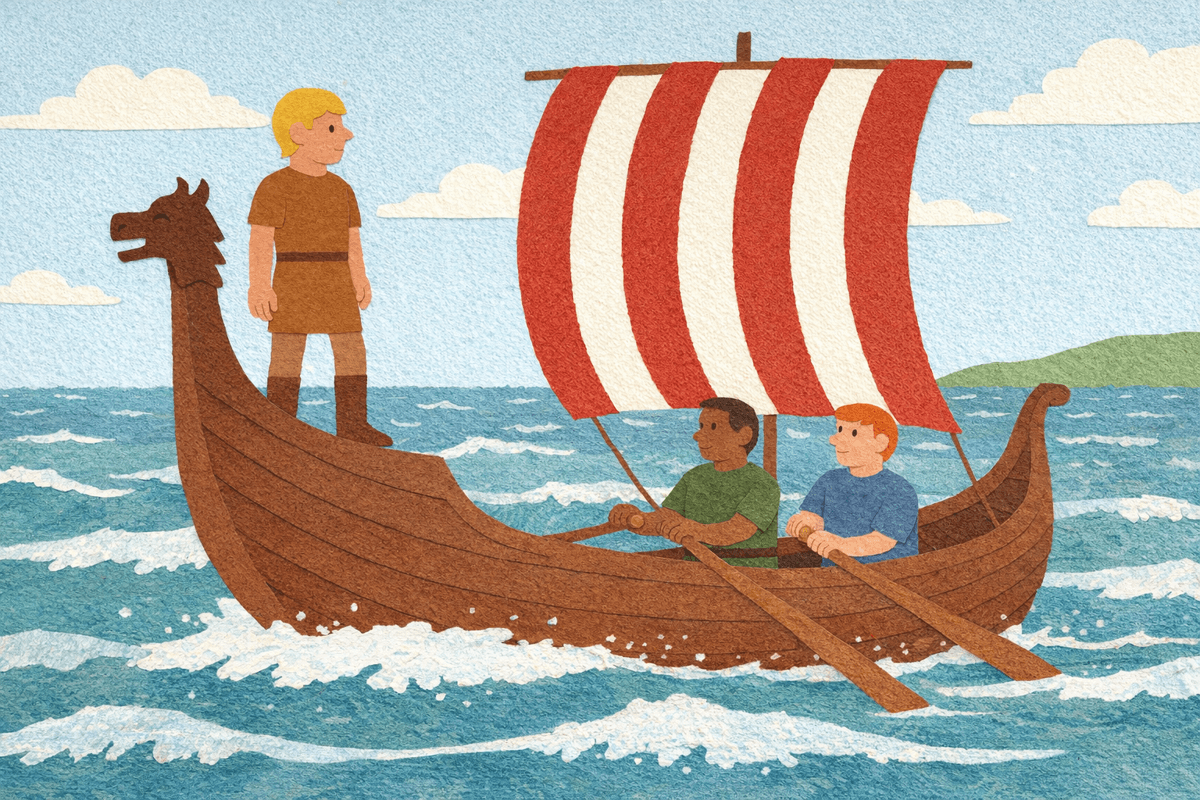
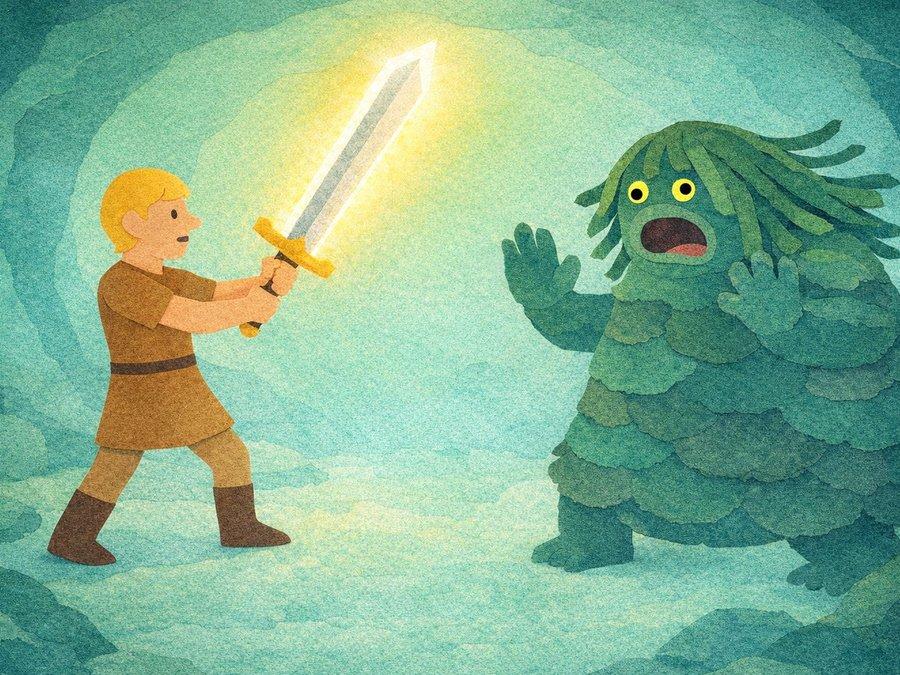
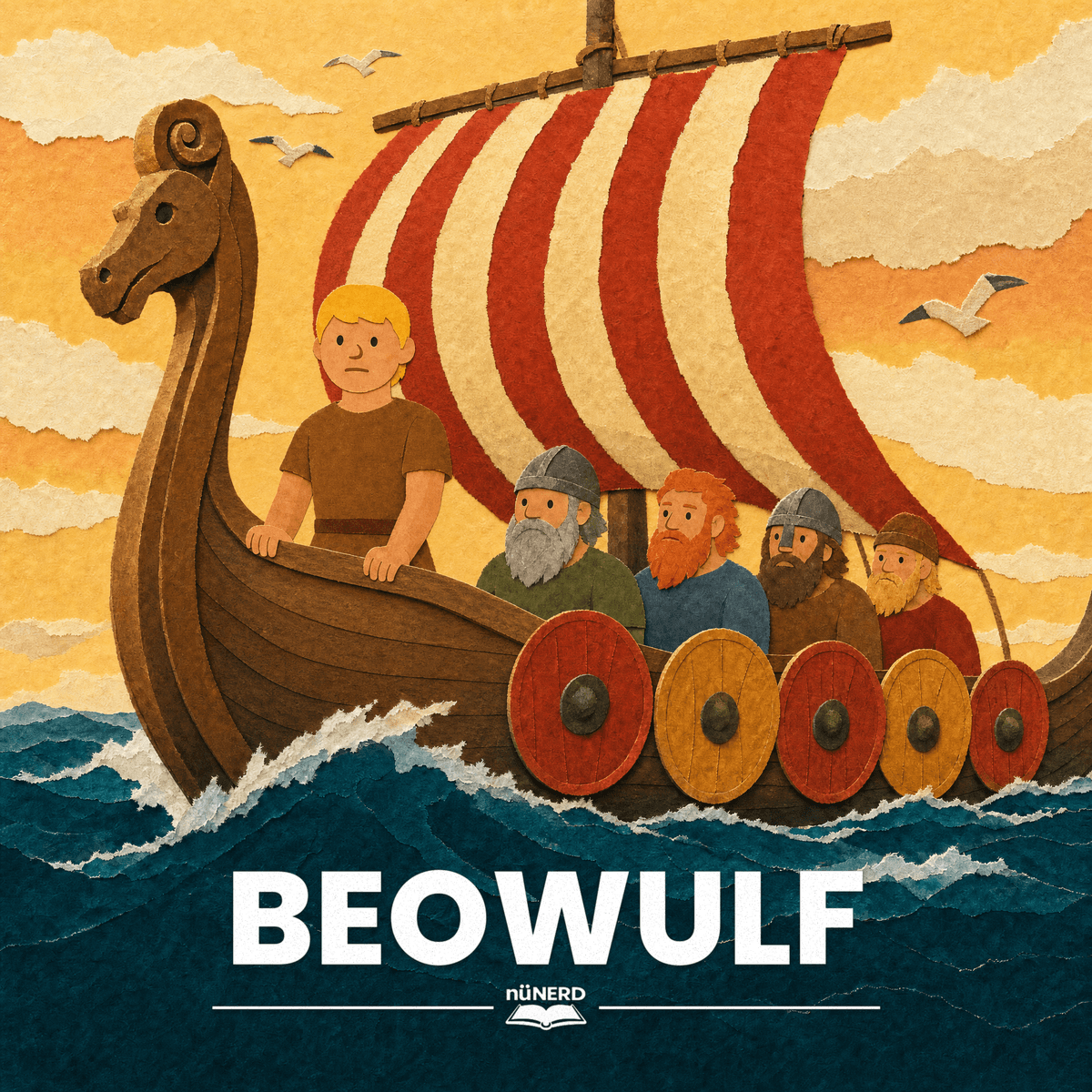
The toddler book keeps all three monsters in a few short sentences a page, and it marks each fight by the hall's singing: the songs stop when Grendel comes and come back when Beowulf wins. Grendel hears the songs and hates them, and night after night he comes until "The great hall was dark. The songs had stopped." Then Beowulf holds on when Grendel bursts in, and "The songs came back and the hall was full." He dives after Grendel's mother, and as an old king he faces the dragon with one friend, Wiglaf. It stops at the win: "Beowulf was tired and hurt, but he had done it."
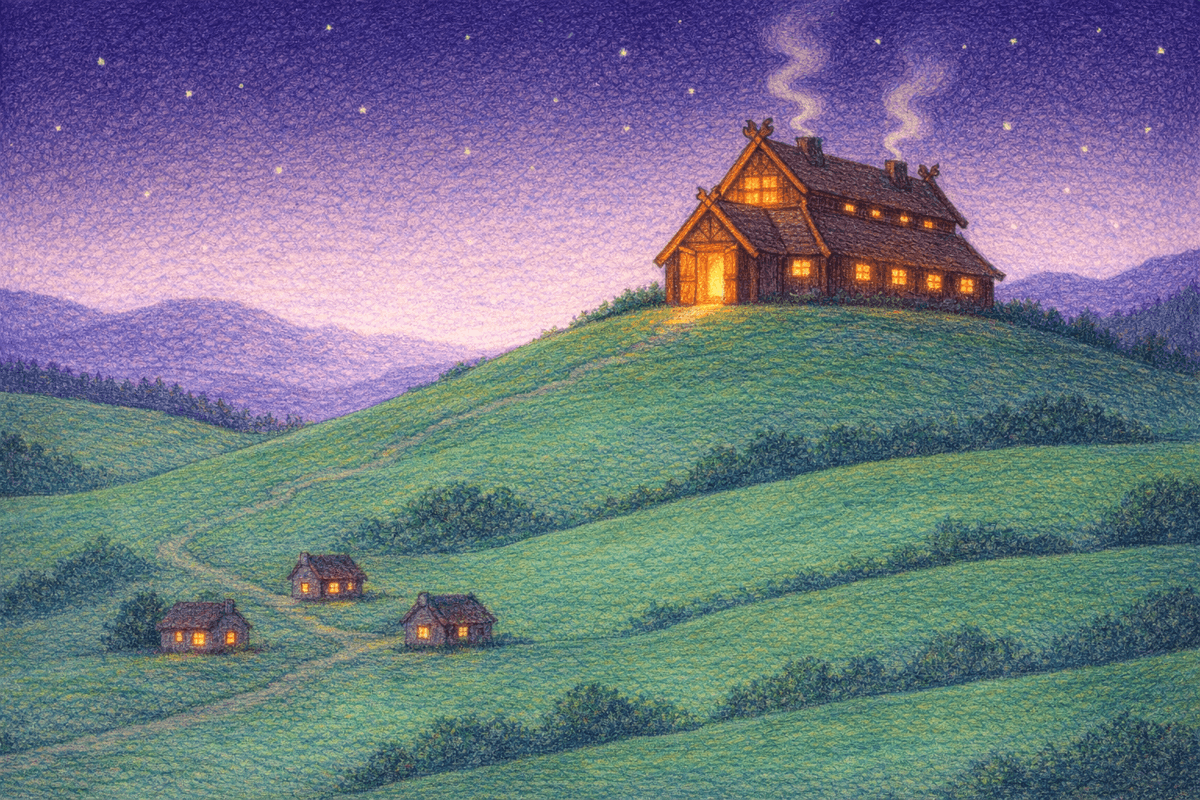
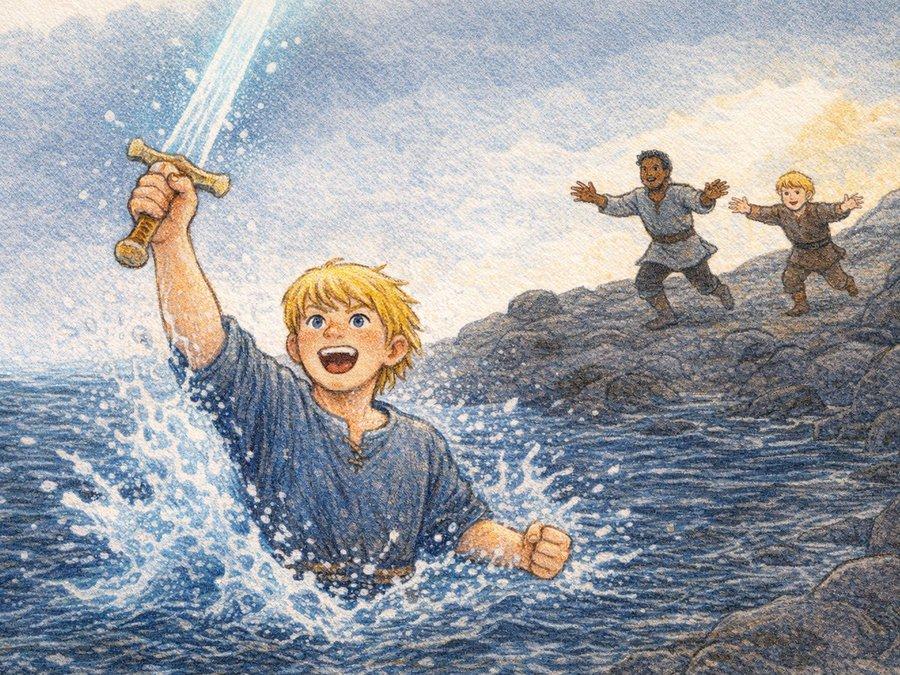
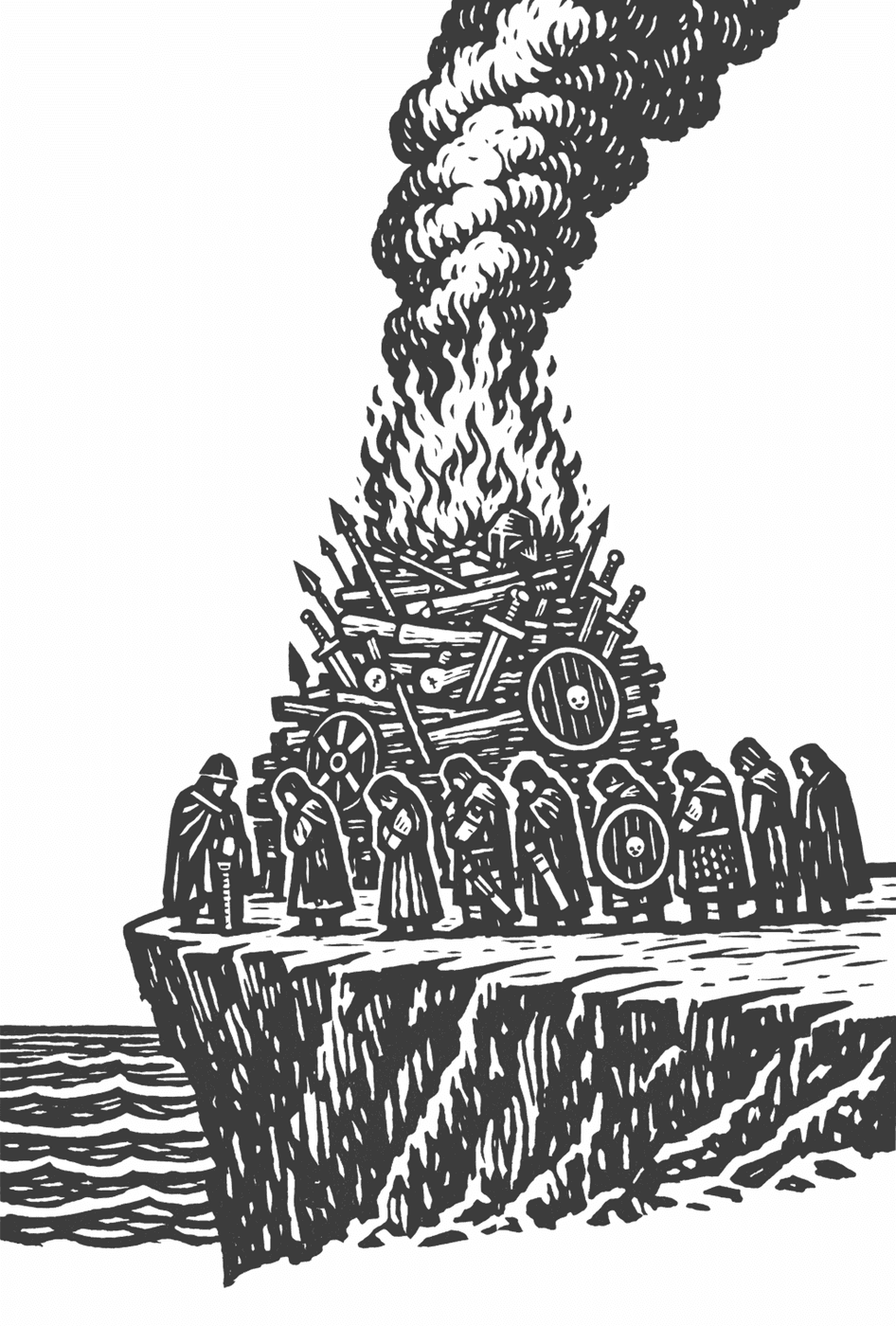
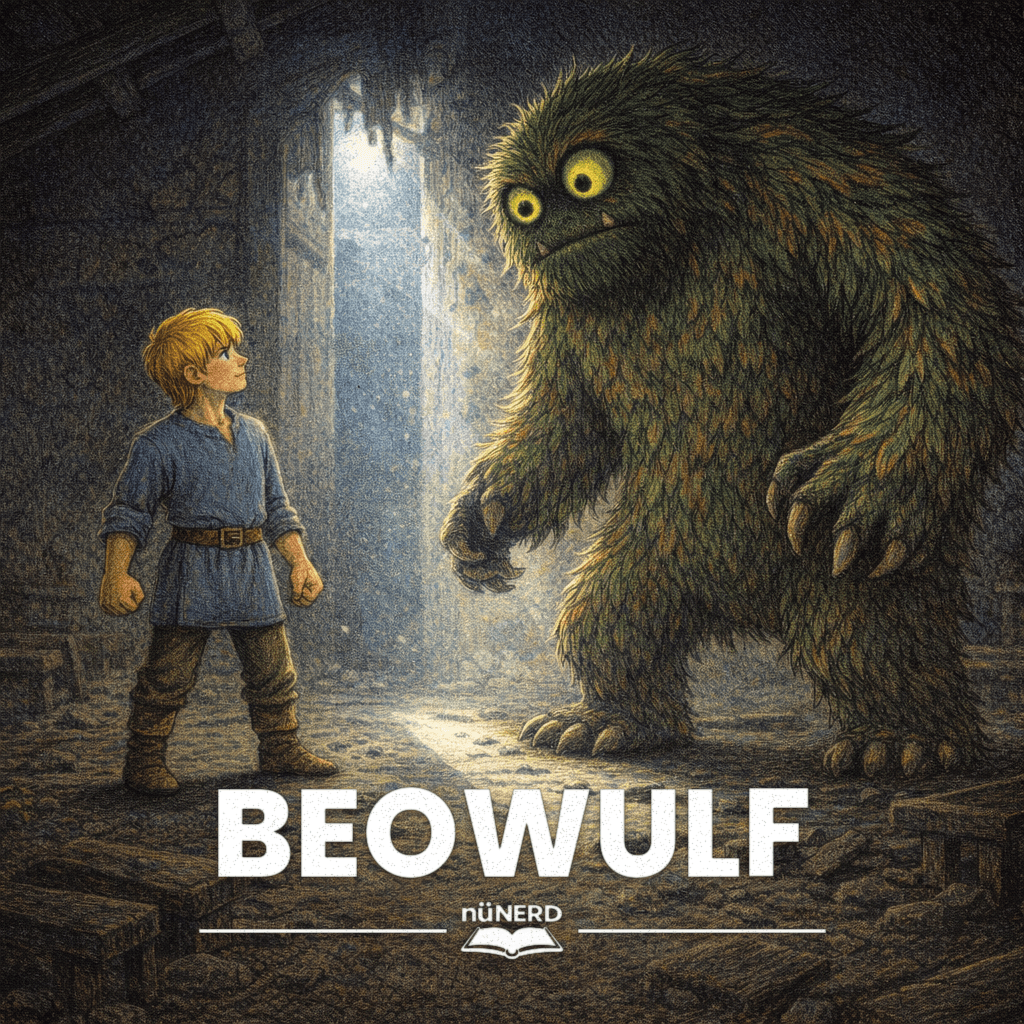
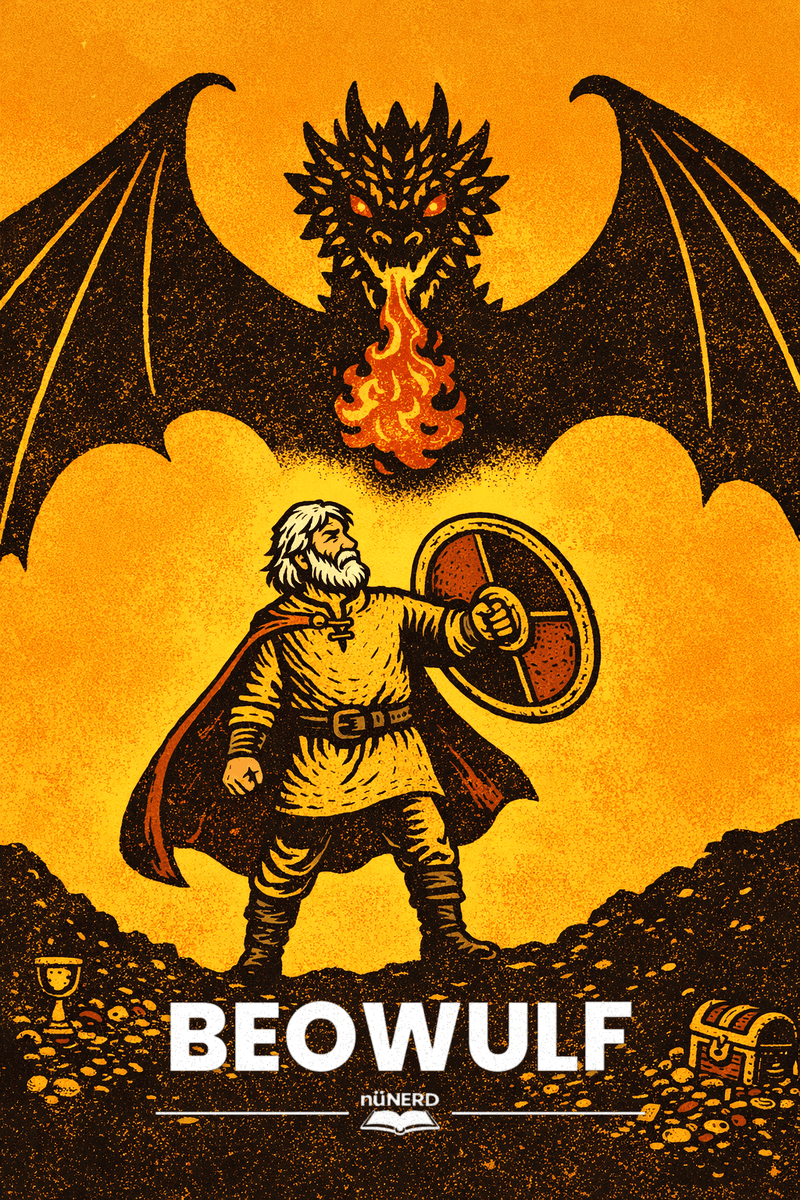
The picture book keeps Beowulf's whole life, because the dragon only means something once you have watched him grow old. The poem passes over his fifty-year reign in a few lines. The picture book gives it two pages: he goes home, he rules, and his beard goes gray. Then the dragon comes, and "Old Beowulf stood up. His hair was white. His hands shook." His men turn away one by one, all except Wiglaf. For readers of three to seven we let the ending be sad but quiet: "The sun went down soft and gold, and Beowulf was still." Then the fire on the cliffs, and riders singing his name.
The chapter book has room for the people around the fights, and a reader of six to ten can keep track of who helped Beowulf, who mocked him, and who ran. Unferth mocks Beowulf in front of the king, then lends him his prized sword, Hrunting, which had never failed in battle and fails against Grendel's mother. She carries off Hrothgar's old friend Æschere from the hall. A thief steals one golden cup and wakes the dragon. When the king's men run, Wiglaf shouts after them: "He gave us everything! Our rings, our armor, our place at his table." It ends at the burial mound, with twelve riders circling it and singing.
What age should kids read Beowulf?
The toddler book is written for ages 0–4, the picture book for ages 3–7, and the chapter book for ages 6–10, as a read-aloud for younger children or a book older ones read alone. In the chapter book, every Old English name comes with a pronunciation the first time it appears, like Hrothgar (HROTH-gar) and Wiglaf (WIG-lahf). The full poem, in a modern verse translation, is a teenage and adult read. You can see the three books on our Beowulf page.
From the books
Toddler book, ages 0–4
Picture book, ages 3–7
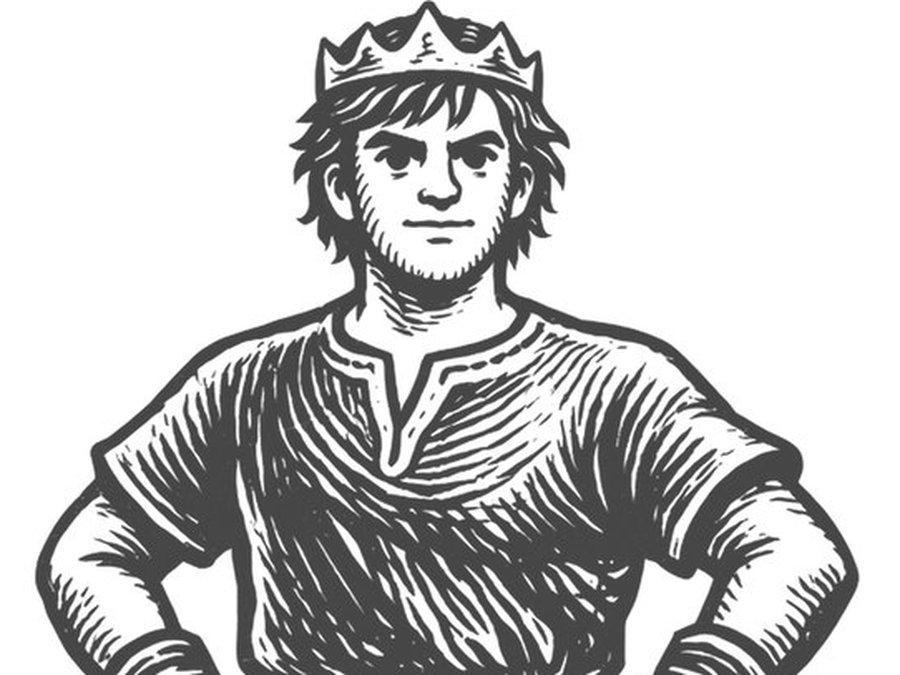
Chapter book, ages 6–10
How close did Beowulf come to being lost?
Only one copy survives, and it was in a fire. On October 23, 1731, fire broke out at Ashburnham House in Westminster, home of the Cotton library. The manuscript came out scorched, its edges charred, and over the next decades the burned edges crumbled and letters flaked away. Two transcripts made in the late 1780s, one by a hired copyist for the Icelandic scholar Grímur Thorkelin and one by Thorkelin himself, preserve many of those letters. You can see the burn marks yourself: the Electronic Beowulf, from the University of Kentucky and the British Library, is free at ebeowulf.uky.edu and lets you page through the manuscript. Our chapter book's foreword tells that story.
What did Tolkien say about Beowulf?
In 1936, J. R. R. Tolkien, Oxford's professor of Anglo-Saxon, gave a lecture called "Beowulf: The Monsters and the Critics." Many critics before him had treated the monsters as a distraction. Tolkien argued that they are the point, and that the poem is built on a contrast between youth and age, "two moments in a great life, rising and setting." He had been building his own mythology since the First World War; The Hobbit followed in 1937. In a 1938 letter he called Beowulf "among my most valued sources," though he said it was not on his mind when he wrote the theft of a cup from a dragon's hoard.
The poem's last word is lofgeornost, "most eager for fame." The mourners call Beowulf the mildest of men, the kindest to his people, and the most eager for fame, and readers still argue over whether that last one is praise. His wish for glory may be part of why he chose to face the dragon himself. Before the ending, the poem foretells that, without him, his people will be overrun. The chapter book keeps the line: "And he was the most eager for lasting fame."
Where to pause in Beowulf
In the picture book, ask who stays by him. At the lake, "His men were too scared to move." At the dragon's hill, "one by one, they turned away." With the chapter book, stop after Hrothgar's warning, "Do not let pride become your enemy," and come back to it when the old king tells his warriors to wait outside and steps into the dragon's cave. Ask whether that was brave, or proud, or both. The poem's last word leaves the same question open.
Each of our Beowulf books is made to be outgrown: your child finishes one level and moves up to the next, where the same story has more in it.
The books
Beowulf on Amazon
Frequently asked questions
What size and format are the Beowulf books?
The toddler book is an 8.5 by 8.5 inch picture book of about 380 words, illustrated in cut-paper collage. The picture book is the same size, about 740 words, with soft crayon illustrations. The chapter book is 6 by 9 inches and about 7,300 words, with black-and-white illustrations, a foreword on the poem and the 1731 fire, an afterword on the three fights and Tolkien, and a pronunciation for each Old English name.
Does Beowulf die in the picture book?
Yes. In the ages 3–7 book, Beowulf and Wiglaf bring down the dragon, Beowulf sinks to his knees, tells Wiglaf "You will be king now. Take care of them," and dies as the sun goes down, followed by a funeral fire on the cliffs. The ages 0–4 book stops earlier, with the dragon beaten and Beowulf tired and hurt but alive.
Is Beowulf too scary for young children?
The toddler and picture books keep the monsters and leave out the blood: Grendel smashes the hall and scares everyone away, and his lost arm is never mentioned. The chapter book follows the poem more closely. Grendel seizes sleeping warriors and drags them off, and he escapes Beowulf only by leaving his arm behind. The hardest passage is the dragon's last attack, when its claws tear through Beowulf's armor and its poisoned fangs sink into his flesh, told in plain sentences with no blood on the page.
Where can I find free Beowulf resources?
Our Beowulf page links these free resources: The epic Nordic legend of the monster slayer (TED-Ed), Beowulf, an Anglo-Saxon Epic Poem (Project Gutenberg), Beowulf (LibriVox audiobook), and Beowulf (Britannica).