June 6, 2026
Why We Made Don Quixote for Kids
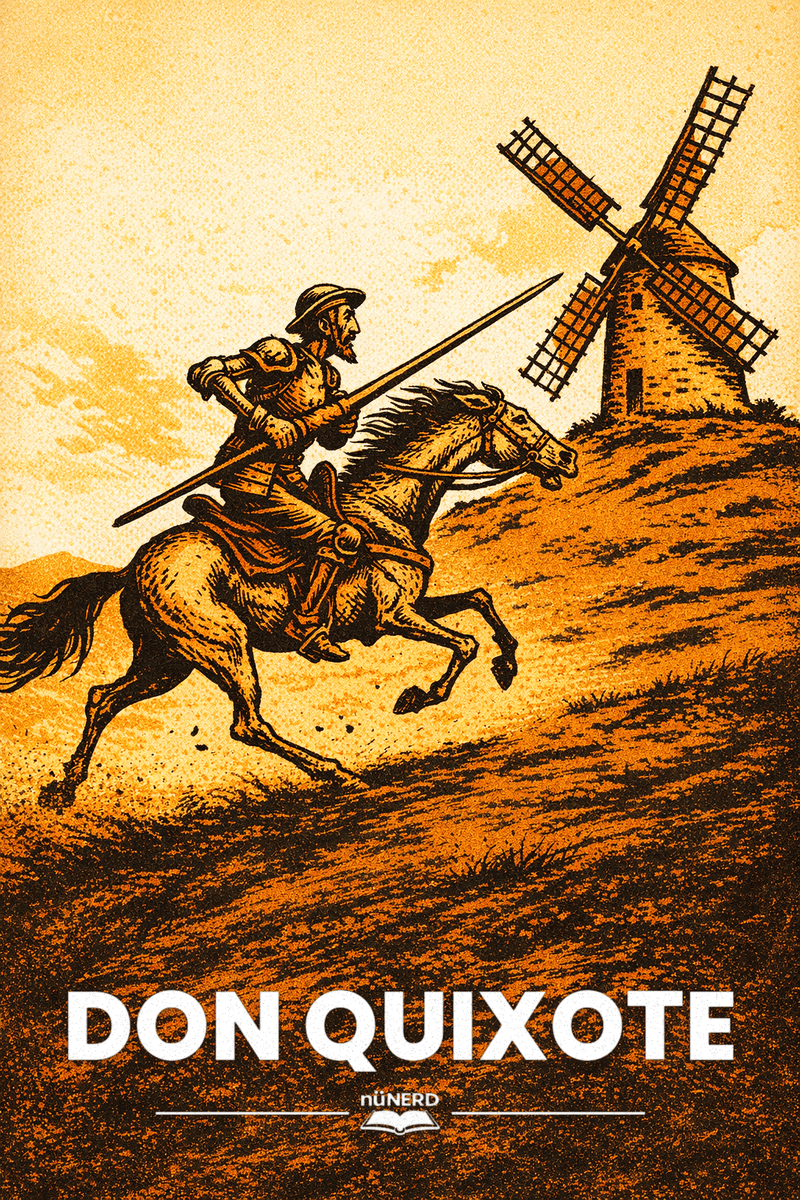
Don Quixote, the novel Miguel de Cervantes published in two parts in 1605 and 1615, is a story young children can follow, because its center is simple. A man of nearly fifty in Spain reads so many books about knights that he decides to become one. He rides out in rusty armor on a bony horse named Rocinante and charges a windmill he is sure is a giant. The novel runs close to a thousand pages and was written for adults. Ours are three separate books: a Toddler Book for ages 0–4, a Picture Book for ages 3–7, and a Chapter Book retelling for ages 6–10.
We made it because the same story is a joke a small child gets at once and a question an older child can argue about. Don Quixote names a thing grandly, his squire Sancho Panza names it plainly, and the world usually sides with Sancho. Our Chapter Book's afterword puts the question in two lines: "Is he a fool? Yes. Is he a hero? Also yes."
What does each of our Don Quixote books keep?
Every topic, its own book at each reading level
History, philosophy, and classic literature for kids from toddlers to teens.
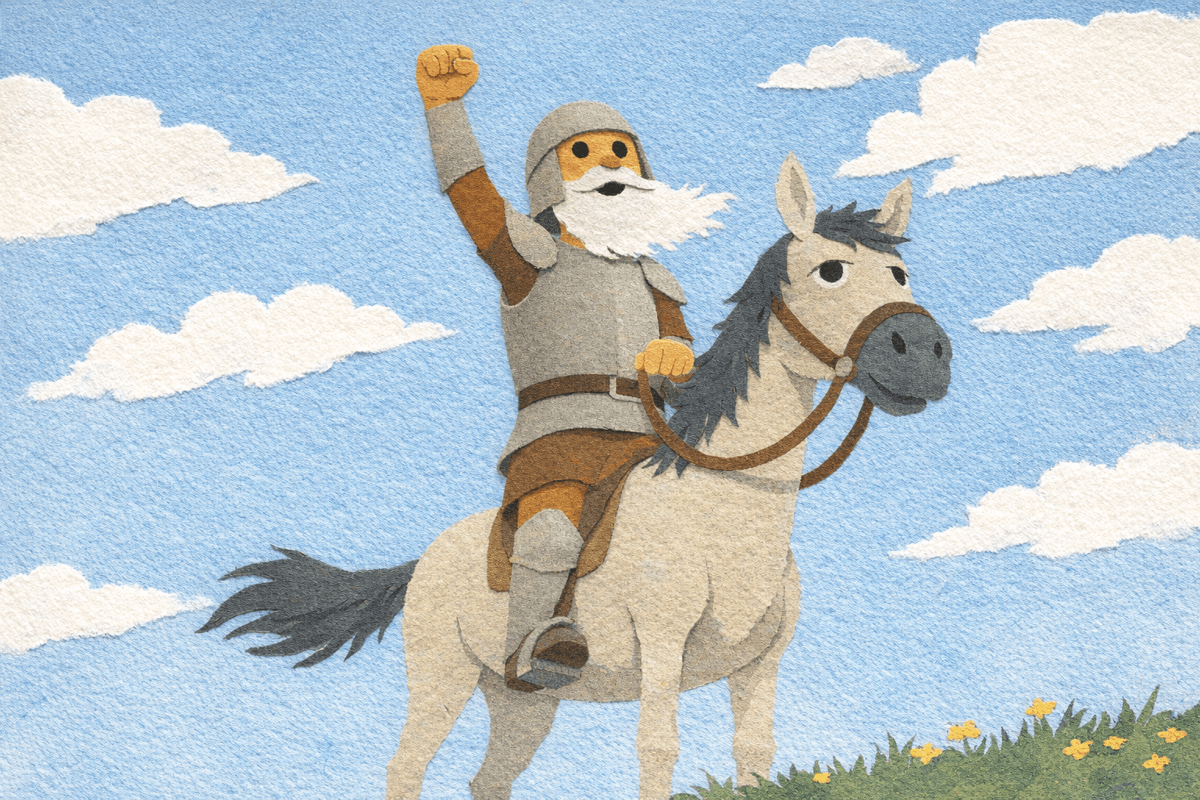
For the Toddler Book we kept the start of the novel and one idea from it. The old man reads "all day long," puts on rusty armor, climbs onto Rocinante, and rides at the windmill: "CRASH! BANG! As it turned out, the giant won." Then: "He always, always got back up." After he meets Sancho, an old inn becomes a castle, old bread and cold soup become a feast, and a flock of sheep becomes an army. Most pages give a small child one thing to point at or one noise to make, and by the last page Sancho has learned to see the giants too.
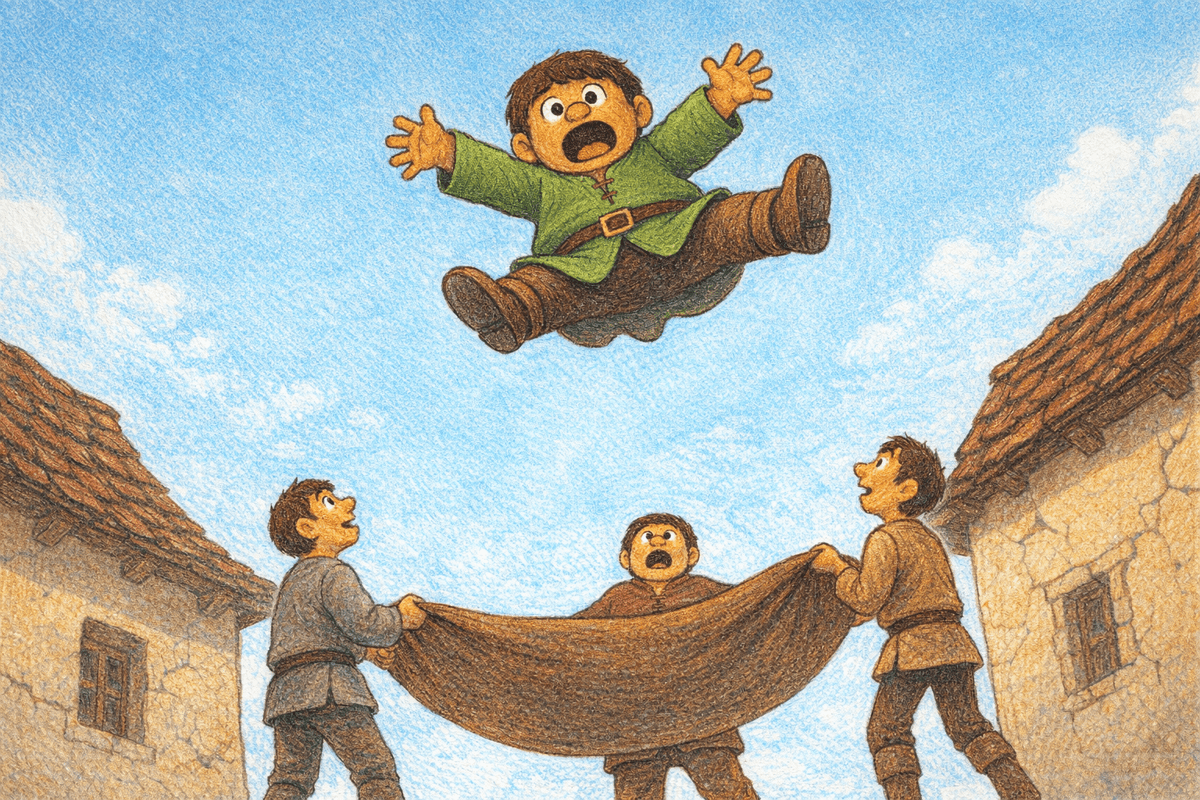
For the Picture Book we chose episodes where the joke repeats in a shape a child can predict. Don Quixote shouts "GIANTS!" and Sancho answers, "Those are windmills, sir!" He bows to a girl hanging laundry and calls her his princess, Dulcinea, and Sancho says, "That is a girl doing laundry." He grabs a shiny bowl off a man's head and calls it a golden helmet, has a lion's cage opened (the lion yawns and lies back down), and wrecks a puppet show to save a puppet knight while Sancho yells, "IT'S JUST PUPPETS!" Then, by a fire under the stars, Sancho asks, "Do you really believe all of this?" Don Quixote's answer has nothing to do with giants, and Sancho, after a moment, says he believes it too.
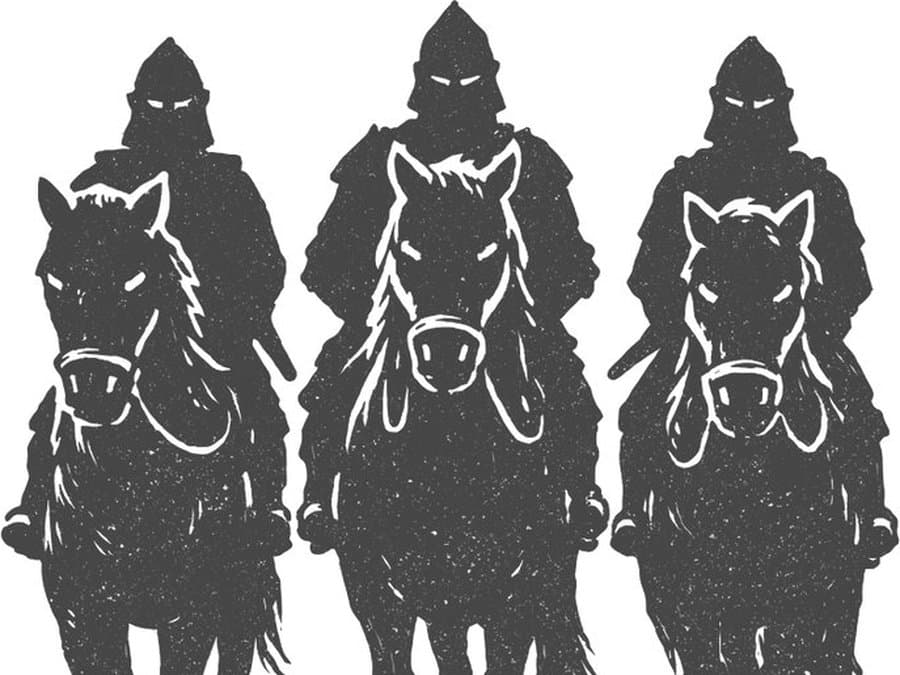
The Chapter Book follows him from his first ride out to his deathbed and tells the adventures where his courage makes things worse. He frees a boy tied to a tree, and the boy pays for it once the knight has ridden off. He frees a line of chained prisoners, and in our telling they go on to attack and rob people on the road. By the fire at night, Don Quixote tells Sancho that a farmer can be noble, and later Sancho finds he no longer cares about the island he was promised. Then come the Duke and Duchess, who invite the knight to their castle so they can laugh at him, and Sancho tells the Duchess to her face that "he is kind. And that is worth something." A duel on a beach sends Don Quixote home, and he dies with Sancho holding his hand. The book shows that a good intention and a good result are different things, and it still agrees with Sancho that the knight's kindness is worth something.
From the books
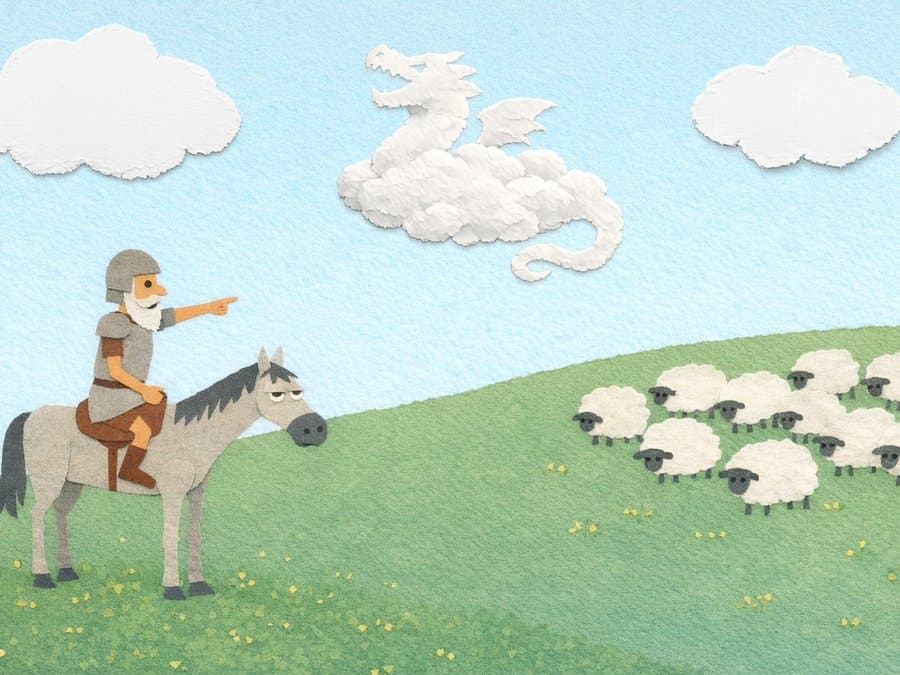
Toddler book, ages 0–4
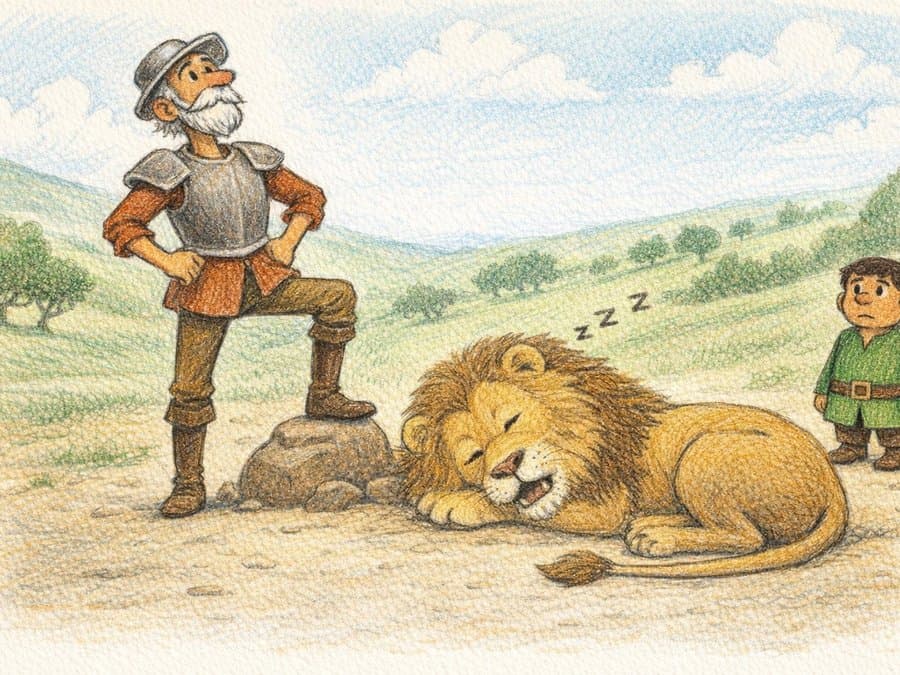
Picture book, ages 3–7
Chapter book, ages 6–10
What age is Don Quixote for?
Our Toddler Book is for ages 0–4 and our Picture Book for ages 3–7, both read-alouds. The Chapter Book is for ages 6–10: read it aloud at the younger end, and older readers can take it alone. Cervantes's novel is for older teenagers and adults. All three of our books are on the Don Quixote page.
What happens in the second part of Don Quixote?
In Part Two, a Duke and Duchess take the pair in, stage one prank after another, and make Sancho governor of an "island" (a town), which he runs sensibly for about ten days before quitting. Many of the people they meet, the Duchess included, have read Part One, and by 1614 there was also an unauthorized sequel by a writer calling himself Alonso Fernández de Avellaneda. Cervantes answered it inside his own book: the fake sent Don Quixote to a tournament in Zaragoza, so the real one rides to Barcelona instead. On the beach there he is beaten by the Knight of the White Moon, who is Sansón Carrasco, a young man from his own village trying to bring him home. The last page takes one more swipe at the impostor: the knight now lies in his grave, so no other writer can send him out again.
Characters who have read the book they are in: that is one of the things critics point to when they call Don Quixote the first modern novel. Our Chapter Book keeps the Duke and Duchess and the beach, but not the governorship, the rival book, or the readers inside the story, so the knight who beats him is simply "a man from his village, a friend."
How do you read Don Quixote with your child?
Stop before each new adventure and ask your child whether the giant is really a giant, or the castle a castle. In the Picture Book, Sancho gives the plain answer almost every time, so a child who has heard it once will start saying it before he does. With the Toddler Book, make the CRASH and the BANG, and let your child say "got back up" with you.
The Chapter Book's foreword ends on the question the story keeps asking: "Is it better to see the world as it is, or as it should be?" When you finish, ask your child which one Sancho chose, and which they would. The main Spanish names come with a pronunciation the first time they appear ("don kee-HO-tay," "ro-see-NON-tay"), so you can read it aloud without guessing.
Each of our Don Quixote books is made to be outgrown: your child finishes one level and moves up to the next, where the same story has more in it.
The books
Don Quixote on Amazon
Frequently asked questions
How long is each Don Quixote book, and what comes with it?
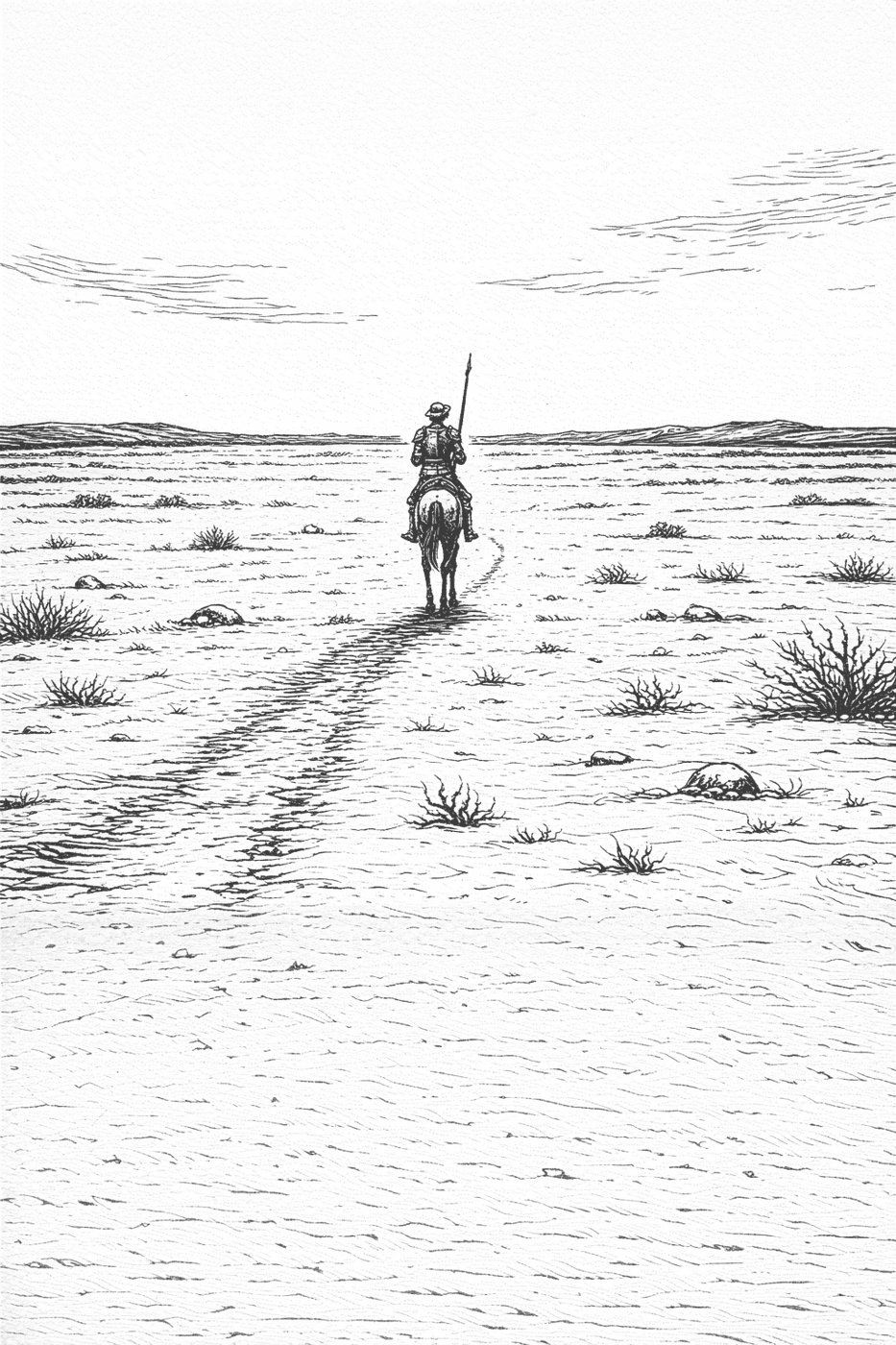
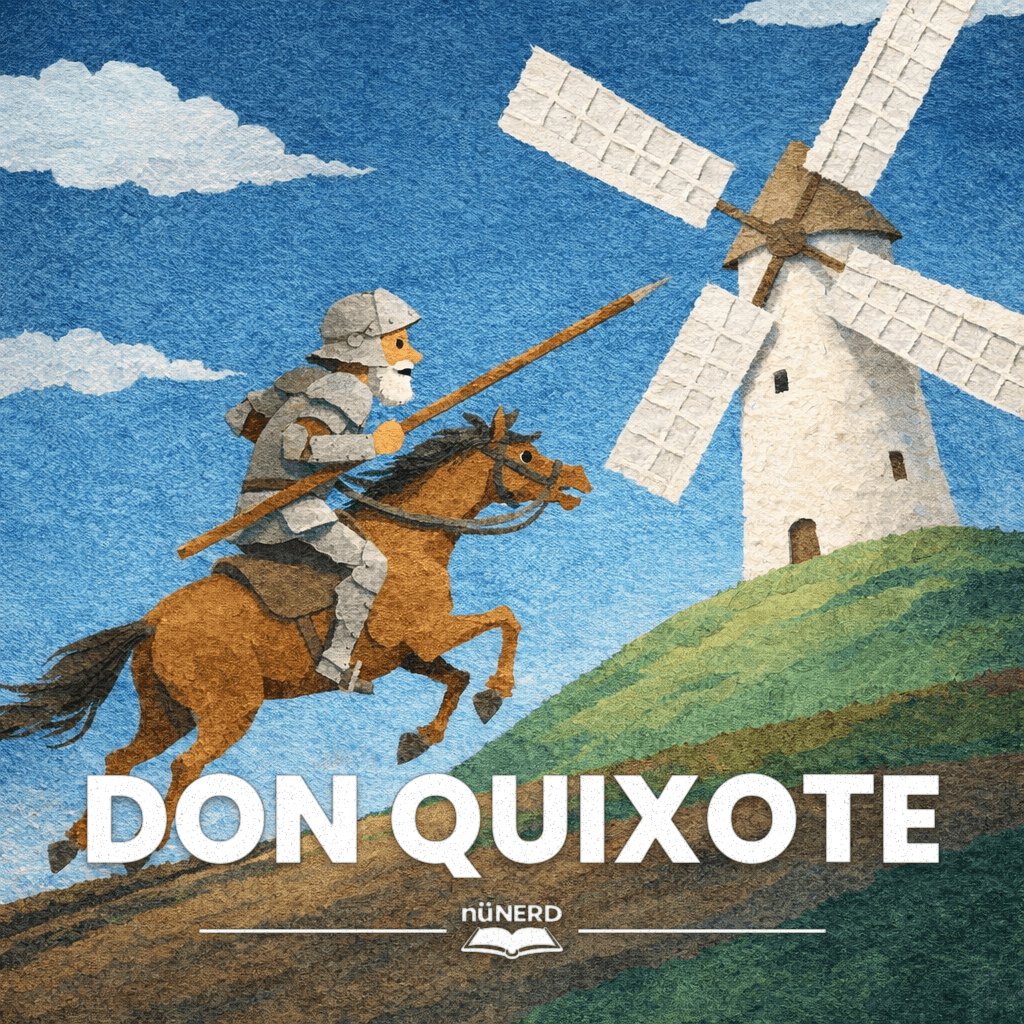
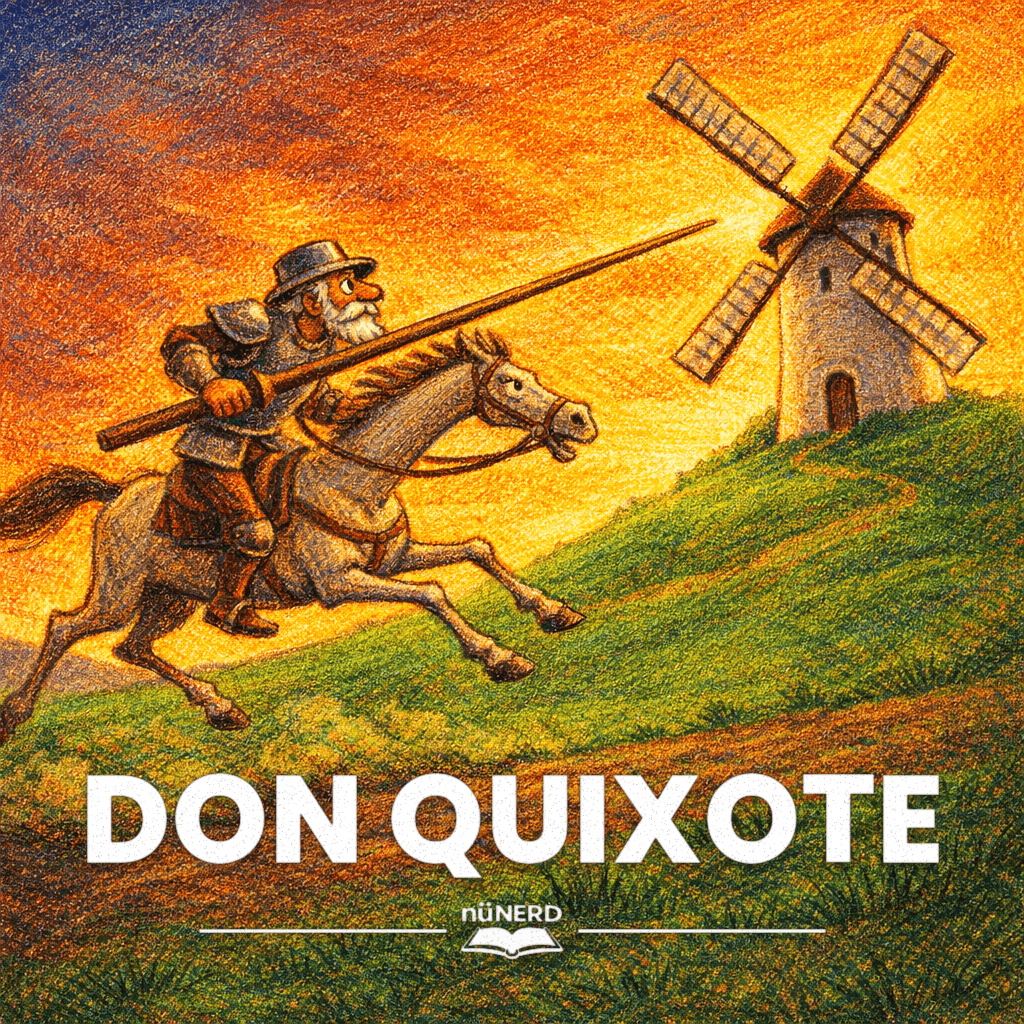
The Toddler Book is a read-aloud of about 350 words with cut-paper collage illustrations. The Picture Book runs about 870 words with soft crayon illustrations. The Chapter Book is a retelling of about 7,300 words in six chapters with black-and-white illustrations, a foreword that introduces Cervantes, and an afterword on why the story has lasted.
Does Don Quixote die in the chapter book?
Yes. After he loses the duel on the beach, he goes home, gives up being a knight, and dies about a week after getting there, with Sancho holding his hand. The death is told in two short sentences, and the book closes on Sancho remembering his friend. The Toddler Book and the Picture Book end with the knight and his squire still out on the road.
What does "quixotic" mean?
The word comes from Don Quixote's name. Our Chapter Book's afterword defines it as "chasing something idealistic even when everyone around you says it's impossible." Dictionaries put it as foolishly impractical, especially in the pursuit of ideals. "Tilting at windmills," for fighting imaginary enemies, comes from the same knight.
Where can I find free Don Quixote resources?
Our Don Quixote page links these free resources: Why should you read Don Quixote? (TED-Ed), Picturing Don Quixote (The Public Domain Review), Don Quixote (Project Gutenberg), and Don Quixote (LibriVox audiobook).