June 11, 2026
Why We Made Alfred the Great for Kids
Alfred the Great was king of Wessex, in southern England, from 871 to 899, and he is the only Anglo-Saxon king called "the Great." By the late 870s Viking armies had conquered or carved up every other English kingdom. In January 878 a surprise attack on Chippenham sent Alfred into hiding in the Somerset marshes, and that May he beat the Viking leader Guthrum at Edington. He spent the rest of his reign building: fortified towns called burhs, a fleet, a code of laws, and English translations of Latin books. nüNERD tells his story in four books, from a toddler read-aloud for ages 0–4 to a Secret Nerd book for ages 9–12, in which Alfred himself explains how things worked.
We made these books because Alfred's life has a shape a small child can follow (he loses everything, hides, and wins it back) and a second half worth meeting: the king who learned Latin as a grown man, timed his days with candles, and rebuilt his kingdom with walls, ships, laws, and books.
How are the four Alfred the Great books different?
Every topic, its own book at each reading level
History, philosophy, and classic literature for kids from toddlers to teens.
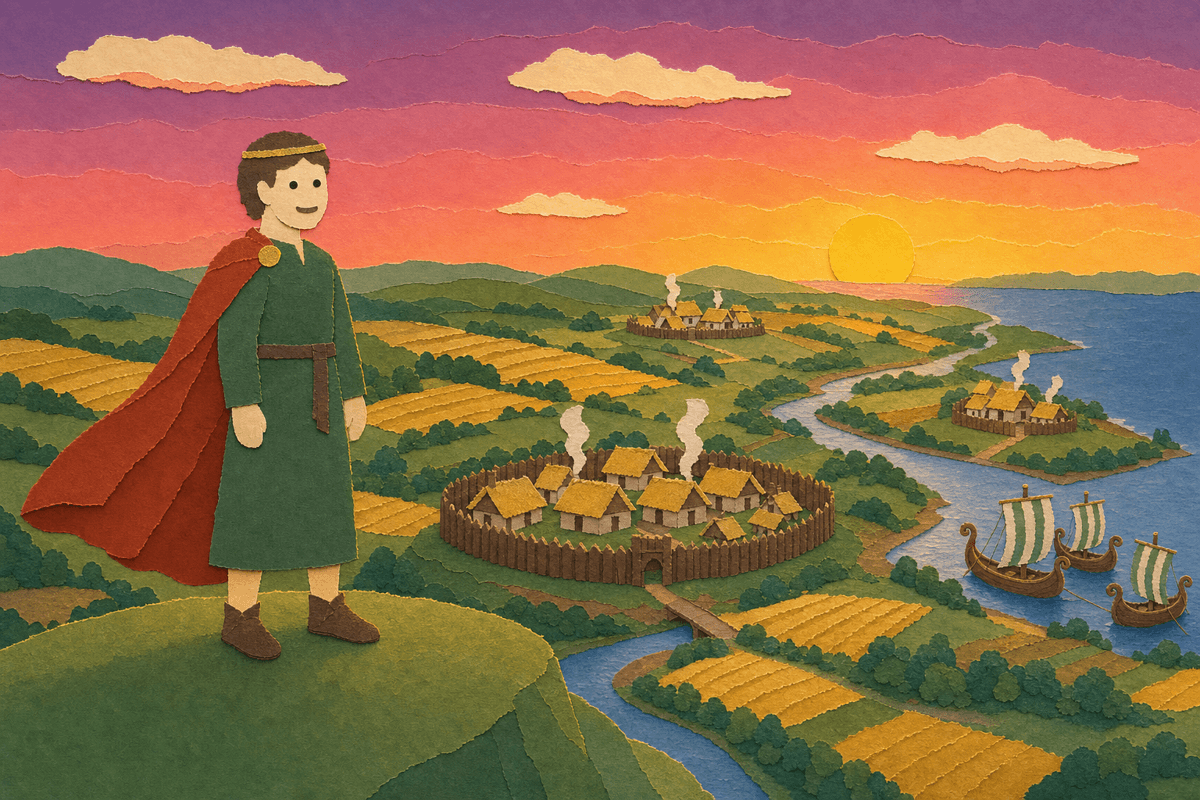
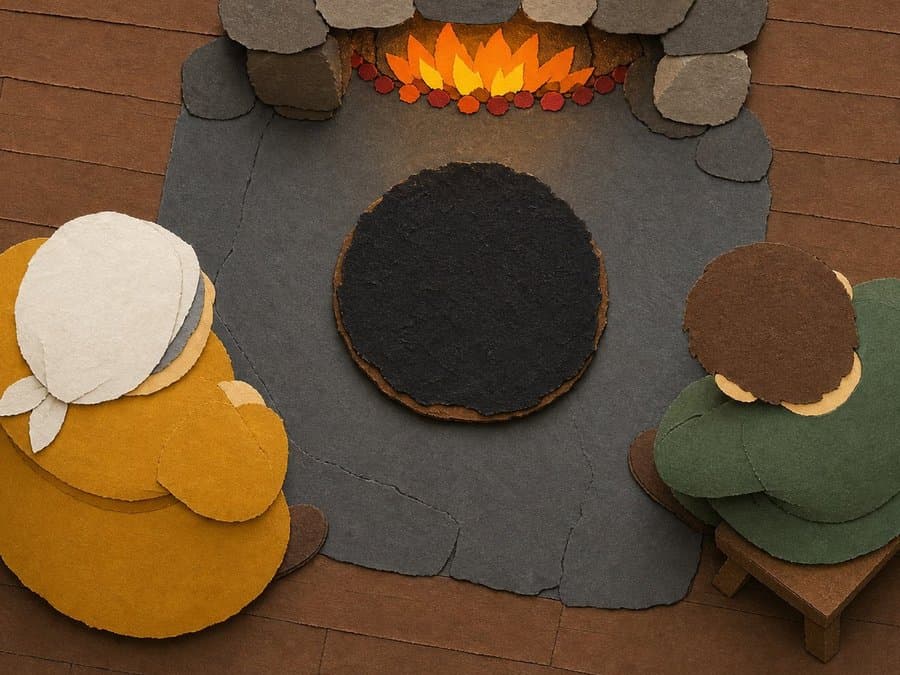
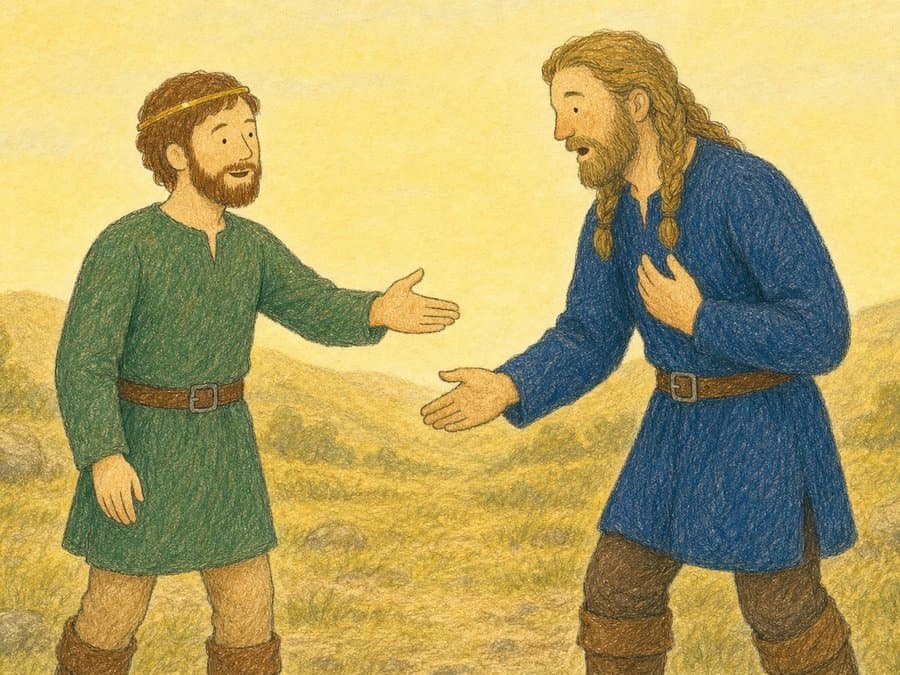
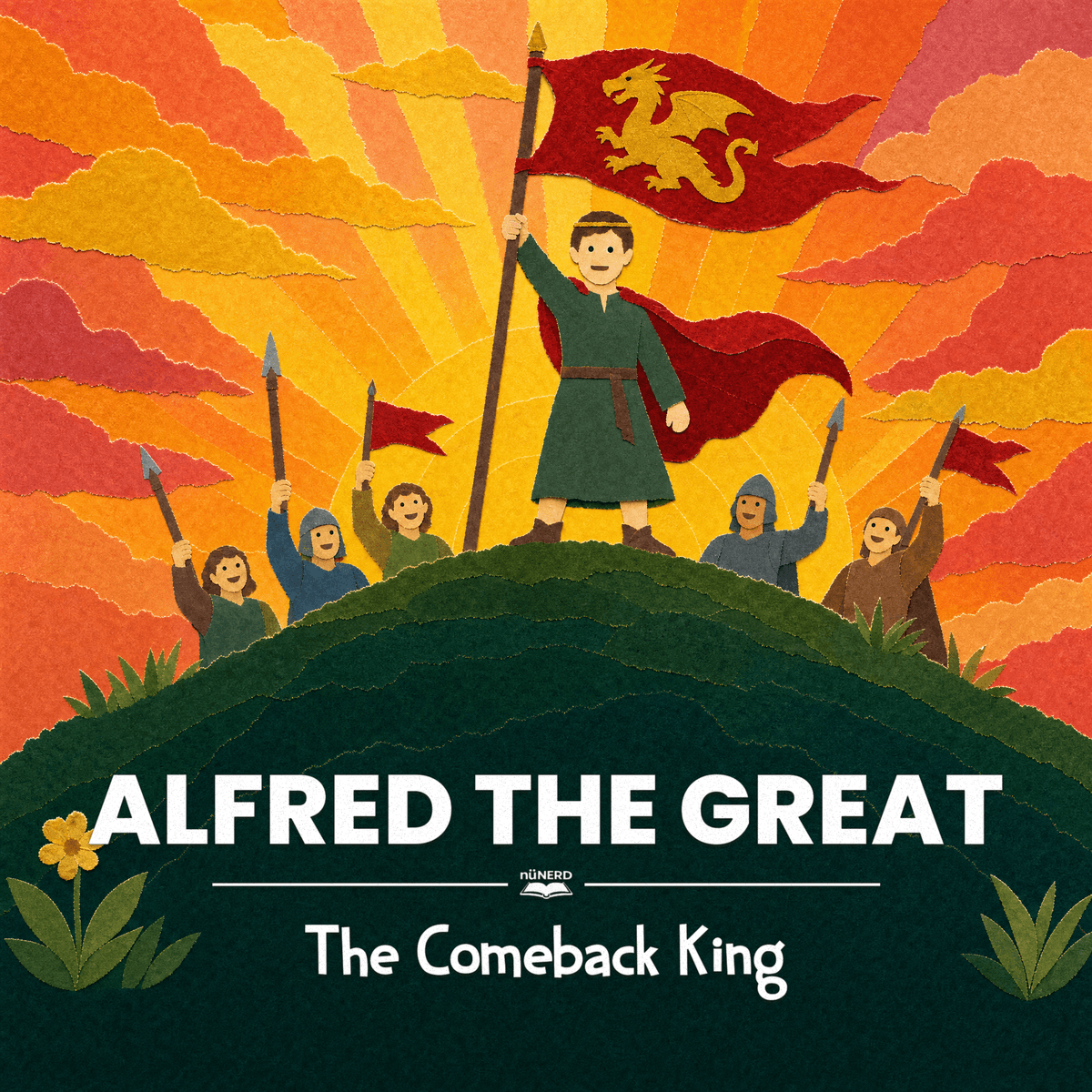
The toddler book, The Comeback King, follows the shape of his life: the ships come, Alfred has to run, and then he builds it all back. It includes the burnt-cakes story, told with a loaf of bread. A kind woman gives the hiding king a seat by the fire and says, "Watch my bread. Don't let it burn." He thinks about his lost land, the bread turns black, and she scolds him. "Alfred said sorry. Then his head felt clear."
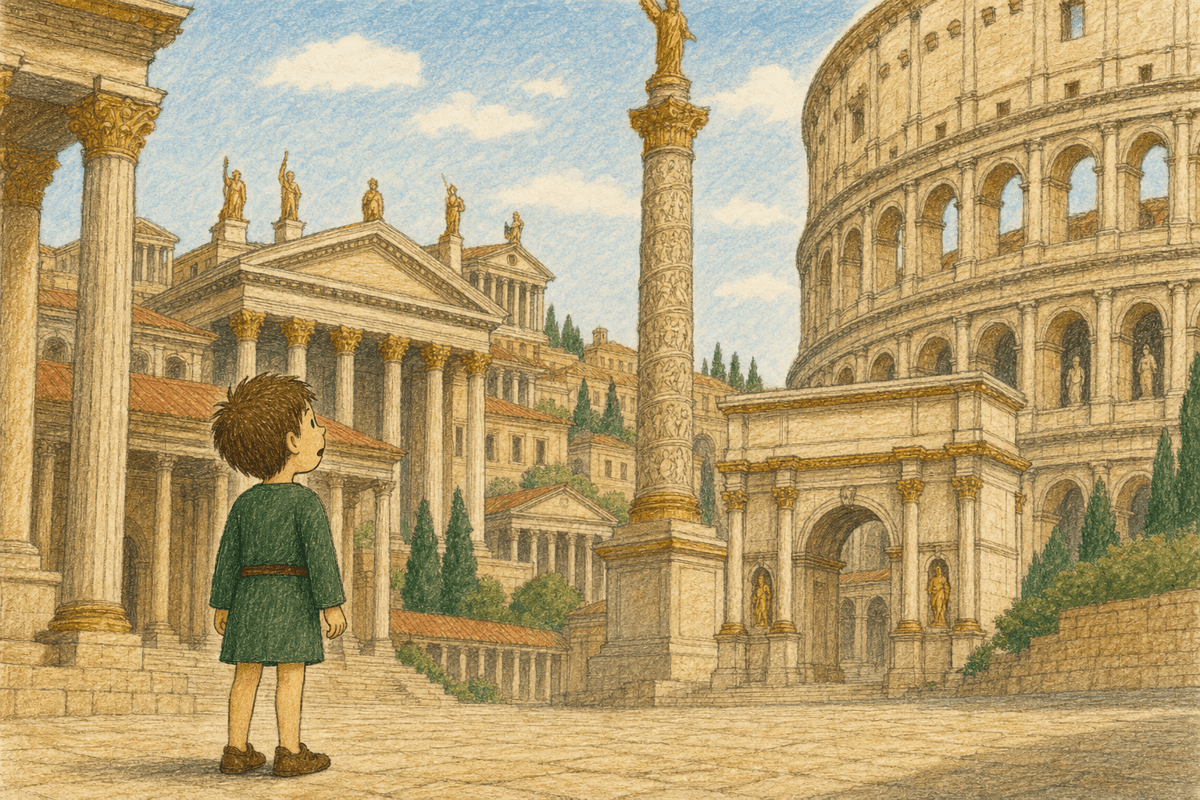
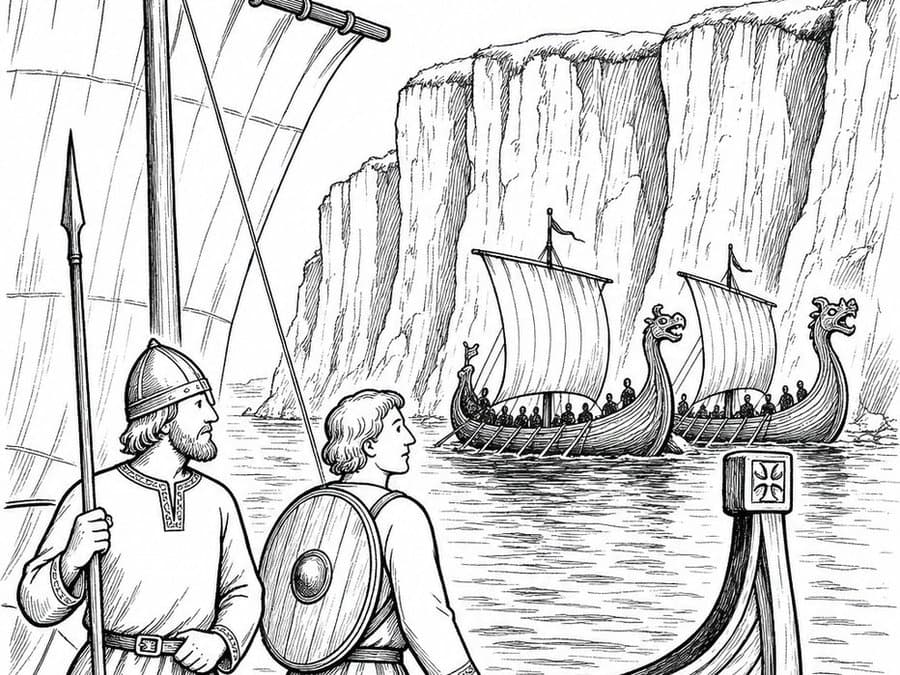
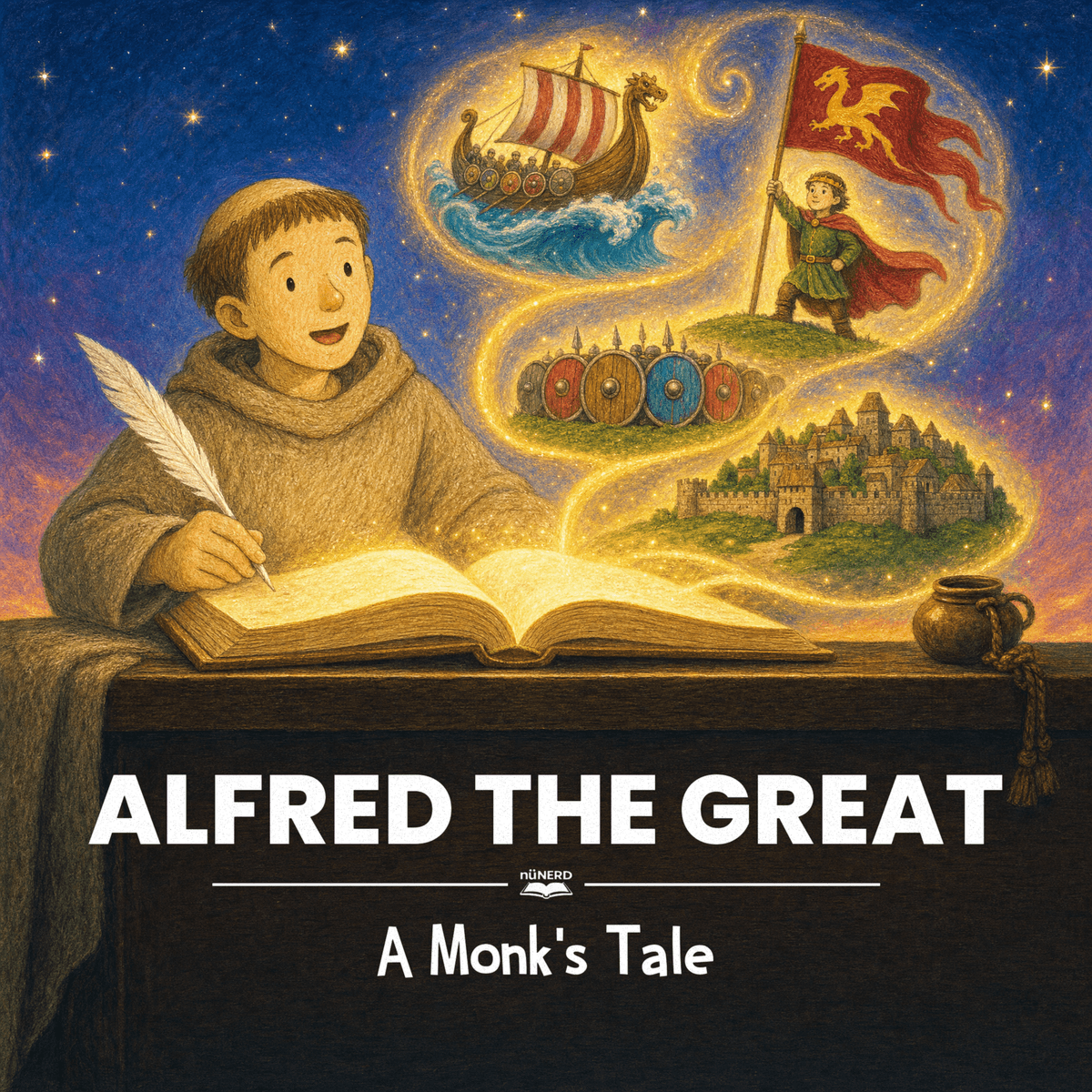
The picture book, A Monk's Tale, opens on Asser, the monk who wrote a book about Alfred, so a child hears what happened and who wrote it down. It follows Alfred, the youngest of five brothers, from a boyhood visit to Rome, "a city of stone and gold," to the crown, which passes down the line of his older brothers until it reaches him. At Edington, Alfred's men "locked their round shields into one great wall and pushed." Alfred waits out the beaten Vikings in their fort, and when Guthrum comes out, "Alfred could have paid him back for all the harm the Vikings had done. Instead, he chose something braver: peace." This book leaves out the cakes.
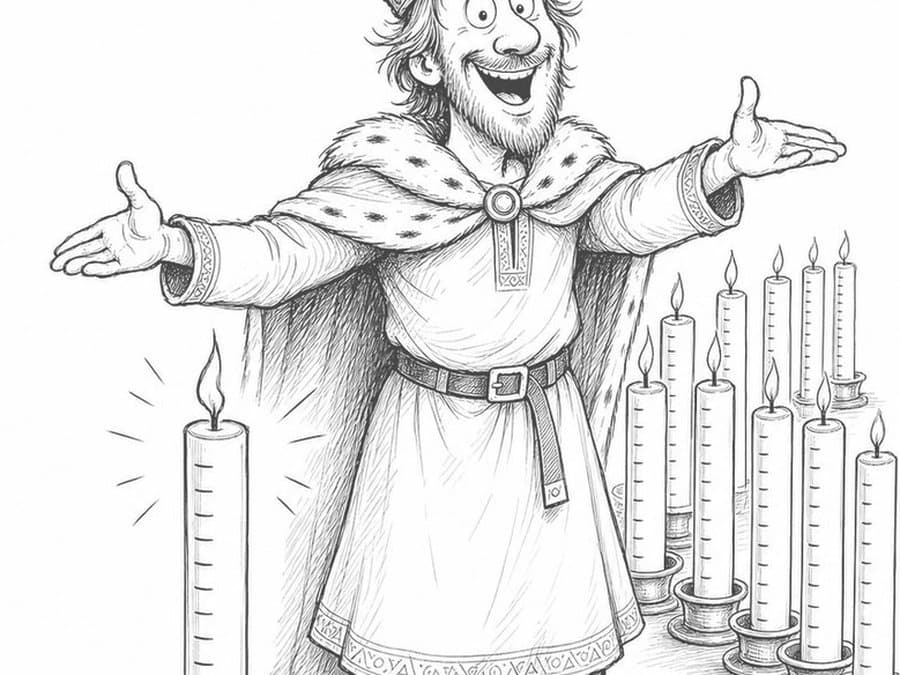
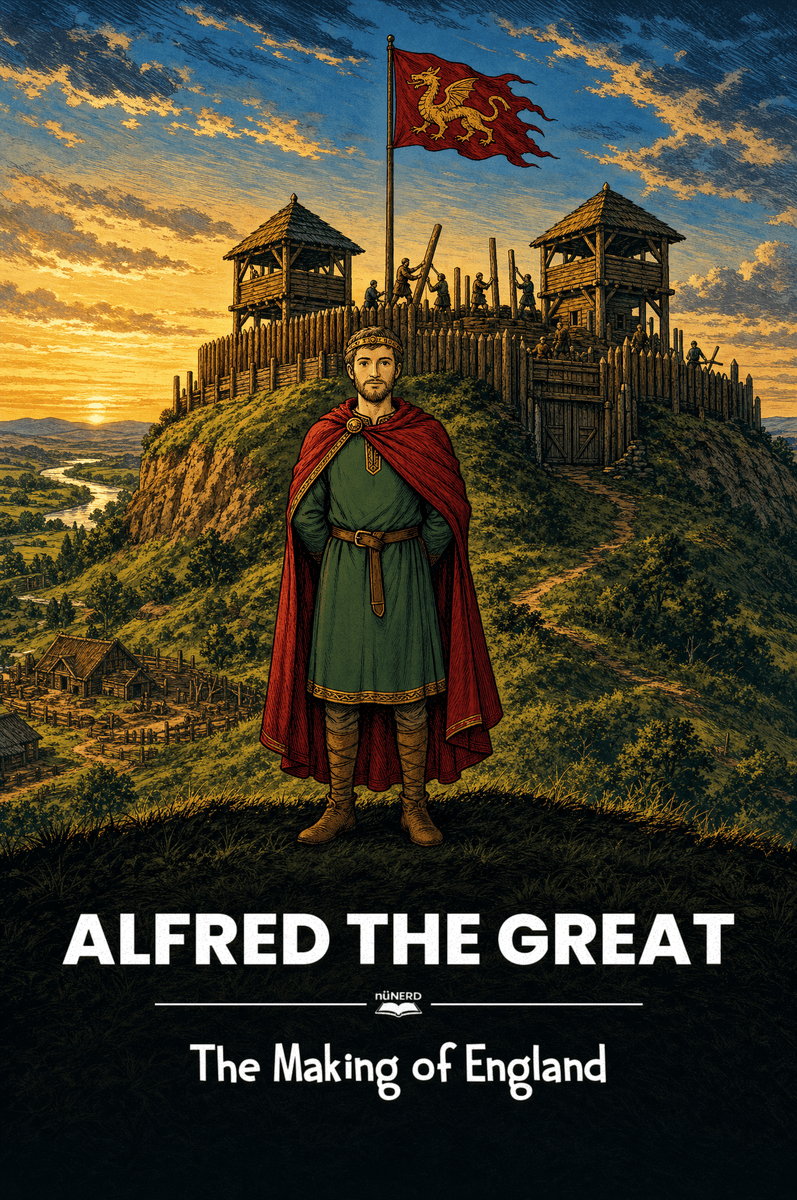
The chapter book, The Making of England, asks why the other English kingdoms fell, and answers that none of them helped the others: they were "like separate houses on the same street, each with its own locked door." It includes the midwinter surprise attack on Chippenham, the illness that bent Alfred double, and secret messages carried by memory because a written note could be found. After Edington, it sums up his rule in one line: "Hold what you can defend." The second half covers the burhs, the ships, and the laws.
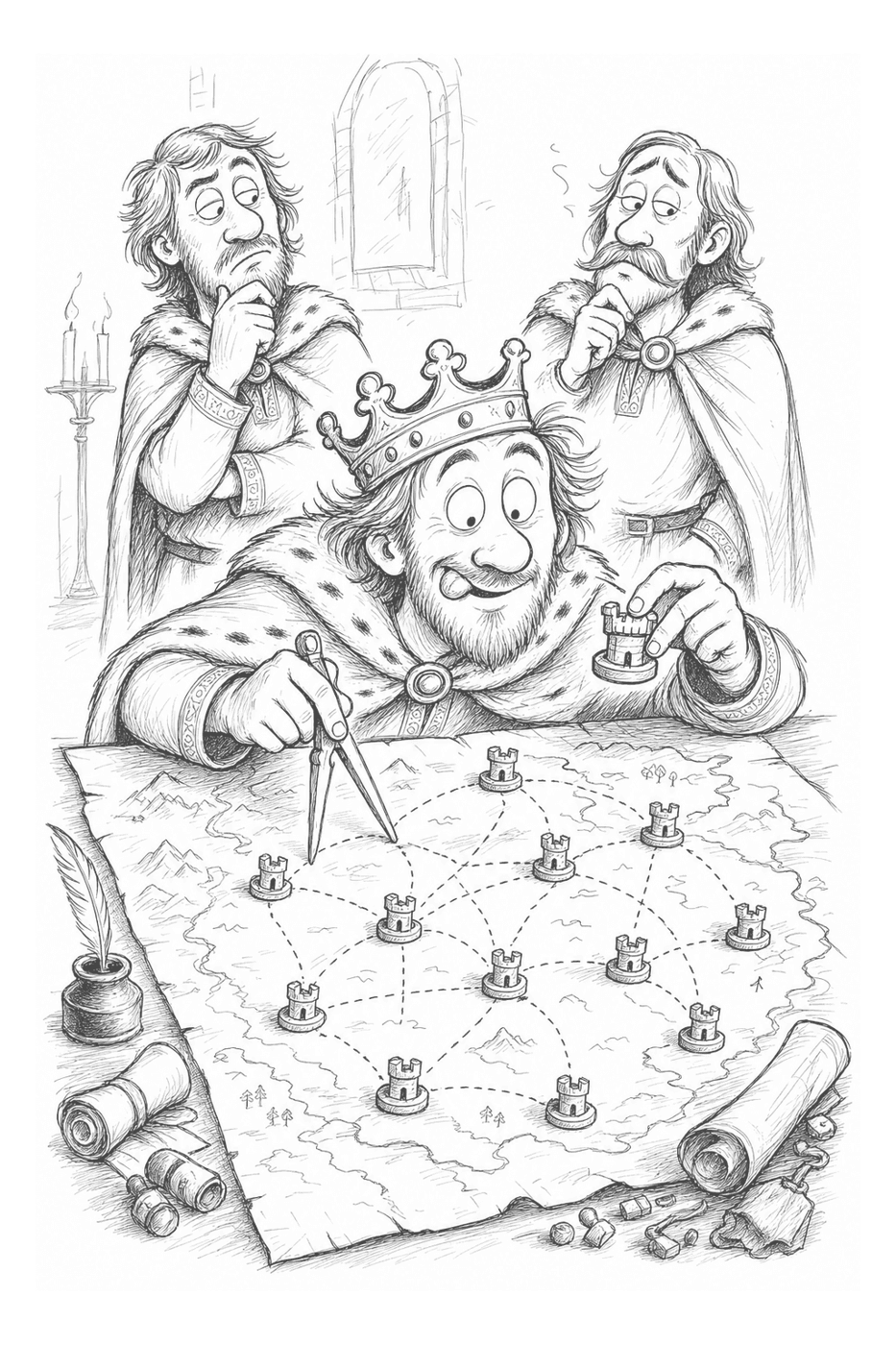
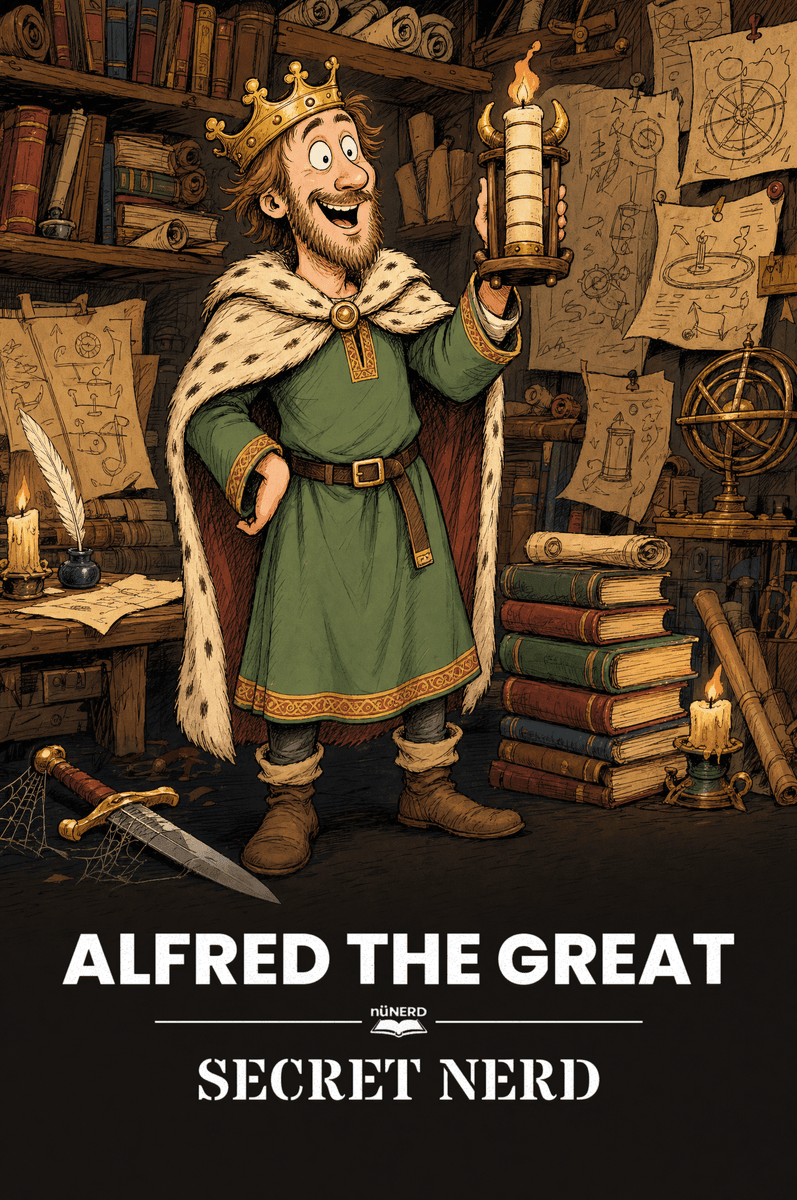
The Secret Nerd book is told in Alfred's own voice, and its first line is "You have probably heard of me." It passes over the battles in a page and spends the rest on Alfred the learner: the boy who memorizes his mother's book of poems to win it, the grown king learning Latin with teachers "from Wales and from across the sea," the candle clock, the arithmetic of guarding each burh, and a law book that had to put a price on a lost thumb. Its last chapter is "So, Warrior, or Nerd?", and its last page hands the verdict to the reader: "You decide whether I deserved to be called Alfred the Great."
Which Alfred the Great book should we start with?
The toddler book (ages 0–4) and the picture book (ages 3–7) are read-alouds. The Secret Nerd book (ages 9–12) gives the battles a single page, so it reads best after the chapter book (ages 6–10), which tells them. All four are on the Alfred the Great page.
Did Alfred really burn the cakes?
Probably not. Asser, who spent long stretches at Alfred's court, never mentions it. It first appears in a life of Saint Neot written roughly a hundred years after Alfred died. Archbishop Matthew Parker added it to his 1574 printed edition of Asser, which is why it is still sometimes credited to Asser. It survives because it fits: a king at his lowest, scolded by a peasant woman, his head full of how to win his country back. Our toddler book tells it straight. The chapter book tells it too, and says first that it "may or may not be true," because it "was not written down until long after Alfred lived."
From the books
Toddler book, ages 0–4
Picture book, ages 3–7
Chapter book, ages 6–10
Secret Nerd book, ages 9–12
How do we know so much about Alfred?
From three sources. Asser, a Welsh monk who joined Alfred's court in the 880s, wrote his Life of King Alfred in 893, while the king was still alive, and left it unfinished, six years before Alfred died. He reports that Alfred began reading and translating Latin in 887, as a grown king, with help from the scholars he had gathered at court. He also describes the candle clock: six candles a day, each marked in twelve divisions, in a lantern of thin horn against drafts. Asser credits the idea to Alfred, and in our Secret Nerd book Alfred makes sure you know it.
The second is the Anglo-Saxon Chronicle, a yearly record in English first compiled during his reign. The third is Alfred himself. In the preface to his own English translation of the Pastoral Care, he writes that learning had fallen so low that few people south of the Humber could understand their church services or translate a letter out of Latin, and that he is sending a pointer called an æstel with every copy. In 1693 a gold, enamel, and rock-crystal piece inscribed "AELFRED MEC HEHT GEWYRCAN," "Alfred ordered me made," turned up in Somerset. It is now in the Ashmolean Museum in Oxford, and many historians think it was the handle of one of those pointers.
One thing to try with the Secret Nerd book
Read the last chapter together, and let your child answer its question before you answer it. Then get out a map of England and look for towns ending in -bury and -borough. Those endings come from the Old English word burh, and Shaftesbury, in Dorset, was one of Alfred's burhs.
Each of our Alfred the Great books is made to be outgrown: your child finishes one level and moves up to the next, where the same story has more in it.
The books
Alfred the Great on Amazon
Frequently asked questions
How long is each Alfred the Great book?
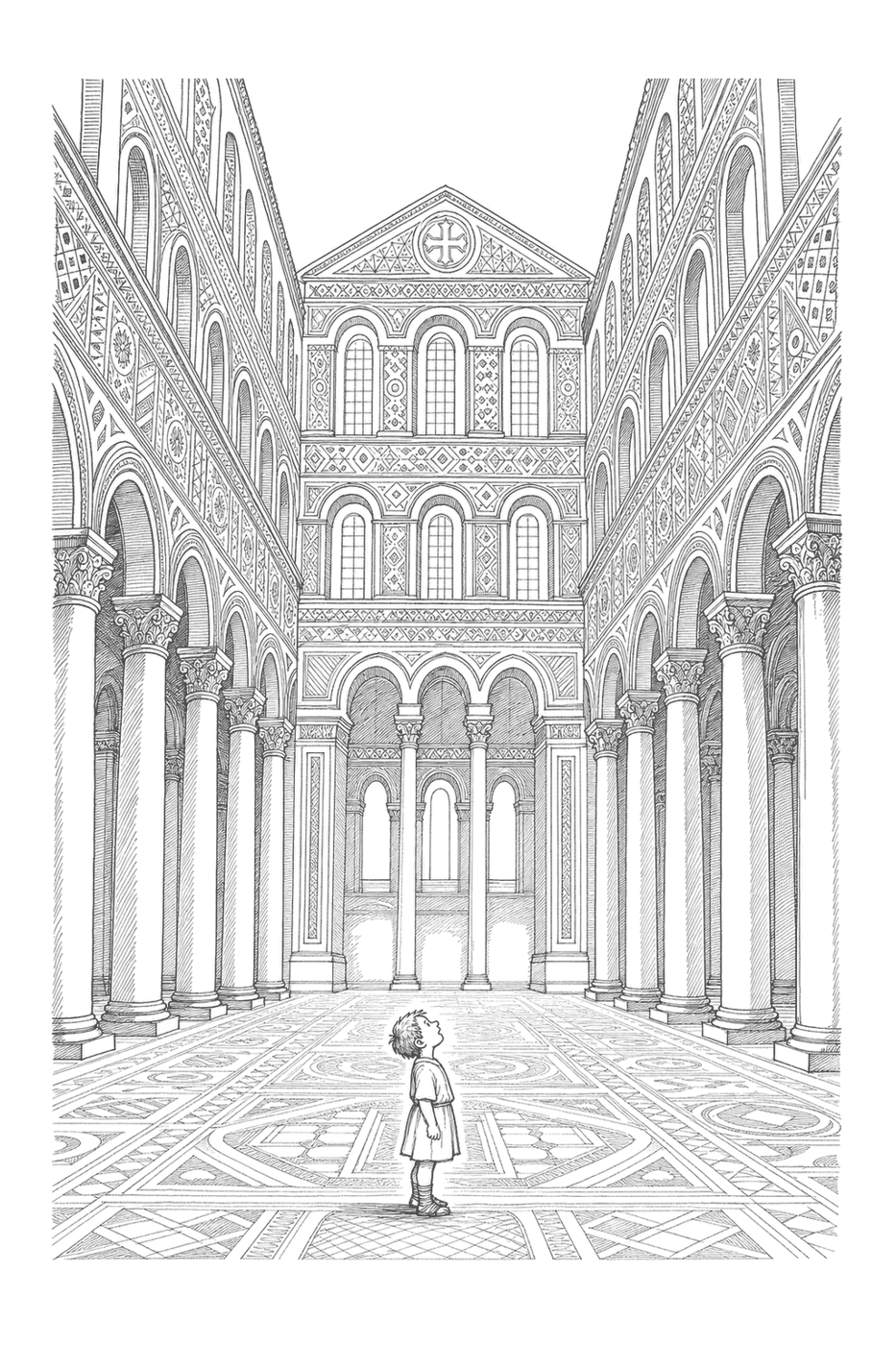
The toddler book is a read-aloud of about 340 words, illustrated in cut-paper collage, and the picture book runs about 730 words with soft crayon illustrations. The chapter book is about 7,100 words with black-and-white line art and pronunciation help for names like Æthelwulf and Guthrum. The Secret Nerd book is about 7,300 words, told in Alfred's voice, with black-and-white cartoon illustrations.
Is what Alfred says in the Secret Nerd book true?
In its main events, yes. The voice is ours: the book has Alfred speak to the reader in the first person, but it is not his autobiography. The main things he describes are in the record: his Latin, the candle clock in Asser, the burhs, his law book, and the sea captain Ohthere, whose account of the far north survives in an Old English translation of Orosius made in Alfred's reign.
Is Alfred the Great too violent for young children?
It depends on the book. In the toddler book the Vikings take and break things, and Alfred's friends push the ships back, with no one hurt on the page. The picture book has the shield wall at Edington and says the war took Alfred's brothers, without describing any deaths. The chapter book tells of kings killed and men stabbing through the gaps in the shield wall, plainly and without graphic detail. The Secret Nerd book passes over the fighting quickly.
Where can I find free Alfred the Great resources?
Our Alfred the Great page links these free resources: How Alfred the Great Became the Saviour of the Anglo-Saxons (The People Profiles), Alfred the Great (World History Encyclopedia), King Alfred the Great (Great Writers Inspire, University of Oxford), and The Anglo-Saxon Chronicle (Avalon Project, Yale Law School).