History · Ages 0–12

Alfred the Great

Alfred of Wessex lost his kingdom to the Vikings in the middle of one winter, won it back at Edington that spring, and spent the next twenty years making sure it could not happen again.

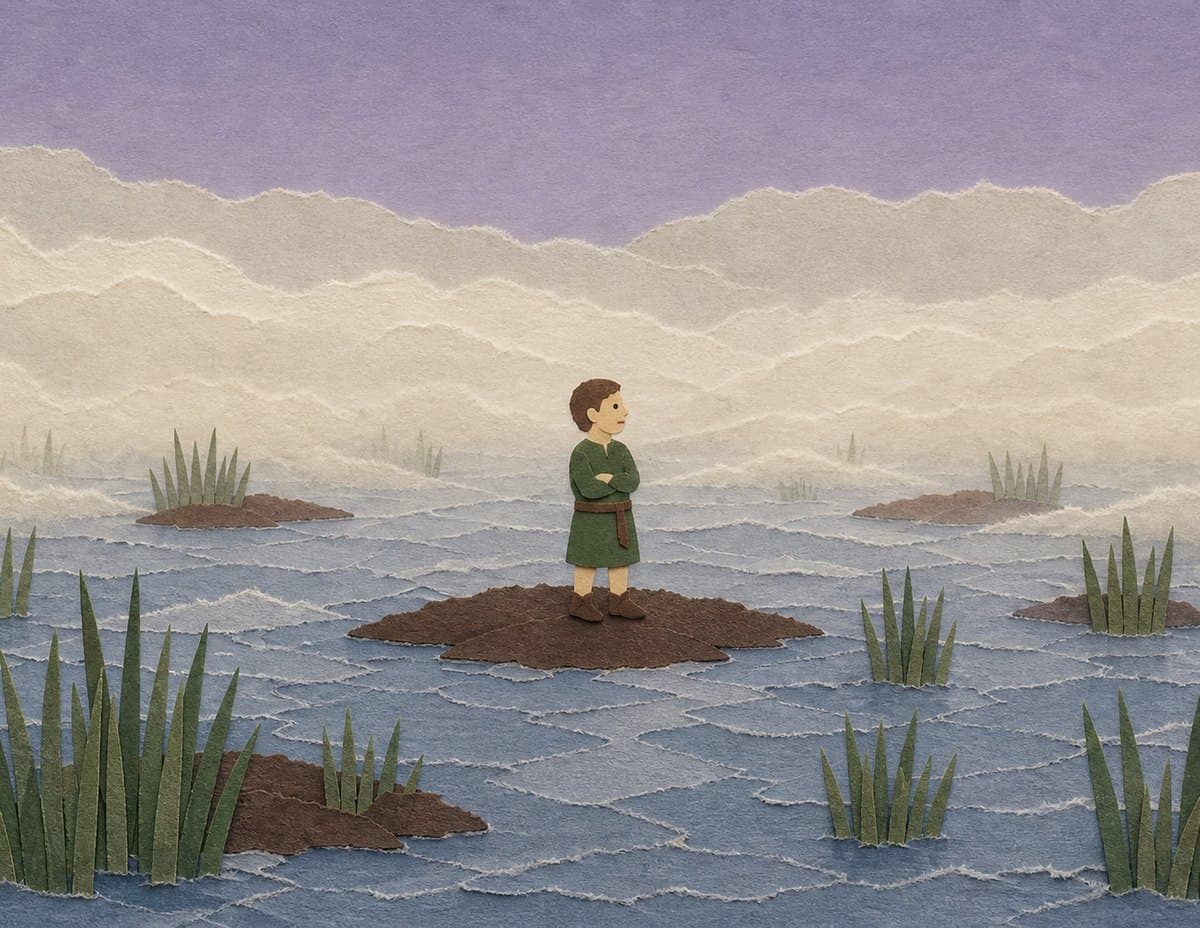
Alfred stands alone on a small patch of ground in a foggy marsh, with water and reeds all around, in cut-paper collage

A page from Alfred the Great: The Comeback King

Why we love it

Soup by the fire.

Alone in the fog, Alfred is found by a kind woman who gives him soup and a seat by the fire before she asks him to watch her bread. In the old legend she is a herdsman's wife in the Somerset marshes, and she has no idea the stranger warming himself is the king.

Toddler book, ages 0–4 ↓

A Welsh monk.

Asser, a monk from St David's in Wales, agreed to join Alfred's court only if he could spend half of every year back home. In 893, with the king still alive, he wrote the Life of King Alfred. Our picture book is framed by him.

Picture book, ages 3–7 ↓

The Burghal Hidage.

A document from Alfred's reign or just after, the Burghal Hidage, lists every burh in Wessex and how many men each one needs, worked out from the length of its wall. The full rule is four men for every pole of wall, about five and a half yards. The chapter book calls it careful planning, done with numbers and maps.

Chapter book, ages 6–10 ↓

Ohthere's tusks.

A Norwegian trader named Ohthere told Alfred how he sailed north past the last farms, partly to hunt walrus for their tusks, and his account went into the Old English version of a Latin world history. Our Secret Nerd book imagines the king asking the questions.

Secret Nerd book, ages 9–12 ↓

Which book for your child?

Cover of Alfred the Great: The Comeback King, for ages 0–4

Ages 0–4 · Toddler book · Read to them

Alfred the Great: The Comeback King

Long ago, a real king named Alfred lost almost everything to the Vikings and had to start over with nothing. But winning his kingdom back was only the beginning: he rebuilt it stronger and wiser than before, and earned the name we still remember, Alfred the Great. Because the best stories aren’t only about getting back up. They’re about what you build next.

24 pages · about 340 words · cut-paper collage

Good to know
Vikings steal and smash things, and one cold night Alfred has to run for it. Then the Vikings sail away, and the rest of the book is about building.
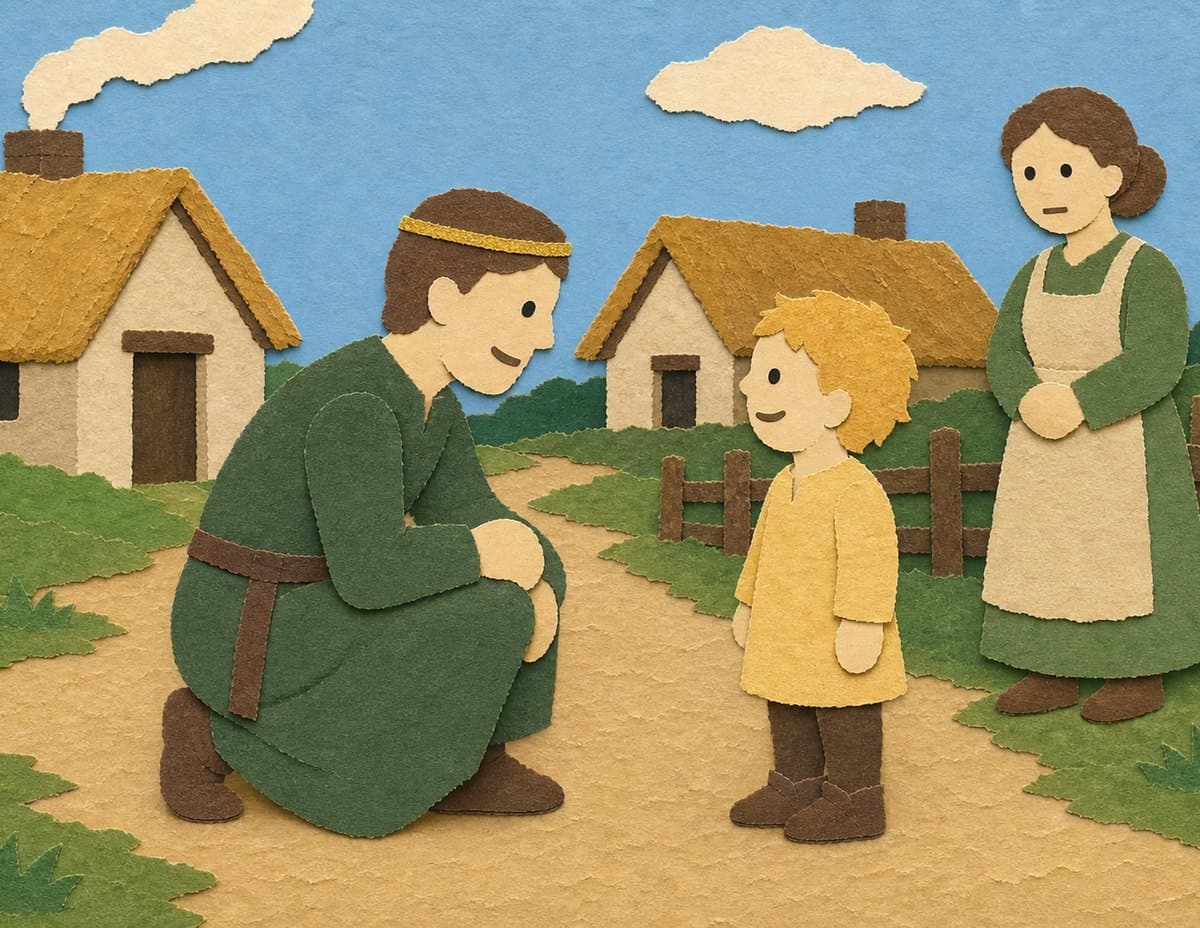
Alfred, in a green tunic, kneels to talk with a small child outside thatched cottages while the child's mother watches, in cut-paper collage
A man named Alfred was the king. He wanted to keep his people safe.
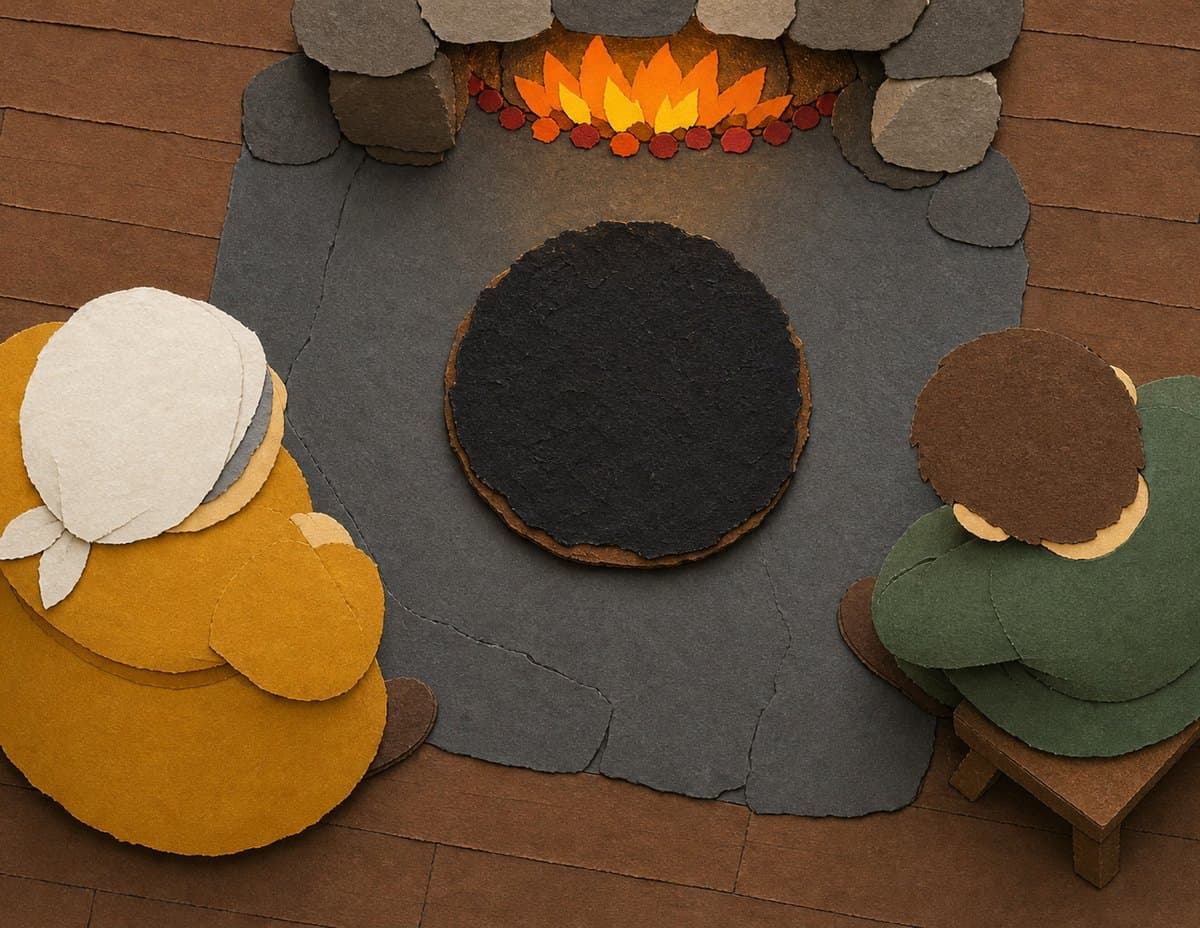
Seen from above, a woman in a headscarf and Alfred sit on either side of a round loaf burnt black by the fire, in cut-paper collage
She came back and scolded him. Alfred said sorry. Then his head felt clear.
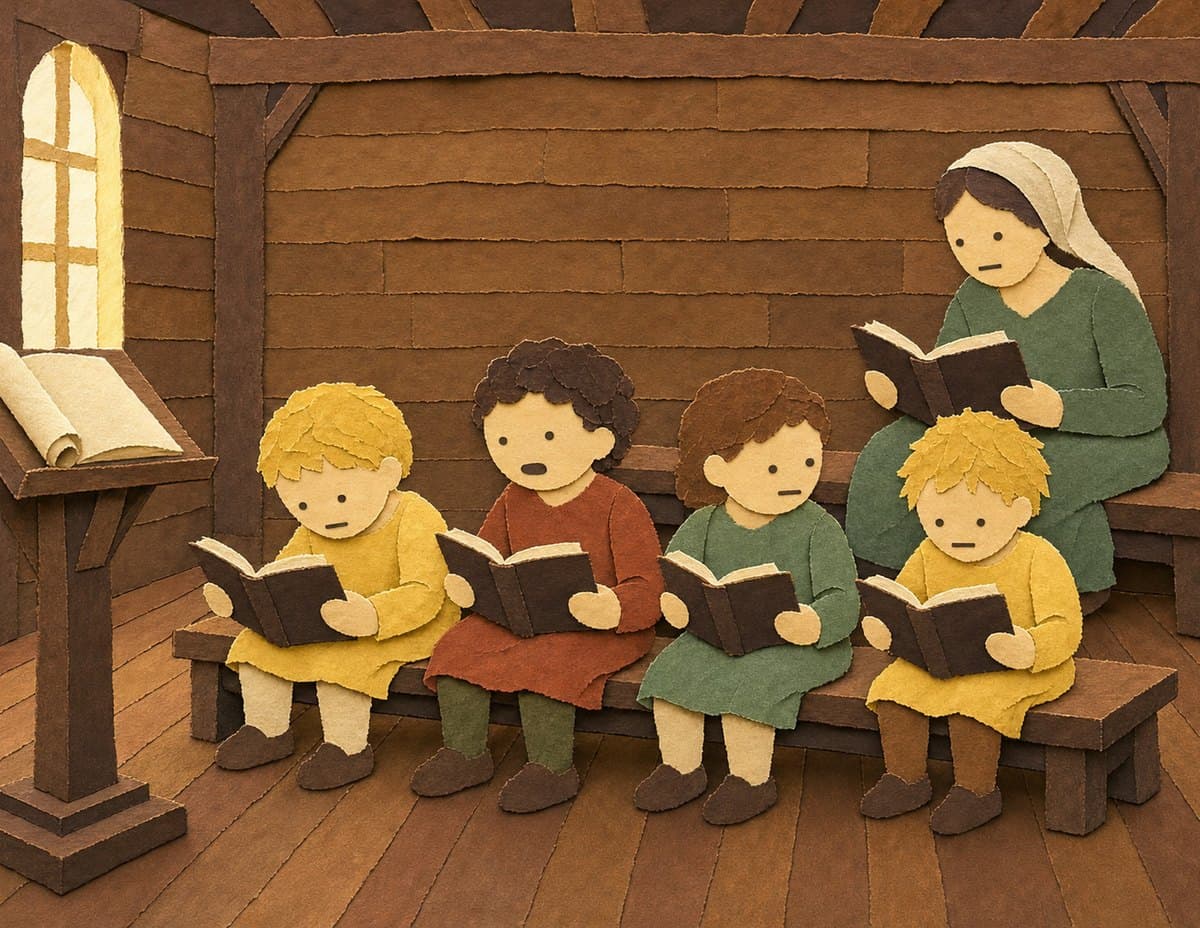
A woman reads with a row of small children holding open books on a bench, beside a lectern under a window, in cut-paper collage
And he built schools so his people could learn to read and to write.
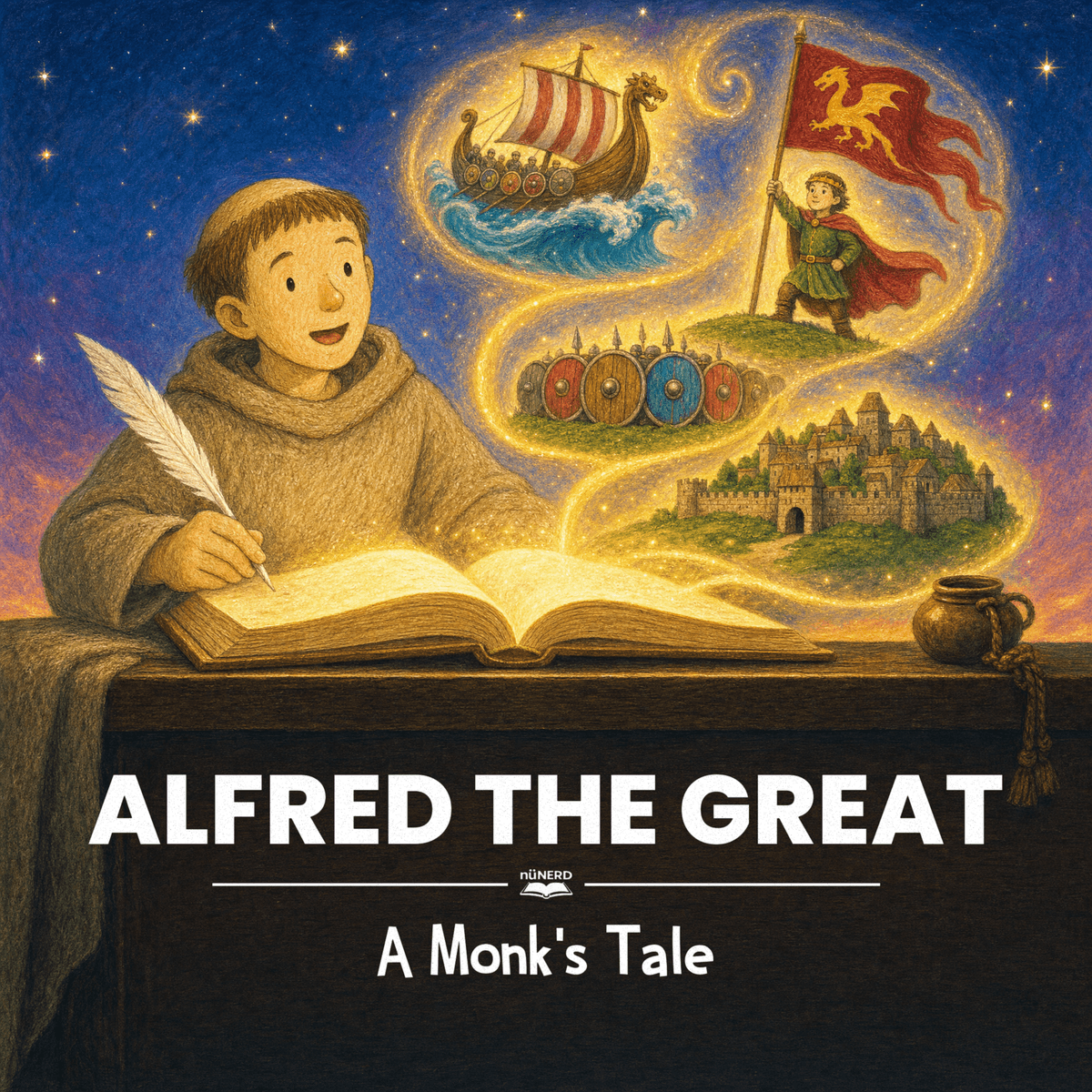
Cover of Alfred the Great: A Monk's Tale, for ages 3–7

Ages 3–7 · Picture book · Read together

Alfred the Great: A Monk's Tale

Why do we still remember a king who lived more than a thousand years ago? Partly because his friend Asser, a Welsh monk, wrote about him while he was still alive. This is the story of Alfred the Great: the youngest brother no one expected to rule, the boy who would rather hear a story than swing a sword, and who grew up to save his people anyway.

36 pages · about 730 words · soft crayon

Good to know
Alfred's older brothers die one after another, in a single line. His men lock shields and push until the Vikings run. A page shows Guthrum's baptism, with Alfred standing beside him as godfather.
Parents will spot
Alfred's boyhood trip to Rome, and the start of the Anglo-Saxon Chronicle.
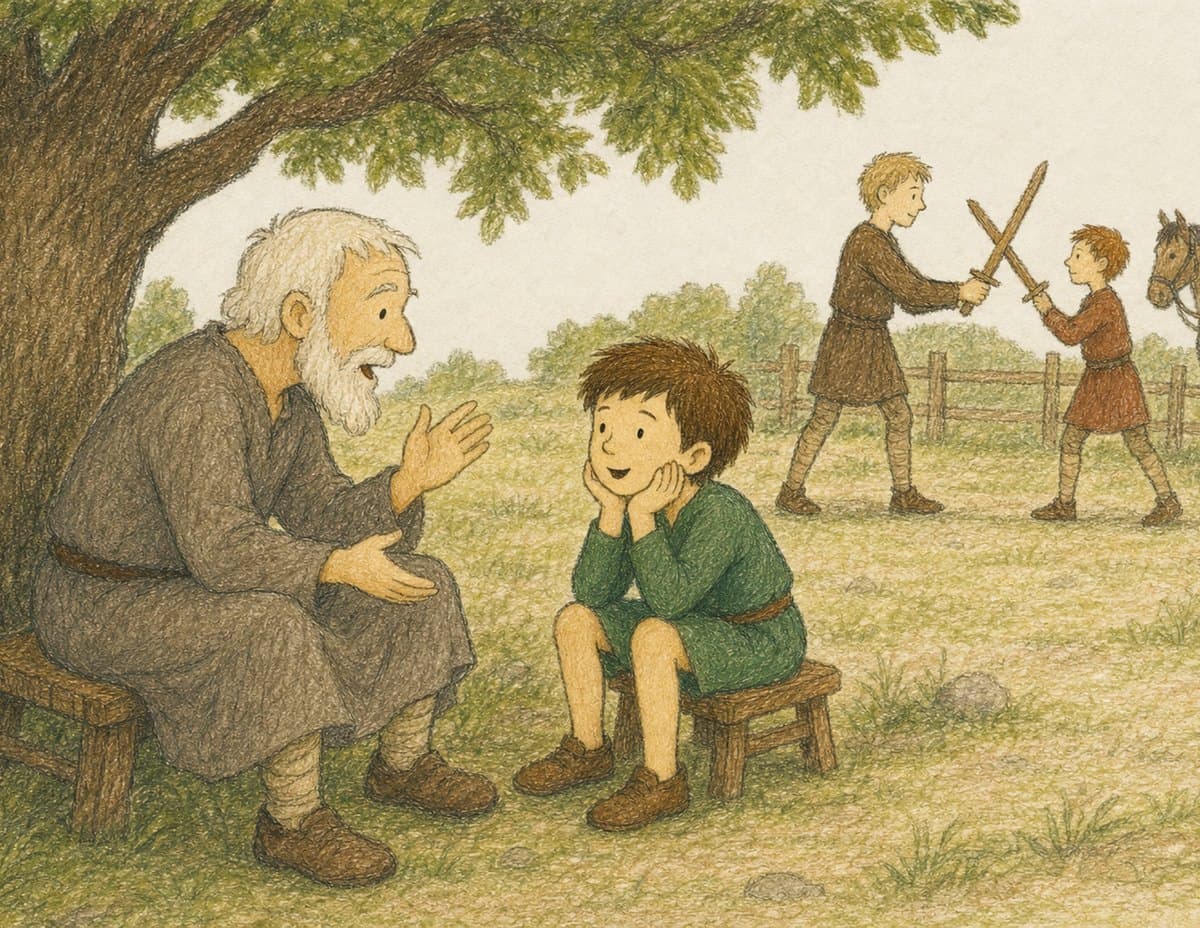
An old man tells a story to young Alfred under a tree while two boys practice with wooden swords in the field behind, in soft crayon
While his brothers practiced with swords and horses, Alfred slipped away to listen to stories. He loved them best of all.
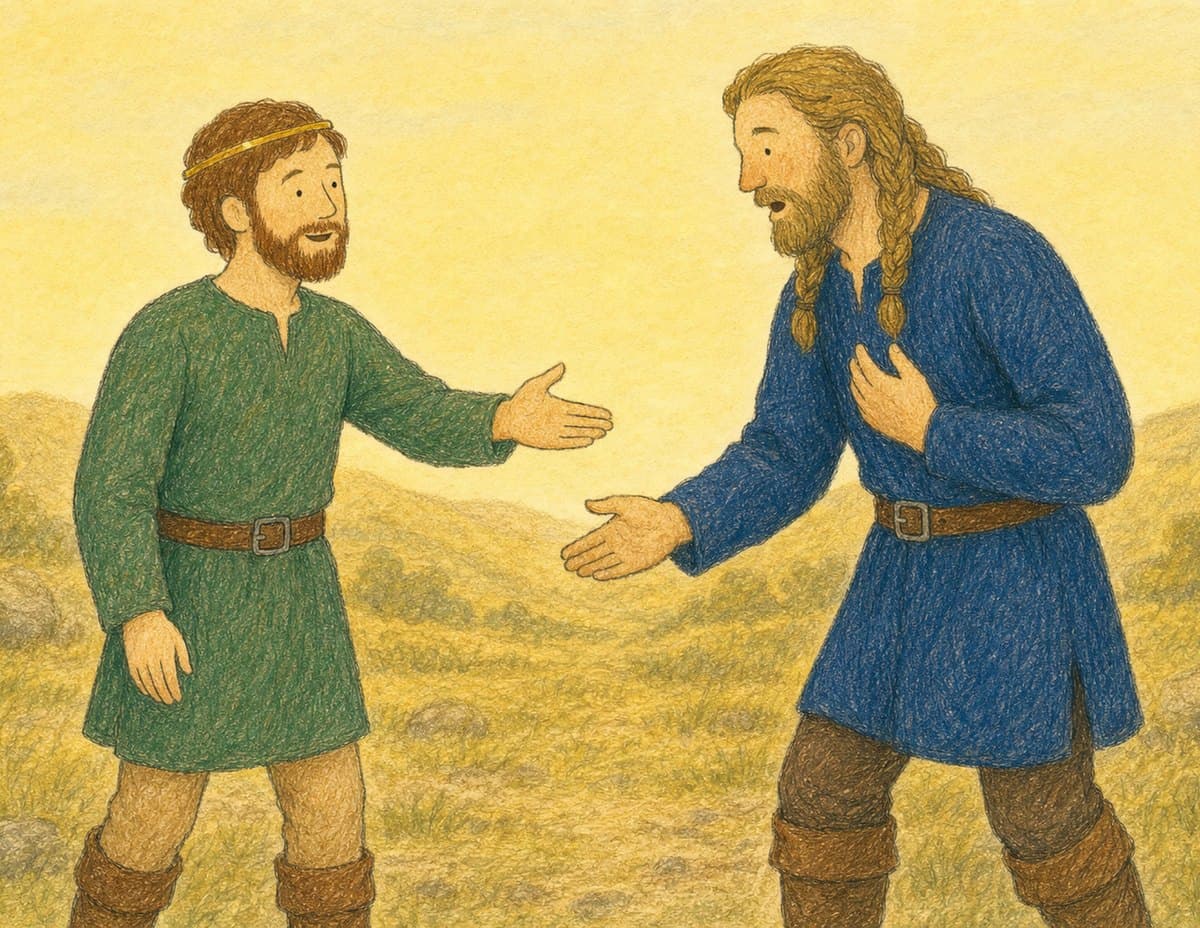
Alfred and a long-haired man in a blue tunic reach out to each other in a sunny field, in soft crayon
Alfred could have paid him back for all the harm the Vikings had done. Instead, he chose something braver: peace.
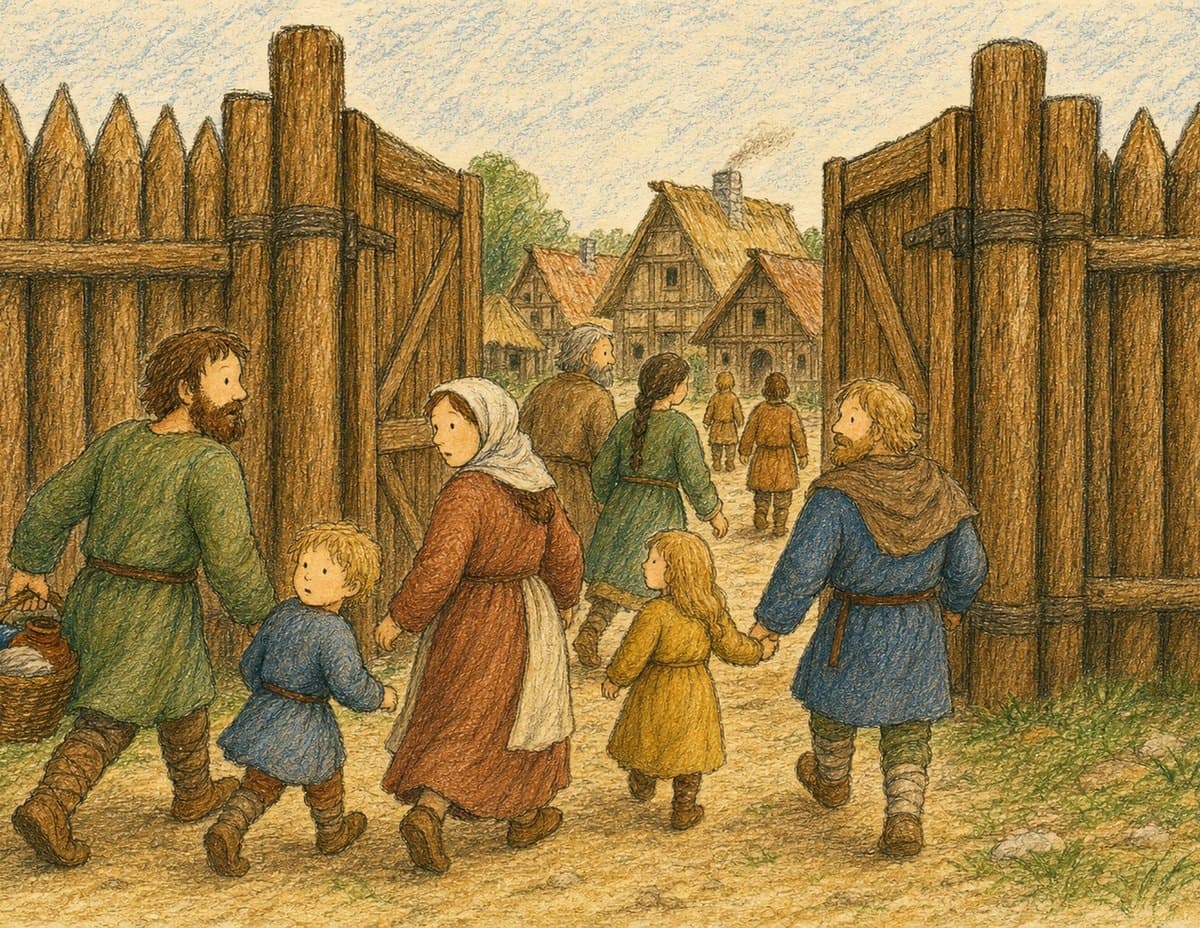
Families with small children hurry in through the open wooden gates of a walled town, in soft crayon
So when raiders appeared, people no longer ran and hoped. They hurried through the gates, safe behind the walls until the danger passed.
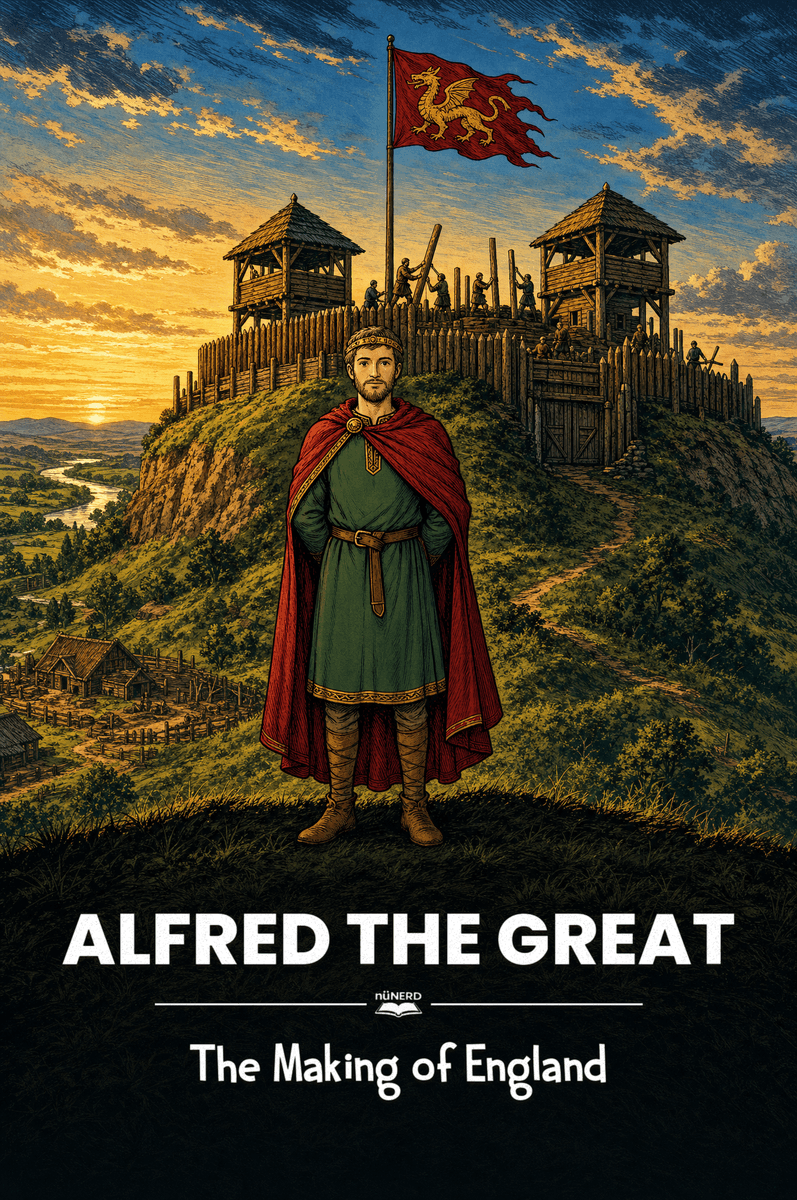
Cover of Alfred the Great: The Making of England, for ages 6–10

Ages 6–10 · Chapter book · They start reading alone

Alfred the Great: The Making of England

By the 870s, the Vikings had taken every English kingdom but one, and the man left to defend it was the youngest of five brothers, dogged by illness, and never meant to rule. How did the least likely king in England save the last kingdom and build a country that has lasted a thousand years? Not with the sword. With his mind.

76 pages · about 7,100 words · 21 black-and-white drawings

Good to know
Monasteries burn, kings are killed, and the day-long battle at Edington has stabbing and the cries of wounded men. Alfred lives with a painful illness that bends him double, and he dies at about fifty in the last chapter.
Also inside
Pronunciations in brackets after the hard names, like Æthelwulf (ETH-el-wolf) and Guthrum (GUTH-rum).
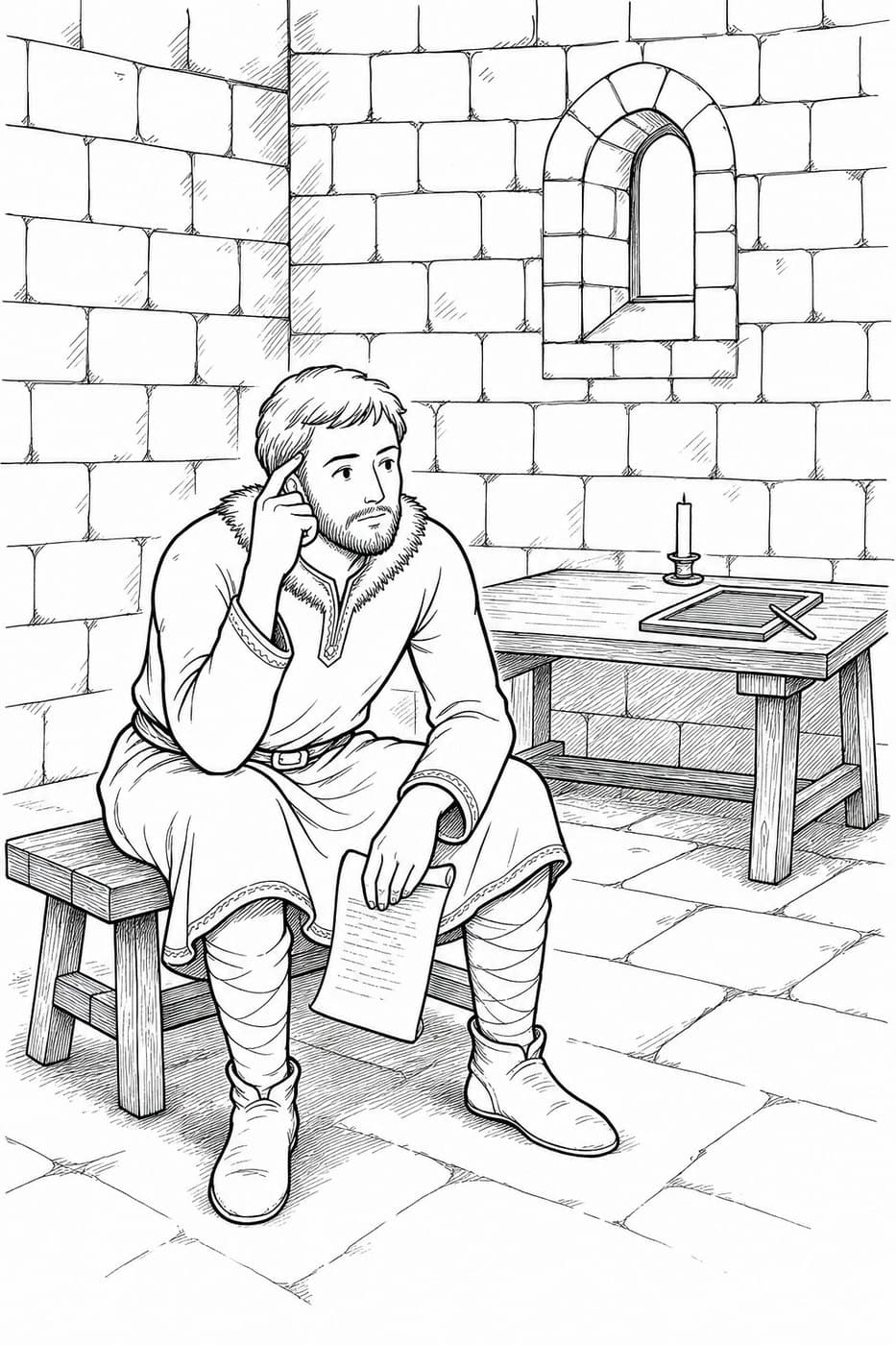
Alfred sits on a bench in a stone room, chin in his hand and a paper on his knee, with a candle on the table behind him, in black-and-white line art
The problem was too big for a sword to solve. Alfred needed a plan. A real plan. One that went beyond fighting.
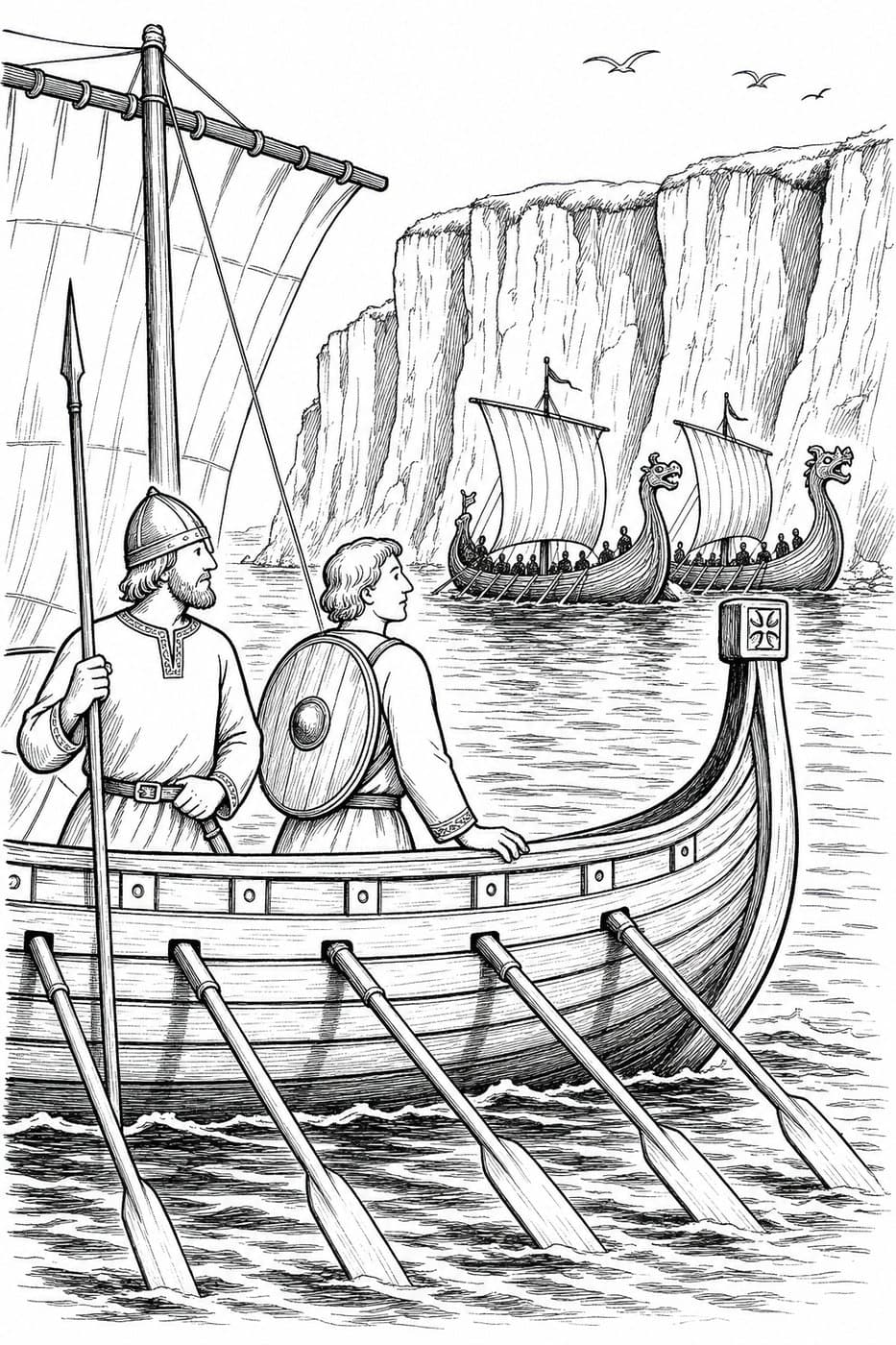
Two armed men stand in a long ship with a row of oars out, facing two dragon-prowed ships under tall white cliffs, in black-and-white line art
For the first time, Wessex had a real fleet that could meet the Vikings at sea before they ever reached the shore.
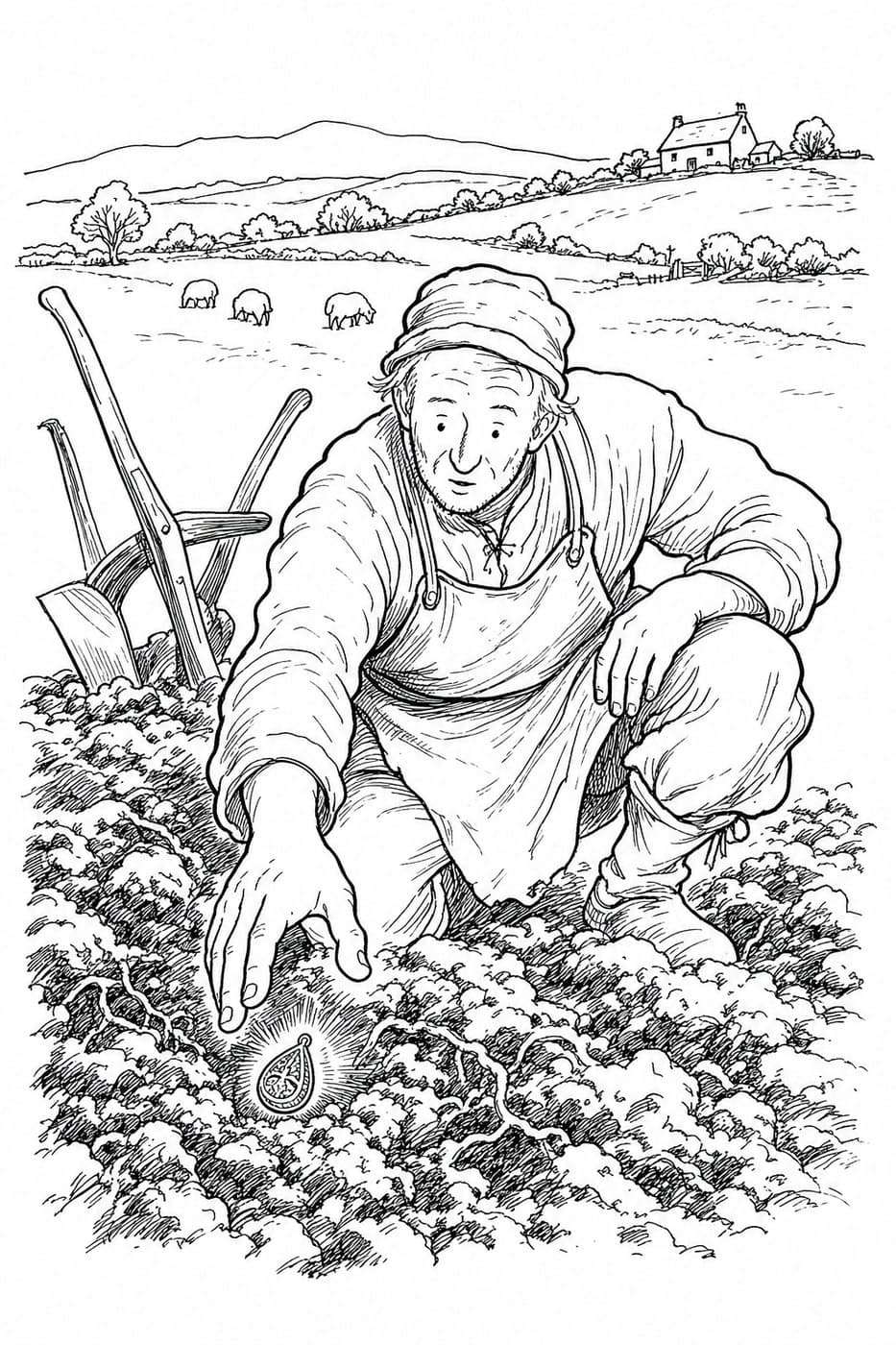
A farmer crouches beside his plow in a field and reaches into the soil for the Alfred Jewel, with sheep in the distance, in black-and-white line art
Hundreds of years later, in 1693, a farmer in Somerset was plowing his field. His blade caught on something small and hard in the dirt.
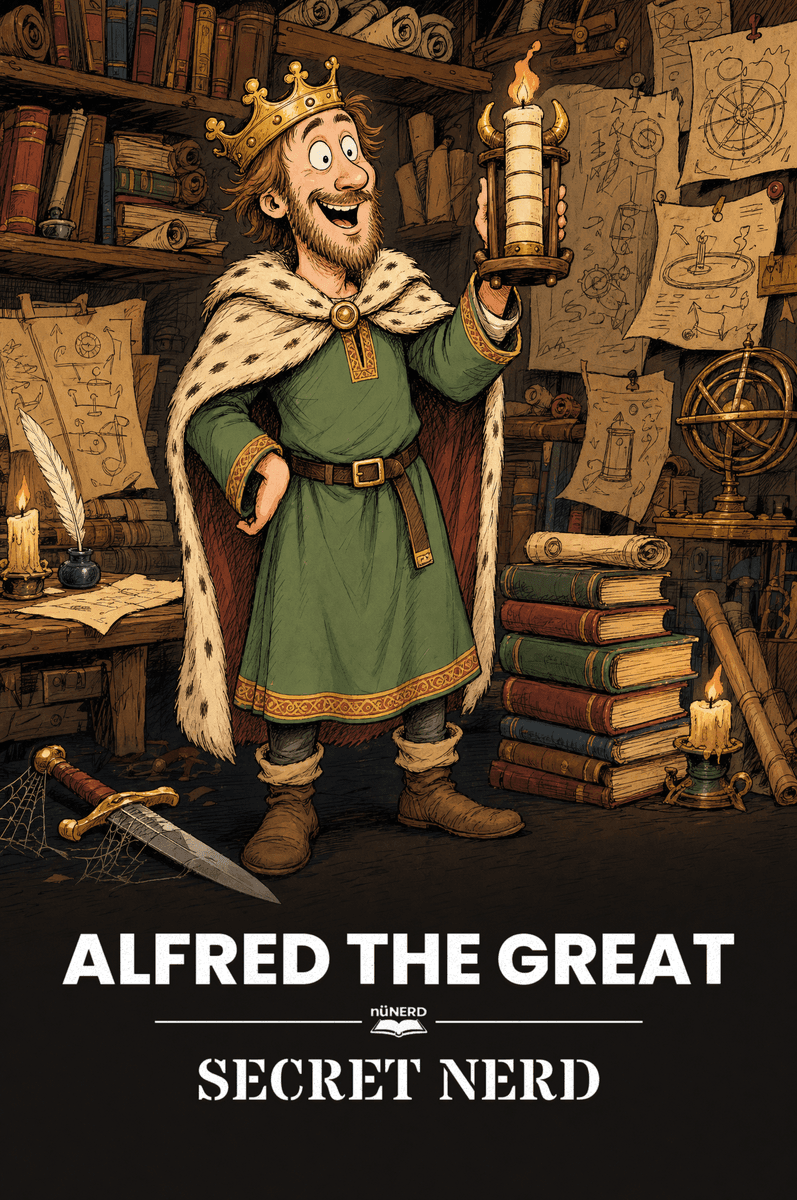
Cover of Alfred the Great: Secret Nerd, for ages 9–12

Ages 9–12 · Secret Nerd book · They read it alone

Alfred the Great: Secret Nerd

Everyone knows Alfred the Great: the warrior, the sword, the Vikings, the statue. Almost nobody knows the truth he wished we remembered. He built a clock out of candles and taught himself a language in middle age to get books to his people. So: was he great because he was a warrior? Read it, and let your kid decide.

80 pages · about 7,300 words · 25 black-and-white cartoons

Good to know
Alfred talks straight to the reader in an invented first-person voice, meant to be funny, and skips the war story on purpose. Along the way Boethius writes a book in a prison cell while he waits to be executed, and a law sets a price for a lost thumb or finger.
Also inside
The Old English word for a fort, burh, lives on in place names from Edinburgh to London, once Lundenburh.
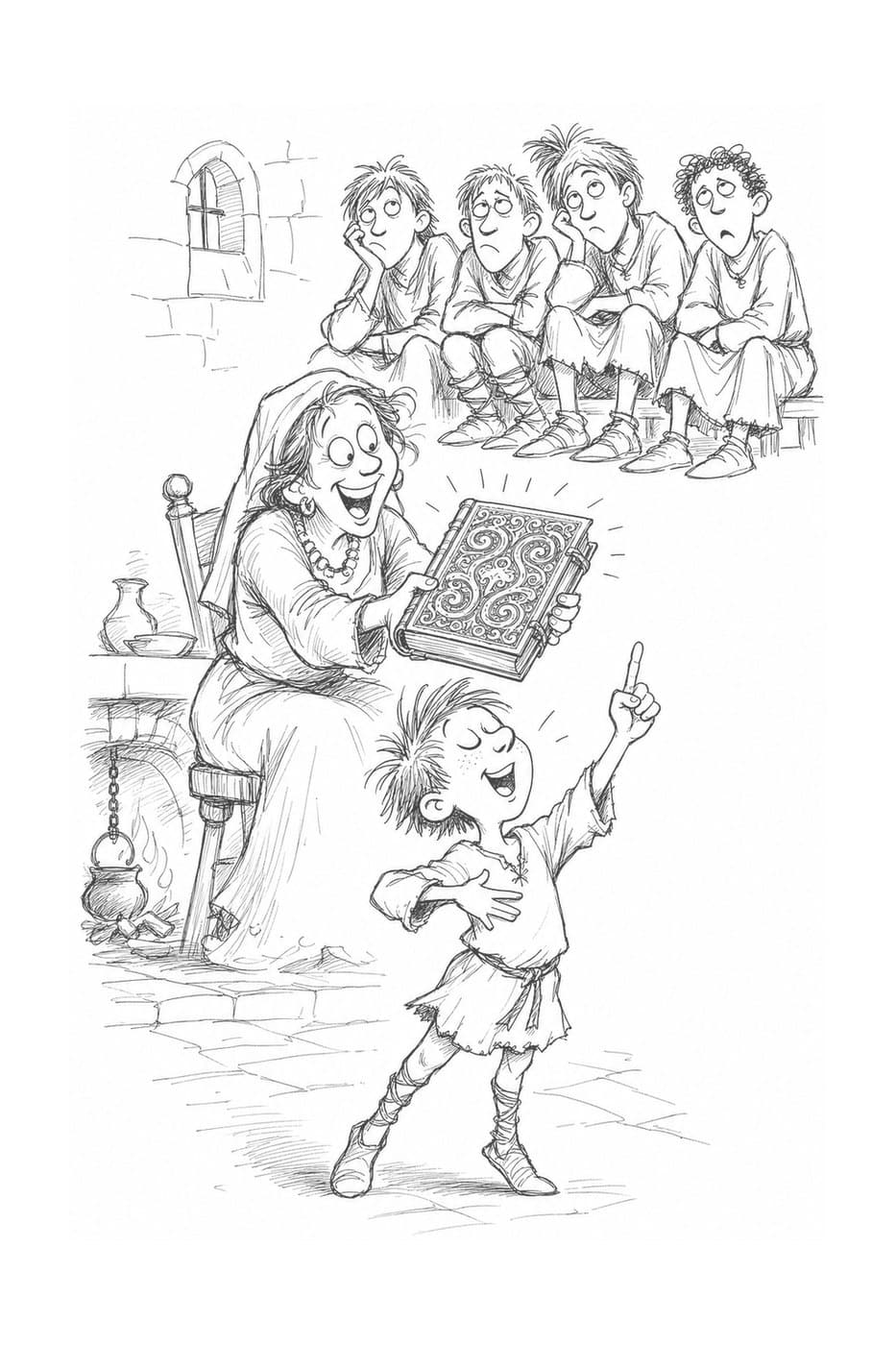
Young Alfred points in the air as he recites to his mother, who holds up a decorated book while four older boys sit bored on a bench behind, in black-and-white cartoon
Then I stood in front of my mother and recited the whole thing, from start to finish, without a single mistake. The book was mine.
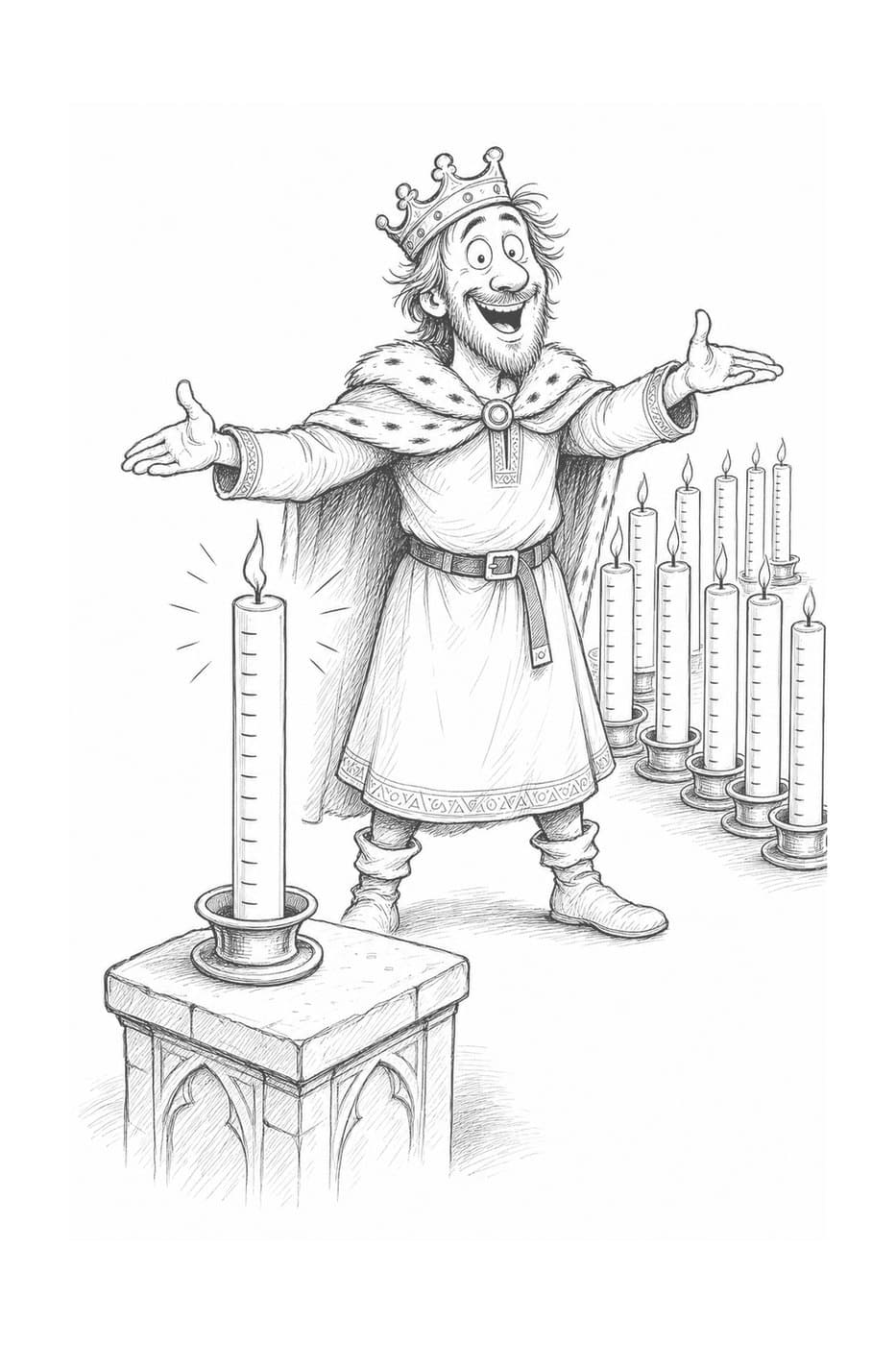
Alfred, in a crown, grins with his arms spread wide beside a tall marked candle on a stand and a row of identical candles, in black-and-white cartoon
Here is what I did. I had candles made, and the important part was that every single candle was exactly the same.
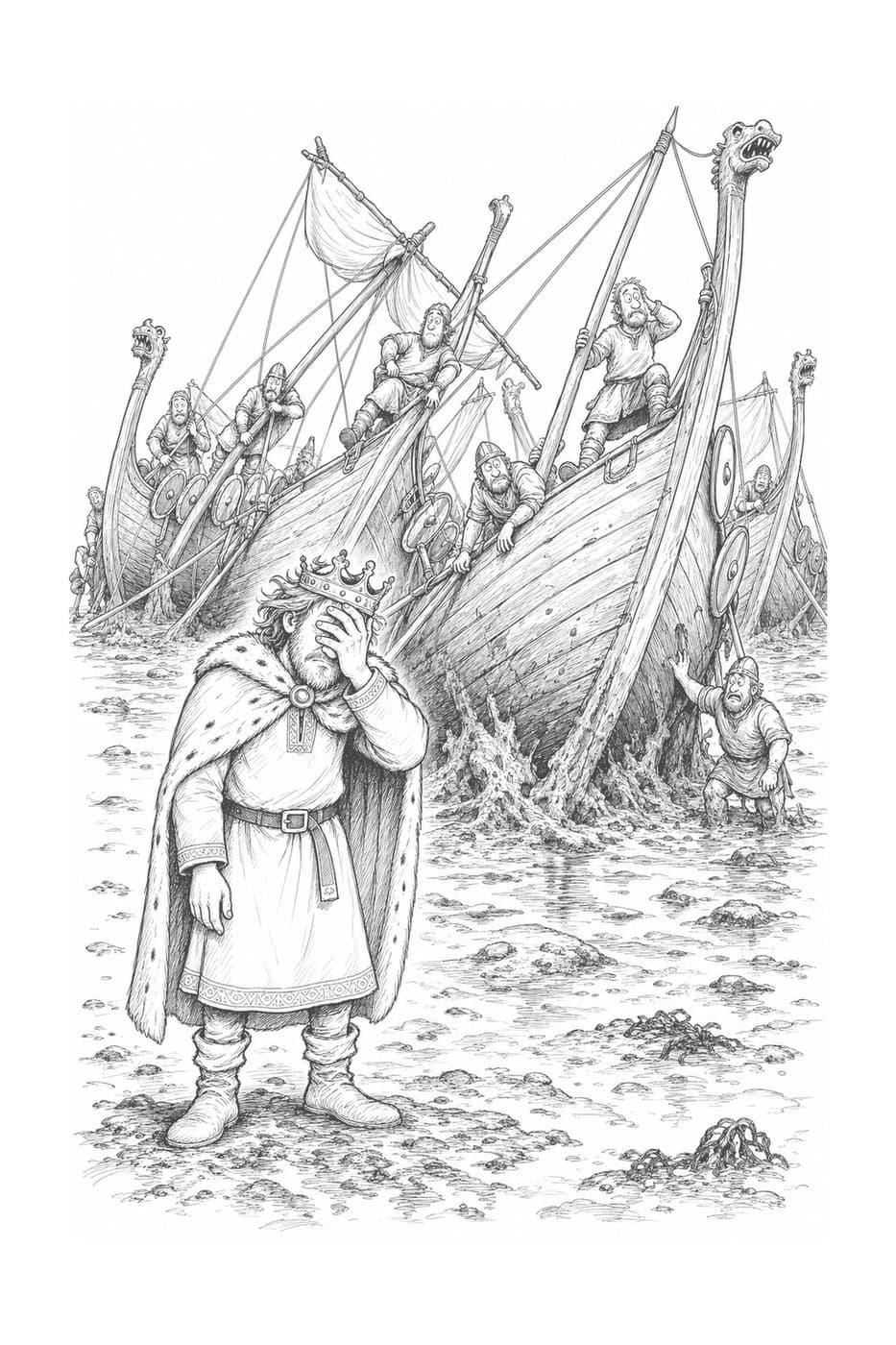
Alfred stands in the mud with a hand over his face in front of tall ships stuck fast on the shore, in black-and-white cartoon
Were they perfect? I will be honest with you, because a real nerd admits when an experiment flops. They were not perfect.

The original

The real Alfred the Great

  • King of Wessex, 871–899
  • Born around 849
  • Asser's Life written in 893

Alfred became king in the middle of a Viking war, and under his grandchildren his kingdom grew into England. Most of what we know comes from Asser's Life of King Alfred and the Anglo-Saxon Chronicle.

When you want more