May 13, 2026
Why We Made Marcus Aurelius for Kids (at Every Reading Level)
Yes, you can teach Stoicism to children, and Marcus Aurelius is the best way in. Stoicism is not abstract old-man philosophy; it is a set of practical tools for handling the unfair thing, the anger that pulls like a string, and the problem that looks enormous at bedtime. Marcus was a Roman emperor who kept a private notebook, the Meditations, in which he talked himself into being a little better the next day, and that habit (look at your day honestly, let go of what you cannot control, try again tomorrow) is something a young child can actually do. We made Marcus Aurelius for kids because the practice behind his book scales all the way down to a toddler, and we built it at every reading level, from a bedtime picture book to a chapter book a ten-year-old can read alone.
Is Marcus Aurelius appropriate for children?
Yes, with the right version. The Meditations itself is a grown-up's private journal, and Marcus lived through hard things, a plague that swept the empire and a decade-long war on the frontier. A good children's edition does not hand a five-year-old the raw text or dwell on the grimness. It pulls out the part a child can use: the nightly habit of one honest look at the day, and a few real tools for getting through a hard morning. The youngest level is simply a gentle bedtime ritual, think about your day, then try again tomorrow. Older readers get more of the man and his world, including the plague and the war, handled with weight rather than shock. There is nothing here a parent needs to screen out. The hard parts are exactly what make the practice worth having.
Every topic, its own book at each reading level
History, philosophy, and classic literature for kids ages 0–14, never a leveled-down rewrite.
What age can you start teaching Stoicism?
Most people meet Stoicism as adults, if at all, and the Meditations usually waits until college. But the core idea, you cannot control what happens, only how you respond, lands much earlier when it is told for a child's age. A two-year-old can meet the shape of it at bedtime: a little book, a quiet look back, and tomorrow is new. A five-year-old can use the emperor's real tools, getting ready for a hard day, holding still when anger pulls, shrinking a giant problem. A nine-year-old can meet the man himself and start asking why his private notebook outlived his empire. So the honest answer to "what age to teach Stoicism" is "younger than you would guess," as long as the book is matched to the child. Our Marcus Aurelius editions run from ages 0 to 10, so a household can grow into the idea together.
How do you teach kids Stoicism without lecturing?
You give them the practice, not a sermon. The whole genius of the Meditations is that Marcus was not preaching to anyone; he was working on himself, out loud, on paper. That is the model: name the thing you can control and the thing you cannot, do one honest look back at the day, and let tomorrow be a clean start. The youngest book turns that into a bedtime question a toddler can answer. The picture book hands a young child three concrete tools to reach for in the moment. None of it asks a kid to memorize a definition of Stoicism. It asks them to try the habit, which is exactly how Marcus learned it himself.
Why does the Meditations still matter?
Because it is one of the most honest books ever written, and almost by accident. Marcus Aurelius was the last of Rome's "Five Good Emperors," the most powerful man alive, and he wrote the Meditations only for himself, in Greek, never meaning a word of it to be read. That is why it does not brag or instruct; it doubts, scolds, and encourages its own author. He wrote much of it on campaign, through plague and war, and two thousand years later it is still in print and still read by people in hard spots, because the practice still works. When a child grows up with that habit, they have a tool the rest of us spend good money trying to learn as adults.
That is why we made Marcus Aurelius for kids at every reading level, rather than one book leveled up and down. You can see all the editions, plus the free text, audiobook, and background reading, on the Marcus Aurelius page.
The books
Marcus Aurelius on Amazon
Frequently asked questions
What format and length is the Marcus Aurelius series, and how many books are there?
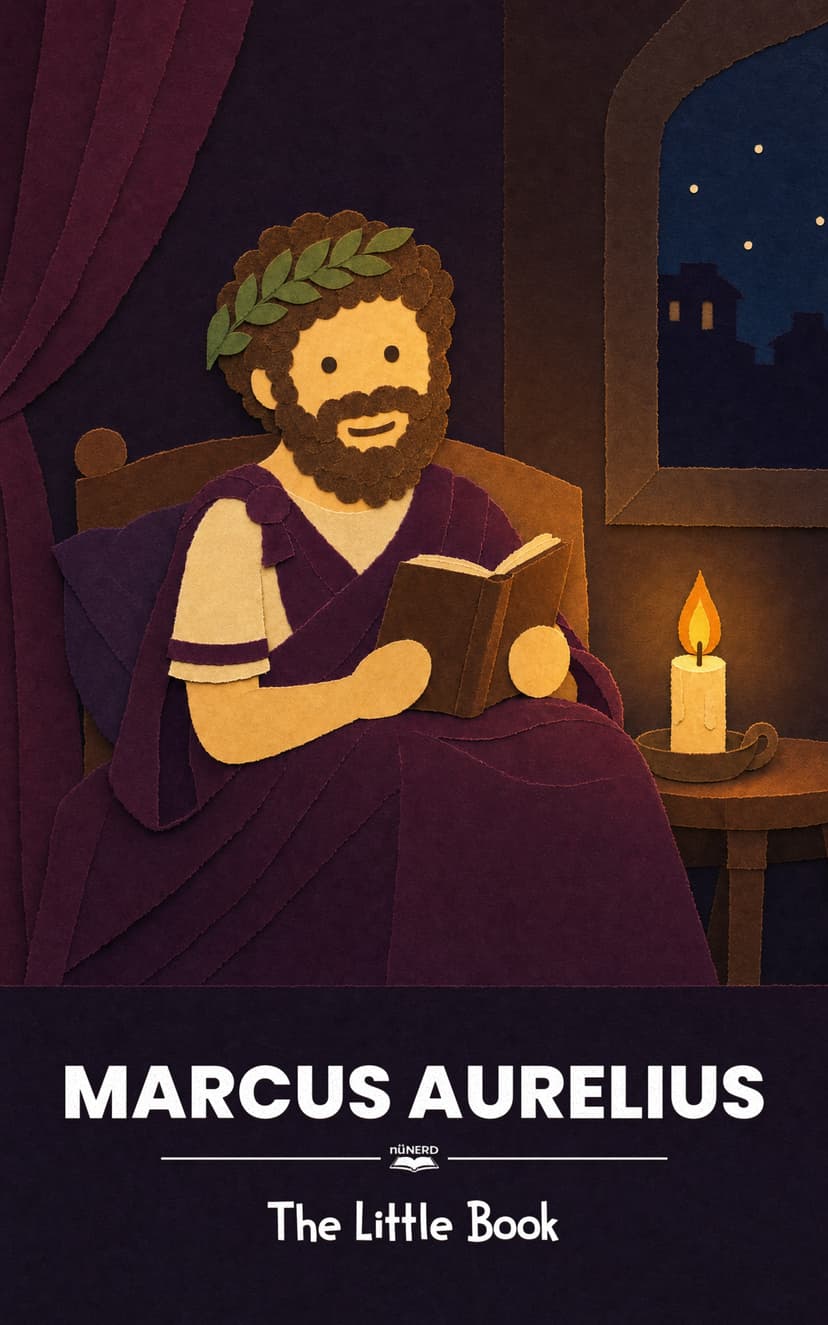
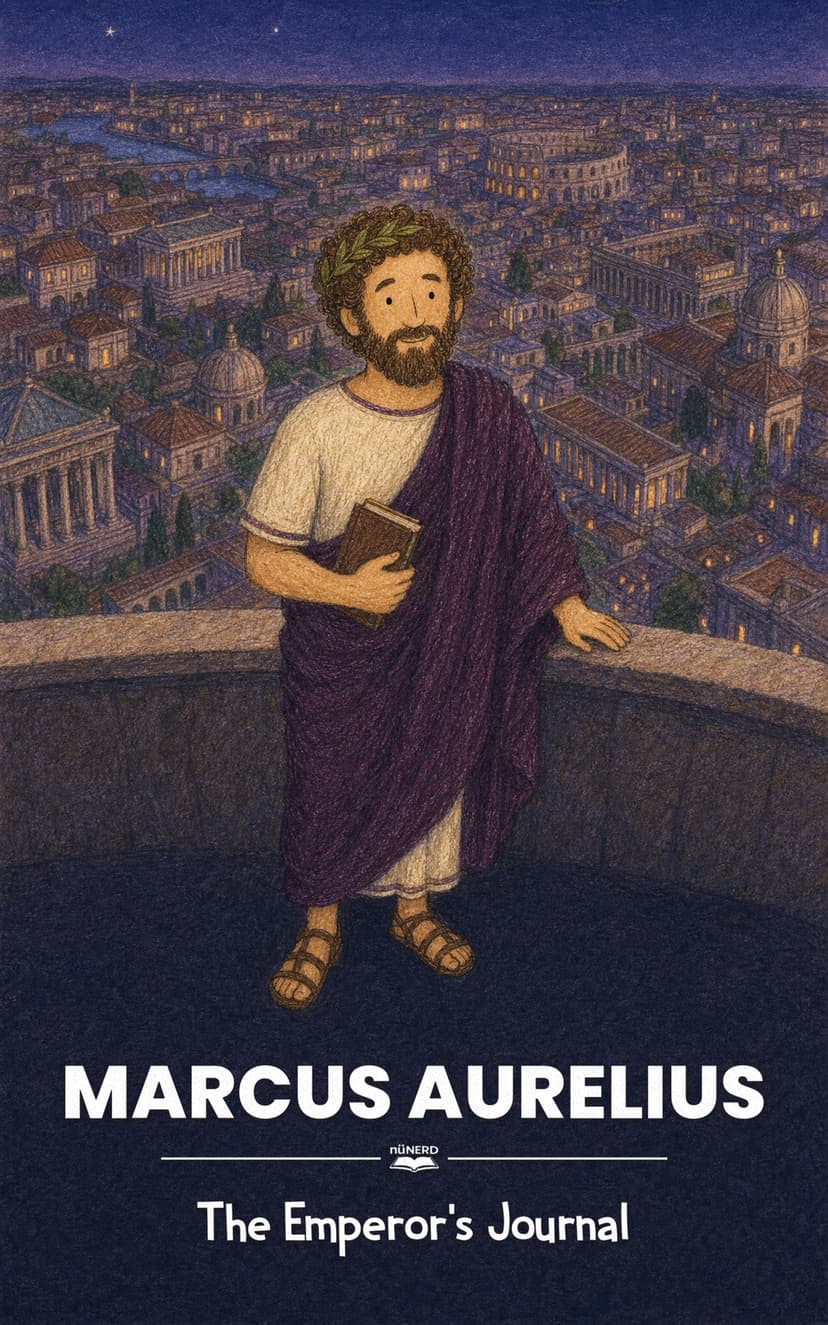
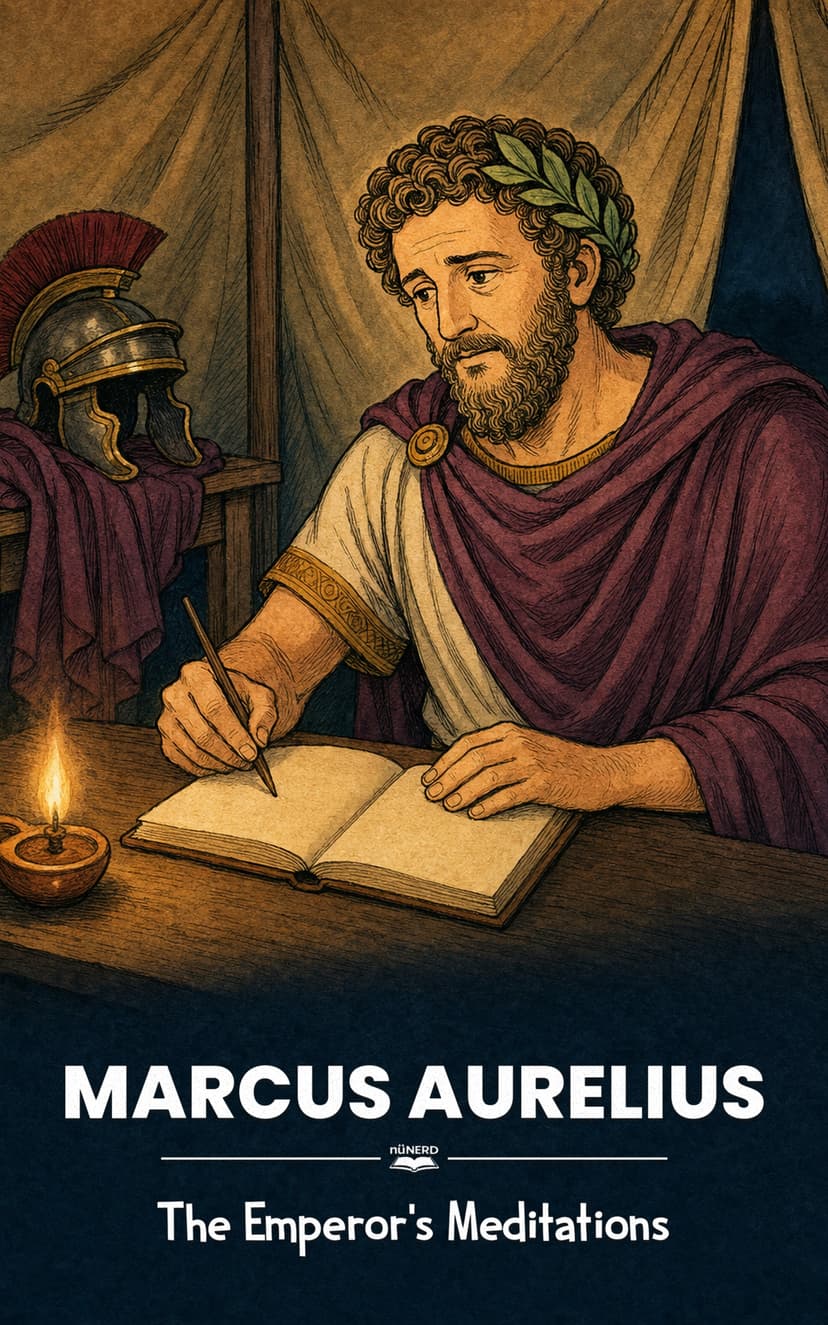
There are three books, each matched to a reading level. The ages 0-4 book, The Little Book, is a short bedtime read-aloud. The ages 3-7 book, The Emperor's Journal, is a picture book. The ages 6-10 book, The Emperor's Meditations, is a chapter book a confident reader can take on alone. You can buy them separately or grow through all three.
Which Marcus Aurelius book makes the best gift, and what age should I start with?
Match the book to the child. For a baby or toddler, start with the ages 0-4 The Little Book as a bedtime gift. For a preschooler or early-elementary kid, the ages 3-7 The Emperor's Journal gives them tools they can use that day. For a strong independent reader, the ages 6-10 The Emperor's Meditations is the keepsake. For a household with kids of different ages, the set lets everyone meet Marcus at once.
How do I use these books at bedtime or in a daily routine?
The series is built around a nightly habit, so it fits bedtime naturally. With the youngest book, do the look-back it models, think about your day, and let tomorrow be a clean start. With the ages 3-7 journal, pick one tool to try the next morning, like getting ready for a hard day or holding still when anger pulls. Reading one short entry and talking it over works better than a long sitting.
Can I read the original Meditations for free, and does this fit a homeschool or Charlotte Mason approach?
Yes to both. The full Meditations is public domain and free as text on Project Gutenberg and Standard Ebooks, and as a free LibriVox audiobook, all linked from the Marcus Aurelius page. The short, self-contained entries suit a Charlotte Mason style of short lessons and narration, and the leveled books let a homeschool family work the same figure across multiple ages at once.
Free printable pack
Read Plutarch with your kids
The free Plutarch family pack gives you the 25-pair Parallel Lives wall map, a parent’s guide to starting Plutarch years before a curriculum does, and a four-level sampler of Alexander & Caesar. A printable PDF you can use tonight.
Get the free pack