Philosophy · Ages 0–10

Marcus Aurelius

On campaign on the Danube, far from Rome, Marcus Aurelius kept writing reminders to himself in Greek, the language of philosophers, instead of the Latin he ruled in. His best lines are short and plain enough to share with a small child.

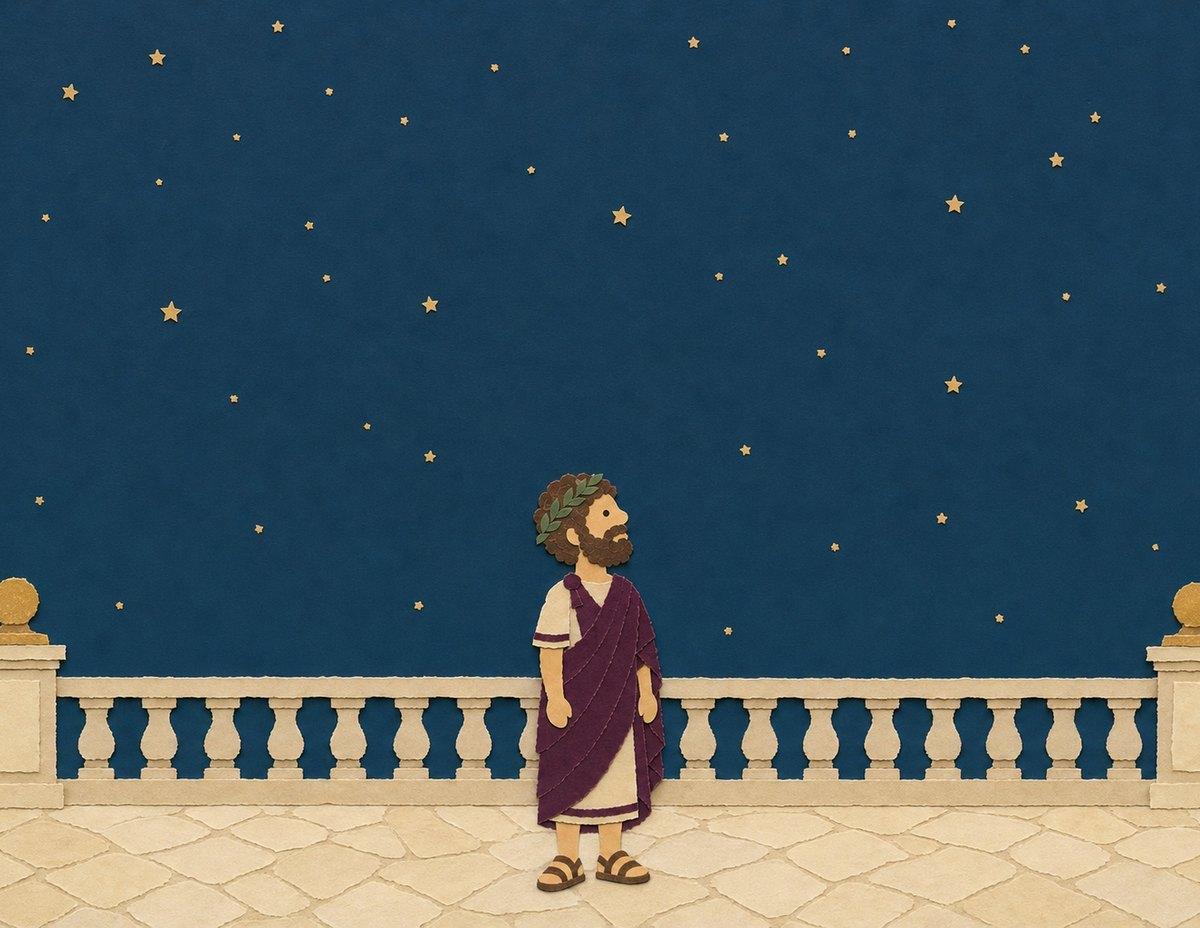
Marcus, very small, stands at a stone balustrade under a huge night sky full of stars, in cut-paper collage

A page from Marcus Aurelius: The Little Book

Why we love it

A warm blanket.

Book 5 of the Meditations opens with the emperor arguing himself out of bed, asking whether he was made to lie under the covers and keep warm. Our toddler book puts him in that bed.

Toddler book, ages 0–4 ↓

His mother.

Our picture book gives Marcus's mother a page of her own. In the thank-you list that opens the Meditations, he says he learned from her to be generous and to live simply, far from the habits of the rich.

Picture book, ages 3–7 ↓

Gold cups for sale.

In years of war and plague, Marcus sold off his own palace treasures, gold cups and silk robes among them, to refill the treasury. Our chapter book lists the paintings and fancy chairs that went too.

Chapter book, ages 6–10 ↓

Which book for your child?

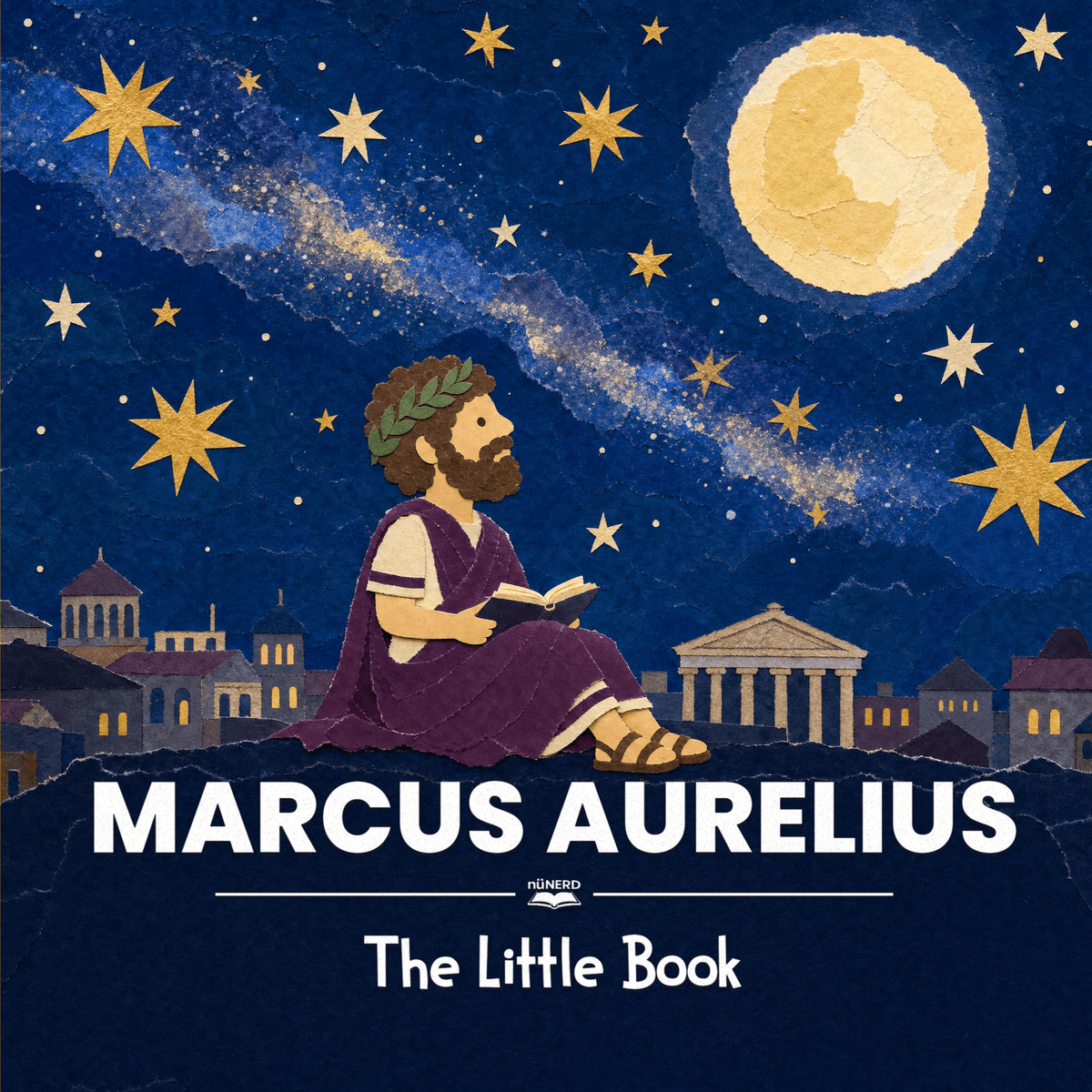
Cover of Marcus Aurelius: The Little Book, for ages 0–4

Ages 0–4 · Toddler book · Read to them

Marcus Aurelius: The Little Book

Marcus Aurelius, emperor of Rome, kept a little book of notes to himself, and in it he looked honestly at his days. This is the gentlest first taste of that habit, a bedtime book that shows the very youngest reader how to get up when it is hard, let the small things go, and try again tomorrow.

24 pages · about 380 words · cut-paper collage

Good to know
Under the stars, Marcus thinks about the emperors before him who are already forgotten, and knows he will be too; the next page says that's okay. Everything else is small, everyday trouble, told in short lines for a slow bedtime read.
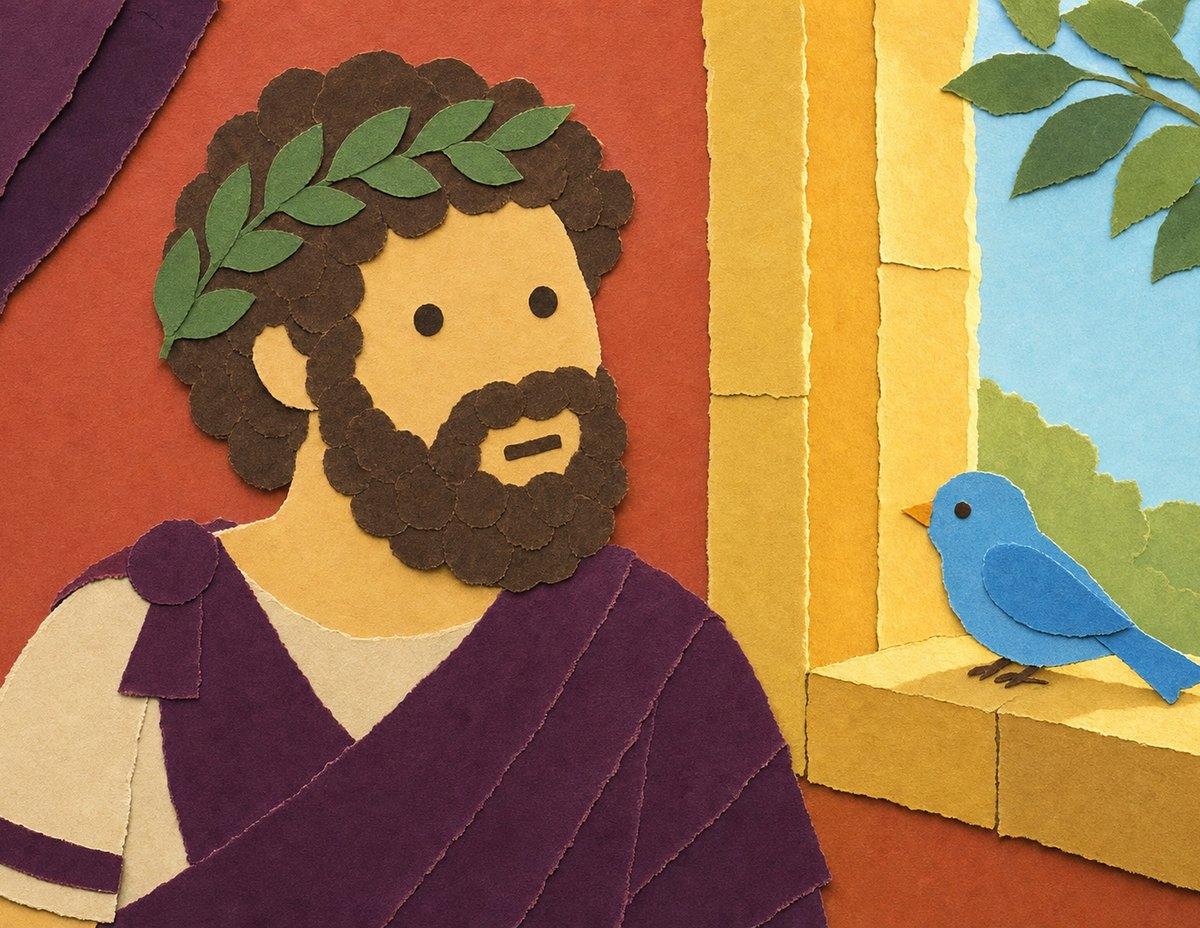
Marcus, in a crown of leaves, looks away toward a small bird perched on the window ledge, in cut-paper collage
His eyes drift to the window. A bird lands on the ledge. Oh, to be that bird!
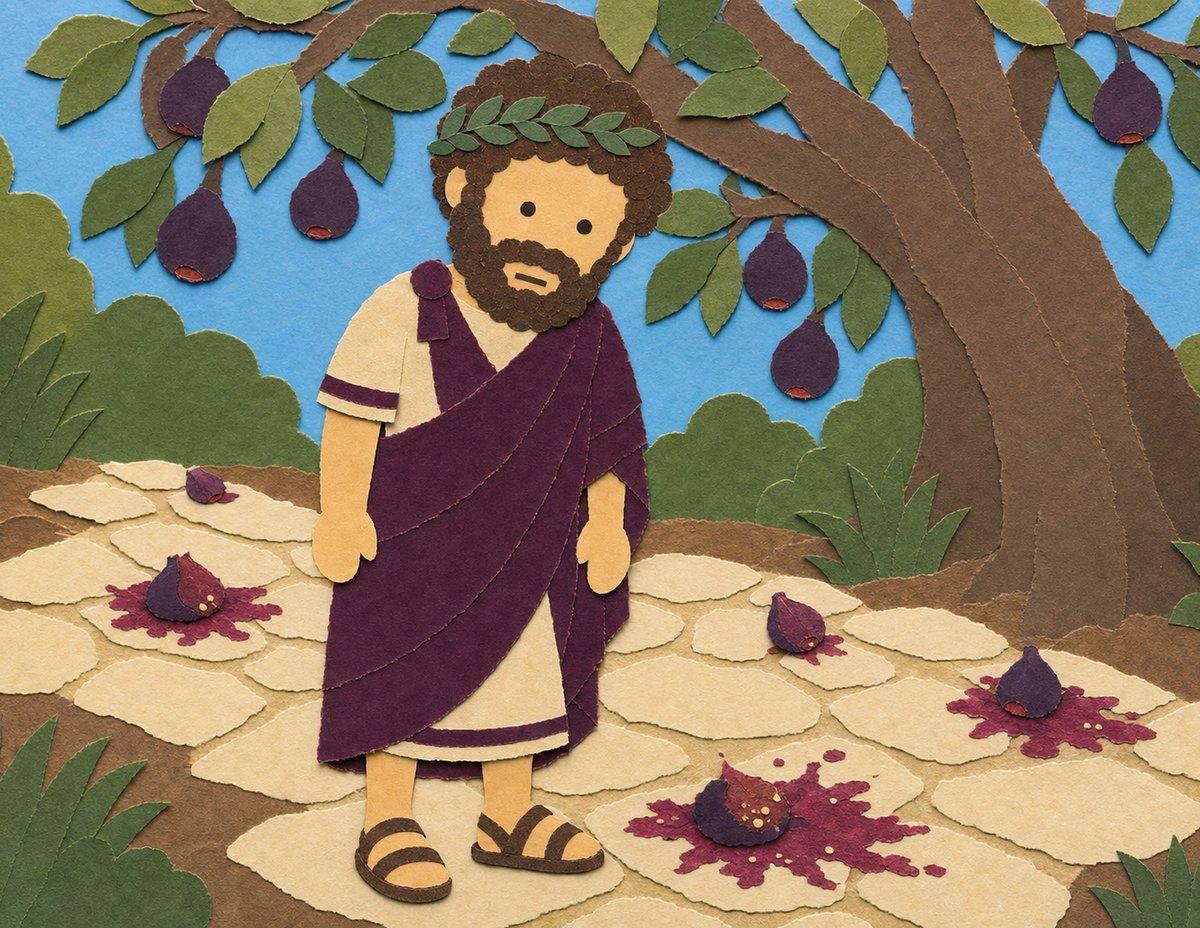
Marcus walks on past a big fig tree, with squashed figs on the stone path behind him, in cut-paper collage
It makes a mess! Marcus frowns. But then he thinks: a fig tree makes figs. That's just what it does.
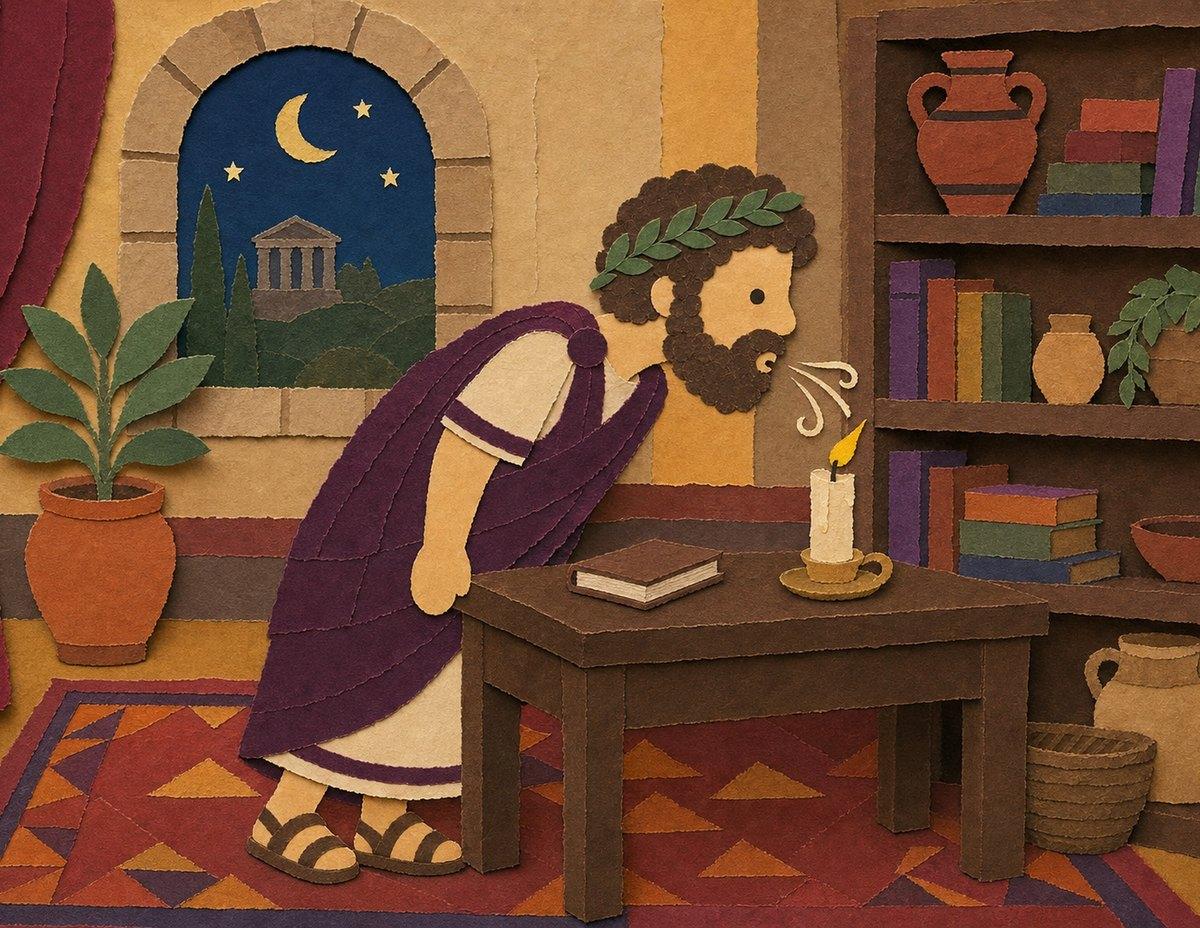
Marcus leans over his desk to blow out a candle, with shelves behind him and a moon in the window, in cut-paper collage
He closes his little book. He blows out the candle. The day is done.
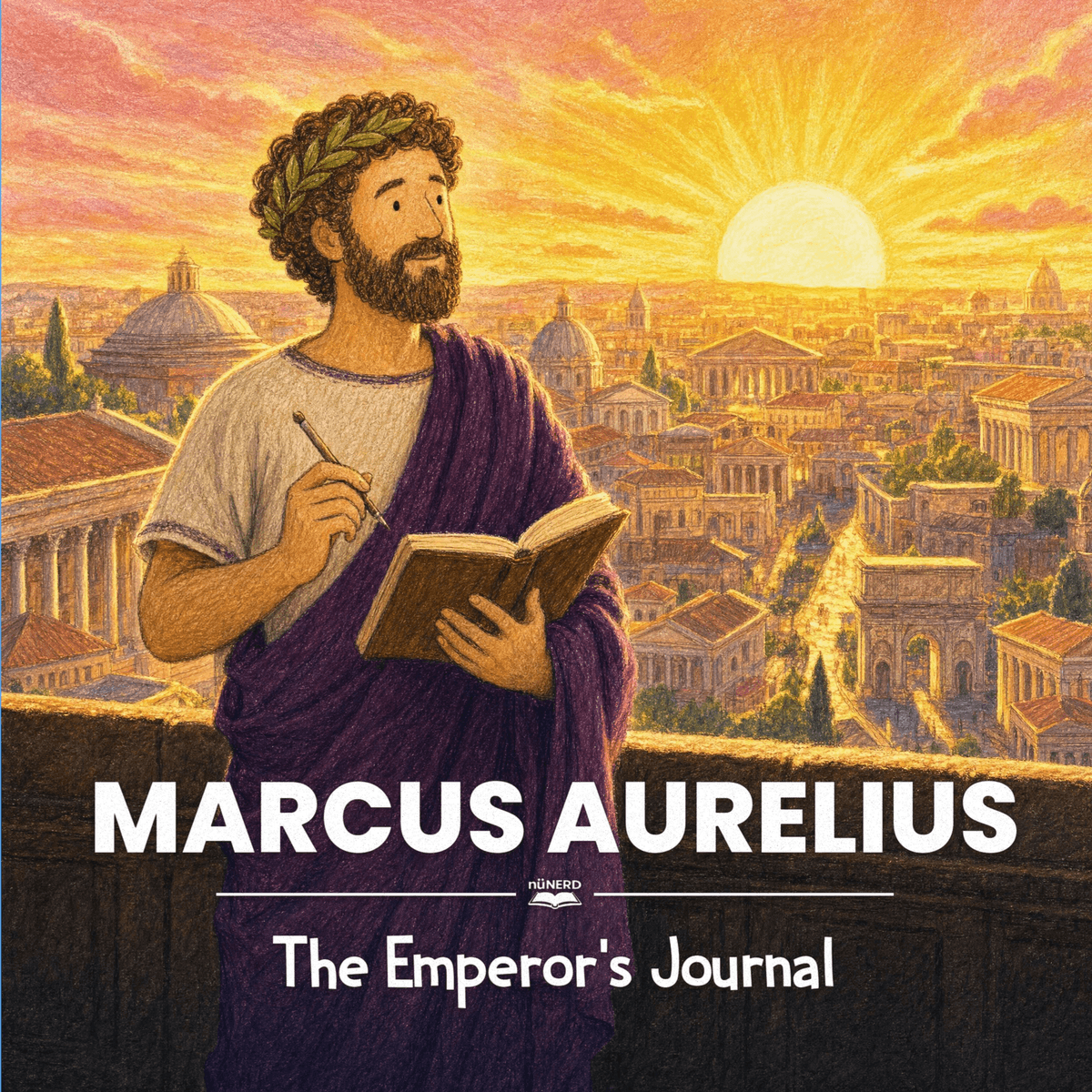
Cover of Marcus Aurelius: The Emperor's Journal, for ages 3–7

Ages 3–7 · Picture book · Read together

Marcus Aurelius: The Emperor's Journal

Marcus Aurelius ran the whole Roman Empire, and still made time to write in a small book about what he was still trying to get right. His journal holds real tools a young child can use tonight: how to get ready for a hard day, how to hold still when anger pulls, and how to make a giant problem feel small again.

36 pages · about 690 words · soft crayon

Good to know
Someone lies to Marcus, he makes a decision because of it, and when he finds out, he gets angry. Nobody is punished, and the rest of the book is quieter: a river, a view over the city, and the grandfather, mother, and teacher he learned from.
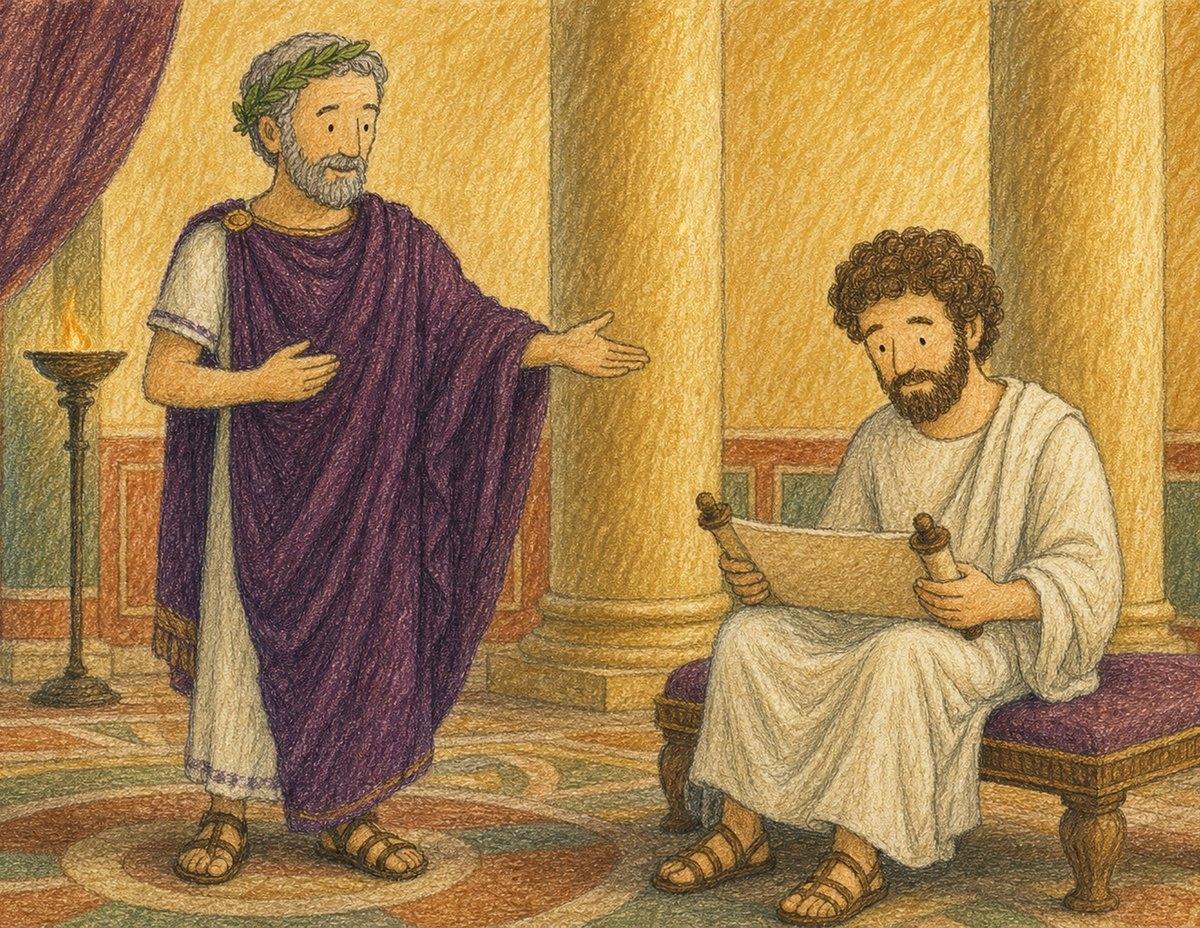
An older man in a purple robe gestures toward Marcus, who sits reading a scroll between tall columns, in soft crayon
An older emperor named Antoninus (an-toh-NYE-nus) chose him. The quietest person in the palace. Marcus would rather read than rule.
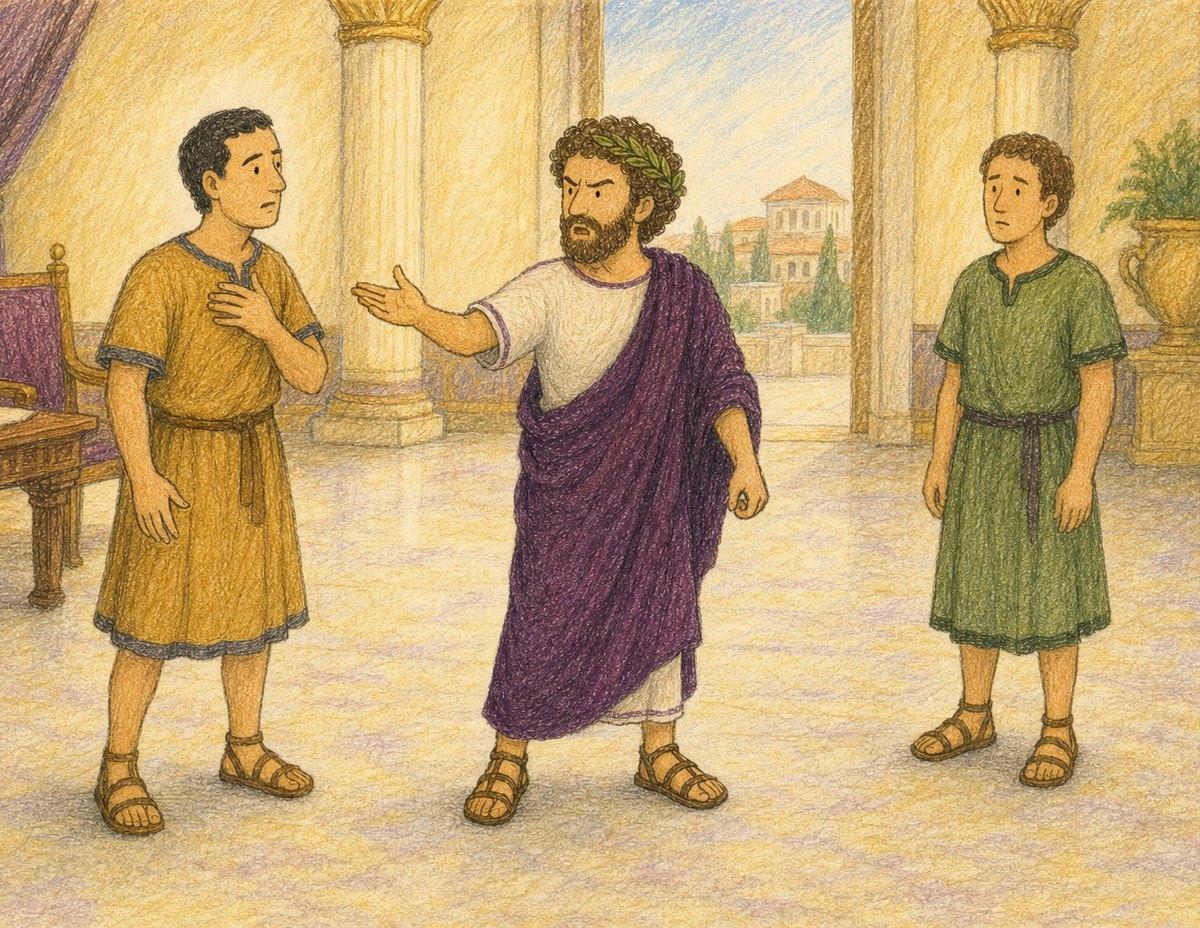
Marcus, in a purple robe, gestures as he stands between two men in tunics in a hall with columns, in soft crayon
He says something he does not mean. The room goes very quiet.
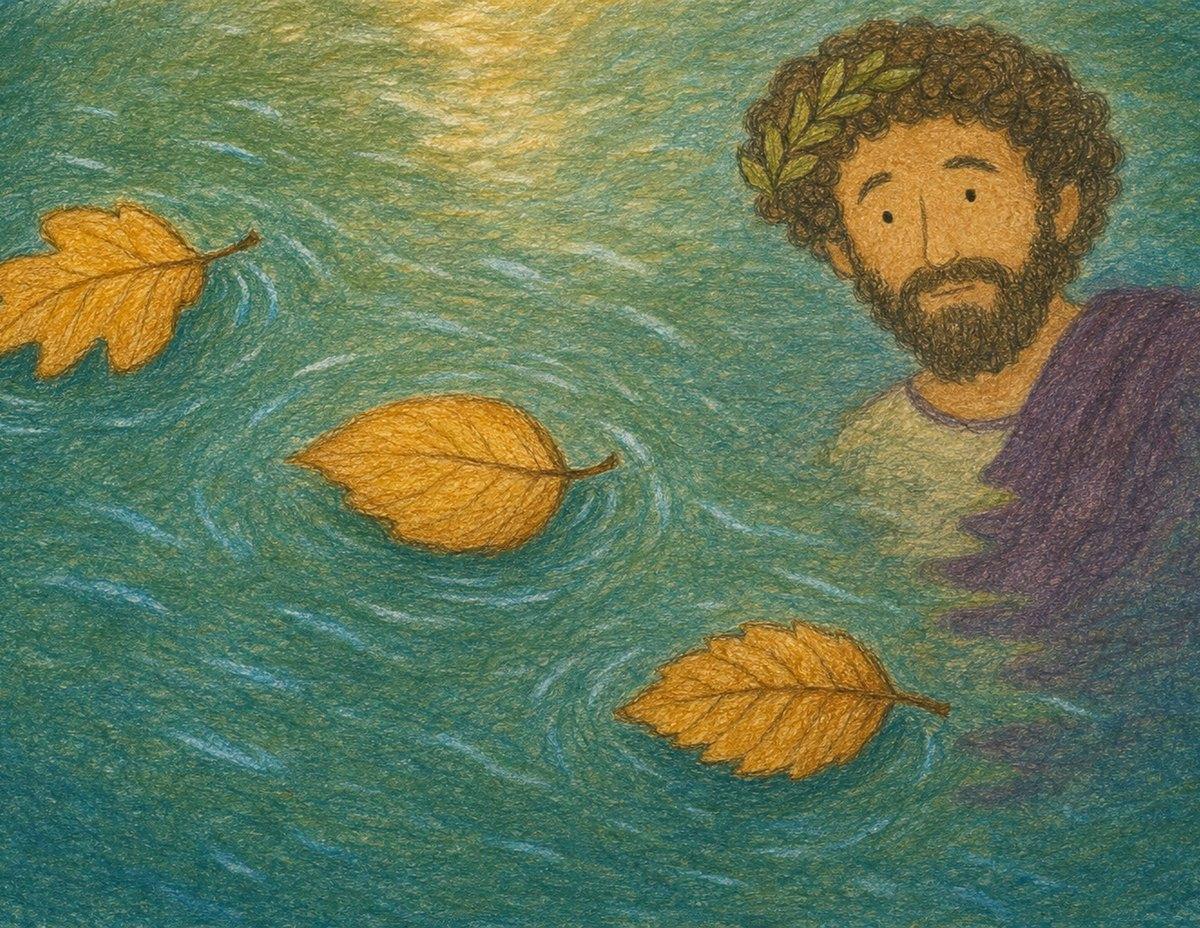
Leaves float on rippling water while Marcus, at the edge of the picture, watches them go, in soft crayon
The argument. The mistake. The promise someone broke. All of them floating past, like leaves on the water.
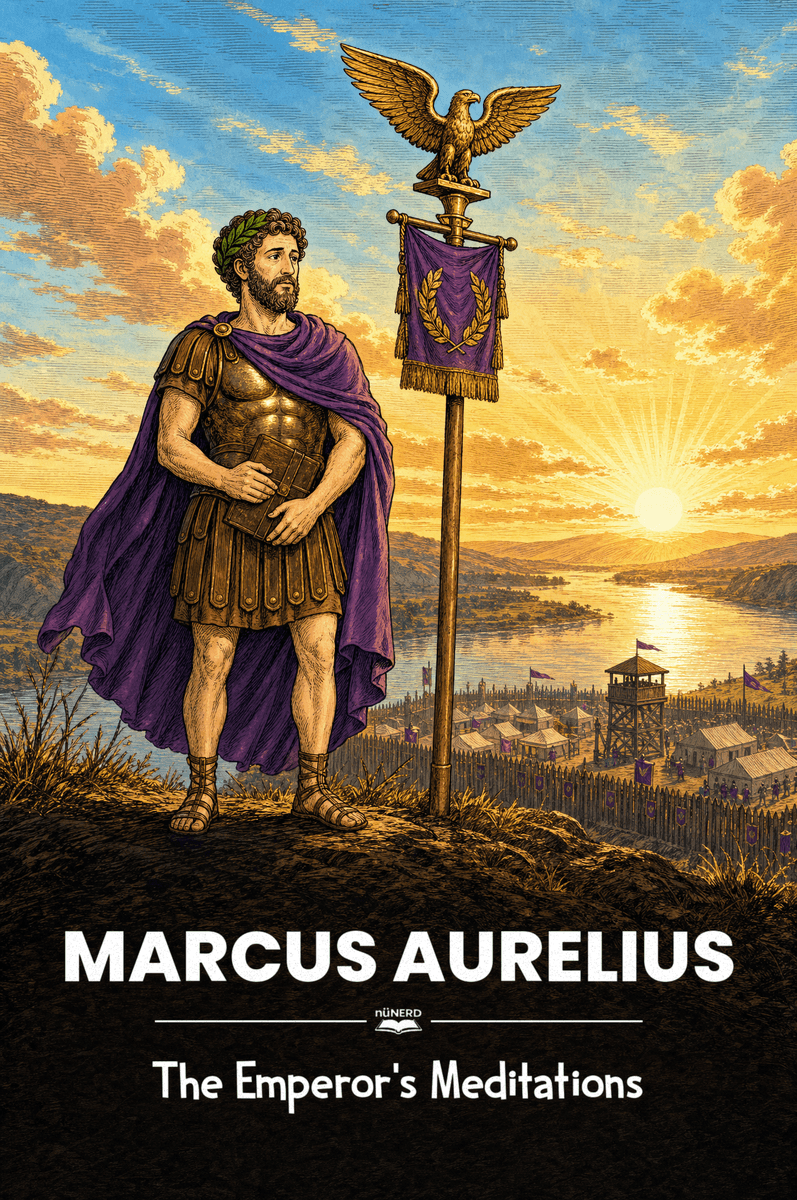
Cover of Marcus Aurelius: The Emperor's Meditations, for ages 6–10

Ages 6–10 · Chapter book · They start reading alone

Marcus Aurelius: The Emperor's Meditations

Marcus Aurelius kept a secret journal, and in it he did not brag or give orders. He scolded himself, doubted himself, and tried to talk himself into being a little better the next day. He wrote it through a plague, more than ten years of war, and a son he could not reach, and he never meant anyone to read a word of it. Our chapter book hands that practice to a child young enough to grow up with it: the anger, the stars, the mornings he did not want to get up.

80 pages · about 7,100 words · 22 black-and-white drawings

Good to know
The plague kills up to two thousand a day in Rome, soldiers die in the camps, most of Marcus's children die young, and Marcus himself most likely dies of the plague. Epictetus, the teacher whose words Marcus studied, is enslaved as a child and left lame, by his owner's cruelty or by illness. Marcus's son Commodus, who rules after him, kills people he distrusts before his own advisors have him killed. Seven short biographical chapters; no death is described in any detail.
Also inside
Pronunciations in the text for the hard Roman names, from Hadrian to Commodus, and a closing question for your child.
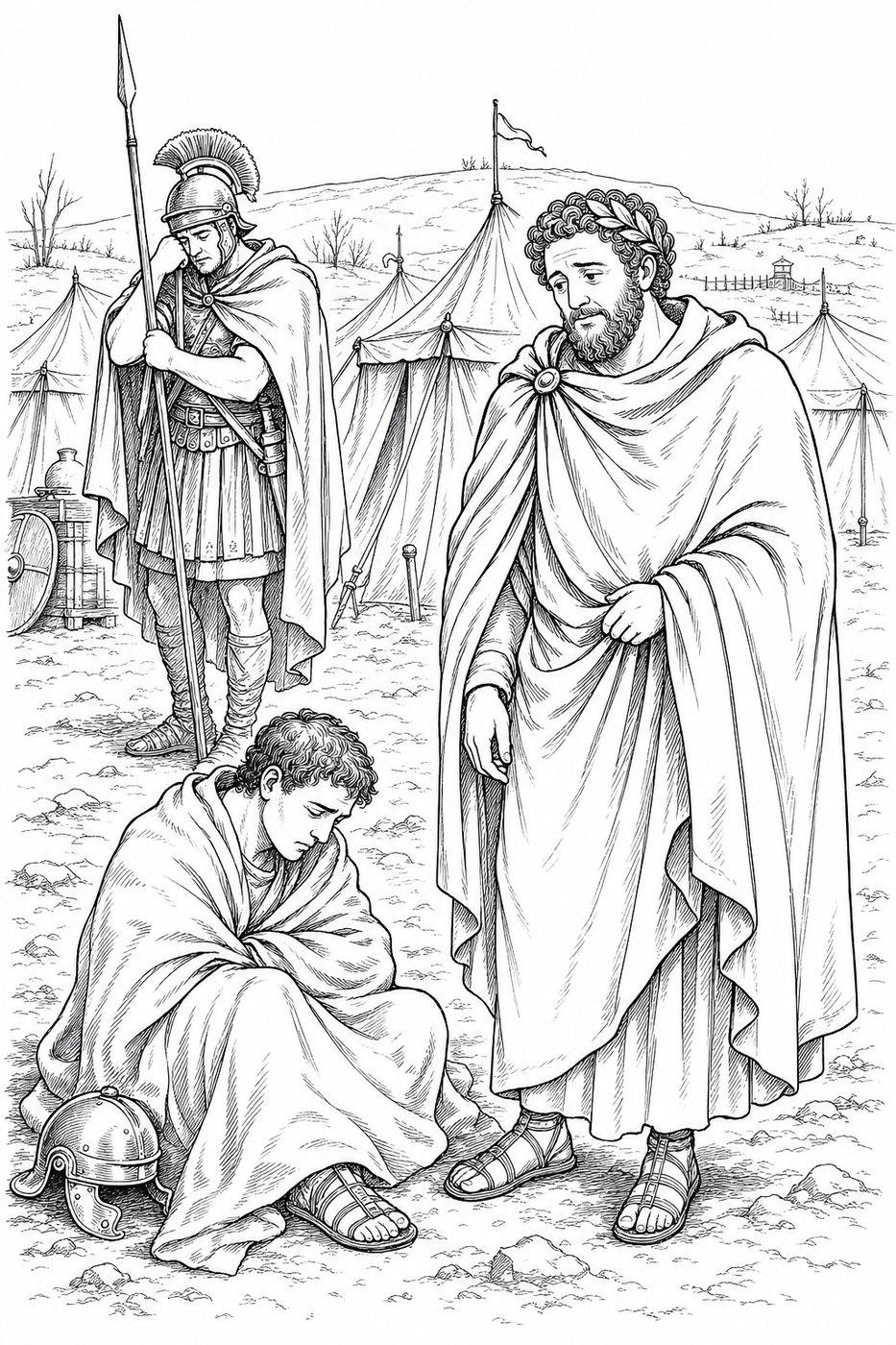
Marcus in a cloak stands in an army camp beside a soldier with a spear, while a man sits hunched on the ground, with tents behind, in black-and-white line art
Marcus slept in a tent. He ate plain food, the same food the soldiers ate.
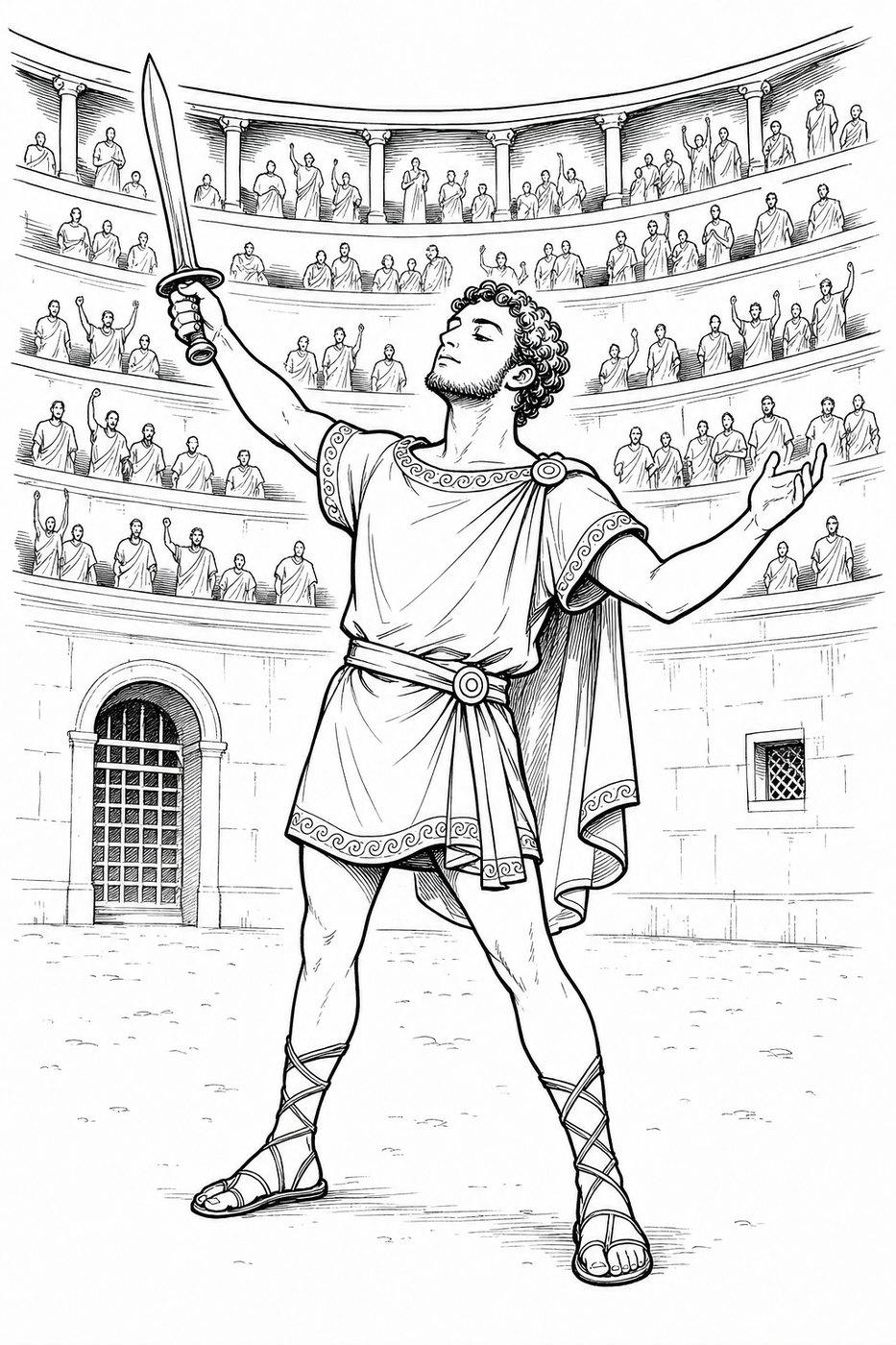
A young man in a short tunic raises a sword in an arena packed with spectators, in black-and-white line art
Commodus did not just want to watch. He wanted to fight. He wanted to stand in the arena, holding a sword, hearing the crowd roar his name.
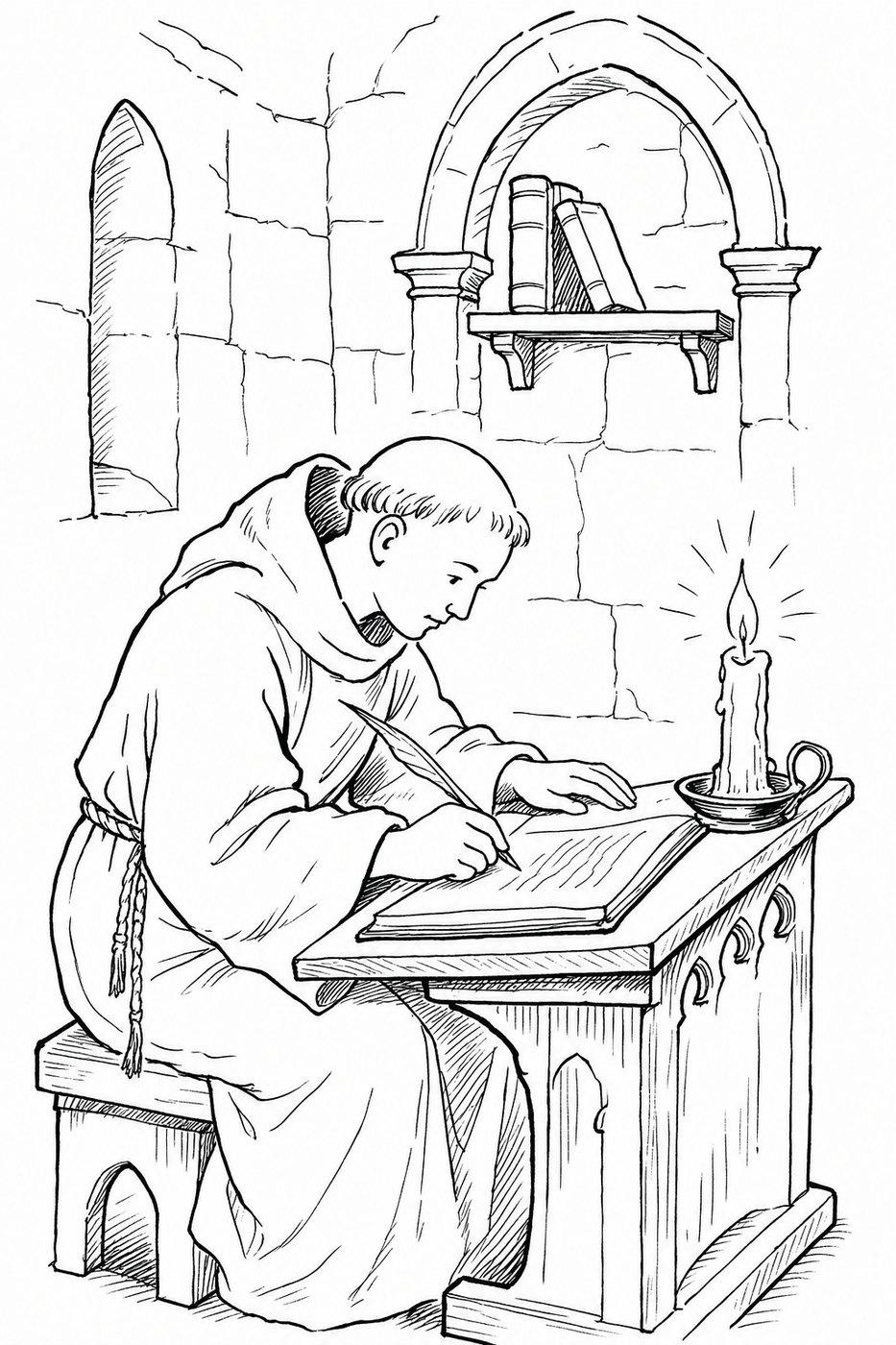
A monk writes at a slanted desk by a candle beneath an arched window, in black-and-white line art
Monks in quiet rooms copied the Greek text by candlelight. Letter by letter. Word by word. Page by page.

The original

The real Marcus Aurelius

  • Emperor, 161–180
  • Written in Greek
  • Twelve short books

The Meditations are notes Marcus wrote for himself in roughly his last decade. No one knows who kept them after his death, and they were first printed in the 1500s.

When you want more