May 21, 2026
Why We Made Stoicism for Kids (at Every Reading Level)
Yes, Stoicism is genuinely good for kids, as long as it is taught as a set of tools rather than a lecture. At its core Stoicism asks one question a child can actually use: what is up to me, and what is not? A toddler whose tower just fell and an emperor writing in his journal are facing the same problem, and the same answer helps both. We made Stoicism for children because the ideas are far more practical, and far more reachable, than the marble-bust reputation suggests, and we built it at every reading level, from a picture book a two-year-old can hear to a chapter book a ten-year-old can read alone.
Is Stoicism good for kids?
Yes, and in a few ways that matter early. Stoicism gives a child a place to put a big feeling and a next move to make, instead of just "calm down." The central idea, that you do not control what happens but you do control what you do next, is exactly the thing a young kid is wrestling with when a plan falls apart. It builds the muscle teachers call resilience without ever using the word. What it is not is "don't have feelings." Good Stoicism for children is about steering the feeling, not suppressing it, and our Stoicism books are built that way at every level.
Every topic, its own book at each reading level
History, philosophy, and classic literature for kids ages 0–14, never a leveled-down rewrite.
How do you teach Stoicism to a child?
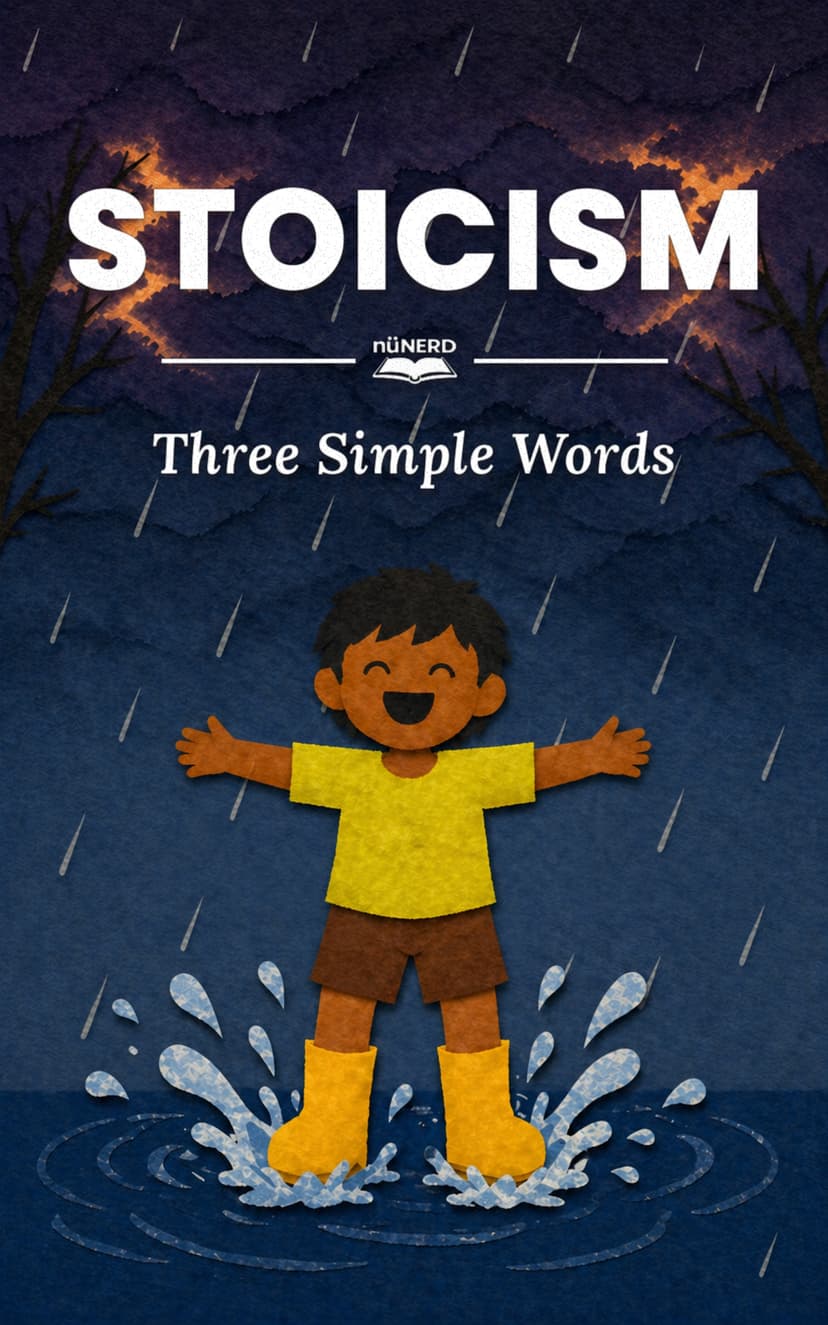
Mostly by showing, not telling. The advice from people who do this well is to think aloud: when something goes wrong in front of your kid, say the quiet part out loud. "I can't control the traffic. I can control whether I'm grouchy when we get there." Then give them the words to do it themselves. Our youngest book hands a toddler three of them, choose, now, try, tied to scenes they already live. The picture book names the four virtues. The chapter book shows real people using them under real pressure. A story does the teaching that a rule cannot.
What age can a child start learning Stoicism?
Earlier than most people guess. You do not need a child to understand the word "philosophy" to hand them its most useful habit. A two-year-old can practice "the tower fell, let's try again" long before they can spell Zeno. A five-year-old can name courage and notice it. A nine-year-old can follow the actual history and start arguing with it. So the honest answer to "what age is Stoicism for" is "the age your child is now," as long as the book is matched to them. Our Stoicism editions run from ages 0 to 10 so a whole household can meet it together.
What are the four Stoic virtues, in kid terms?
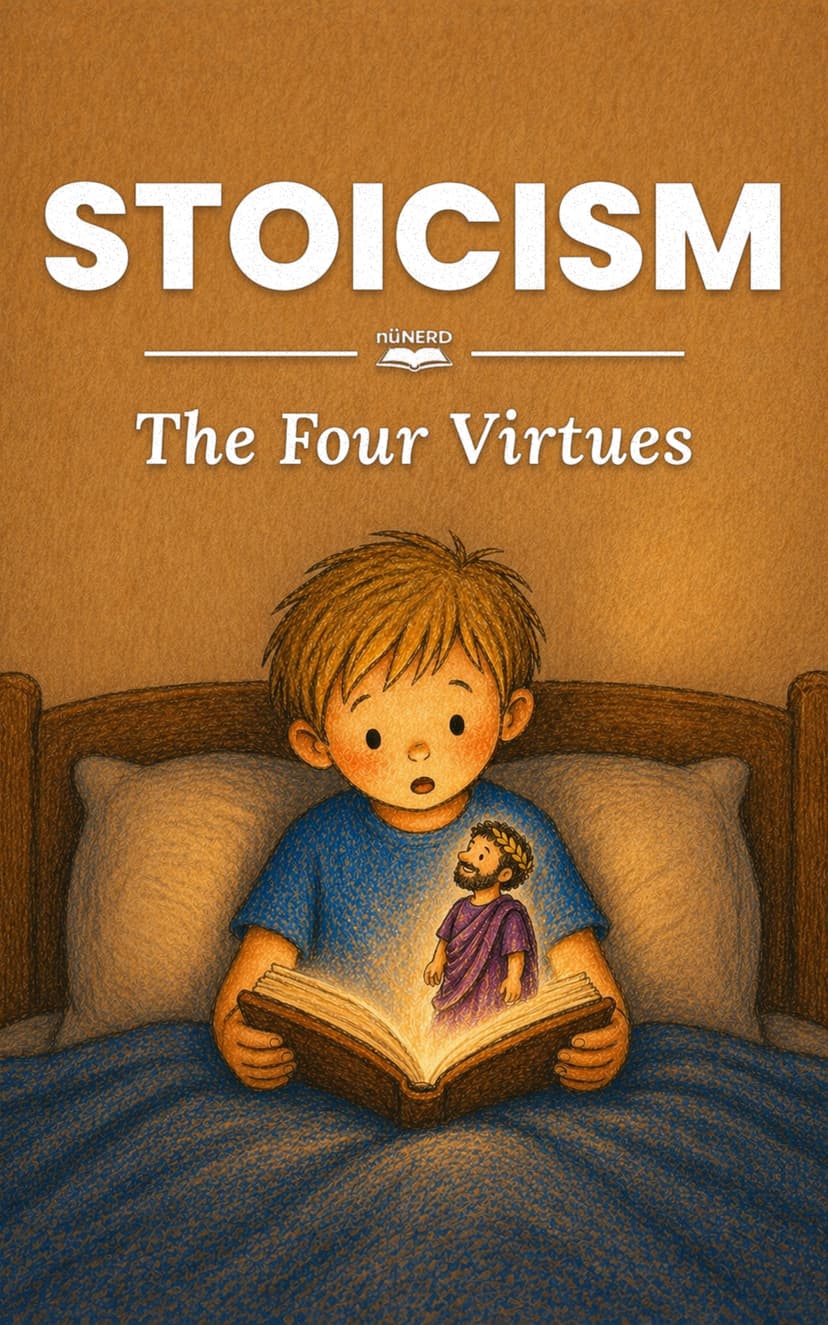
Wisdom, justice, courage, and moderation, and each one lands as something a child can do. Wisdom is the pause that figures out what actually matters here. Justice is the fairness only you can see in the moment. Courage is doing the hard thing across an empty space. Moderation is being bigger than the wave instead of getting swept up in it. Those are not abstractions when they are tied to a real scene, and tying them to scenes is the whole job of a good children's book. Pair them with the one big idea, what is up to me, and a kid has a working kit.
Where do I start with Stoicism for beginners?
Start with the one question and one short text. The question is "what can I control about this?" The text, for a grown-up, is Epictetus's Enchiridion or the Meditations of Marcus Aurelius, both free and both linked from our Stoicism page. For a child, start with the scene, not the source: the spilled cup, the lost game, the rained-out plan, and the quiet question that follows. That is exactly where our books begin, because that is where Stoicism is actually useful.
That is why we made Stoicism for kids at every reading level, rather than one book leveled up and down. You can see all the editions, plus the free texts, audio, and background, on the Stoicism page.
The books
Stoicism on Amazon
Frequently asked questions
How long are the Stoicism books, and what format do they come in?
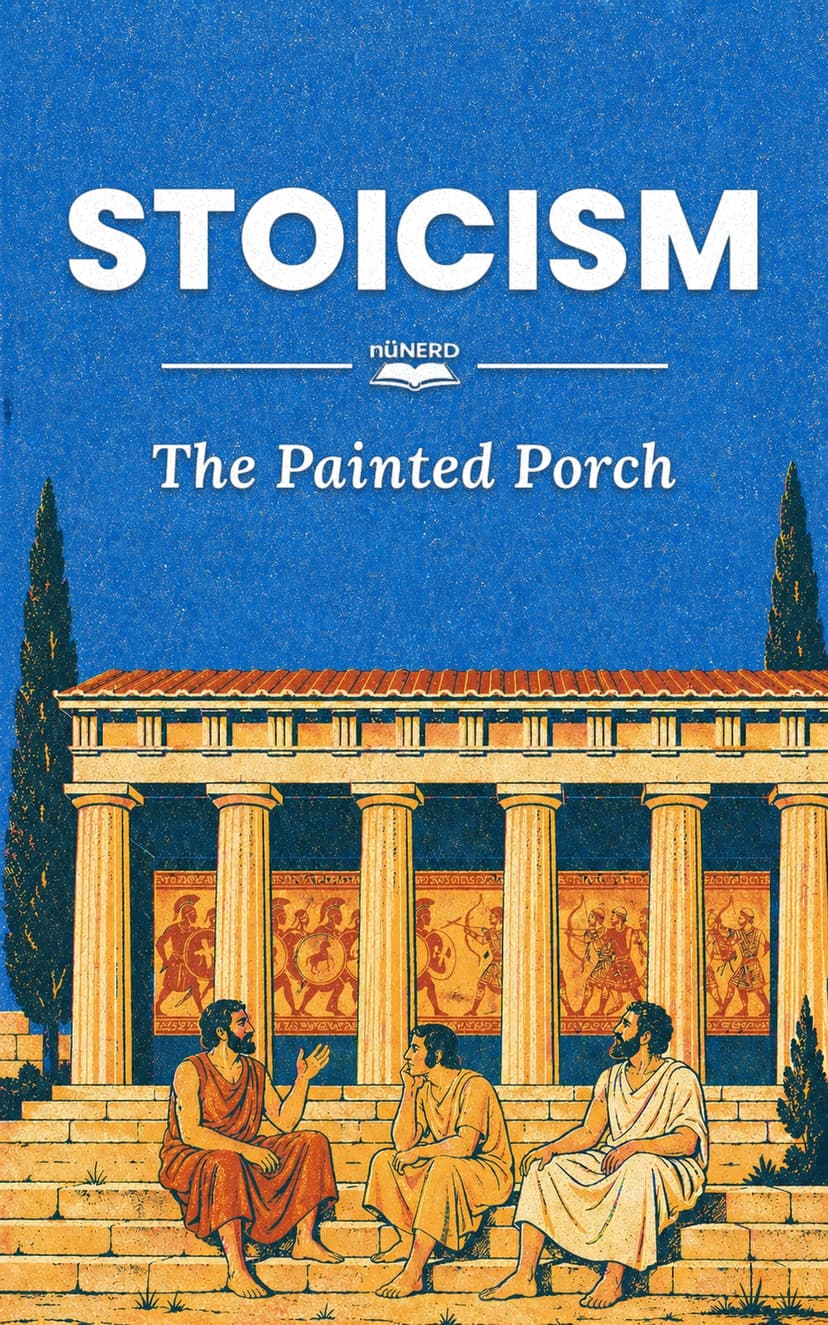
There are three editions matched to reading level. The ages 0 to 4 book, Three Simple Words, is a short read-aloud built around the words choose, now, try. The ages 3 to 7 picture book, The Four Virtues, names wisdom, justice, courage, and moderation in real kid moments. The ages 6 to 10 chapter book, The Painted Porch, traces six real lives across five hundred years.
Can I use Stoicism to help during a meltdown or at bedtime?
Yes, and that is largely the point. The youngest book is built around scenes like a fallen tower and big feelings before bed, so it doubles as a calm bedtime read and a script for the next hard moment. Reach for the one question, what can I control about this, in the moment rather than mid-meltdown, and let the book do the rehearsing earlier in the day.
Where can I read the original Stoic texts for free?
Epictetus's Enchiridion and the Meditations of Marcus Aurelius are both in the public domain and free on Project Gutenberg, and the Meditations has a free LibriVox audiobook. All three are linked from our Stoicism page, along with background reading from the Stanford Encyclopedia of Philosophy.
Do these books work for homeschool or a Charlotte Mason approach?
Yes. The chapter book uses real lives as the spine rather than abstract lessons, which suits a narrative, person-anchored approach well, and the historical realities of plague, exile, slavery, and empire are not softened away. Pair it with the free original texts on our Stoicism page for an older student ready to read a primary source.
Free printable pack
Read Plutarch with your kids
The free Plutarch family pack gives you the 25-pair Parallel Lives wall map, a parent’s guide to starting Plutarch years before a curriculum does, and a four-level sampler of Alexander & Caesar. A printable PDF you can use tonight.
Get the free pack