Plutarch
Alexander & Caesar
Two of the most successful conquerors who ever lived were driven by the same thing: a hunger to be the greatest, with no point at which either one ever felt he had enough. That hunger built wonders, and then it ate both men alive. Nineteen hundred years ago Plutarch set Alexander and Caesar side by side to ask what each life revealed about the other, and we hand a child that exact way of thinking, one reading level at a time, years before a classroom will.
Why we love it
- A boy quiets a wild horse that has thrown every grown man who tried to ride it, because he alone notices the animal is terrified of its own shadow.
- Kidnapped by pirates, the other boy refuses to be frightened: he laughs at them, tells them their ransom is insultingly low, and promises he will come back and crucify them. He did.
- The two lives actually touch. Caesar, grown up, reads about Alexander and bursts into tears, because Alexander had conquered the known world by the age Caesar had reached with nothing to show. One measured himself against the other.
- Two men who conquered more of the world than almost anyone before or since, and the most dangerous word in either story turns out to be a small one: enough.
Why it matters
Alexander the Great and Julius Caesar are the two most famous conquerors who ever lived, the men later generals and kings and dictators all measured themselves against. Before he was thirty Alexander had built the largest empire the world had yet seen, and he died at thirty-two, still hungry for more. Caesar conquered Gaul, crossed the Rubicon, ended the Roman Republic, and was stabbed to death by his own friends at a meeting of the Senate. Two thousand years later we still reach for their names whenever we mean ambition without limit. What makes the pair worth a child's time is the question their two lives raise together: both men wanted to be the greatest, neither ever felt he had enough, and that same hunger built wonders and then destroyed them. The books let a child thrill to the conquests first and then, when they are older, sit with the harder thing, that the drive that makes someone great can be the very thing that ruins them.
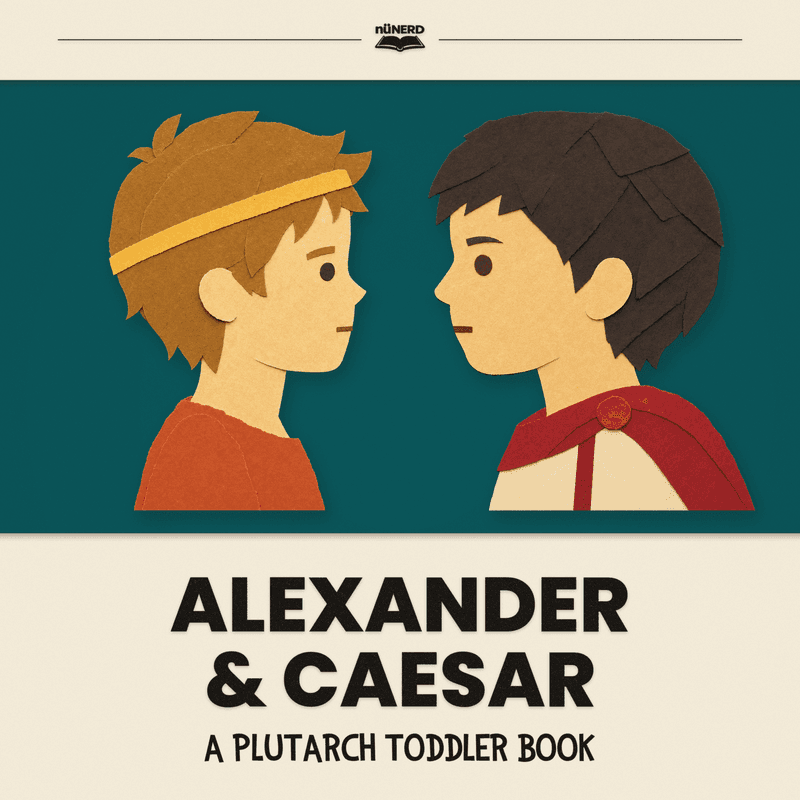
Ages 0–4 · Read TO
Alexander & Caesar: A Plutarch Toddler Book
Picture Book (8.5" × 8.5") · Full Color Cut-Paper Collage
A boy quiets a wild horse that has thrown every grown man who tried to ride it, because he alone notices what the horse is afraid of. Another boy, captured by pirates, refuses to be scared and instead laughs and bosses them around. One clever, one bold, a difference a toddler can feel long before anyone hands them a date. A picture on every page.
Buy on Amazon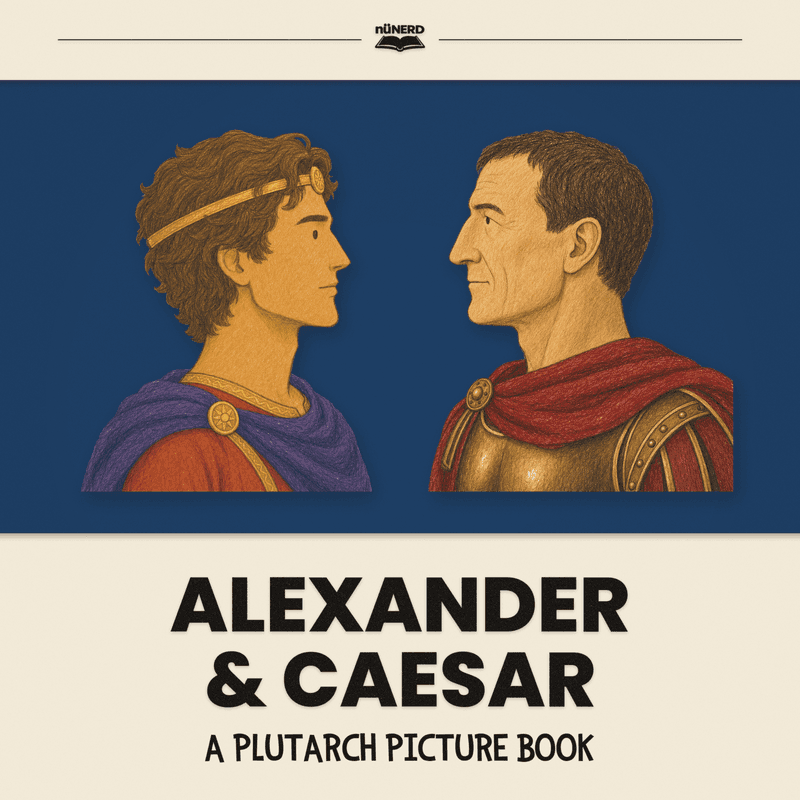
Ages 3–7 · Read WITH
Alexander & Caesar: A Plutarch Picture Book
Picture Book (8.5" × 8.5") · Full Color Soft Crayon
Two boys, born far apart, who both wanted to be the greatest the world had ever seen. Setting Alexander and Caesar side by side lets a young child feel how differently two people can chase the very same dream, and the book ends on a quiet surprise: the boy who wanted the whole world meets a man who wants almost nothing and turns out to be the happier of the two.
Buy on Amazon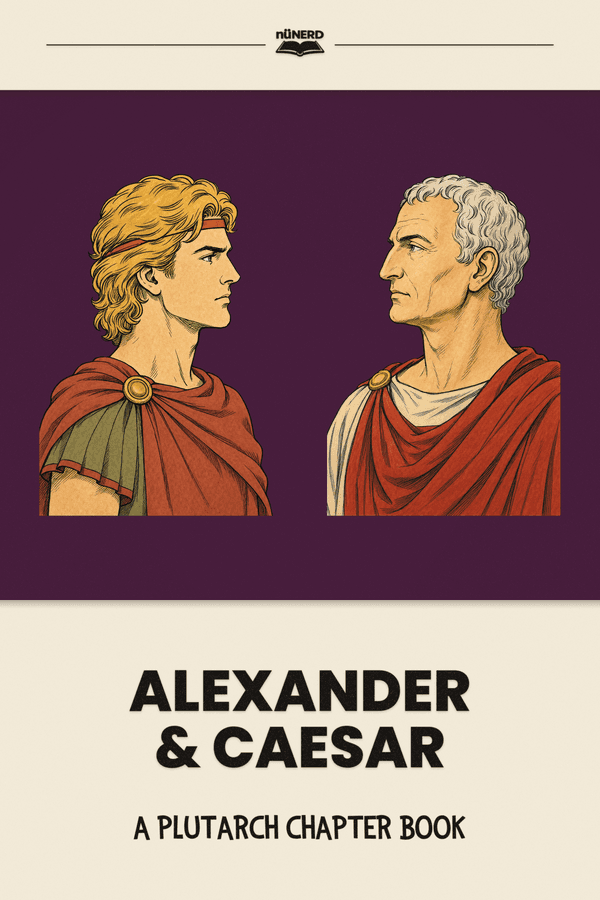
Ages 6–10 · Early Independent
Alexander & Caesar: A Plutarch Chapter Book
Chapter Book (6" × 9") · Black & White Illustrations
Both lives in full, a great Greek and a great Roman, and then the part nearly every other children's version skips: the weighing. Your child learns to read a life the way a historian does, watching the small moments instead of just counting the battles, and meets the most dangerous word in either story, enough. Vintage black-and-white illustrations throughout.
Buy on Amazon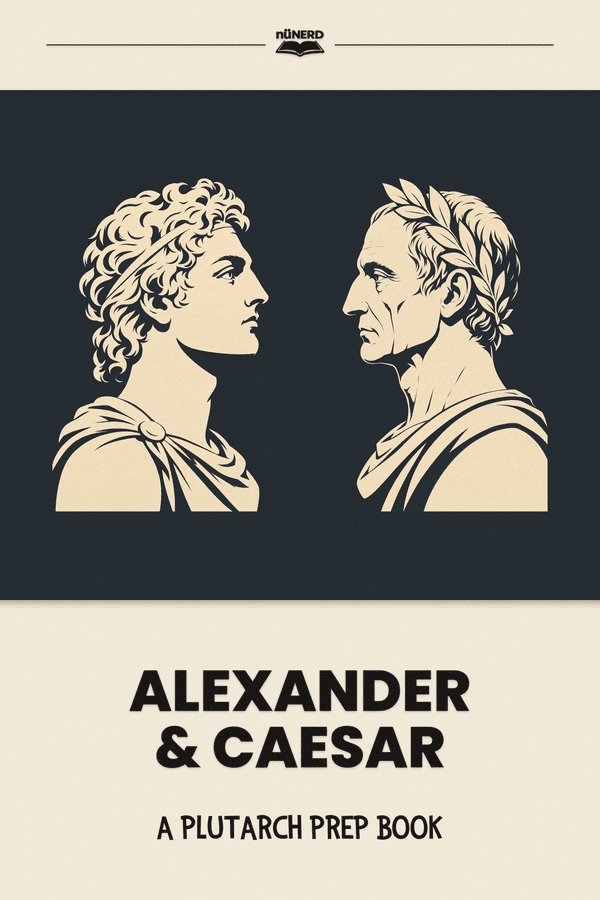
Ages 10–14 · Independent
Alexander & Caesar: A Plutarch Prep Book
Prep Book (6" × 9") · Black & White Woodcut
The most famous comparison ever written is one nobody alive has read: Plutarch's verdict on Alexander and Caesar was lost. The prep book teaches a ten- to fourteen-year-old to weigh the two lives the way a historian would, through four questions, judging without crowning a cheap winner and handling sources that disagree, until they can reach the verdict history never left us. It is also the fastest primer for a parent who wants to teach or discuss Plutarch: what the two lives cover, the questions the comparison turns on, and where the evidence leans. It hands a reader the lost art of comparison and leaves them one step from Plutarch's own pages.
Buy on AmazonFree resources
Read Alexander & Caesar free
Our books are built to get kids ready for the real thing. When they are, here is the real thing, free: the public-domain text, a volunteer-read audiobook, and background worth a parent’s time.
Watch and explore
- Was Alexander the Great really that great? (TED-Ed)
A short animated lesson that puts Alexander on trial, a lively way to open a conversation about ambition and its cost.
Background for parents
- Alexander the Great (Livius.org)
A careful, source-aware account of the whole campaign, with a table of contents if you want to go deeper on any stage.
- Julius Caesar (World History Encyclopedia)
A readable life from the pirates to the Ides of March, a good companion piece to set the two conquerors side by side.
- Alexander the Great (Britannica)
A concise, fact-checked reference with a separate evaluation of his legacy, and a kids version linked at the top.
Go deeper
- Plutarch and his method (World History Encyclopedia)
An essay on why Plutarch pairs a Greek with a Roman, useful here because this pair's own comparison was lost.
Read Plutarch free (this pair's two Lives)
- Plutarch, Life of Alexander (LacusCurtius)
The full life, including the famous anecdotes no other source preserves, free to read.
- Plutarch, Life of Caesar (LacusCurtius)
The Roman half of the pair, free in full public-domain English.
Read more
Why Plutarch Paired Alexander with Caesar
Plutarch matched Alexander against Caesar because they shared one hunger from opposite starts: one was handed an empire, one clawed his way up. And the comparison he wrote for them is the one nobody alive has read.
Read the post