How we use AI · Side by side
What most people picture when they hear “AI children’s book”
Parents are right to be wary of children’s books made with AI. Often the AI writes and illustrates the whole book, start to finish, and someone sells what comes out. Most parents who have seen one decide that books made this way aren’t good, don’t do their job, and give AI a bad name. We agree.
That’s why we don’t “one-shot” books. We built our own production system instead, one that uses AI for what it does well, with people checking and redirecting it at every stage and hard stops where nothing moves until human beings sign off.
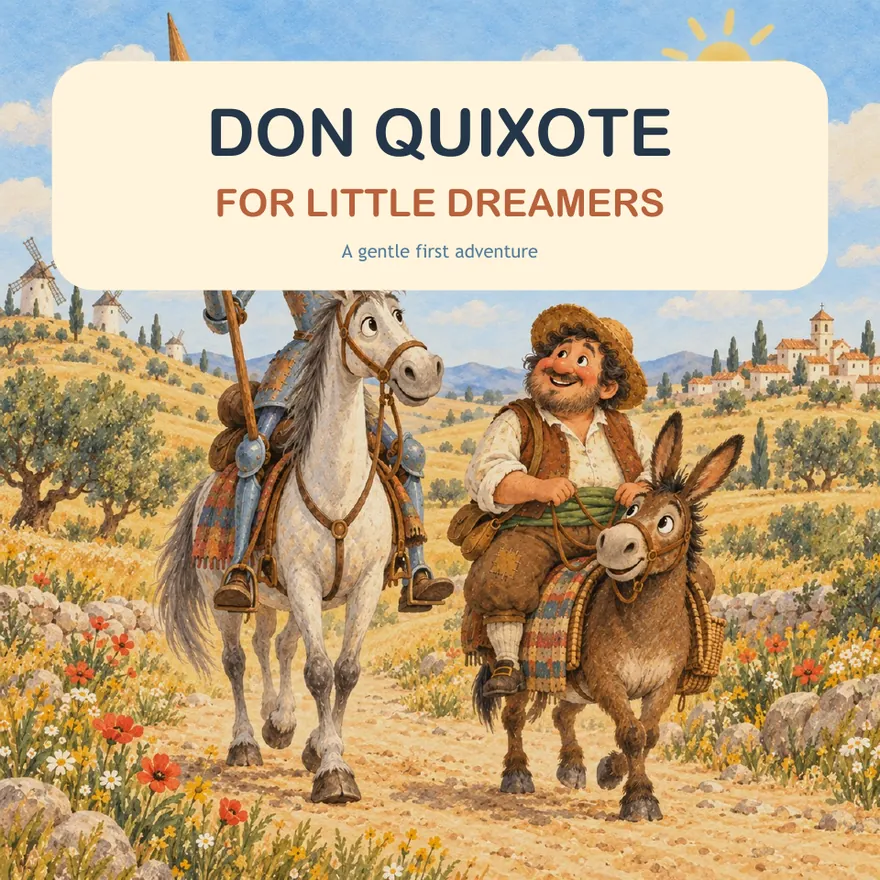
To show you what we mean, here is our Don Quixote for toddlers next to one that ChatGPT’s Sol 5.6 model made in September 2026 from this prompt: “build a 24-page illustrated don quixote book for toddlers.” The chatbot took about ten minutes. We did not edit what it made.
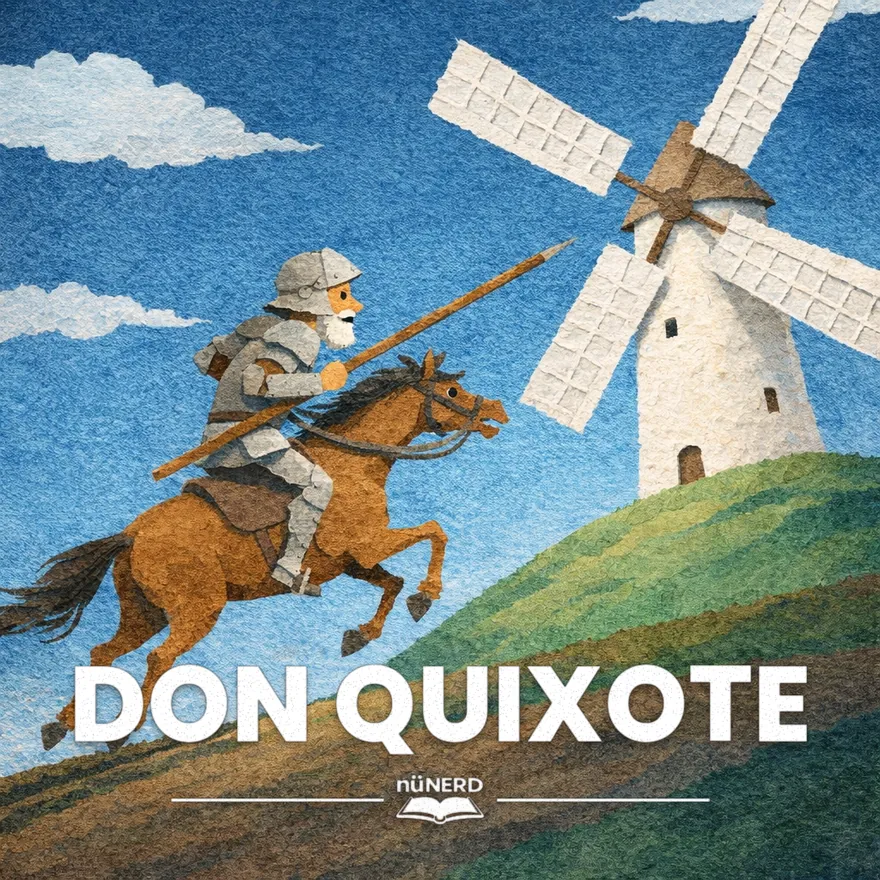
Ours was made using AI too, but in a very different way. It went through our own production system, where OpenAI and Anthropic models drafted the manuscript from a story plan we shaped and signed off on. People edited that manuscript, refined the AI-drafted prompt for each illustration, and laid out and finished the book. The windmill scene alone is several AI images, layered together and retouched by hand in Photoshop.
Side by side, the pages make three things plain:
- Suspicion is the right instinct when a chatbot’s first answer is sold as a book for a child.
- A book made that way is full of mistakes: illustrations that make no sense, a story Cervantes didn’t write, the same illustration again and again, and lines with nothing in them.
- Ours was planned and built a different way, and the difference is on every page.
Read them both
01
No windmill charge
The windmills are the most famous scene in Don Quixote: he charges one, sure it's a giant, and it knocks him flat. Ours keeps the charge: he rides at it, the windmill wins, and he gets right back up. In the one-prompt book he never charges. He points, Sancho says “Windmills,” and both friends laugh.
02
No story
Ours has an arc: the knight falls and gets back up, and Sancho goes from thinking it's all a game to seeing what his friend sees. In the one-prompt book, scenes from Cervantes turn up (the windmills, the flock of sheep, the barber's basin he takes for a golden helmet), but only as sightings, one after another. Nobody changes, and it ends on a slogan: “Dream big. Look closely. Help gently.”
03
Three pages for a goat
Ours spends its pages on scenes Cervantes wrote, like the flock of sheep Don Quixote takes for an army. The one-prompt book gives three of its 22 pages to rescuing a baby goat by a bridge (“Together, the friends lifted. Up, up, safe!”), a scene Cervantes never wrote.
04
The same illustration, over and over
We plan our illustrations as a sequence before a single one is made: an art-director check reads every brief in order, and we sign them off. So our book moves: close-ups, wide country, a crash, a campfire at night. In the one-prompt book, pages 1 to 4 are the same room from the same angle, and pages 5 to 12 are the same two riders on the same hillside.
05
Words on faces
Our words sit in their own band, clear of every face. On the one-prompt cover, the title box sits where the knight's head should be, and inside, the text boxes keep landing on him: on pages 5 and 10 you can't see his face at all.
06
The first page
In our first four pages he reads, dreams of dragons and castles, pulls on rusty armor to declare himself a knight, and climbs onto his skinny horse. The one-prompt book opens on an old man in his study, holding a big book open with its pages facing us instead of him, and one line: “Don Quixote loved stories.” Its next three pages repeat the same illustration.
We don’t like it either
One prompt, ten minutes, nobody checking the result. Books made that way are on sale now, and we don’t like them either. But “AI children’s books” aren’t what we make. We make children’s books, using AI, in a system we designed and run: we send sections back for redrafts, Karen edits every manuscript, and we approve every illustration before it goes in a book. War and Peace, for example, took about four and a half weeks from the first plan to its first books going on sale in September 2026.