How we use AI
Yes, we use AI to make these books, although probably not in the way you imagine. We don’t pull up ChatGPT and type “build a 24-page illustrated don quixote book for toddlers” and then sell whatever it spits out (although there is an epidemic of children’s book AI slop like this flooding the market, unfortunately).
Instead, we’ve built our own production system as software, one that plans, drafts, reviews and illustrates alongside human feedback and correction. It lets us make books that largely don’t exist: Machiavelli for four-year-olds; a Beowulf that comes back at each reading level, a little closer to the poem every time; Plutarch’s paired lives, ending in a prep book that gets a twelve-year-old ready for the real thing.
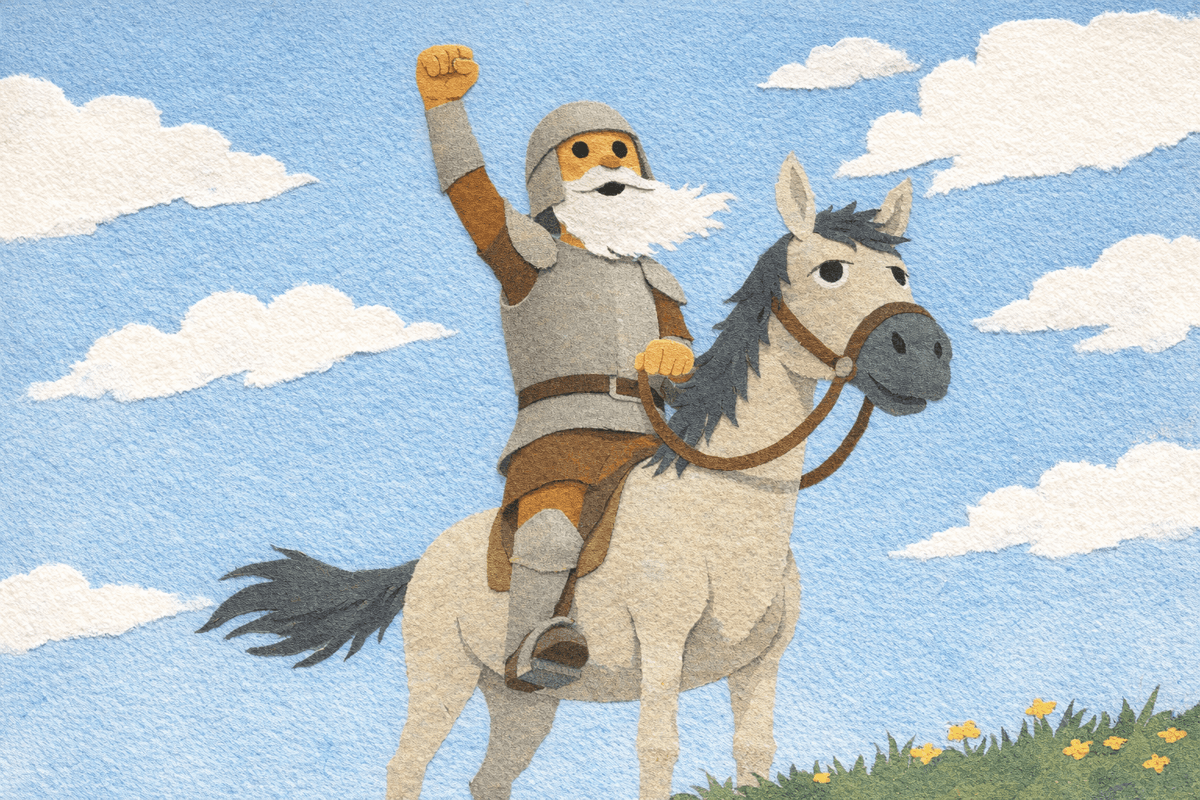
A page from Don Quixote: Ages 0–4
Why we use it at all
Because children's publishing mostly skips the subjects we care about most. We couldn't find a Machiavelli for toddlers, and the children's retellings of Plutarch we found were all more than a century old.
There's a reason. A traditional children's book takes a lot of time and a lot of money (an author, an illustrator, an editor, a designer, a print run), so it has to sell thousands of copies to pay for itself. That rules out the niche. For us, a good book still takes a lot of time, but only a little money: AI does much of the production work, and the books are printed when they're ordered. A book that sells a few copies a month to families who care about its subject can earn back what it cost within a year. So we can say yes to subjects a traditional publisher has to turn down.
And because each book costs so little to make, we can make three or four for a subject, so a child can meet Don Quixote at two, five and eight and arrive at Cervantes already knowing the knight.
How a book gets made
Every book moves through the same six stages. At each one, AI does most of the work and one of us reads the result, then sends it back or signs it off.
The source
We start from the original text, not a summary of it. AI breaks it down into the story, the scenes that carry it, and how much a reader of each age can take in. Noah reads that breakdown and corrects anything it gets wrong about the original.
The plan
Next comes an outline of the whole book, then a plan for every page or chapter. We question it, send parts back and rework them until the plan holds together. Nothing gets drafted until one of us has signed off on the plan.
The draft
AI writes the draft, following the plan with the original text alongside. Sections that fall short go back to be redrafted, and we rework the rest line by line until the whole draft holds up.
The checks
Separate AI readers, each seeing the draft cold, check it for anything weak or machine-sounding, and every page is compared with the original text. We decide what changes. Then Karen, Noah's mother and our editor, edits the whole manuscript.
The illustrations
For every illustration, AI writes instructions: the moment, the composition, what to leave out. We approve each set before an image model makes anything, then reject whatever is wrong, like a face that changes between pages. Only illustrations we've approved go in the book.
The book
We lay out the pages, add the title pages and notes, and design the covers for print and Kindle. Automated checks catch layout errors, and Noah reads every proof before a book goes on sale.
Side by side
Let us show you
We gave ChatGPT’s Sol 5.6 model a simple prompt and put what it spat out beside our Don Quixote for toddlers. In the ChatGPT version, Don Quixote never charges the windmill. The book spends three of its pages on a goat Cervantes never wrote about. It repeats the same basic illustrations page after page, and it prints the manuscript text (which is also quite bad) across the characters’ faces.
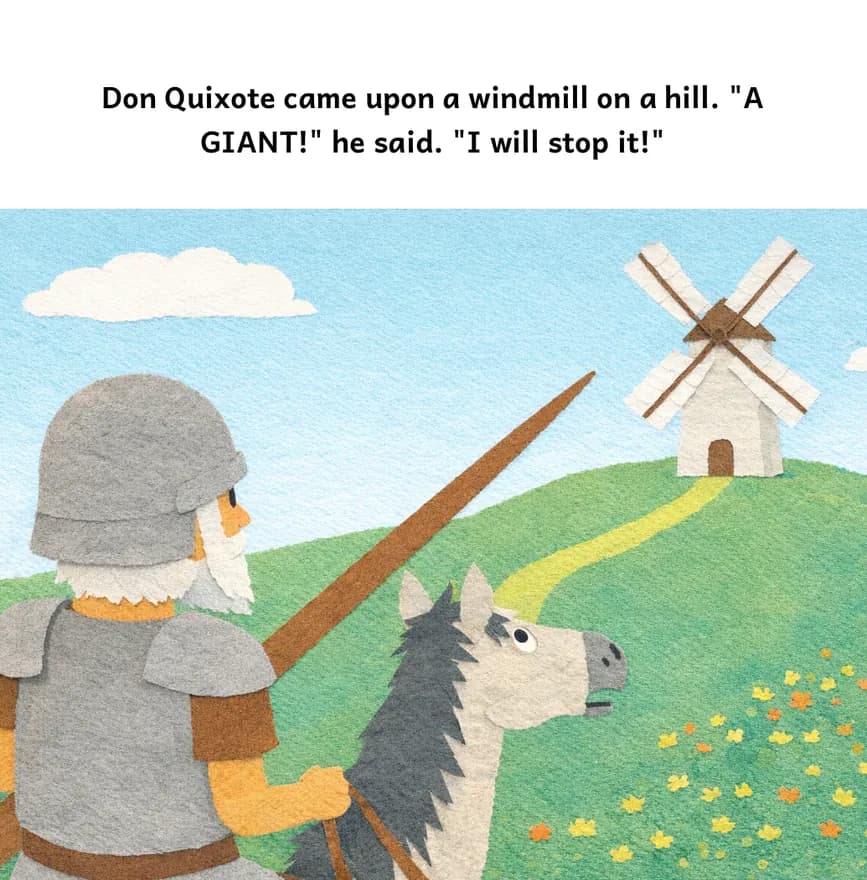
Our Don Quixote for Toddlers · six weeks
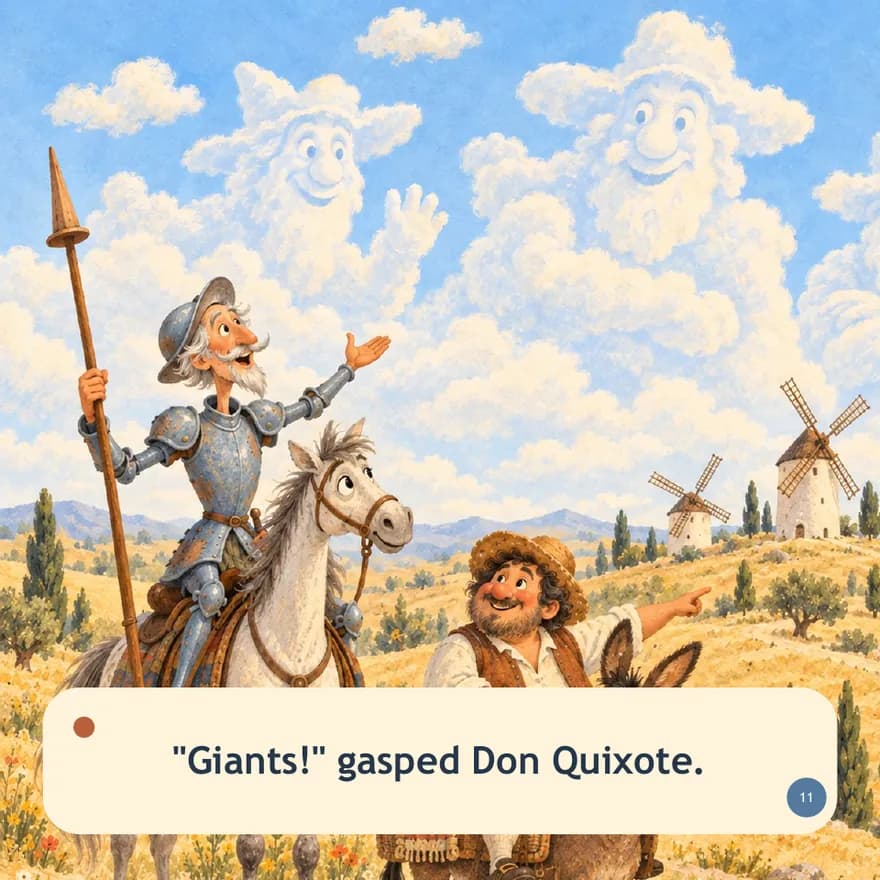
Lazy AI Don Quixote for Toddlers · about ten minutes
About the art
Our illustration prompts describe materials, not artists: torn construction paper for the youngest books, crayon for the next, cartoonish line art for the chapter books, woodcut for the prep books. No prompt of ours names an illustrator. And every book says on its copyright page that it was made with the assistance of AI tools.
We want people to keep illustrating by hand, and we think it’s more important than ever to support human illustrators now that machines can do it too. We also know the image models we use were trained on an enormous amount of human work, much of it without permission or compensation.
We can’t change that. Image models exist, and they aren’t going anywhere. But here’s what we can do: as these books sell, part of what they earn will go to working illustrators, from established names to students looking for their first paid job. Every title that sells 500 copies will get a second edition illustrated by hand. None of our books have sold anywhere close to this number yet, but we’re just getting started. When one does, we’ll say so here. If you illustrate and that sounds like something you’d be interested in, get in touch. We want to collaborate with any and all illustrators who connect with the topics we cover.
If you’d rather have zero AI
Some families want nothing made with AI in the house. We'd rather you know exactly how these books are made and pass than buy one without knowing.
Judge for yourself
Our entire Don Quixote for ages 0–4 book is free to read, page by page, next to the one-prompt version. Read it to your child, then ask them to tell the story back. Whatever they say will tell you more than this page can.