October 18, 2026
Why We Made Boudica for Kids
Boudica was a queen of the Iceni, a people who lived in what is now Norfolk, in the east of England. Her husband, Prasutagus, ruled as Rome's ally. When he died, Roman officers seized his kingdom, and in AD 60 or 61 Boudica led the Iceni and their neighbours the Trinovantes in a revolt. Her army burned Colchester, London, and St Albans before the Roman governor, Suetonius Paulinus, defeated it with a much smaller army. Not one word of her own survives. Almost everything we know comes from two Roman historians, Tacitus and Cassius Dio, and from what archaeologists have dug up. We made three books about her, for ages 0–10, because her story is also a good first look at how history gets pieced together: two Roman writers who disagree, and burnt earth under two cities.
What part of Boudica's story does each book tell?
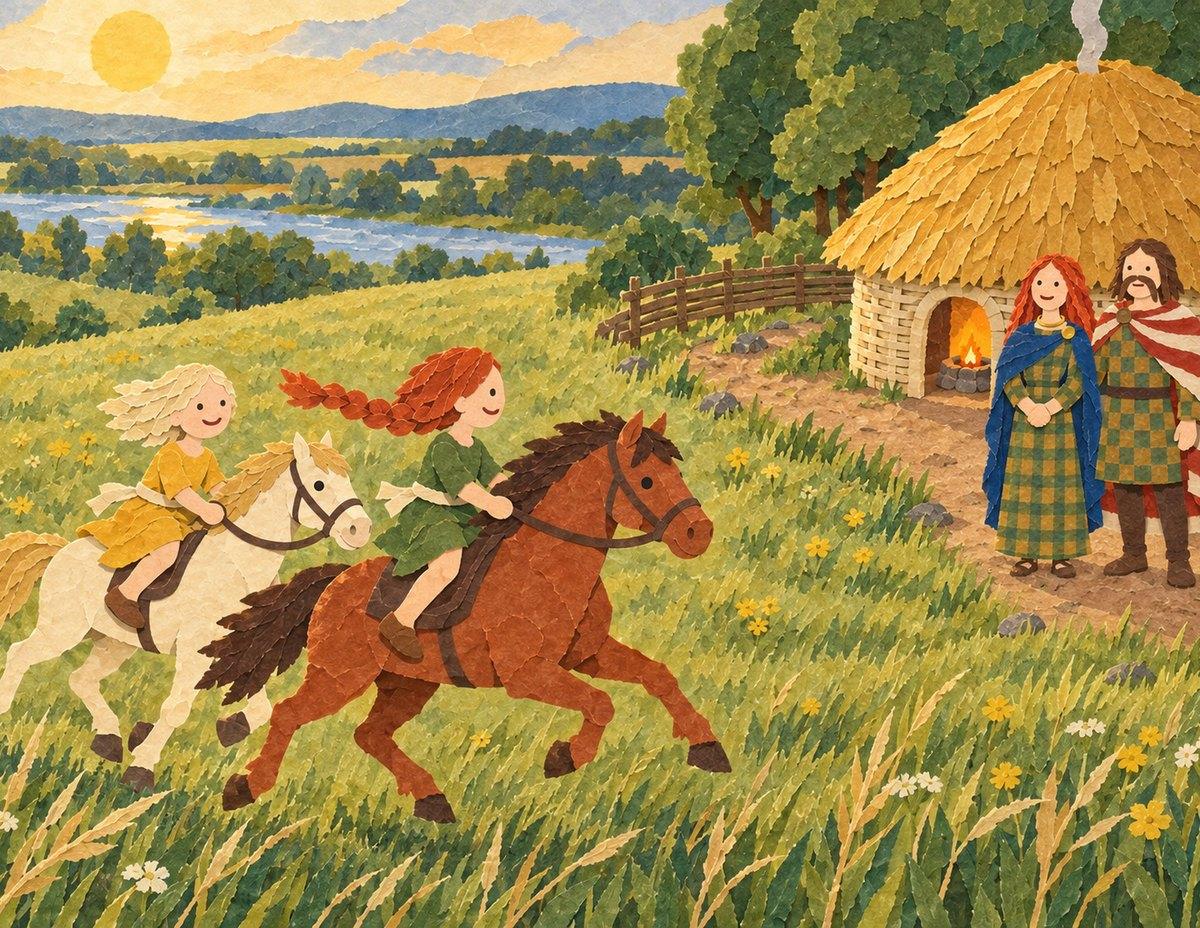
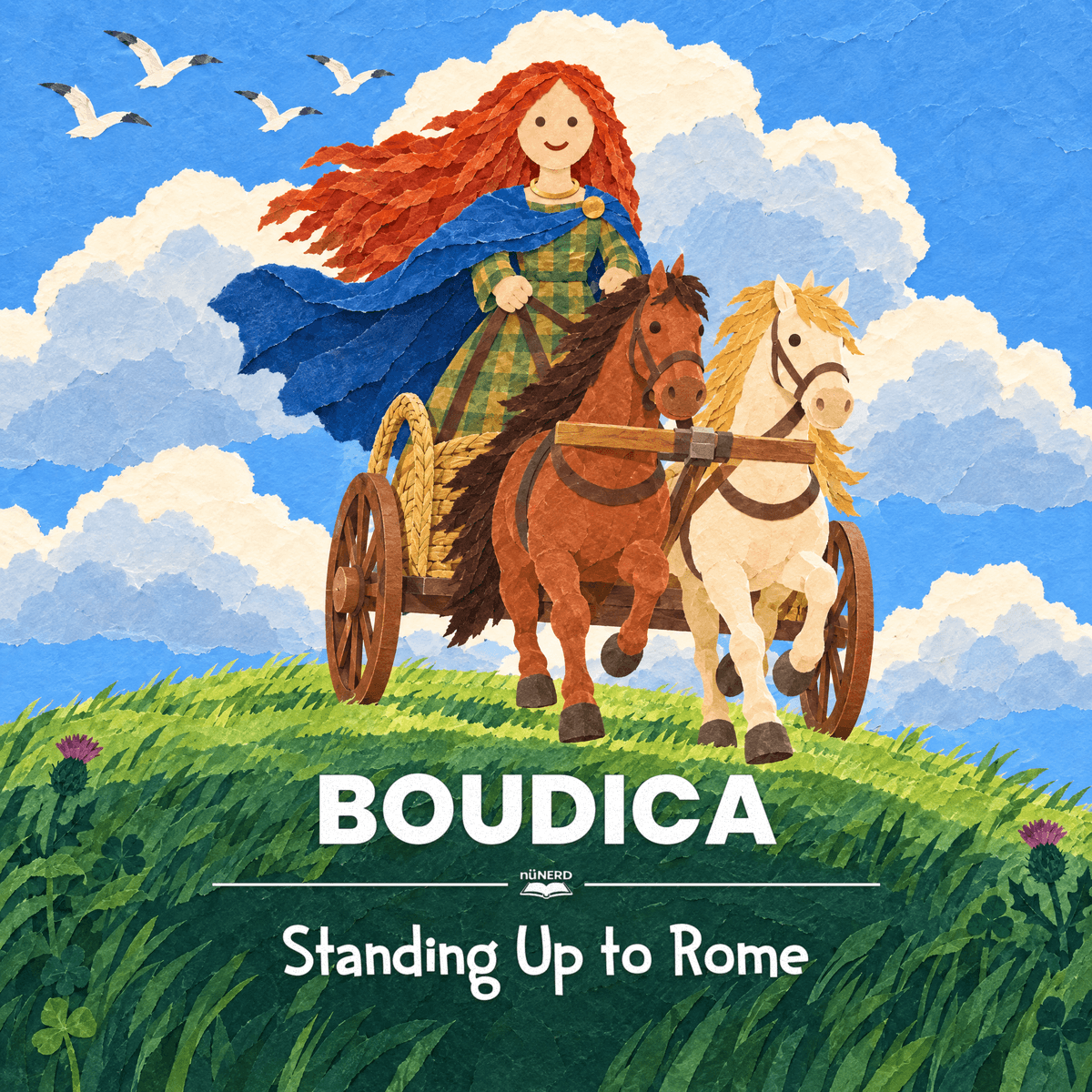
The toddler book, Standing Up to Rome, starts at home: "She had two daughters, fast horses, and a round house with a warm fire." Then Roman boots come "tramping up the road to Boudica's door," the Romans carry her things out of her house, and she climbs a mound of earth and calls out, "Let's take them back!" Her army takes "one Roman town, then two, then three," loses the last battle, and the last page jumps to London today, where her statue stands by the river.
Every topic, its own book at each reading level
History, philosophy, and classic literature for kids from toddlers to teens.
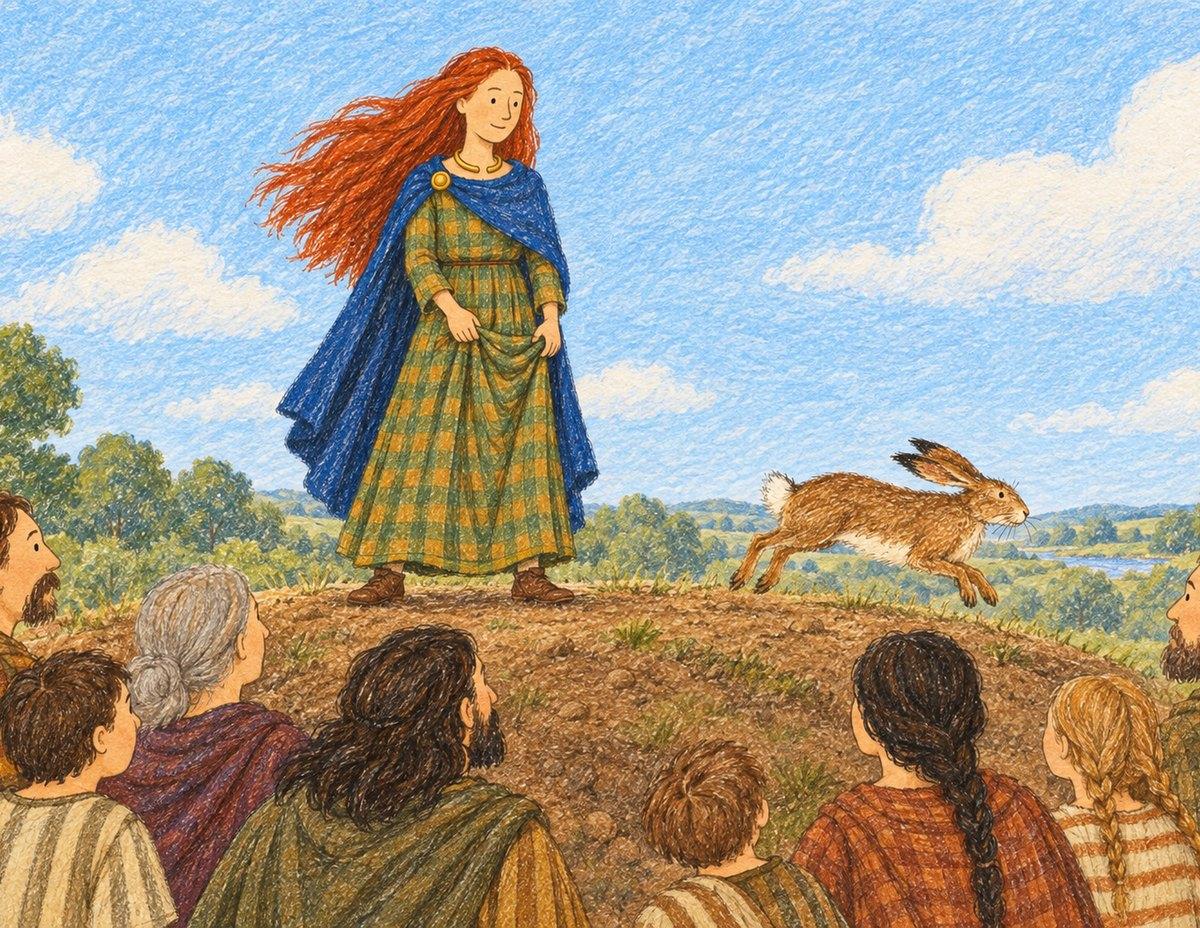
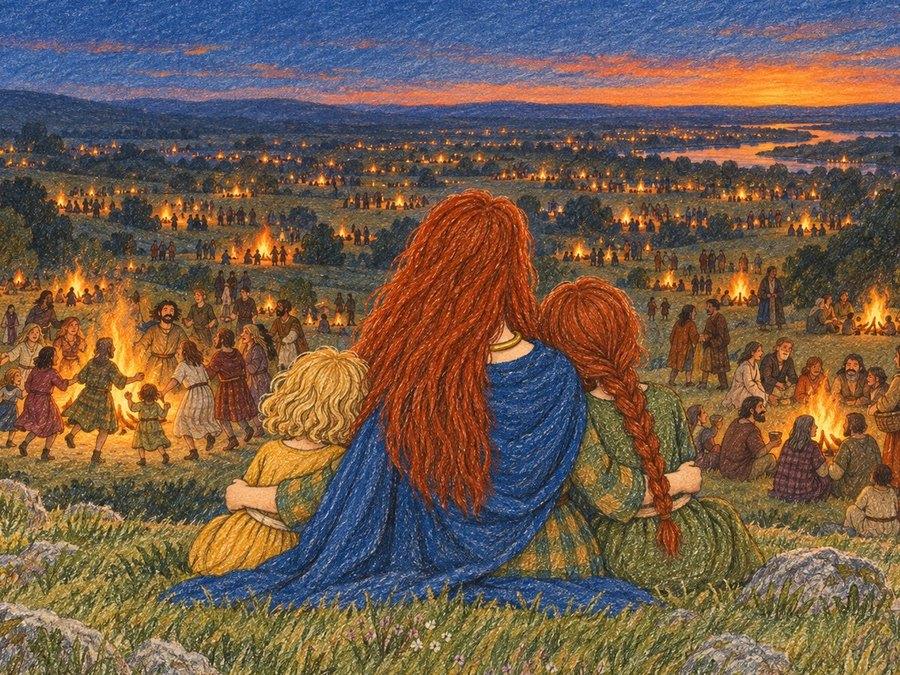
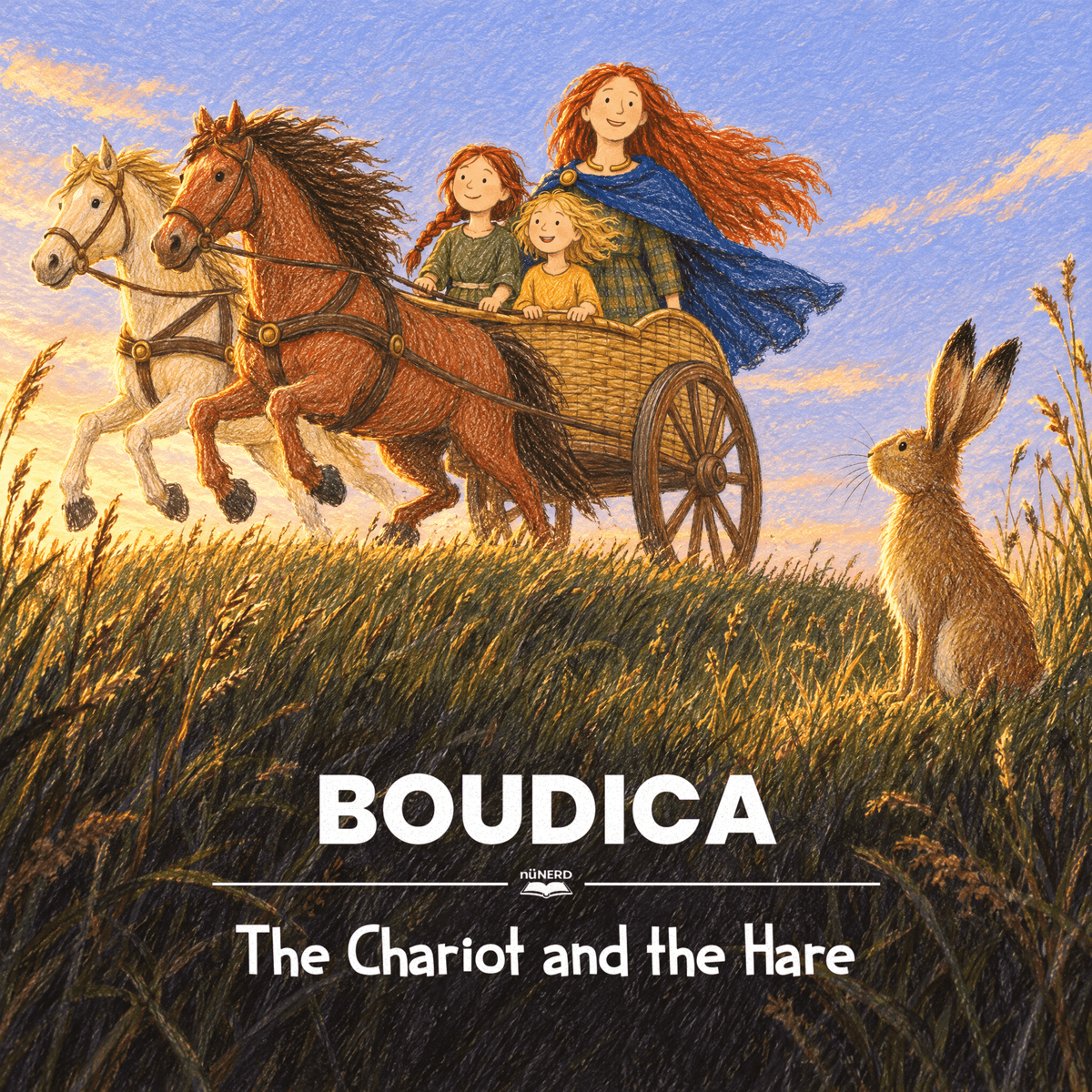
The picture book, The Chariot and the Hare, is about the tribes who came to stand with her after Roman soldiers take the kingdom and hurt the queen and her daughters, which the book says in two plain lines. Boudica calls on the tribes, though "those tribes almost never fought together, not even against Rome." Not every tribe comes, but thousands of people do: warriors, farmers, and whole families with their carts. On a mound in front of them she lets a hare go from her dress, because her people believed a hare running one way meant good luck. "And it ran the lucky way!"
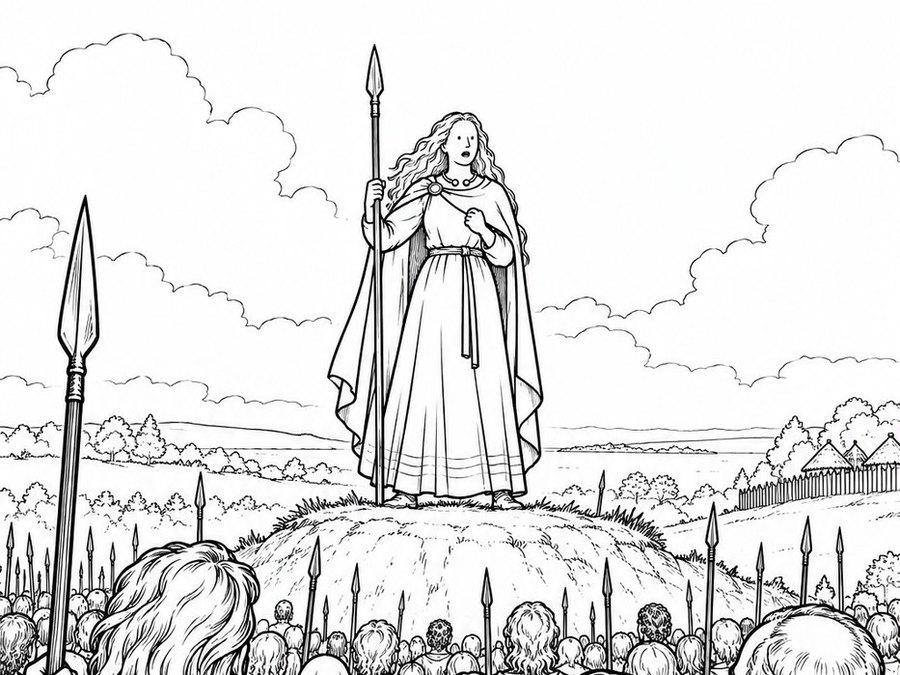
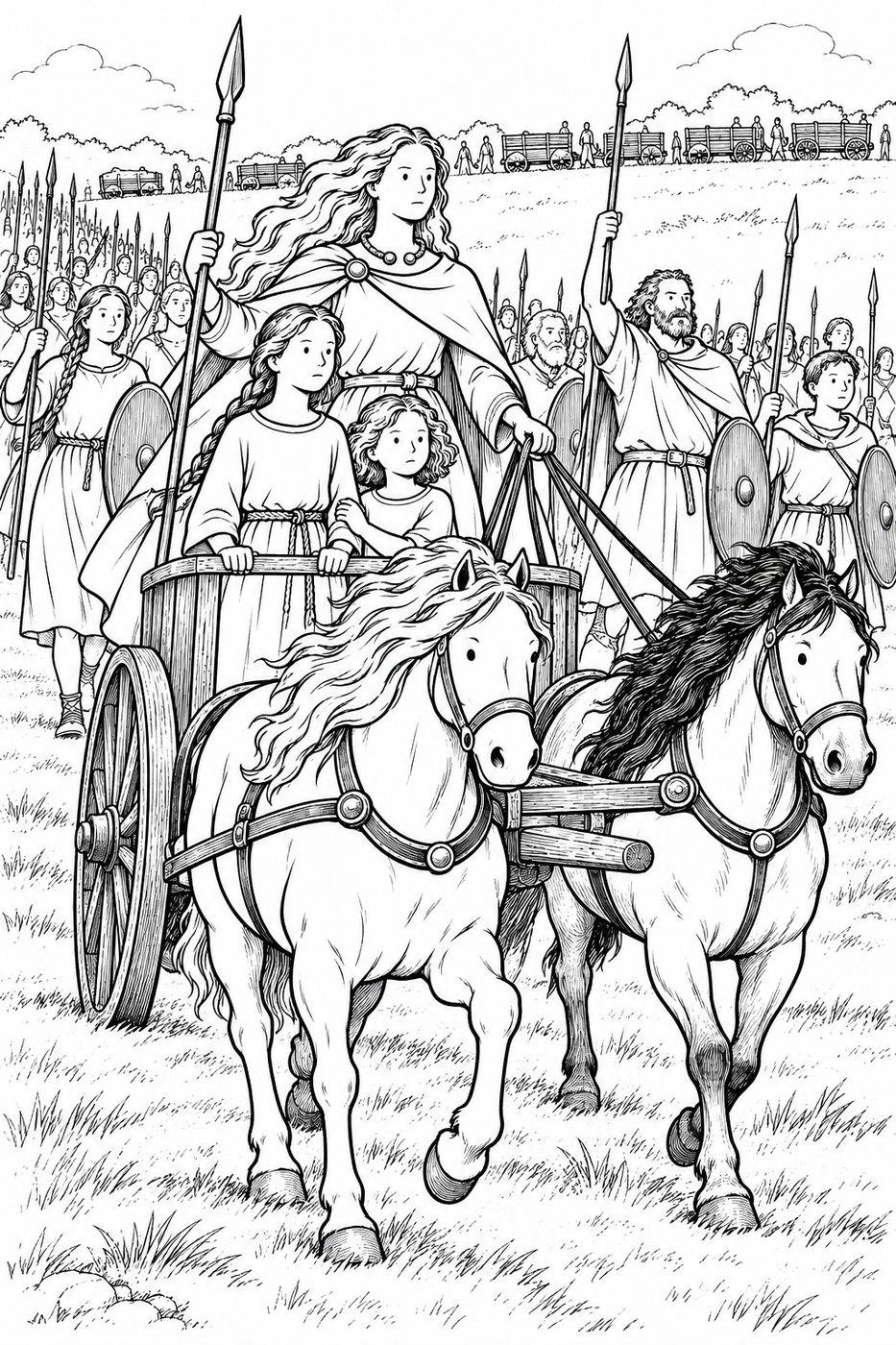
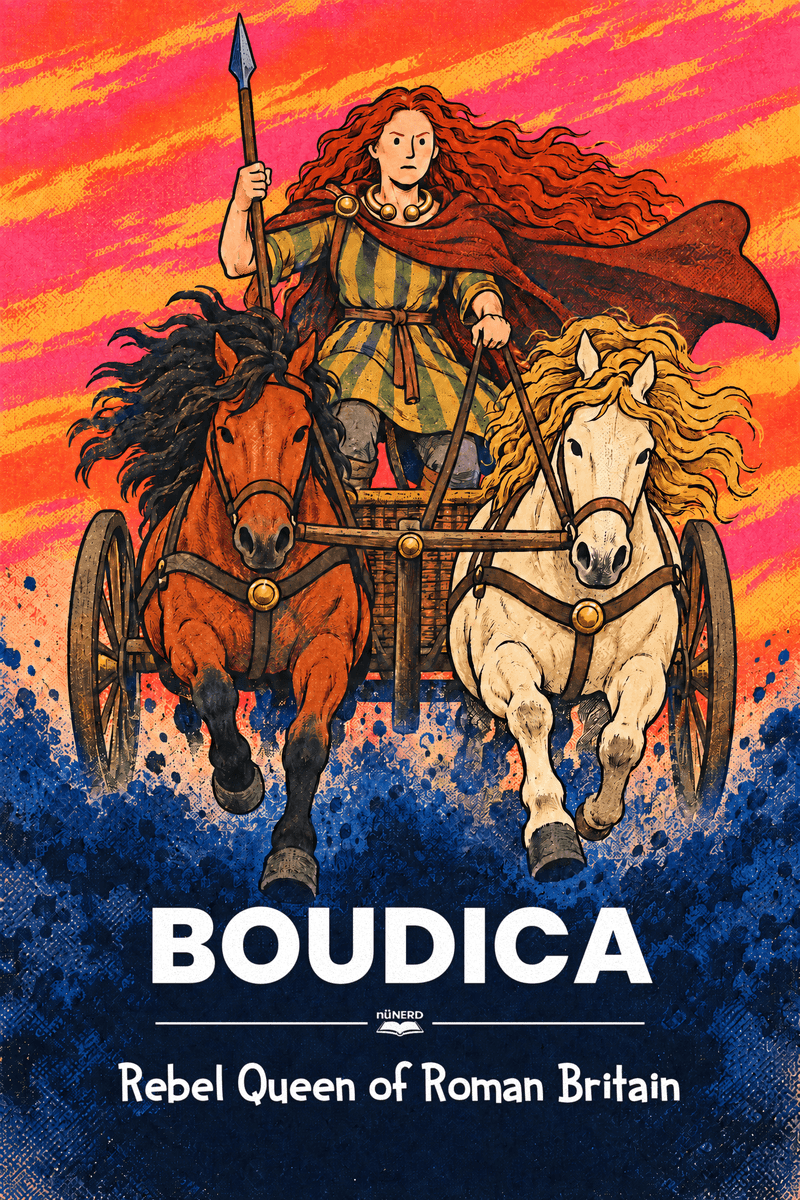
The chapter book, Rebel Queen of Roman Britain, tells the whole revolt and sets Tacitus and Dio side by side where they disagree: Tacitus says the war began when Roman officers ignored the king's will and had Boudica whipped, and Dio says it began over money. It follows Suetonius across the water to the island of Mona (Anglesey) while the revolt starts behind him, and then the march on the three towns. The last chapters jump to the present: the bronze statue by Westminster Bridge, and the archaeologists digging under Colchester and London.
From the books

Toddler book, ages 0–4
Picture book, ages 3–7
Chapter book, ages 6–10
What age are the Boudica books for?
Standing Up to Rome is a toddler book for ages 0–4, and The Chariot and the Hare is a picture book for ages 3–7. Rebel Queen of Roman Britain is a chapter book for ages 6–10: read it aloud to younger children, and older ones can read it alone. All three are on the Boudica page.
How do we know about Boudica?
From her enemies, and from the ground. Tacitus, whose father-in-law Agricola served in Britain during the revolt, wrote about her in two books. Cassius Dio, writing in Greek more than 150 years after the revolt, gives the version with the hare. Neither says where she was buried, and they disagree about how she died: Tacitus writes one line saying she took poison, and Dio says she fell ill and died while her people gathered to fight again.
The ground agrees with them about the fires. When archaeologists dig in Colchester and London, they find a band of red and black earth, burnt clay, and charcoal from buildings that burned around AD 60. In 2014, under a shop on Colchester's High Street, they found a Roman house that burned in the revolt, with dates, figs, wheat, and peas charred black where a shelf had been. Under its floor was a small pit of gold and silver jewellery. Archaeologists think a woman who lived there hid it as news of the Britons reached the town. Nobody came back for it.
Was Boudica's hair really red?
Nobody knows. Dio, the only ancient writer to describe her, says she was very tall, with a great mass of tawny hair (a light yellowish brown) down to her hips, and that she wore a large gold necklace. Painters and filmmakers later gave her red hair. Our toddler and picture books draw her with red hair; the chapter book tells the reader what Dio actually wrote.
How do you read the Boudica books with kids?
With the picture book, stop before the hare runs and ask your child which way they think it will go. With the chapter book, keep a two-column list as you read, one column for what Tacitus says and one for what Dio says, and see where they agree. If you are ever in London, the statue the toddler book ends on stands at the west end of Westminster Bridge, by Big Ben.
The books
Boudica on Amazon
Frequently asked questions
How long are the Boudica books, and what format is each one?
Standing Up to Rome is a 24-page read-aloud of about 380 words with a cut-paper collage picture on every page, and The Chariot and the Hare is a 36-page picture book of about 740 words with soft crayon pictures; both are 8.5-inch square. Rebel Queen of Roman Britain is an 80-page, 6-by-9-inch chapter book of about 7,500 words with 20 black-and-white drawings, and it gives a pronunciation the first time each hard name appears.
Do the Boudica books show her death?
Only the chapter book describes it. The toddler book ends her story with "Boudica's fight was over." The picture book never uses the word death: after the last battle, "Boudica was gone forever," and her people gave her "the grandest farewell they could." The chapter book gives both Roman accounts plainly, poison in Tacitus and an illness in Dio, along with the Roman writers' death tolls for the burned towns and the last battle.
Why do some books call her Boadicea?
The name was copied by hand for centuries, and copyists and printers changed it. "Boadicea" took hold in English in the 1600s, possibly from a printer's mistake, and English writers used it for hundreds of years; the statue in London still carries it. Her real name probably came from an old British word, bouda, meaning victory. Most historians today write Boudica.
Where can I find free Boudica resources?
Our Boudica page links these, all free to open: Boudicca (Britannica Kids, ages 8 to 11); The Snettisham Great Torc (British Museum); Tacitus, Annals, Book 14 (LacusCurtius); Cassius Dio, Roman History, Book 62 (LacusCurtius).