History · Ages 0–10

Boudica

Boudica left no writing of her own. A Roman writing about 150 years later described a queen with hair to her hips and a heavy gold necklace, who led thousands of Britons against Rome.

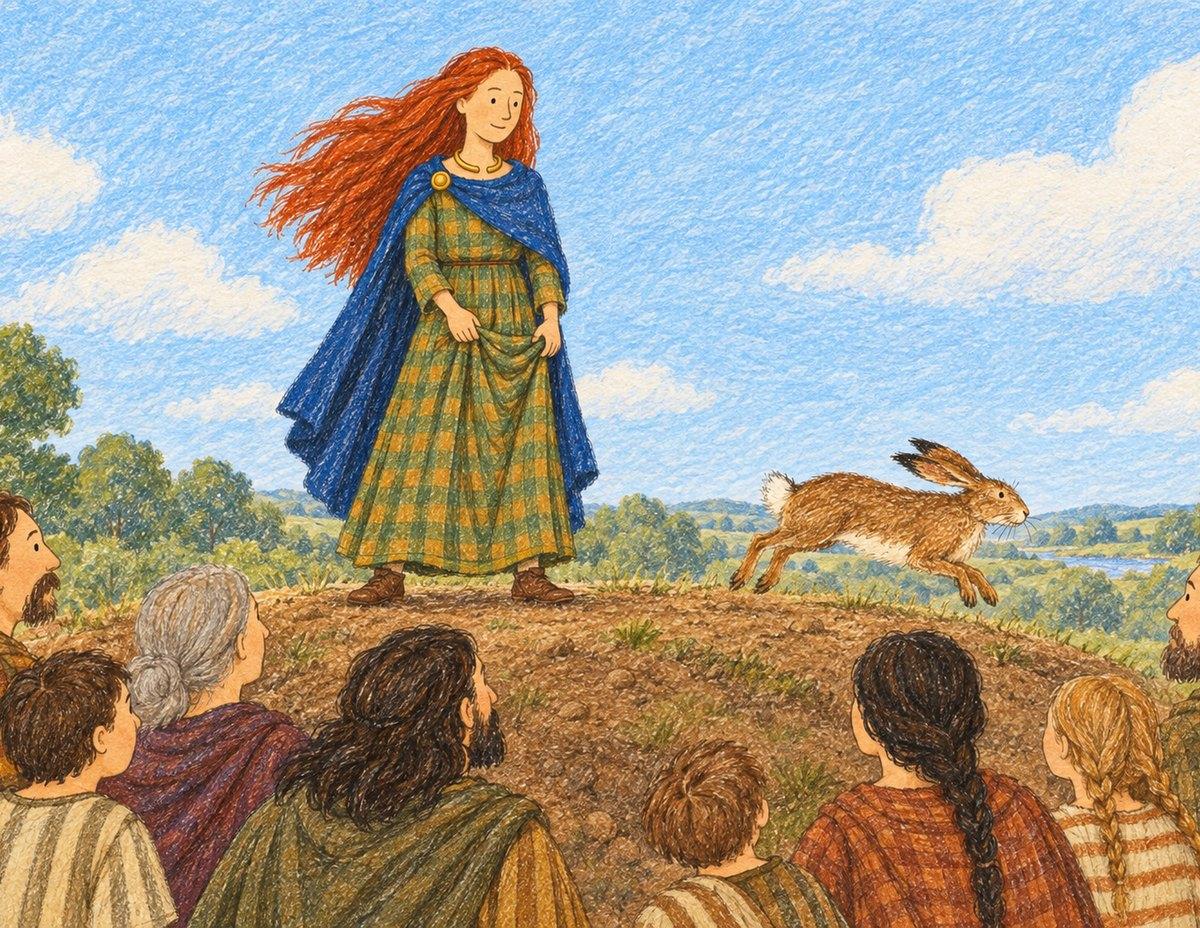
Boudica, in a blue cloak and a checked dress, stands on a mound holding up the hem of her dress as a brown hare leaps away across the top of the mound, with a crowd watching from below, in soft crayon

A page from Boudica: The Chariot and the Hare

Why we love it

A ball on a Roman road.

Early on, our toddler book shows what Rome built: towns, temples, and "roads so straight you could roll a ball along them." A few pages later, Roman boots come tramping up that road to Boudica's door.

Toddler book, ages 0–4 ↓

A hare.

Before her army marches, Boudica lets a hare go from her dress, because her people believed a hare running one way meant good luck. It runs the lucky way, and the crowd roars. The hare comes straight from the Roman historian Cassius Dio.

Picture book, ages 3–7 ↓

Dates and figs.

In 2014, under a shop on Colchester's High Street, archaeologists found a Roman house that burned in Boudica's revolt, with dates, figs, wheat, and peas charred black where a shelf had been. Under the floor was a small pit of gold and silver jewellery that, they think, a woman hid as news of the Britons reached the town.

Chapter book, ages 6–10 ↓

Which book for your child?

Cover of Boudica: Standing Up to Rome, for ages 0–4

Ages 0–4 · Toddler book · Read to them

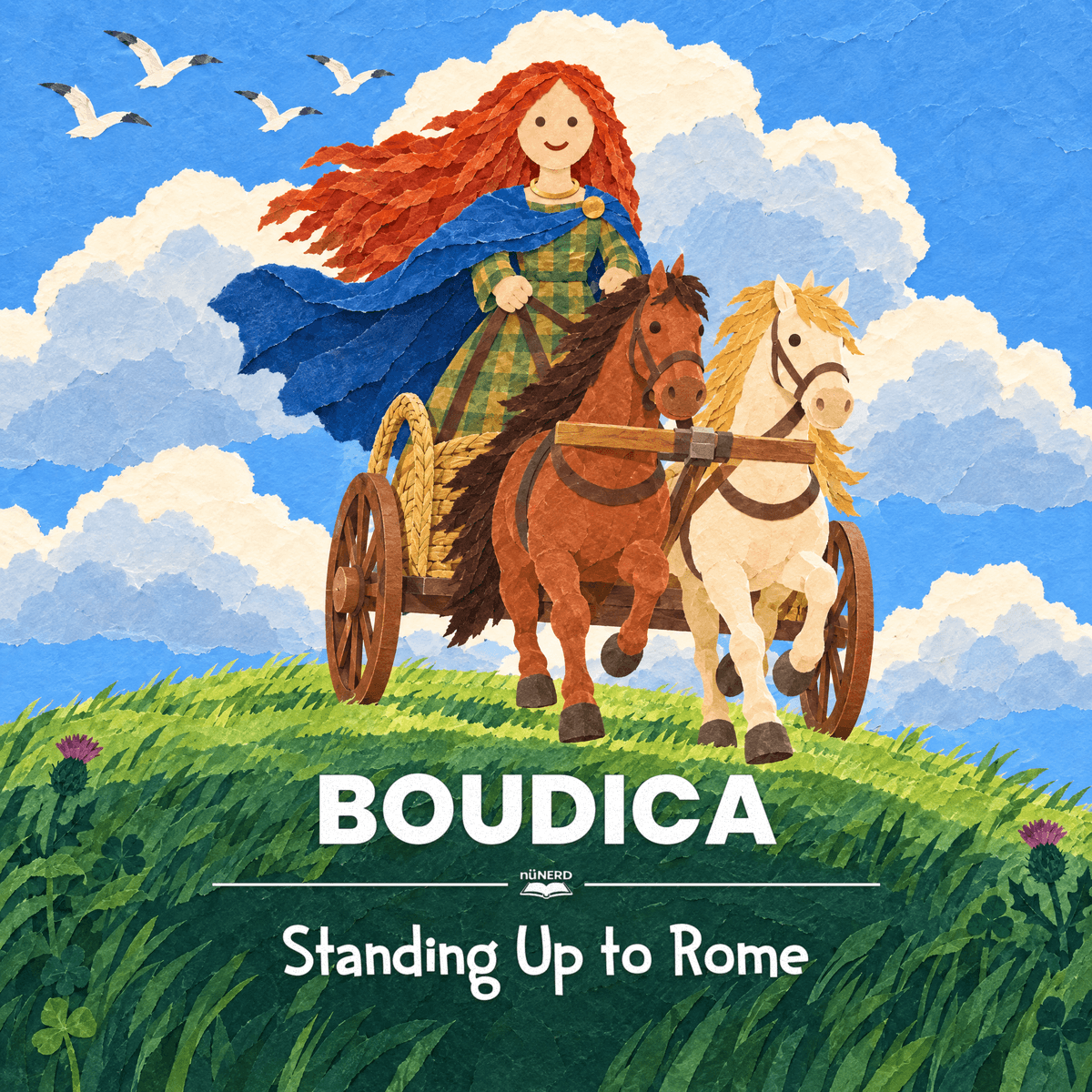
Boudica: Standing Up to Rome

For the youngest listeners: two daughters, fast horses, a round house with a warm fire, and a chariot that rumbles and rattles. When Roman soldiers carry Boudica's things out of her house, one woman stands up to Rome anyway, and so many people answer her call that the grass disappears under their feet.

24 pages · about 380 words · cut-paper collage

Good to know
Boudica's husband is simply "gone," and soldiers carry her things out of her house. There are battles, and she loses the last one. The pictures show no one hurt.
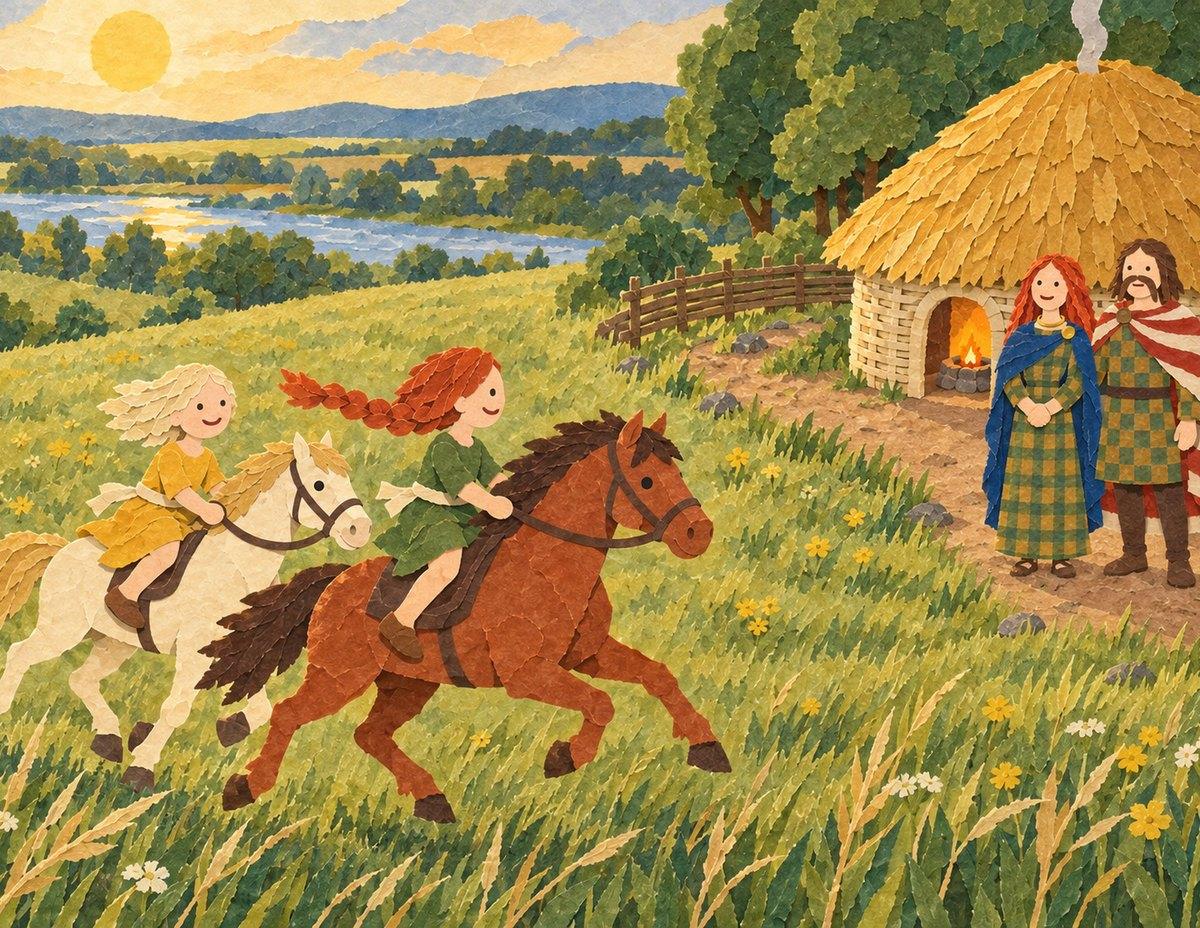
Boudica's two daughters gallop a white horse and a brown horse across a meadow while Boudica and the king stand by a thatched round house with a fire inside, in cut-paper collage
She was the queen of the Iceni (eye-SEE-nye) tribe. She had two daughters, fast horses, and a round house with a warm fire.
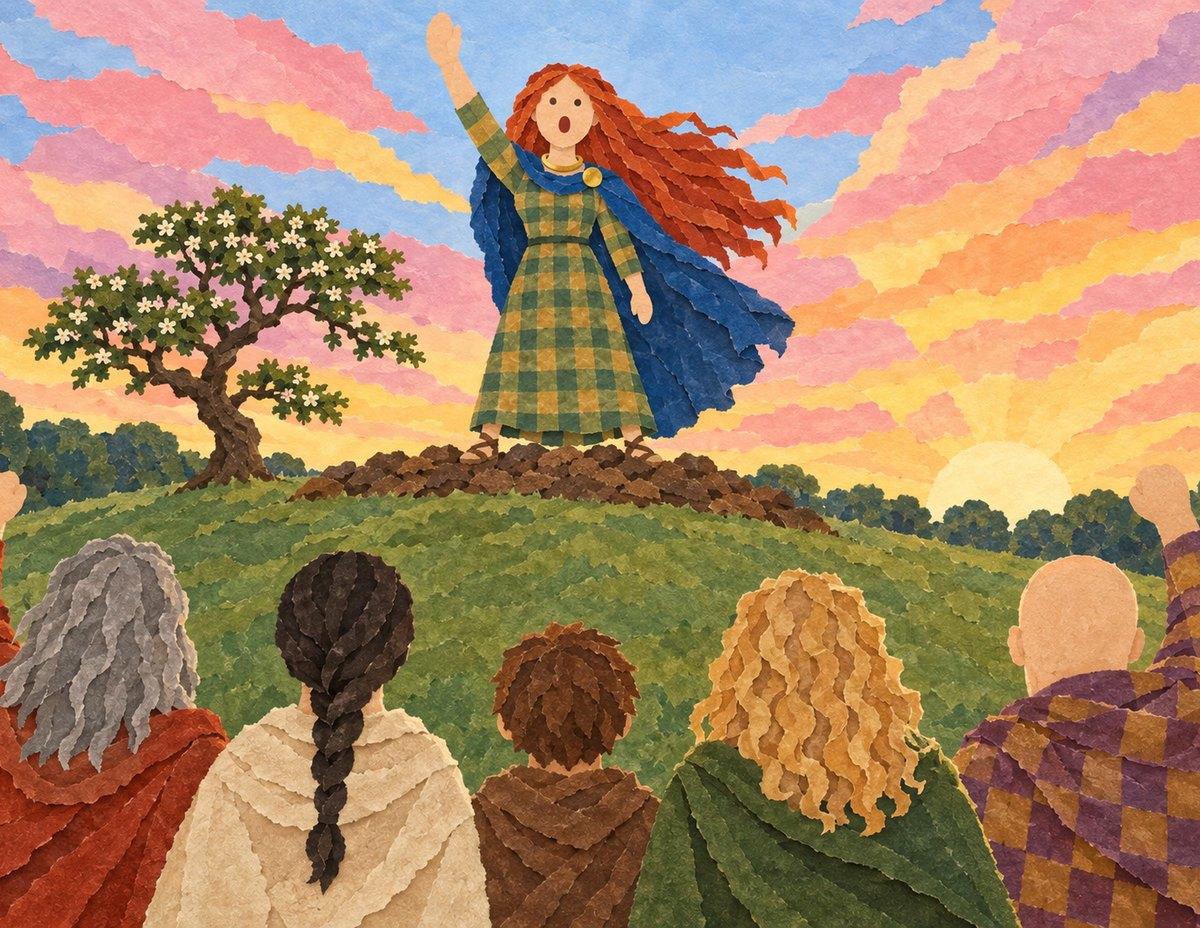
Boudica stands on a grassy mound under a pink sunset sky, one arm raised and mouth open, as a crowd seen from behind looks up at her, in cut-paper collage
She climbed a mound of earth. "They took our homes," she called. "Let's take them back!"
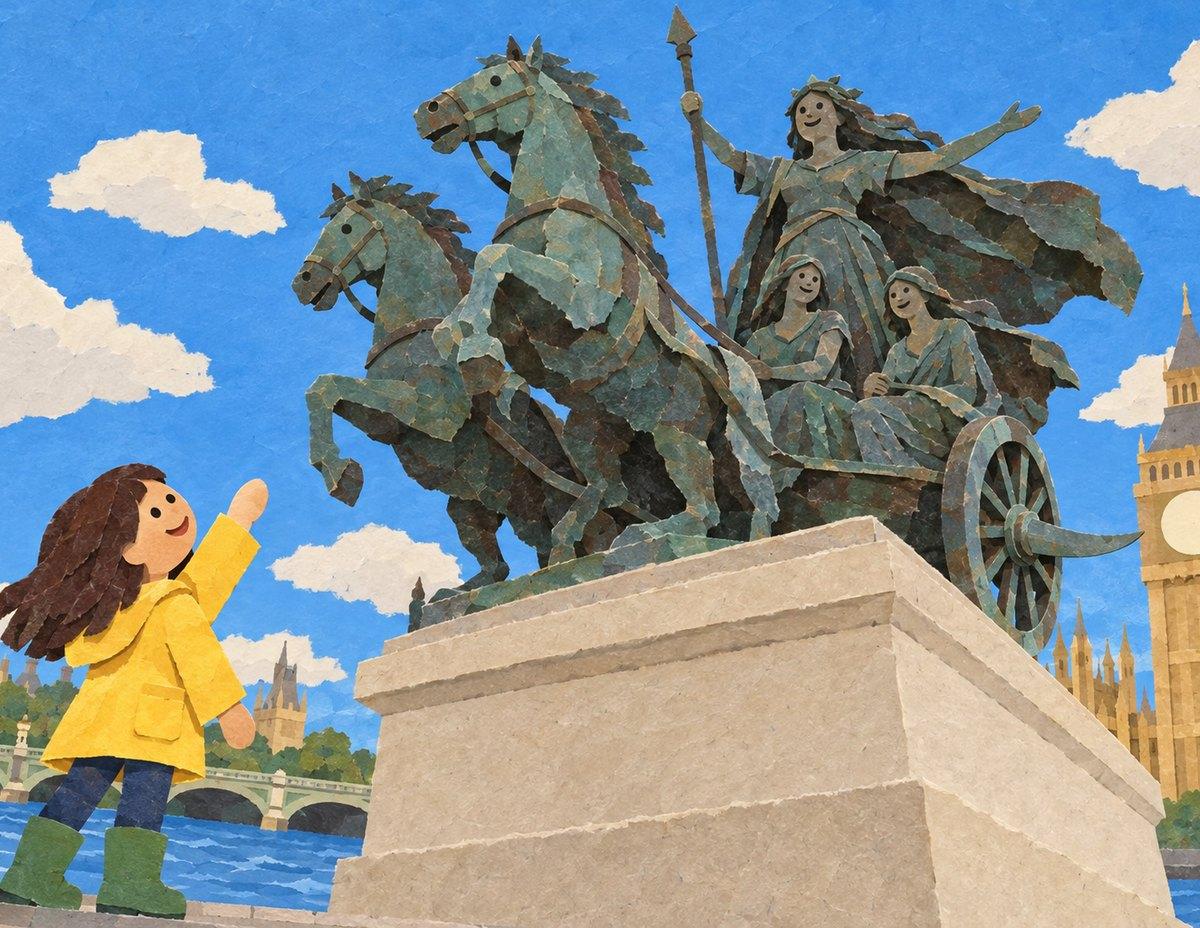
A girl in a yellow raincoat points up at the bronze statue of Boudica in her chariot with two rearing horses, beside the river in London, in cut-paper collage
In Britain today, her statue stands by the river in London, with her daughters in her chariot. Still standing tall.
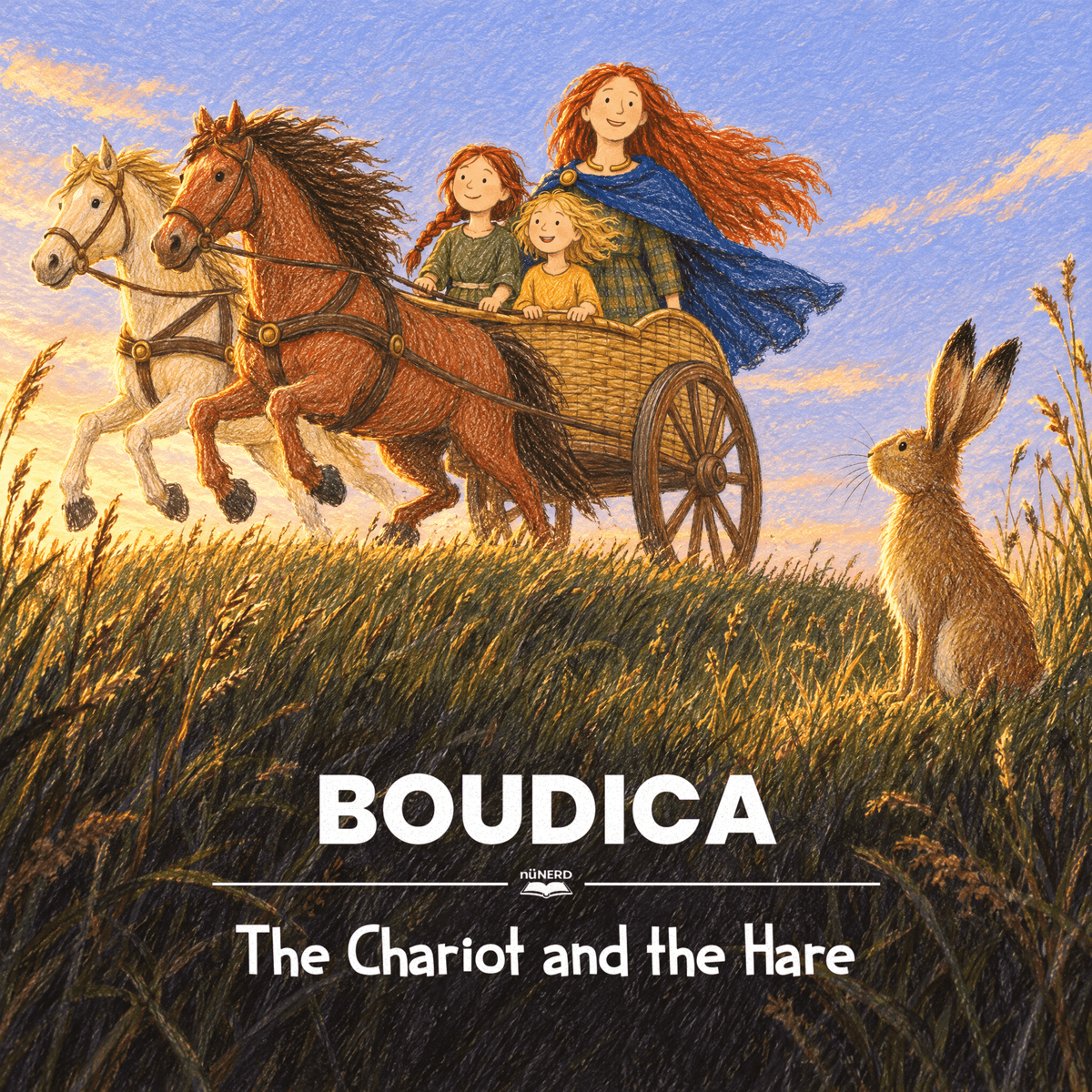
Cover of Boudica: The Chariot and the Hare, for ages 3–7

Ages 3–7 · Picture book · Read together

Boudica: The Chariot and the Hare

Boudica called on tribes that almost never fought together, not even against Rome. Would they come? The picture book follows the answer: warriors, farmers, and whole families with their carts, thousands and thousands of them, with her two daughters beside her all the way, from the round house to the night the campfires glow as far as they can see.

36 pages · about 740 words · soft crayon

Good to know
The king is "gone," with no more said. Then soldiers seize the kingdom and hurt Boudica and her daughters. It is told in two plain lines, and the book says the Romans treated her family "as if they were slaves." Her army burns a Roman town, loses the last battle, and then she is gone forever; her people mourn her, and the word "death" is never used.
Also inside
Say-it-aloud spellings in the text for Iceni (eye-SEE-nye) and Trinovantes (trin-oh-VAN-teez), where they first appear.
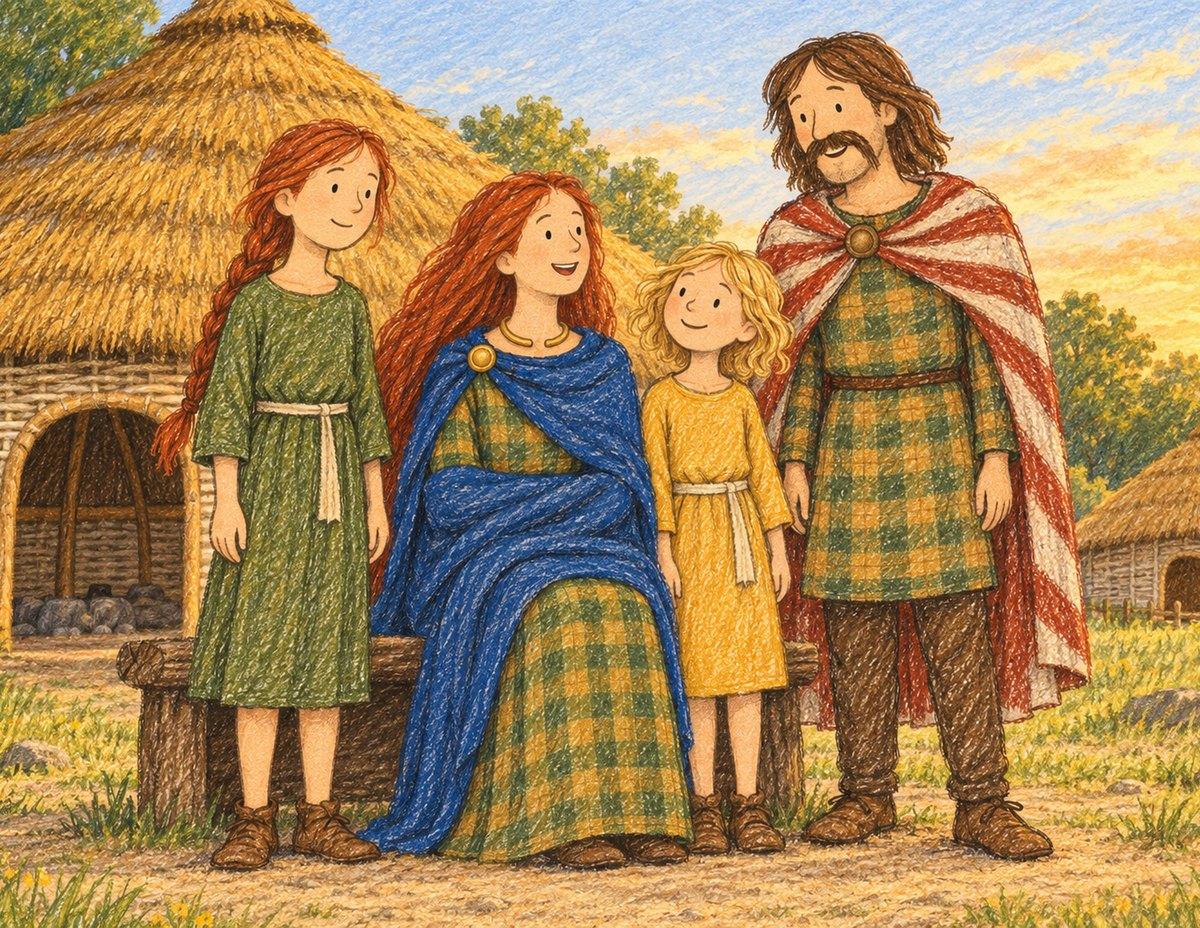
Boudica in a blue cloak sits on a bench outside a thatched round house, with her two daughters and the king in a striped cloak standing beside her, in soft crayon
Their queen was Boudica (BOO-dih-kuh). She and her husband, the king of the Iceni, had two daughters.
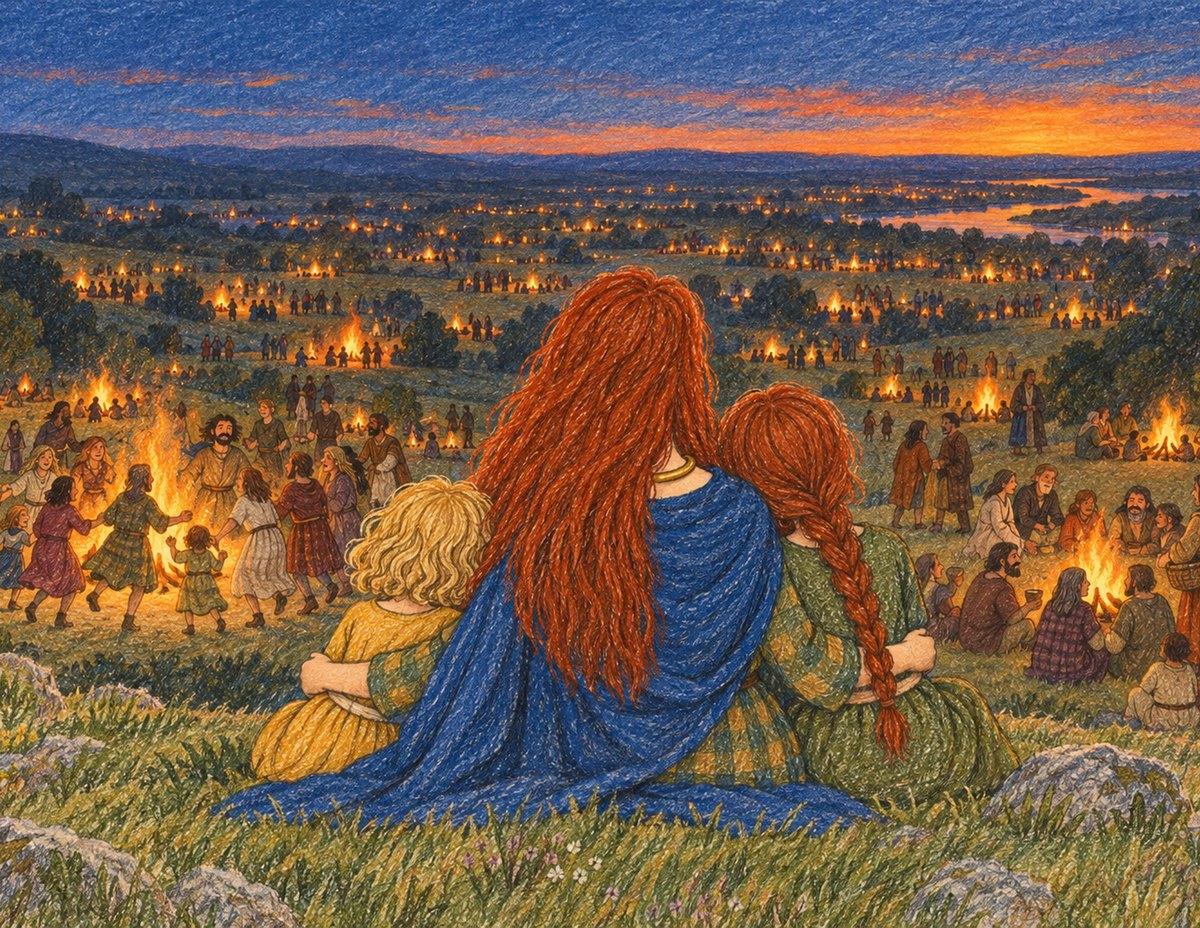
Boudica and her two daughters sit close together on a hillside at dusk, seen from behind with their arms around each other, looking out over a valley full of campfires and crowds of people dancing and gathering around them, in soft crayon
That night, her people's campfires glowed as far as her daughters could see. Rome was close to losing Britain.
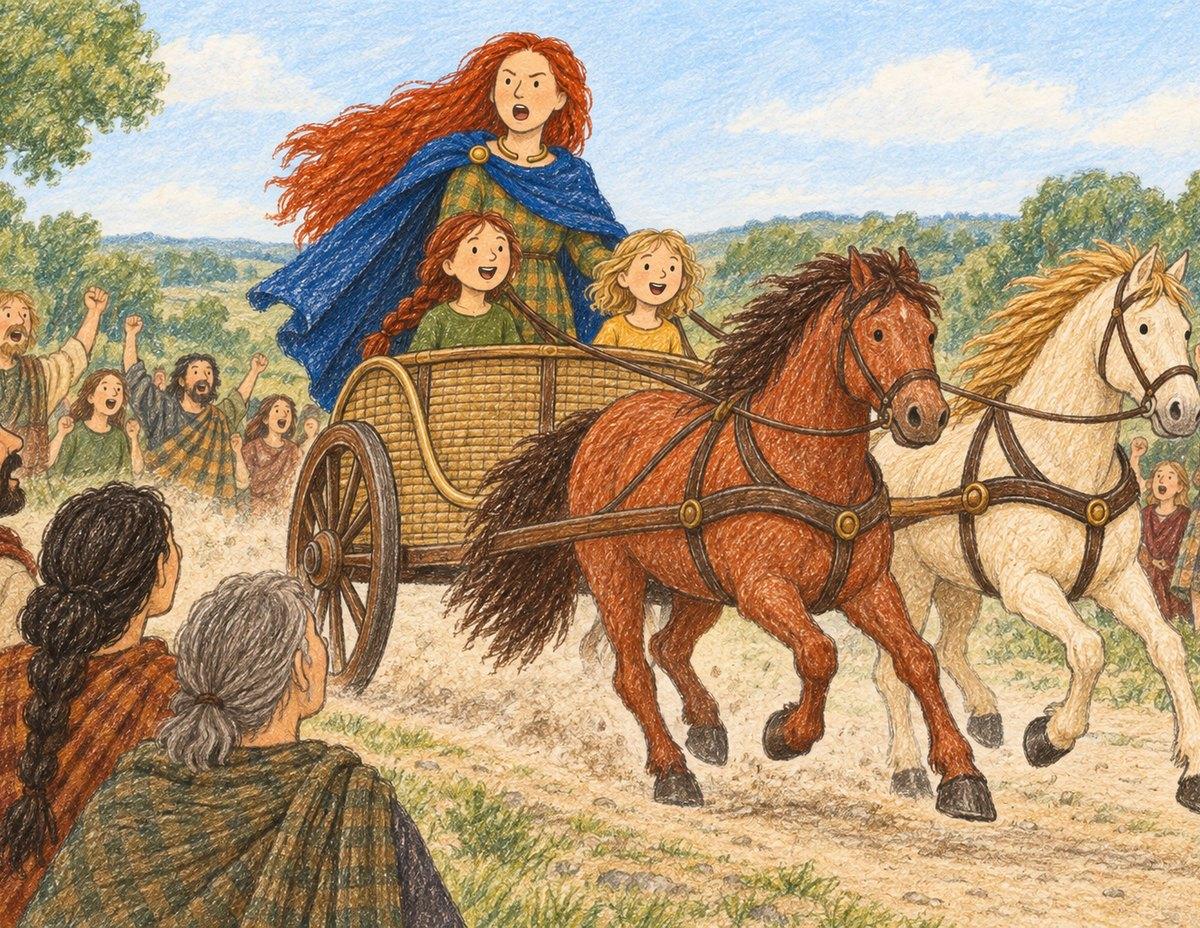
Boudica drives a wicker chariot pulled by a brown horse and a white horse, her two daughters in front of her, past cheering people, in soft crayon
Boudica rode her chariot from tribe to tribe, her daughters with her. The Romans say she called out that she fought not as a queen, but as one of her people.
Cover of Boudica: Rebel Queen of Roman Britain, for ages 6–10

Ages 6–10 · Chapter book · They start reading alone

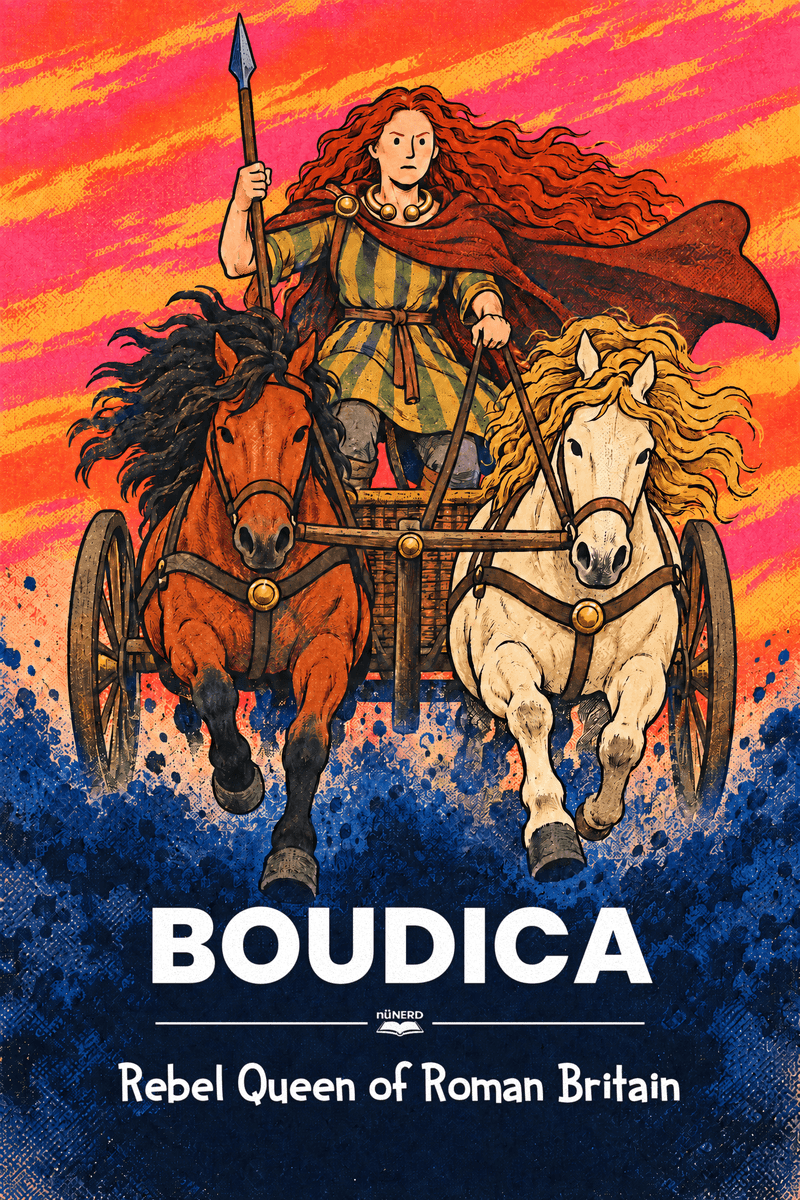
Boudica: Rebel Queen of Roman Britain

The two Roman accounts of Boudica's war that survive disagree on how it started: Tacitus says Roman officers ignored a dead king's will and his widow was whipped; Cassius Dio says it was about money. Rebel Queen of Roman Britain sets their accounts side by side, then goes underground, to the band of burnt red and black earth that archaeologists still find beneath Colchester and London.

80 pages · about 7,500 words · 20 black-and-white drawings

Good to know
It covers the whole revolt: war, the whipping of the queen and an attack on her daughters, Roman servants carrying off children, the killing of townspeople and of the families who came to watch the last battle, and Boudica's death, which Tacitus says was by poison and Dio by illness. Rome's reprisals by burning, killing, and hunger follow.
Also inside
Why so many old books call her Boadicea (probably a copying and printing mistake that stuck), the statue beside Westminster Bridge, and pronunciations from Prasutagus (pruh-SOO-tuh-gus) to Snettisham (SNET-ih-shum).
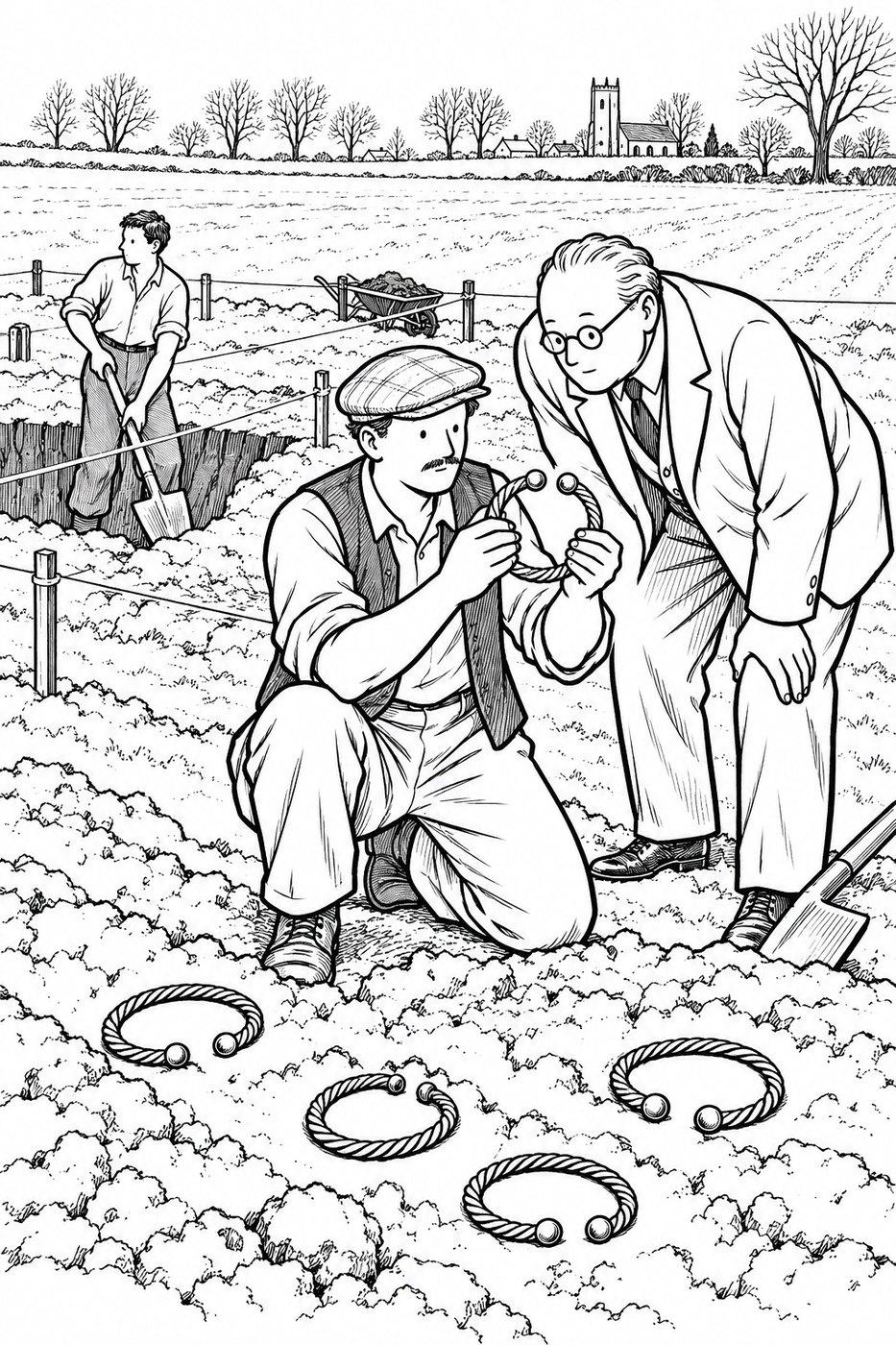
A man in a flat cap kneels in a ploughed field holding a twisted metal ring while a man in a suit and glasses leans in to look, with more rings lying in the earth, in black-and-white line art
Eventually, the remains of hundreds of torcs were found near Snettisham.
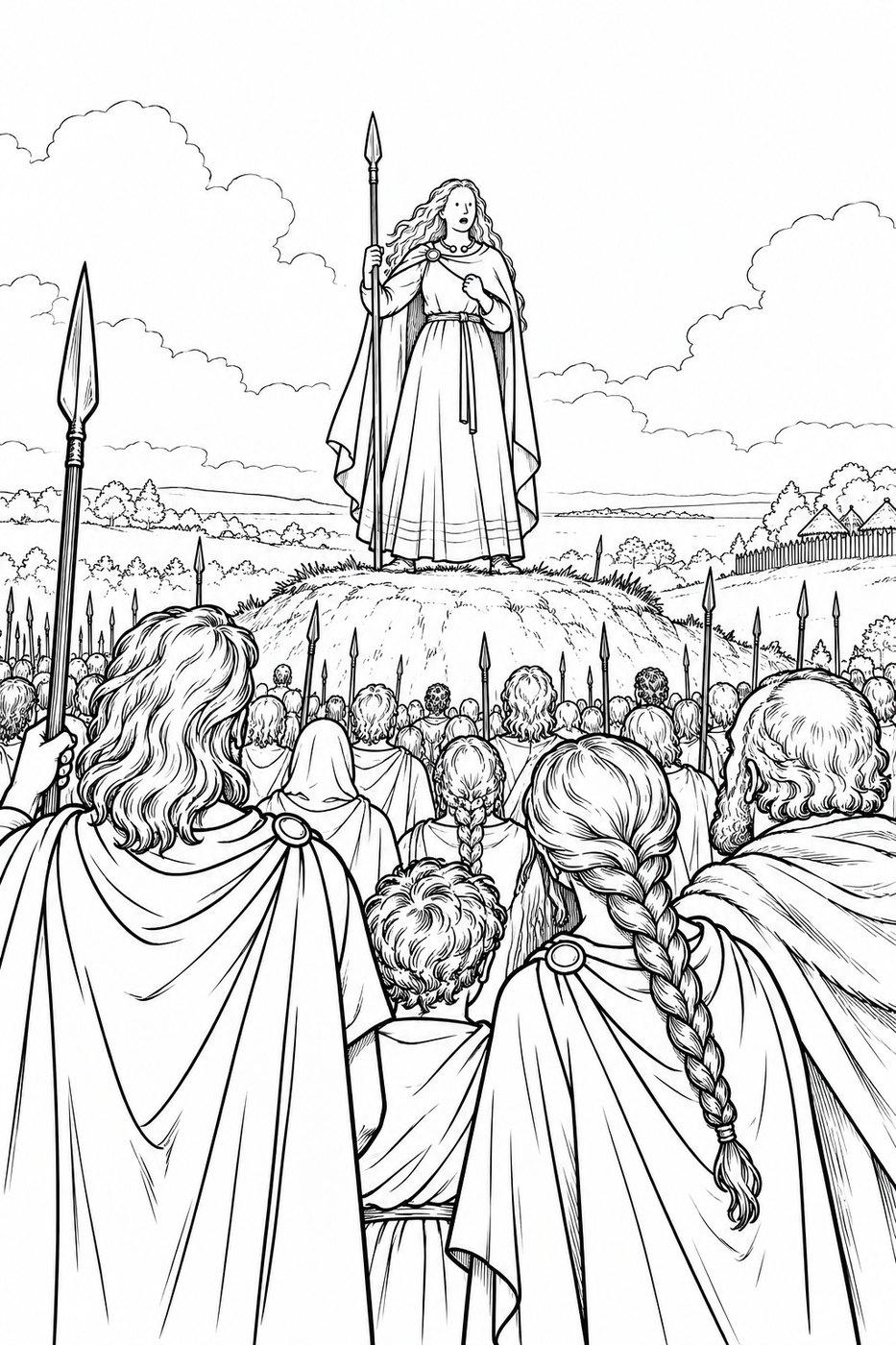
Boudica stands on a high mound holding a spear, seen past the heads and shoulders of the crowd below, in black-and-white line art
In Dio’s words, the Romans were hares and foxes trying to rule over dogs and wolves.
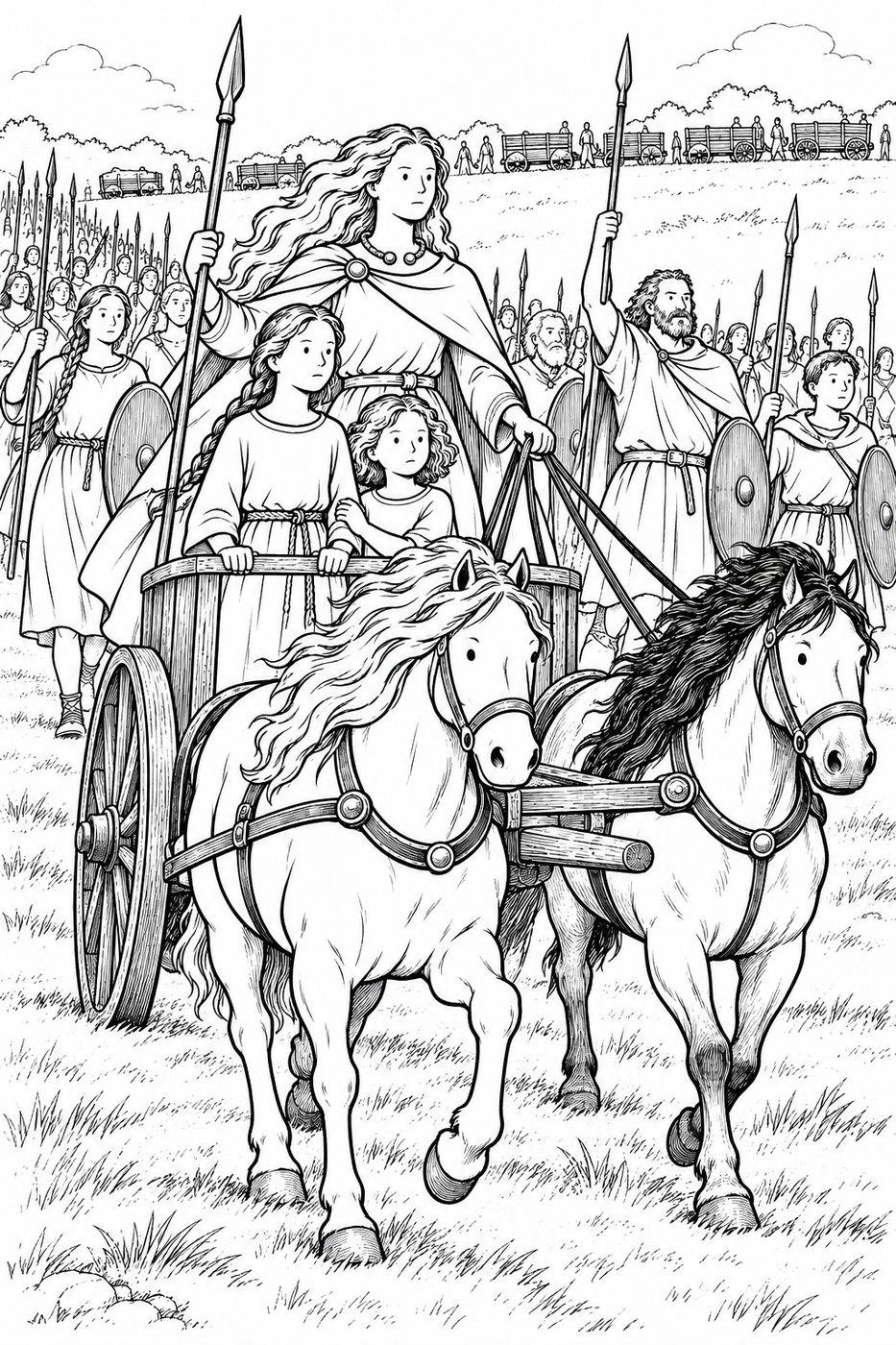
Boudica drives a chariot pulled by two horses, holding a spear, her two daughters in front of her, with warriors holding spears and round shields behind, in black-and-white line art
Boudica rode in a chariot, and her two daughters stood in front of her.

The original

The real Boudica

  • Queen of the Iceni
  • Revolt of 60 or 61 CE
  • Tacitus and Dio

The Iceni lived in what is now Norfolk. When Boudica's husband, Prasutagus, died, Roman officers seized his kingdom, and she led the Iceni and the Trinovantes against Colchester, London, and St Albans until the governor Suetonius Paulinus defeated her. Two Roman writers tell the story, Tacitus and Cassius Dio, and our chapter book quotes both.

When you want more