August 19, 2026
Why We Made Cleopatra for Kids
Cleopatra VII was the last pharaoh of Egypt. She ruled from 51 to 30 BC, came from a Greek royal family descended from one of Alexander the Great's generals, and held her throne through Rome's civil wars for about twenty years, until Octavian defeated her. The picture most people carry of her, the seductress on a couch and the snake, was largely shaped by the Romans who won that war. Our four Cleopatra books, for ages 0–12, each show a different side of her, and the two for older readers show where the legend came from.
What part of Cleopatra's story does each book tell?
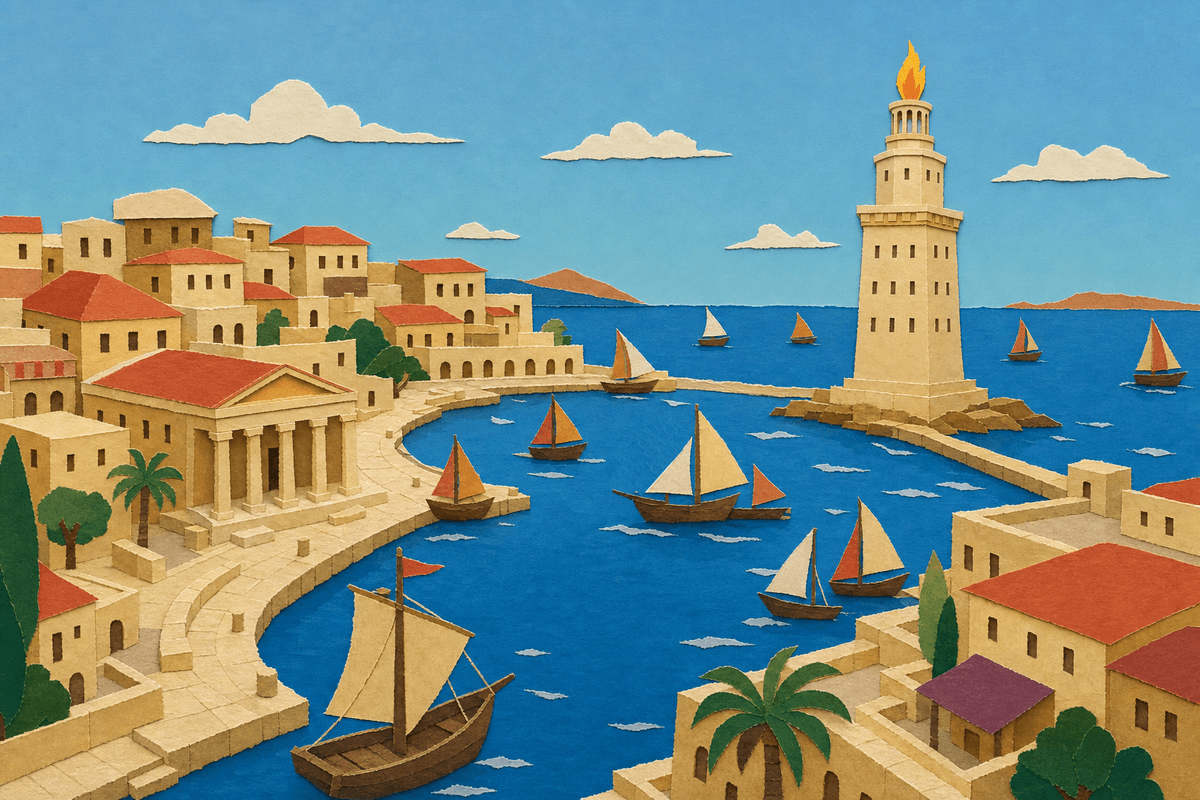
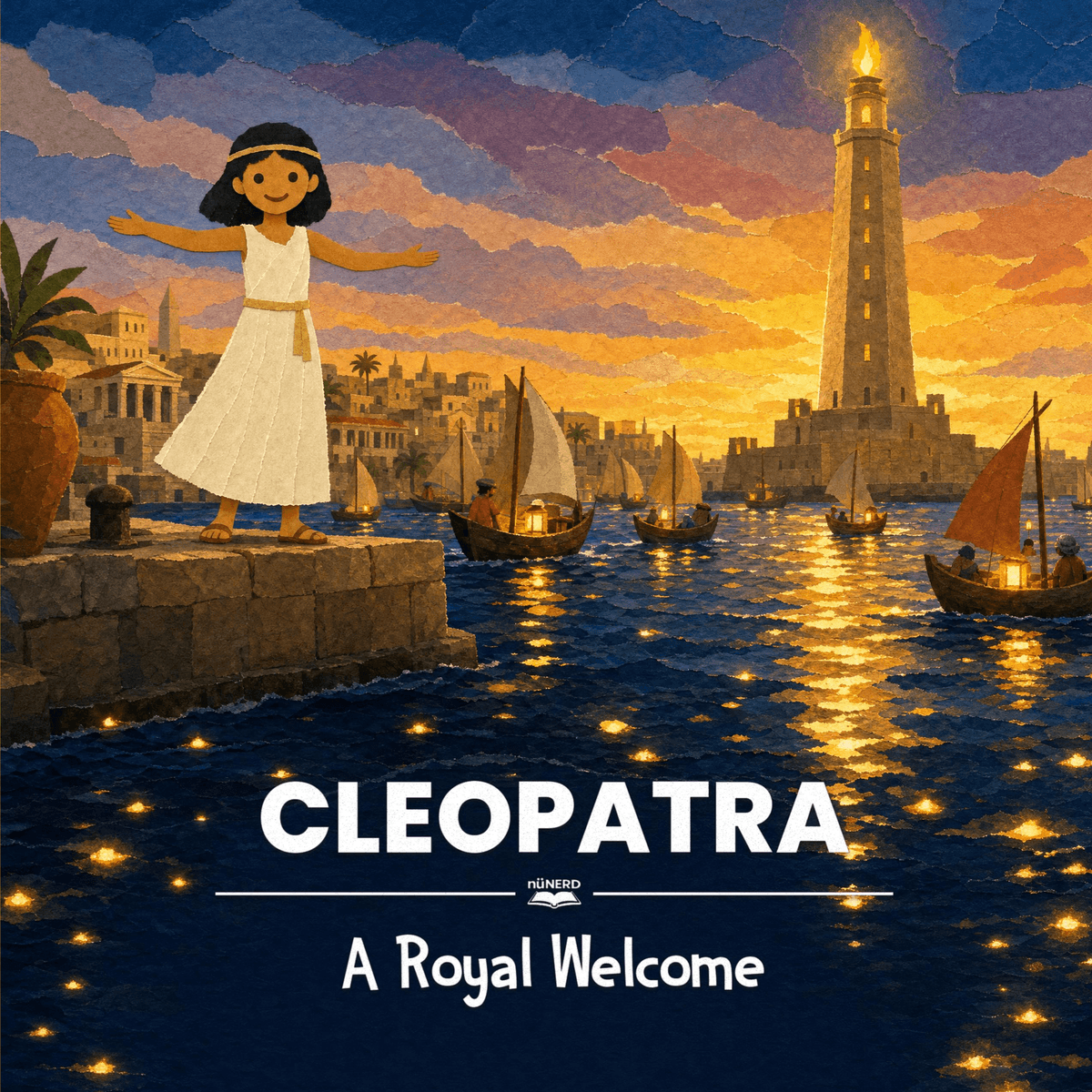
The toddler book, A Royal Welcome, turns her languages into a day at the harbor, because hello is a word a toddler is just learning. Cleopatra greets a sailor "with sea words, quick and bright," a priest with river words, a desert trader with desert words, and an ink-fingered scholar with book words. Then she finds one small girl standing alone, whose words no one else knows, and greets her in them.
Every topic, its own book at each reading level
History, philosophy, and classic literature for kids ages 0–14.
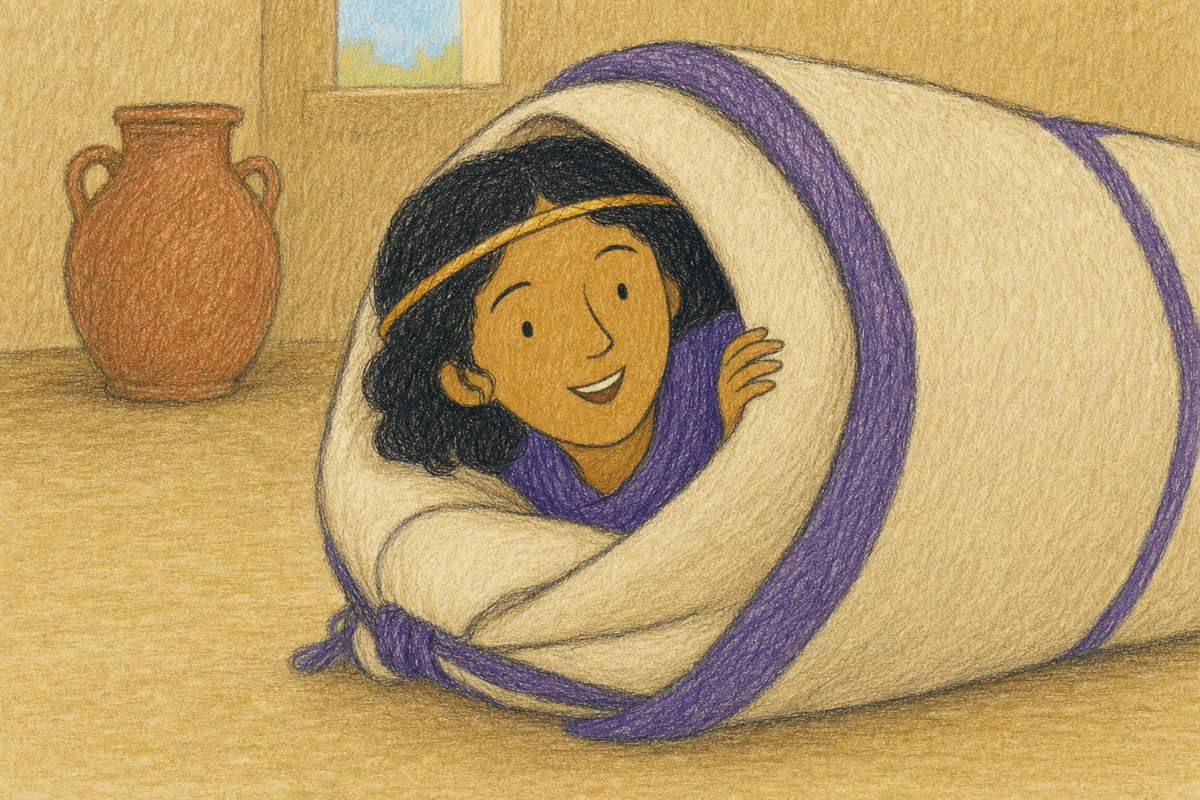
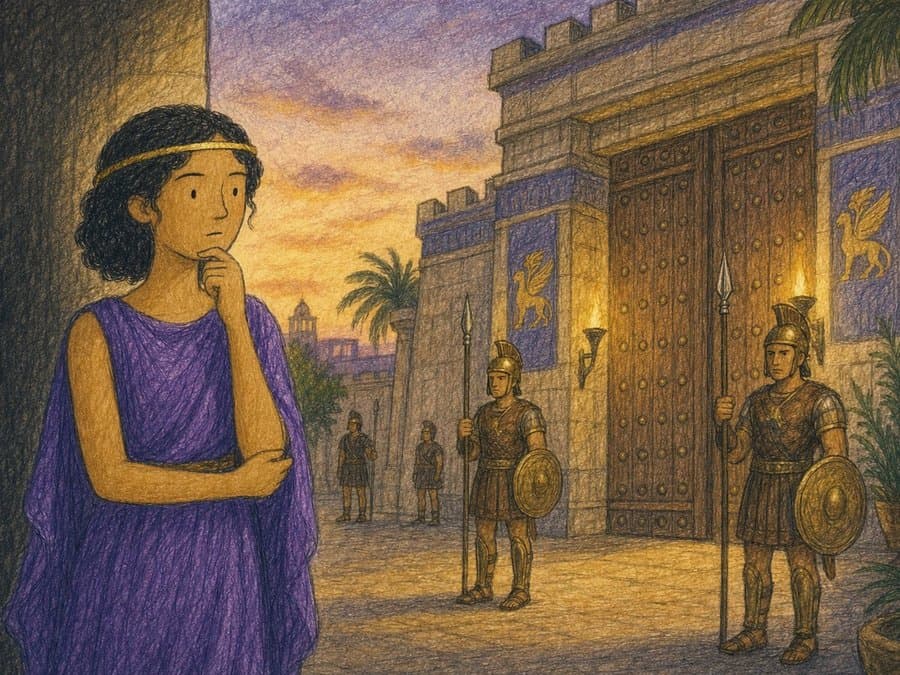
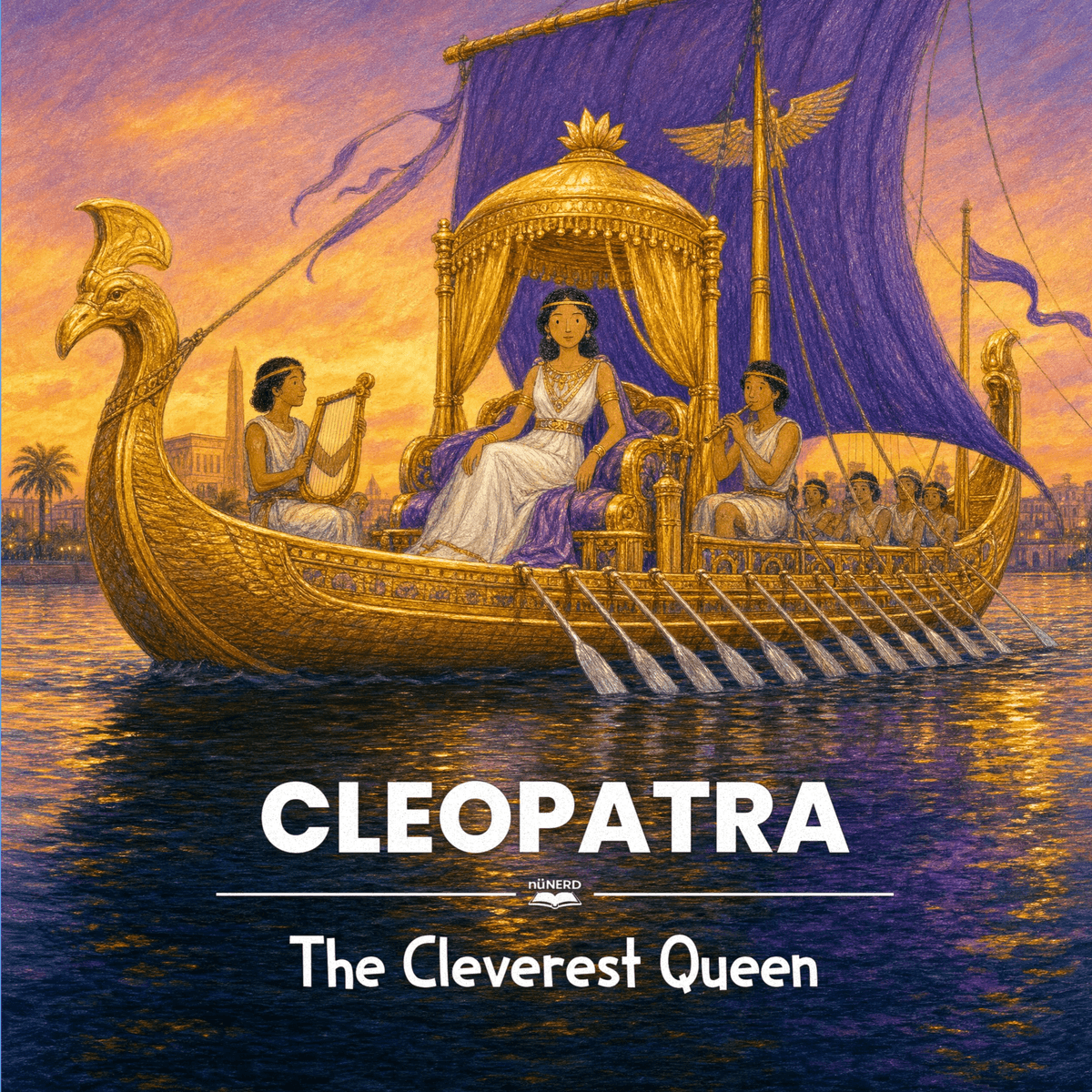
The picture book, The Cleverest Queen, tells her rise through one person after another who "expected very little from her" and was wrong. Her little brother's men push her out of the palace, and she has to reach Caesar past guards at every gate. "Nobody stops a bundle of bedding," so she rolls herself up in one and a trusted friend carries her in. Then comes the work, grain for a dry year and a new fleet, and then the golden barge that sails to meet Antony. The last page asks the reader, "What do YOU see?"
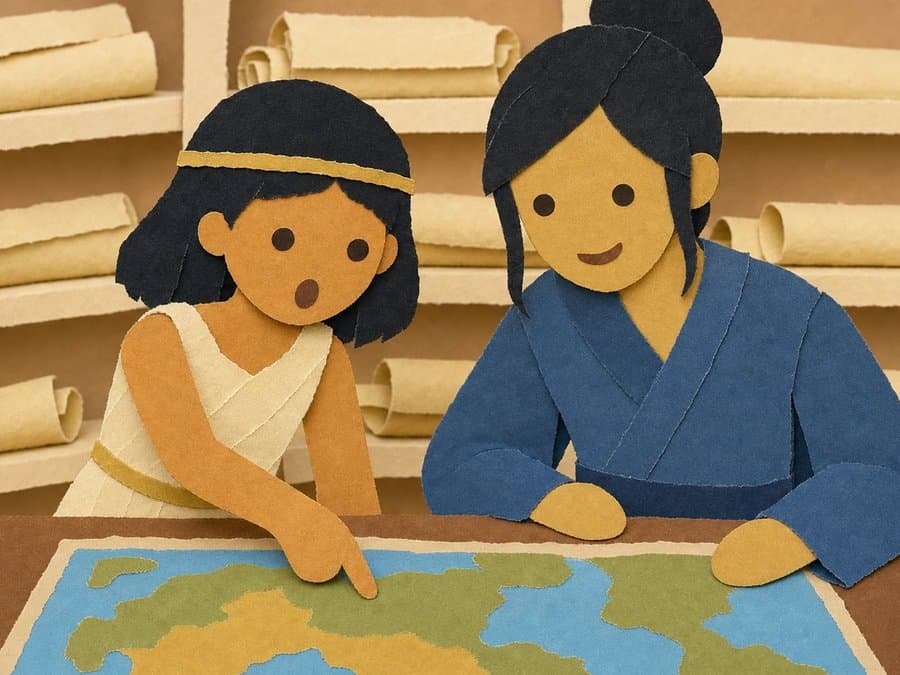
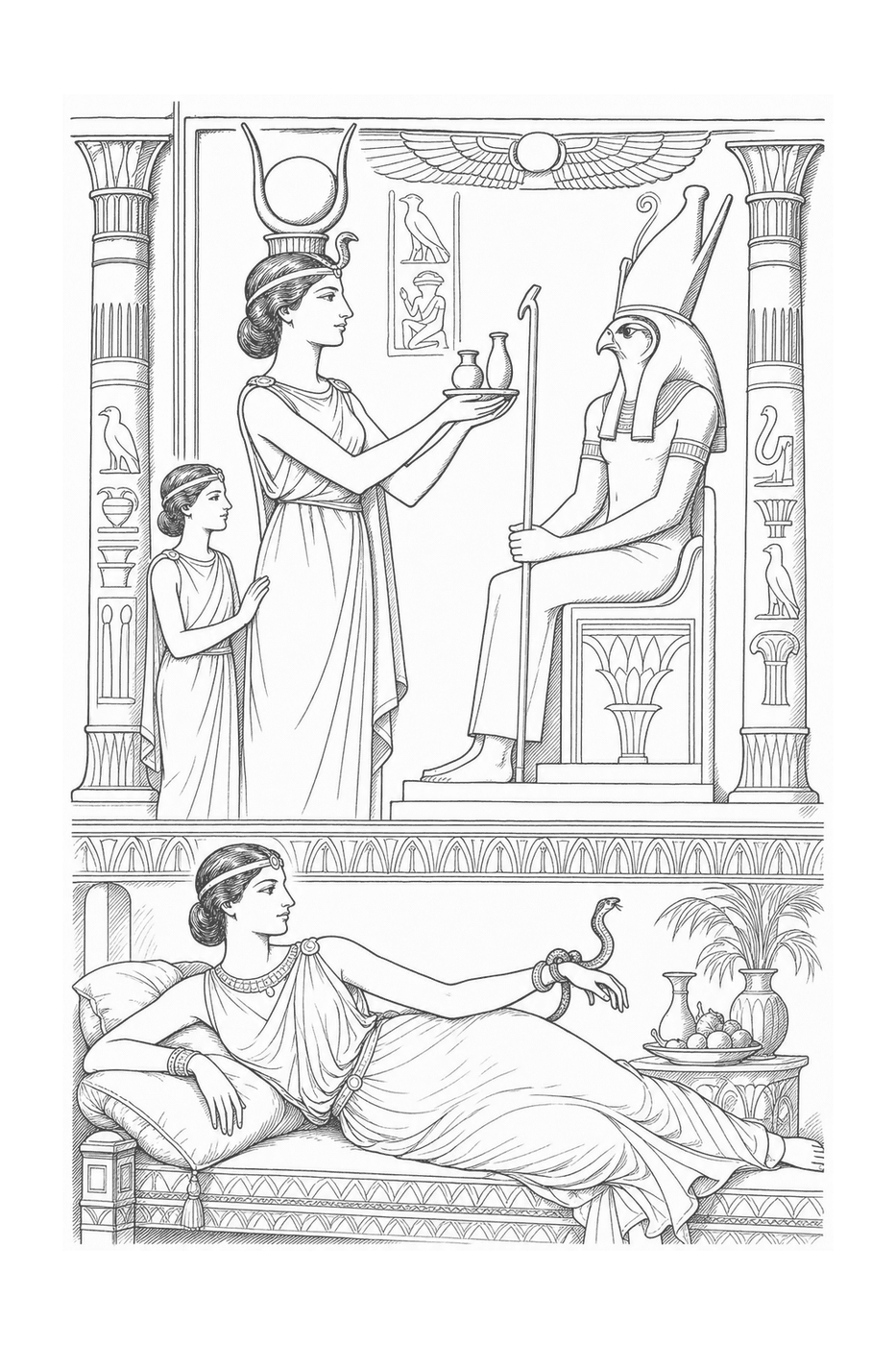
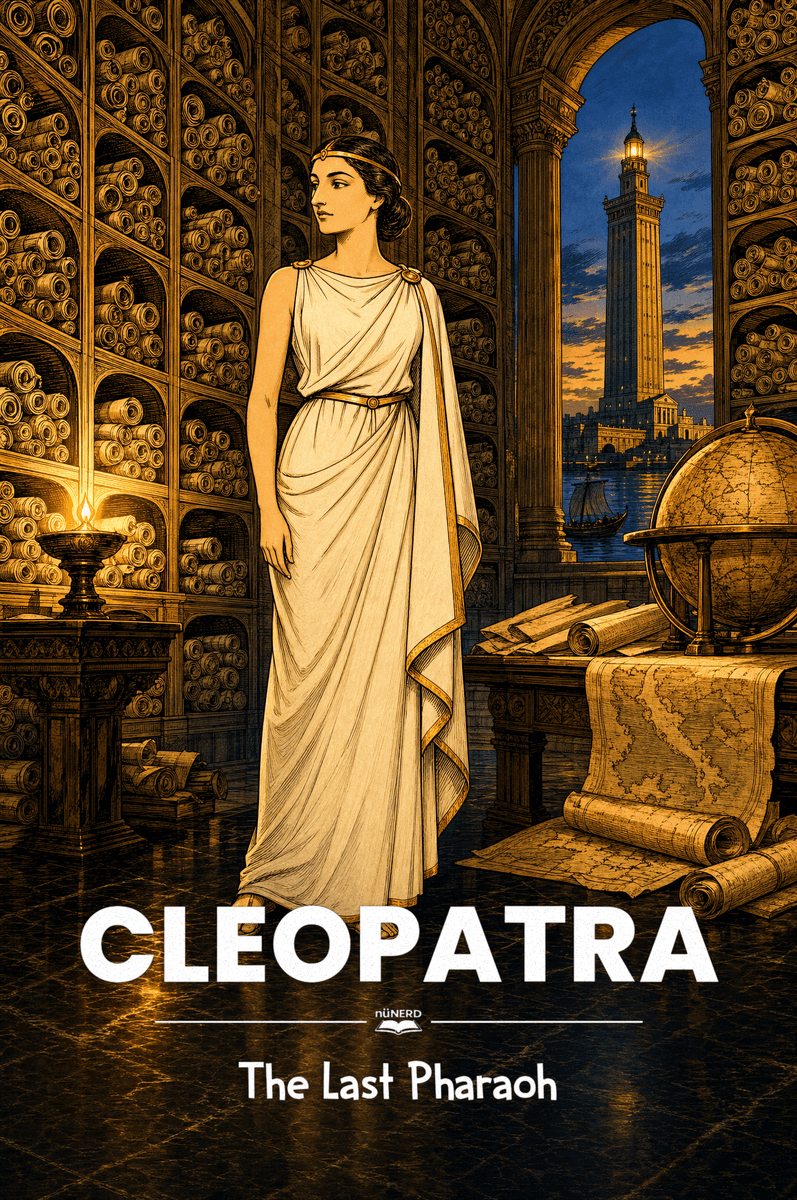
The chapter book, The Last Pharaoh, tells the full life in seven chapters, one of them given to the daily work of ruling Egypt, so the reader sees her at her desk as well as beside Caesar and Antony. In one scene a man quarreling over a field recites his numbers, certain the queen will not check. She has read the same ledgers, and she names the one figure that is wrong in his favor. The last chapter sets a painting of her draped across a couch beside a temple carving of her in a pharaoh's crown, making an offering with her son.
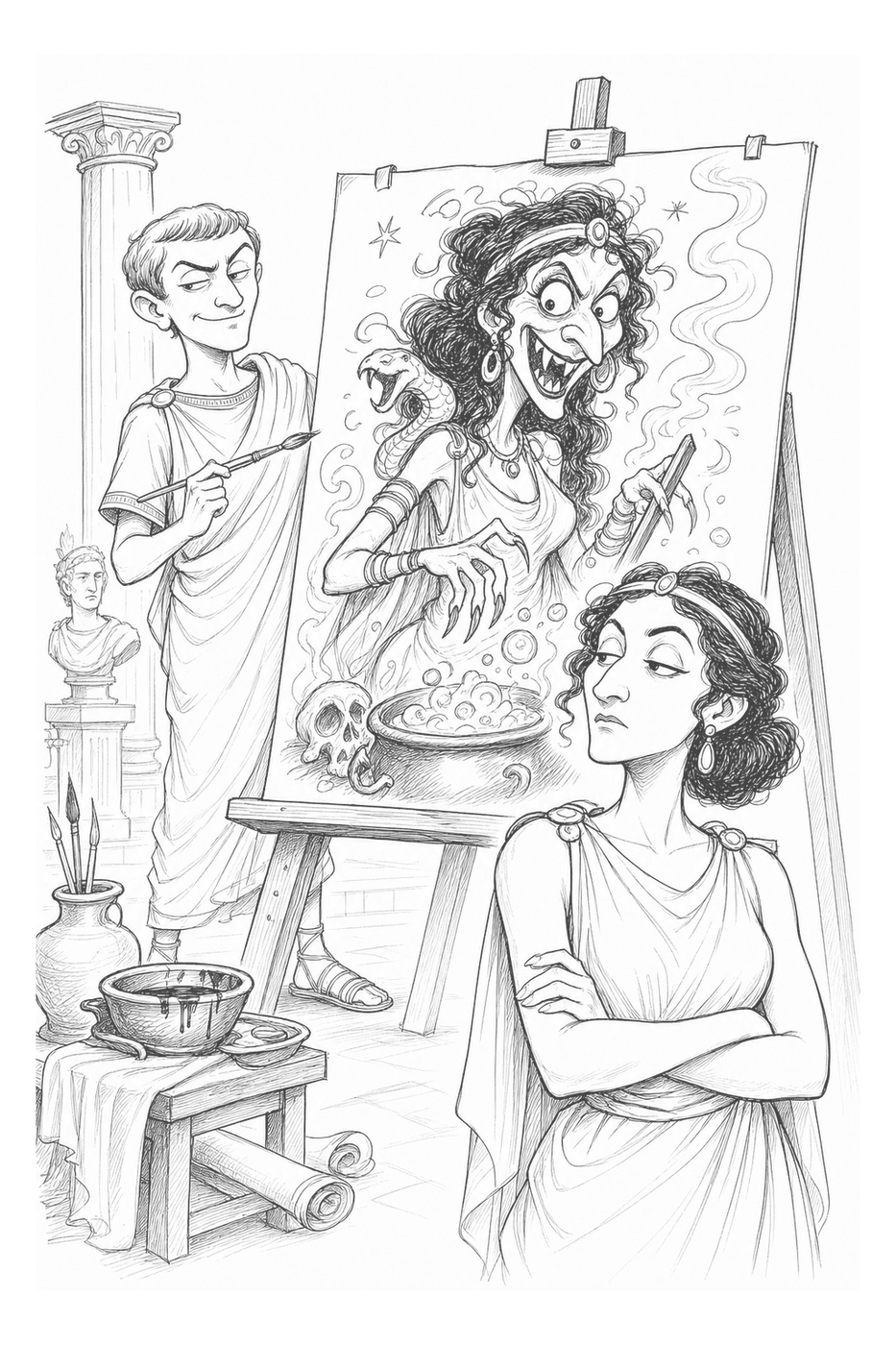
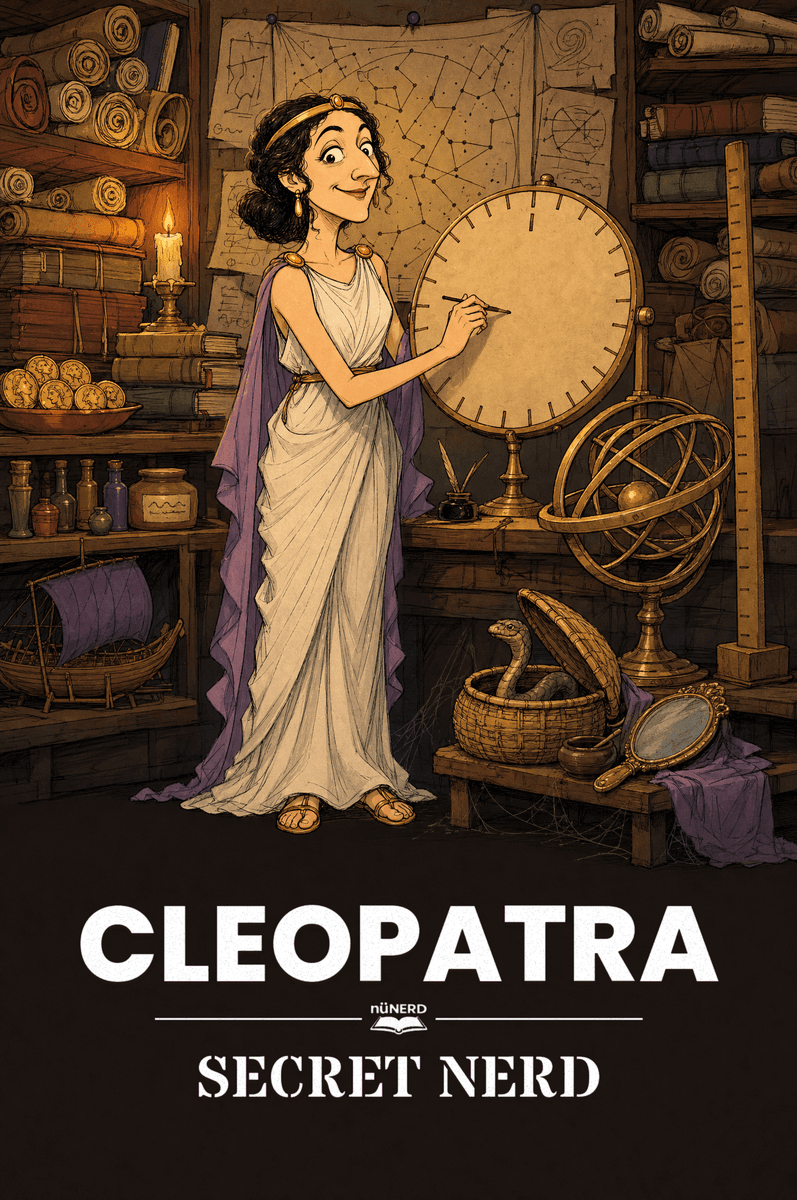
Cleopatra: Secret Nerd is for a reader who knows the outline and wants to know how things worked. Cleopatra sends that reader to "another book" for the wars, then explains the nilometers that measured the flood, the ledgers and granaries, and Sosigenes, the Alexandrian astronomer who advised Caesar on a calendar with a leap day every fourth year. The last chapter walks through Octavian's propaganda campaign against her in four moves, from the whispers before the war to a story Rome went on copying for centuries with no one left to answer it.
From the books
Toddler book, ages 0–4
Picture book, ages 3–7
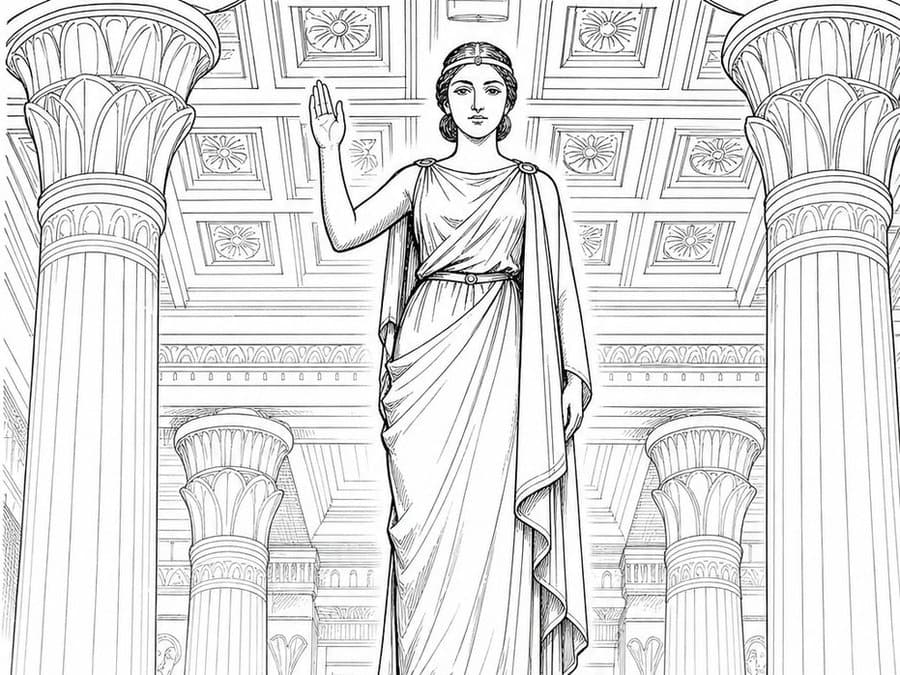
Chapter book, ages 6–10
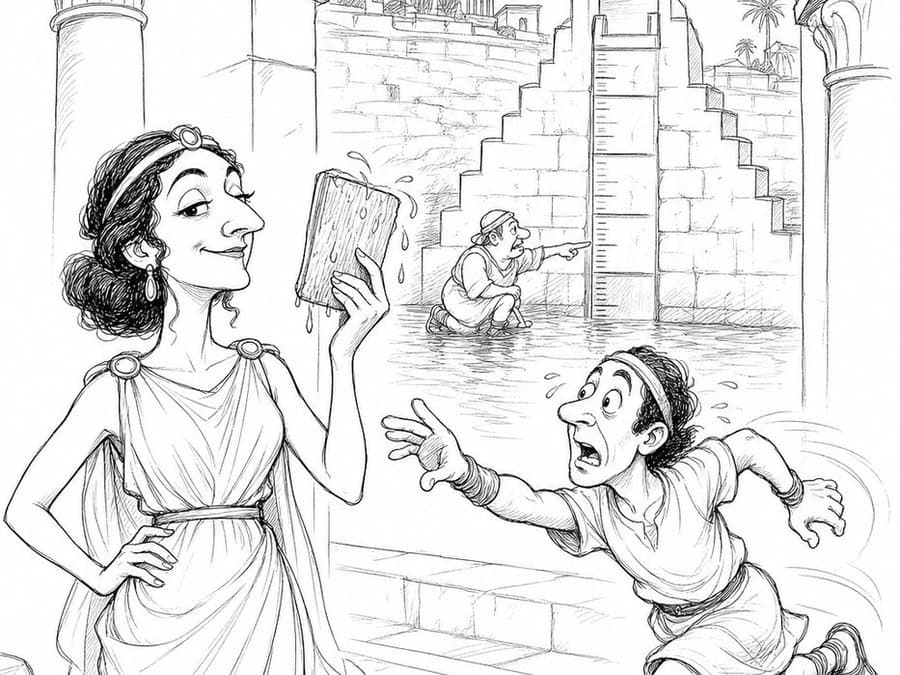
Secret Nerd book, ages 9–12
What age are the Cleopatra books for?
A Royal Welcome is a toddler book for ages 0–4, and The Cleverest Queen is a picture book for ages 3–7. The Last Pharaoh is a chapter book for ages 6–10, and Cleopatra: Secret Nerd is for ages 9–12. All four are on the Cleopatra page.
How independent was Cleopatra's Egypt?
By the time Cleopatra was born, Egypt was still a kingdom only because Rome allowed it. Her father, Ptolemy XII, was driven out by a revolt in Alexandria and put back on his throne in 55 BC by a Roman army he paid for with borrowed money. What she managed, as Caesar's ally and then Antony's, was to keep her throne and keep Egypt out of direct Roman rule for about twenty years. After her death, Egypt became a Roman province, and its grain fed the city of Rome.
She also broke with her own family. The Ptolemies had ruled Egypt for nearly three centuries, and Plutarch (Life of Antony 27) says the kings before her had scarcely bothered to learn Egyptian. She spoke it, and he names Ethiopians, Troglodytes, Hebrews, Arabians, Syrians, Medes, and Parthians among the peoples she answered without an interpreter.
Was Cleopatra really beautiful?
The evidence closest to her own time does not back up her famous beauty. Her own coins show a strong, sharp-featured woman with a prominent nose, nothing like the Hollywood beauty. Plutarch, a Greek writing under Roman rule about a century and a half later, said her beauty was not, in itself, so remarkable that no one could compare with her; what struck the people who met her was her conversation, her presence, and her voice. The seductress is largely a Roman invention. Octavian, later the emperor Augustus, needed a foreign villain to justify a war against a fellow Roman, so in 32 BC Rome declared war on Cleopatra alone. His poets gave the portrait its lasting form: Horace called her a fatale monstrum, a deadly monster, in the same ode that ends by admiring how she died. In Octavian's triumph, Plutarch says, an image of her with the asp clinging to it was carried through Rome. She had died rather than walk in that procession herself.
The carpet she unrolls from in the movies is a later addition too. In Plutarch's account (Life of Caesar 49), her friend Apollodorus tied her up in a bed-sack and carried it into the palace to Caesar: a roll of bedding, not a carpet. Our picture book and chapter book both use the bedding.
How do you read the Cleopatra books with kids?
When the picture book asks "What do YOU see?", turn back and let your child point to what the queen does. The chapter book's last chapter gives three questions to ask of any story that looks too neat: "Who told it first? What did they want? Who never got to tell their side?" Find a photograph of one of her coins, set it next to a movie poster of Cleopatra, and ask your child those three questions.
The books
Cleopatra on Amazon
Frequently asked questions
How long are the Cleopatra books, and what format is each one?
A Royal Welcome is a short read-aloud of about 320 words with cut-paper collage pictures, and The Cleverest Queen is a picture book of about 750 words with soft crayon illustrations; both are 8.5-inch square picture books. The Last Pharaoh is a 6-by-9-inch chapter book of about 7,100 words in seven chapters, with black-and-white line art. Cleopatra: Secret Nerd is the same size, about 6,400 words in eight chapters, told in Cleopatra's own voice.
Do the Cleopatra books show her death?
The toddler book and the picture book end while she is alive and ruling. The chapter book tells it plainly: Antony takes his own life as Alexandria falls, and Cleopatra dies in the monument where she is held rather than be paraded through Rome. It gives the asp as one account among several and quotes Plutarch: "But what really took place is known to no one." The Secret Nerd book leaves her death to the chapter book.
Was Cleopatra Egyptian?
She was queen of Egypt and spoke Egyptian, but her father's family, the Ptolemies, were Macedonian Greeks descended from Ptolemy, one of Alexander the Great's generals, and they ruled from the Greek city of Alexandria. Who her mother was is not known for certain, so historians still debate her full ancestry. Our chapter book introduces the Ptolemies as "a Greek family ruling an Egyptian land."
Where can I find free Cleopatra resources?
Our Cleopatra page links these, all free to open: Cleopatra (Britannica Kids, ages 8 to 11); Cleopatra (Britannica, by Joyce Tyldesley); Was Cleopatra Beautiful? (Encyclopaedia Romana, University of Chicago); Plutarch, Life of Antony (LacusCurtius).