History · Ages 0–12

Cleopatra

The seductress most people picture as Cleopatra was drawn by the Romans who beat her. The queen on her own coins has a strong nose and a ruler's jaw.

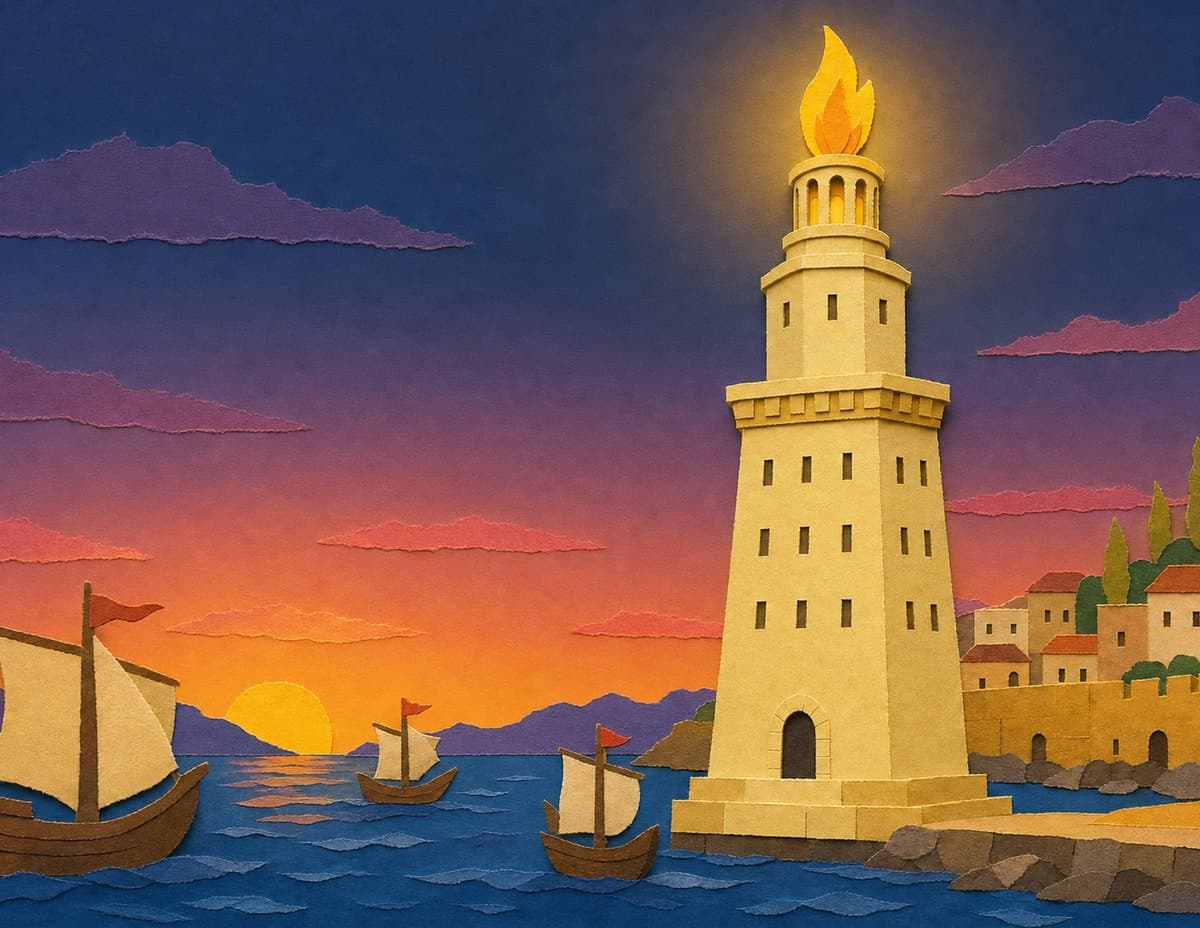
The great lighthouse at dusk, its fire burning at the top of the tower, with small ships on the water below, in cut-paper collage

A page from Cleopatra: A Royal Welcome

Why we love it

Sea words.

The first visitor off the boats is a sailor whose ship smells of salt and rope, and Cleopatra greets him with sea words, quick and bright, so his whole face lights up. He shows her his very best shells. Plutarch says the real queen could answer most visitors in their own tongue.

Toddler book, ages 0–4 ↓

Purple sails.

Summoned by Antony to explain herself, she let his letters pile up, then came up the river Cydnus on a barge with a gilded stern, purple sails, and silver oars beating time to flutes. Her attendants, dressed as sea nymphs, were steering and working the ropes. In our picture book, Cleopatra planned the whole thing.

Picture book, ages 3–7 ↓

One Greek word.

A papyrus from 33 BC grants a tax break to one of Antony's generals, and at the bottom a second hand has added a single Greek word meaning "make it happen." Some scholars think that hand was hers.

Chapter book, ages 6–10 ↓

Hair-loss cures.

Galen, the most famous doctor of the Roman world, copied remedies for baldness from a book on cosmetics that went under Cleopatra's name. Nobody can prove she wrote it. Our Secret Nerd companion asks whether she did.

Secret Nerd book, ages 9–12 ↓

Which book for your child?

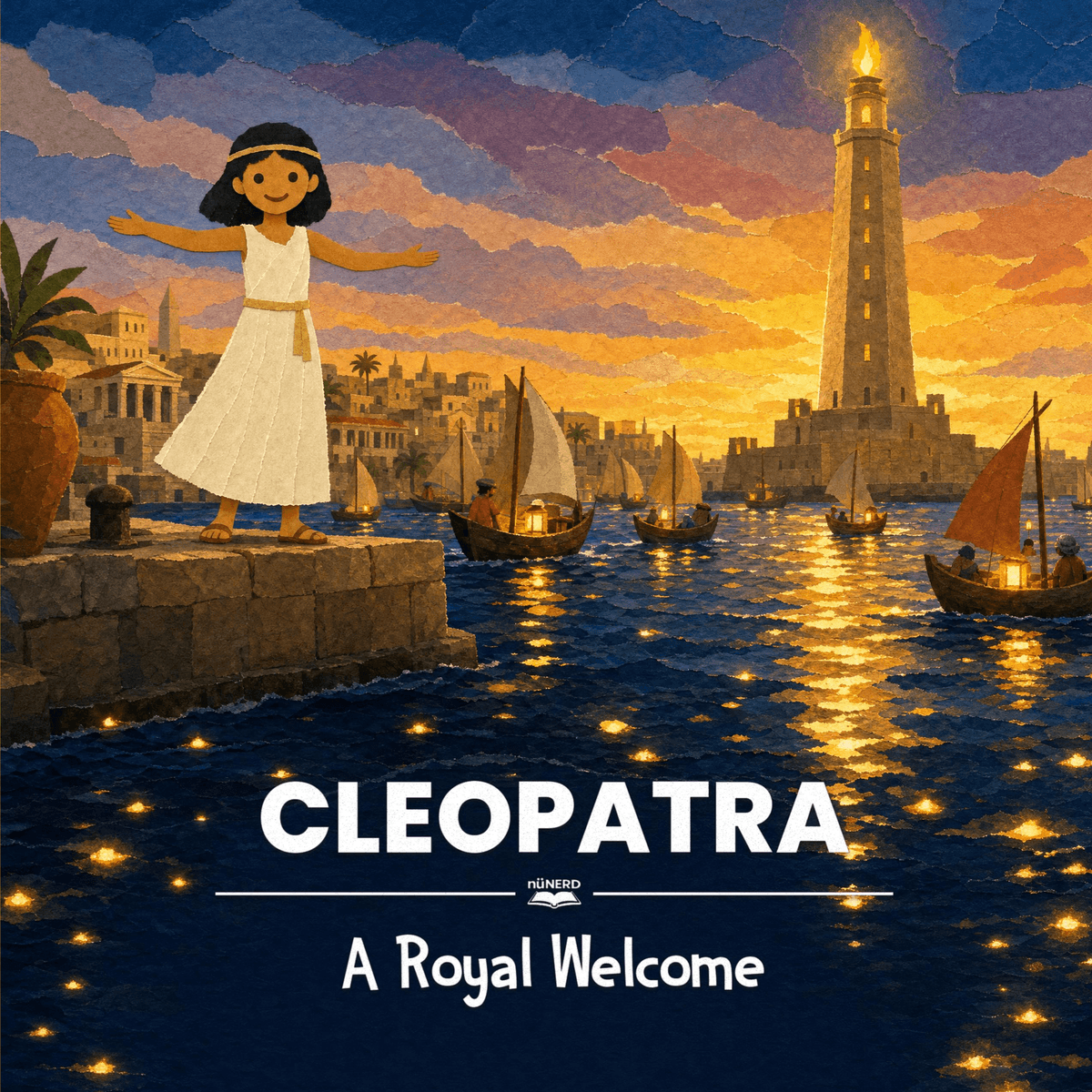
Cover of Cleopatra: A Royal Welcome, for ages 0–4

Ages 0–4 · Toddler book · Read to them

Cleopatra: A Royal Welcome

Before she wore a crown, Cleopatra was a little girl in the great harbor city of Alexandria, where ships arrived from everywhere and travelers came speaking dozens of languages. This is the story of the child who learned to greet each of them in their own words, and watched a stranger's whole face light up. A made-up story about a real person, and about a big idea a two-year-old can feel: knowing someone's words is a way of making them feel at home.

24 pages · about 320 words · cut-paper collage

Good to know
A gentle made-up story about Cleopatra as a girl, inspired by her gift for languages. The greetings are "sea words" and "desert words", so no real phrases are taught. Near the end a small girl stands alone at the harbor and nobody knows her words, until Cleopatra says her hello.
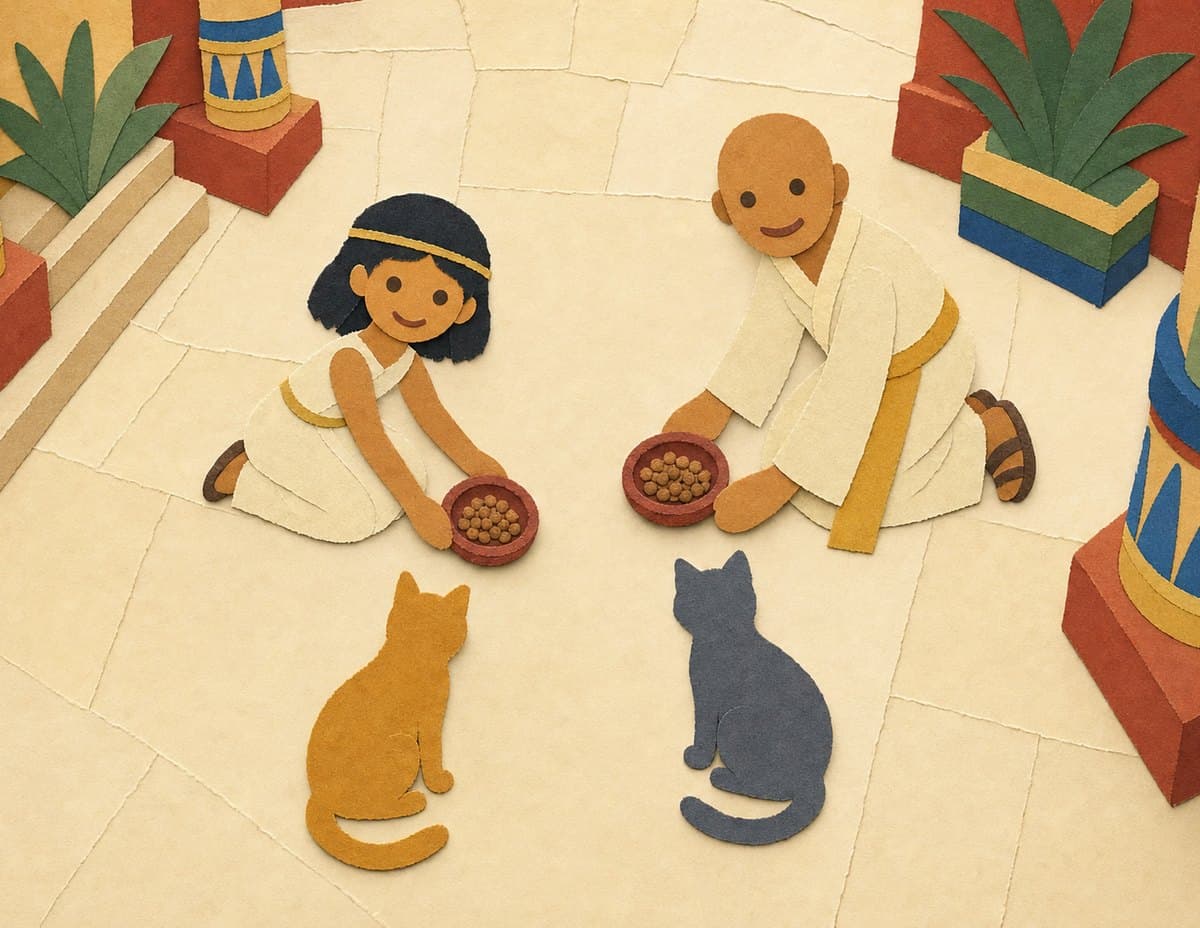
Cleopatra and a bald priest in white kneel on a stone courtyard, setting out bowls of food for an orange cat and a gray cat, in cut-paper collage
Together they fed the temple cats. The cats purred in every language.
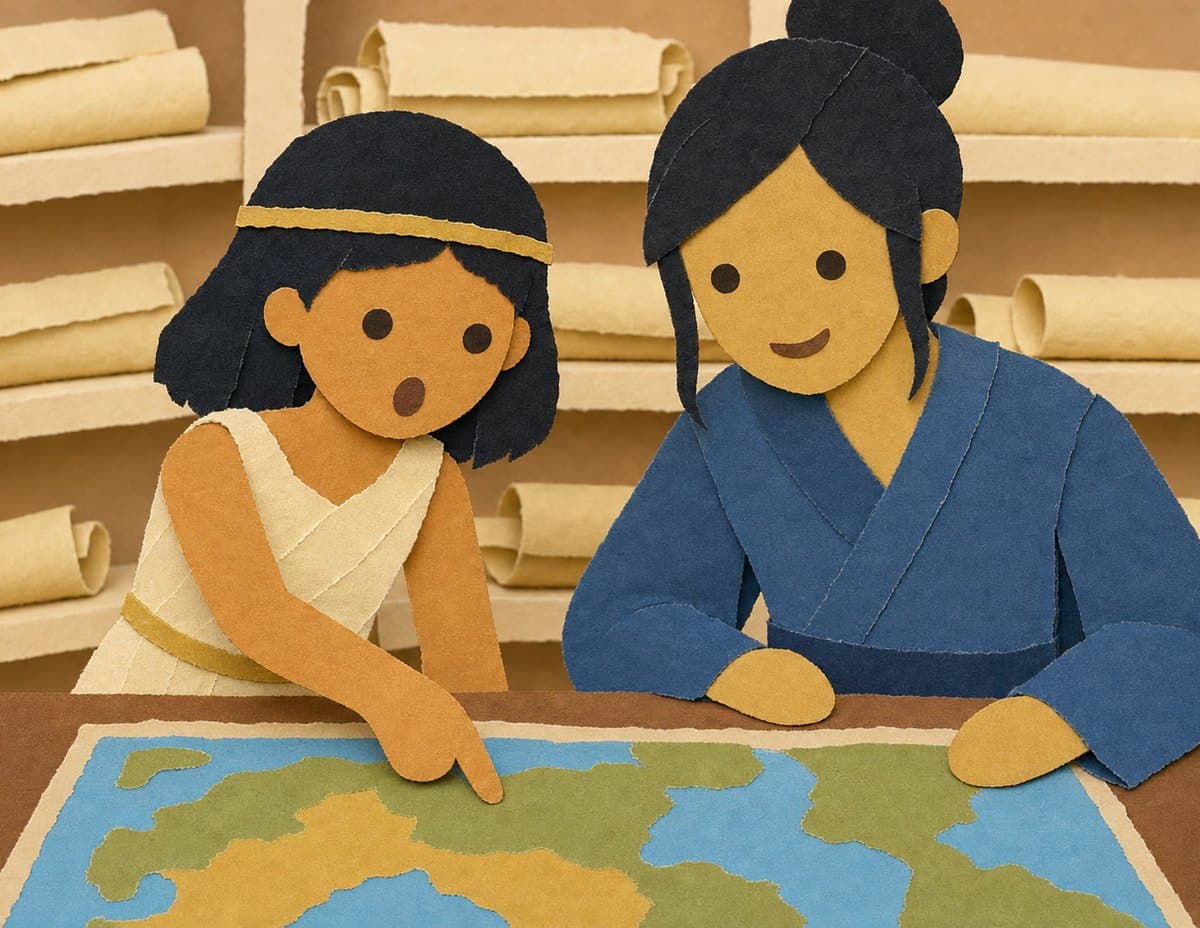
Cleopatra and a scholar in a blue robe lean over a big map of the world, and Cleopatra points to a spot on it, in cut-paper collage
The scholar showed her a map of all the world. Cleopatra found her own city on it!
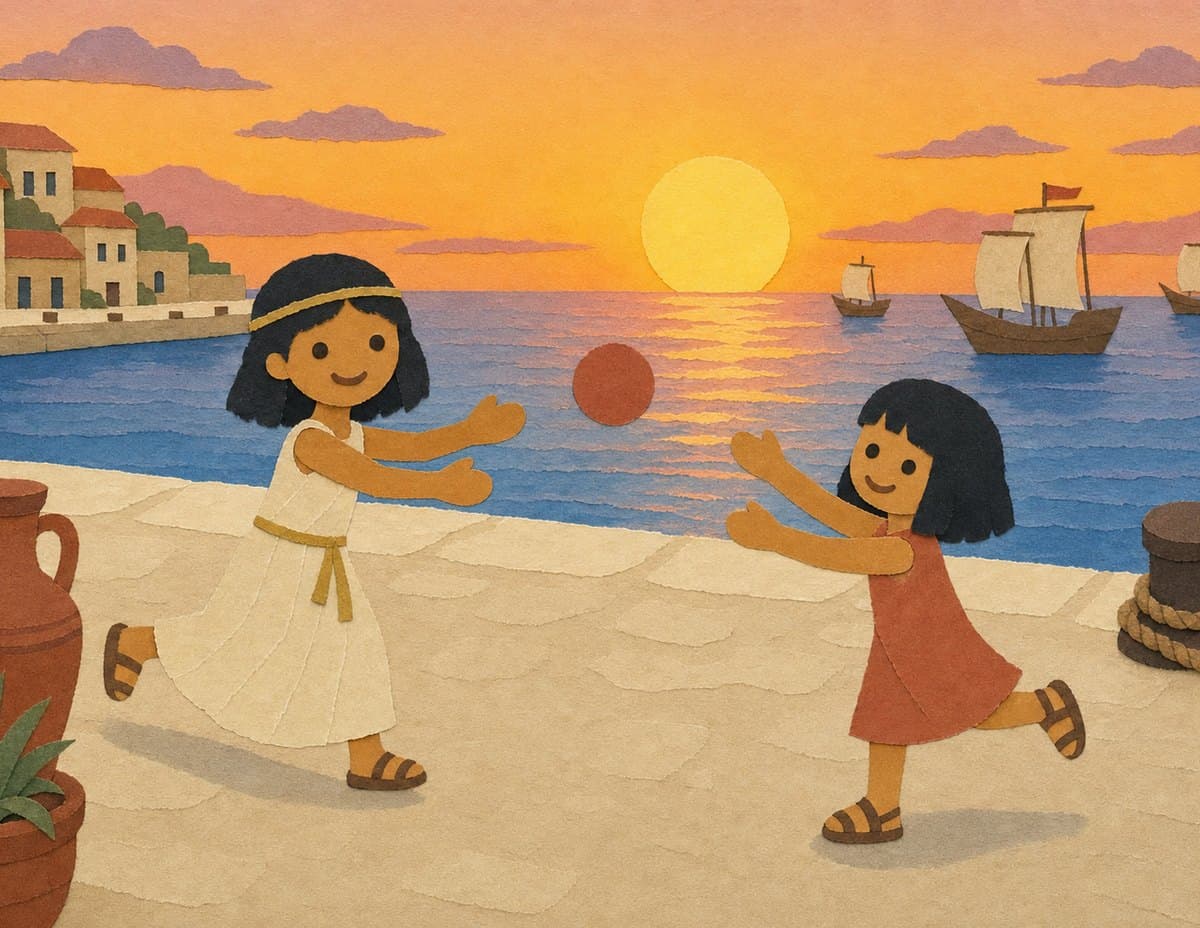
Cleopatra and a girl in an orange dress toss a ball on the waterfront at sunset, with ships on the sea behind them, in cut-paper collage
The girl smiled the way you smile when someone makes you their friend. They played till dark.
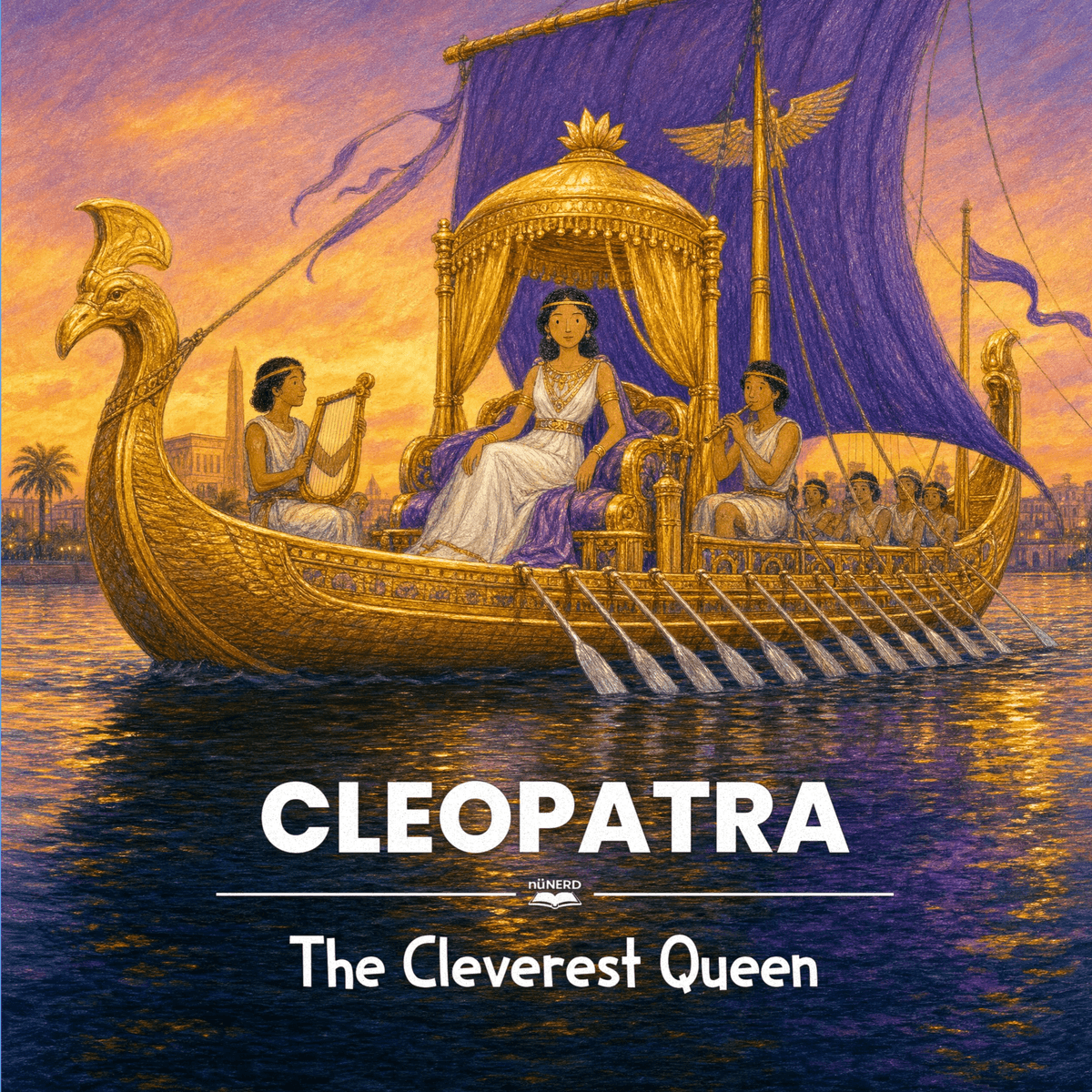
Cover of Cleopatra: The Cleverest Queen, for ages 3–7

Ages 3–7 · Picture book · Read together

Cleopatra: The Cleverest Queen

Everyone expected very little from the girl who kept slipping off to the library. That was their first mistake. This is Cleopatra's rise, for the picture-book years: the princess nobody took seriously, who grew up to outwit her rivals, feed a kingdom, and keep Egypt independent with the one thing no one thought to guard against, which was how much she knew.

36 pages · about 760 words · soft crayon

Good to know
Her brother's men tell lies and push her out of the palace, and she gets it back with Caesar's help, without a battle. The book stops in her good years: Actium and her death are not in it. It ends by asking your child, "What do YOU see?"
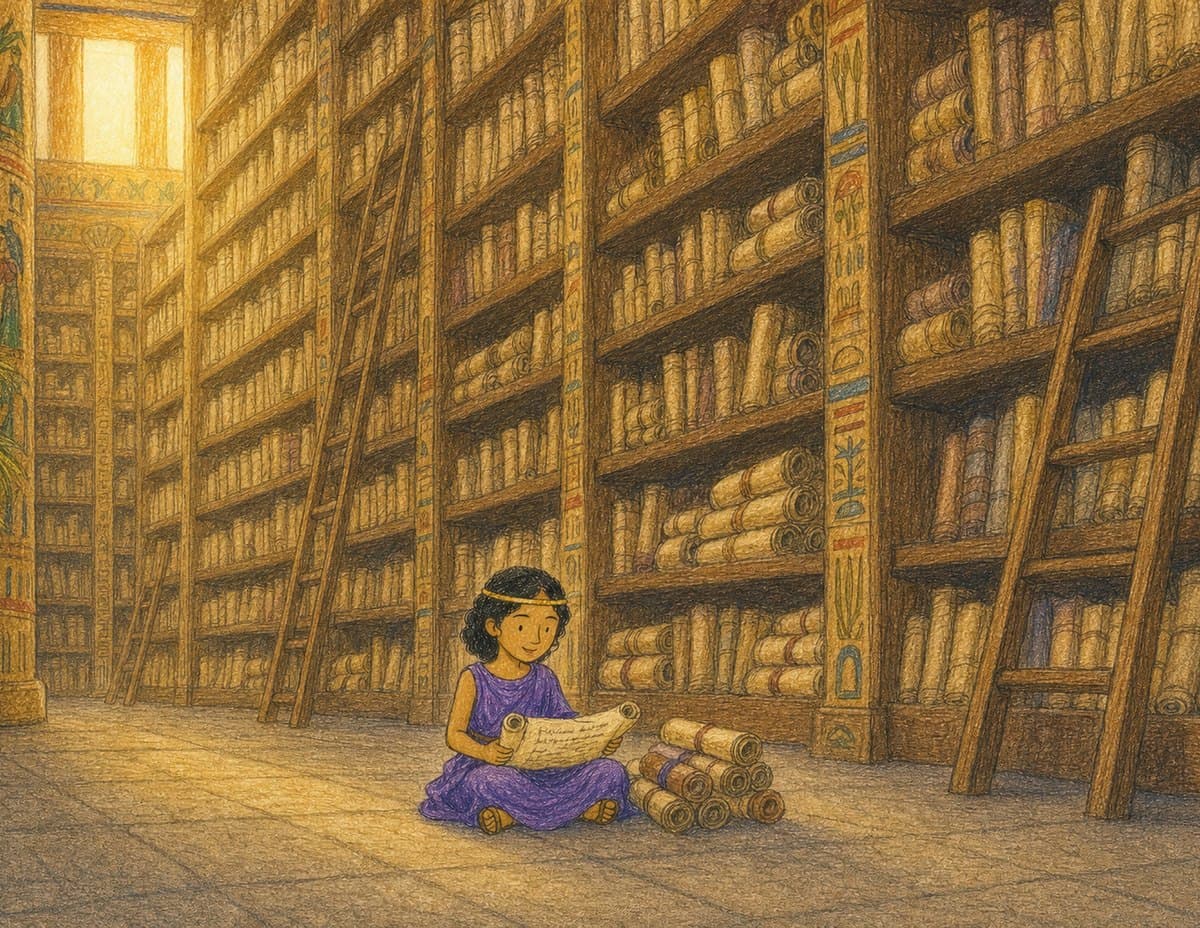
Young Cleopatra sits reading on the floor of a tall library, surrounded by shelves full of scrolls, in soft crayon
Cleopatra slipped away to the library instead. Quiet halls. Tall shelves. A thousand scrolls. She read and read and read.
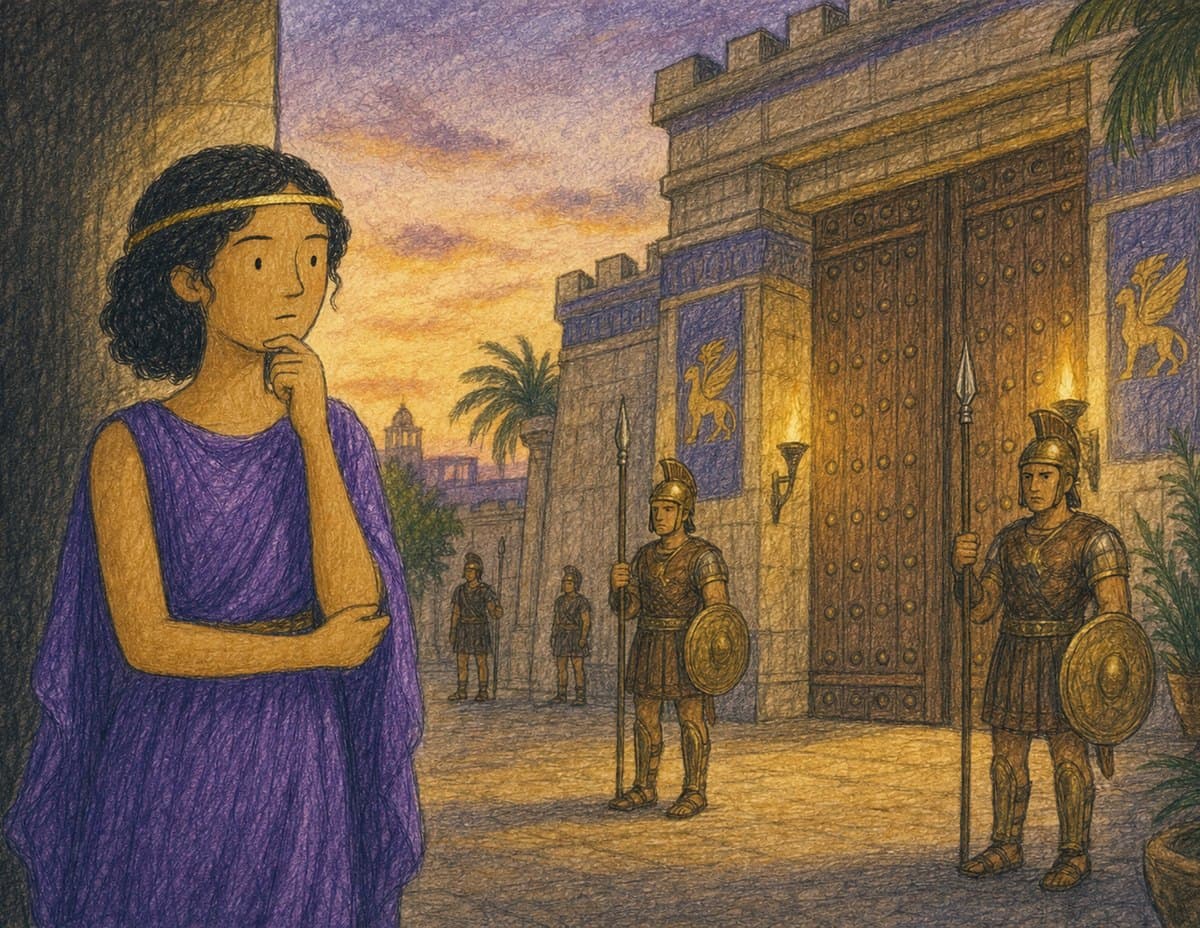
Cleopatra stands outside a great gate at dusk, where armed guards keep watch by torchlight, in soft crayon
But her brother's guards watched every gate. How could a queen sneak into her own palace?
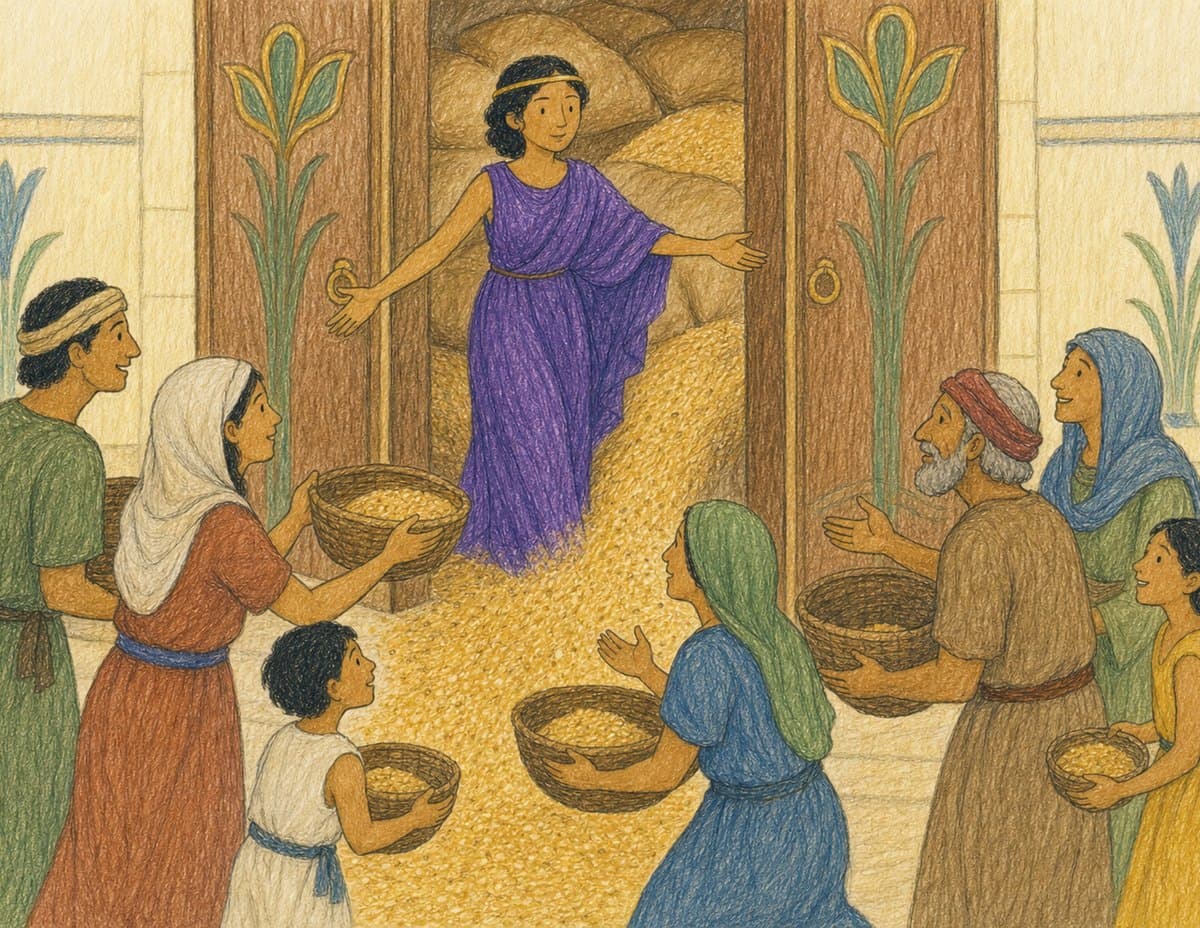
Cleopatra stands in an open storehouse doorway as grain spills out and people hold up bowls, in soft crayon
But the queen had kept the royal storehouses full. She opened the doors wide. Grain for everyone. No one went hungry.
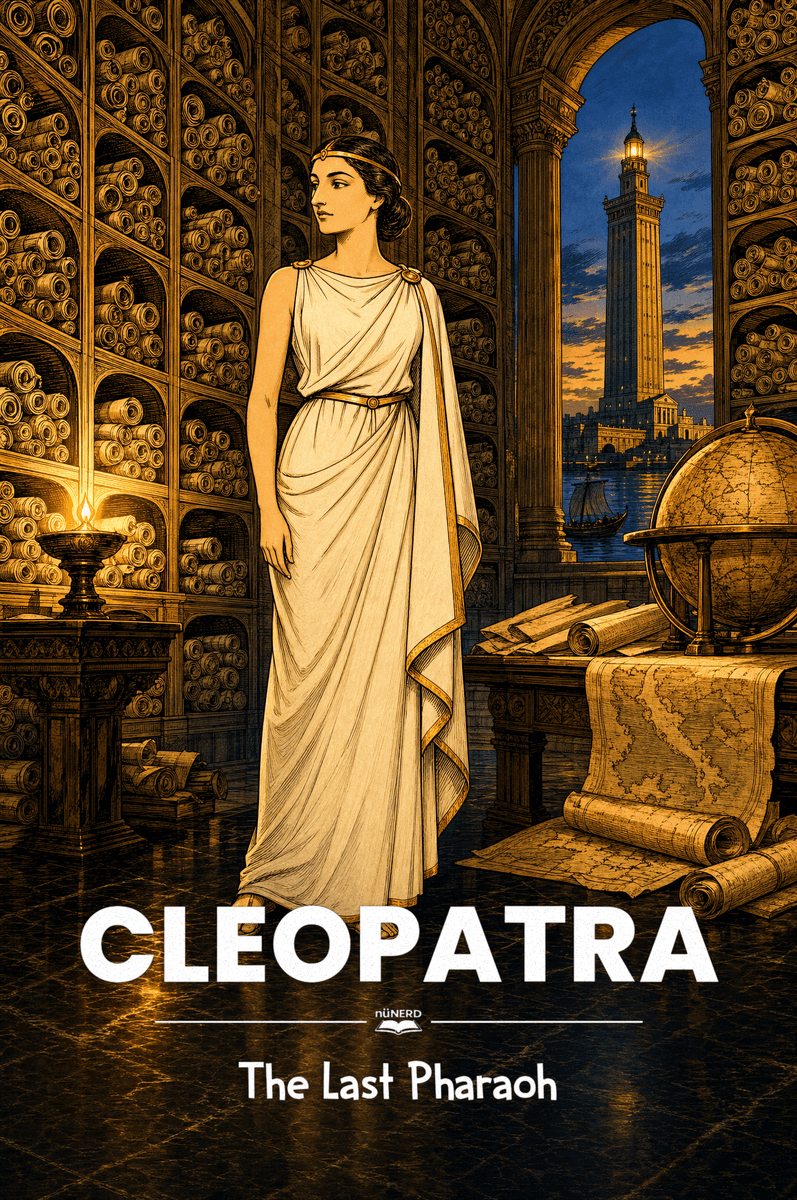
Cover of Cleopatra: The Last Pharaoh, for ages 6–10

Ages 6–10 · Chapter book · They start reading alone

Cleopatra: The Last Pharaoh

Most kids meet Cleopatra, if they meet her at all, as eyeliner and a snake. This is the queen the record shows: raised in the palace beside the Great Library of Alexandria, fluent in as many as nine languages, the last pharaoh of Egypt, who kept her kingdom fed and unconquered while Rome swallowed the ones around it. Then the book does the thing other versions skip. It asks where the famous legend came from, and shows a child how history gets written, and by whom.

76 pages · about 7,100 words · 19 black-and-white drawings

Good to know
Pompey is killed as he steps ashore, her young brother drowns in the Nile, Caesar is murdered, and after Actium Antony takes his own life. Cleopatra dies in her monument, and the book admits nobody knows whether a snake was involved; her son Caesarion is killed afterward.
Also inside
Pronunciations the first time each hard name appears, from Ptolemy (TOL-uh-mee) to Charmion (KAR-mee-on), and short quotations from Plutarch.
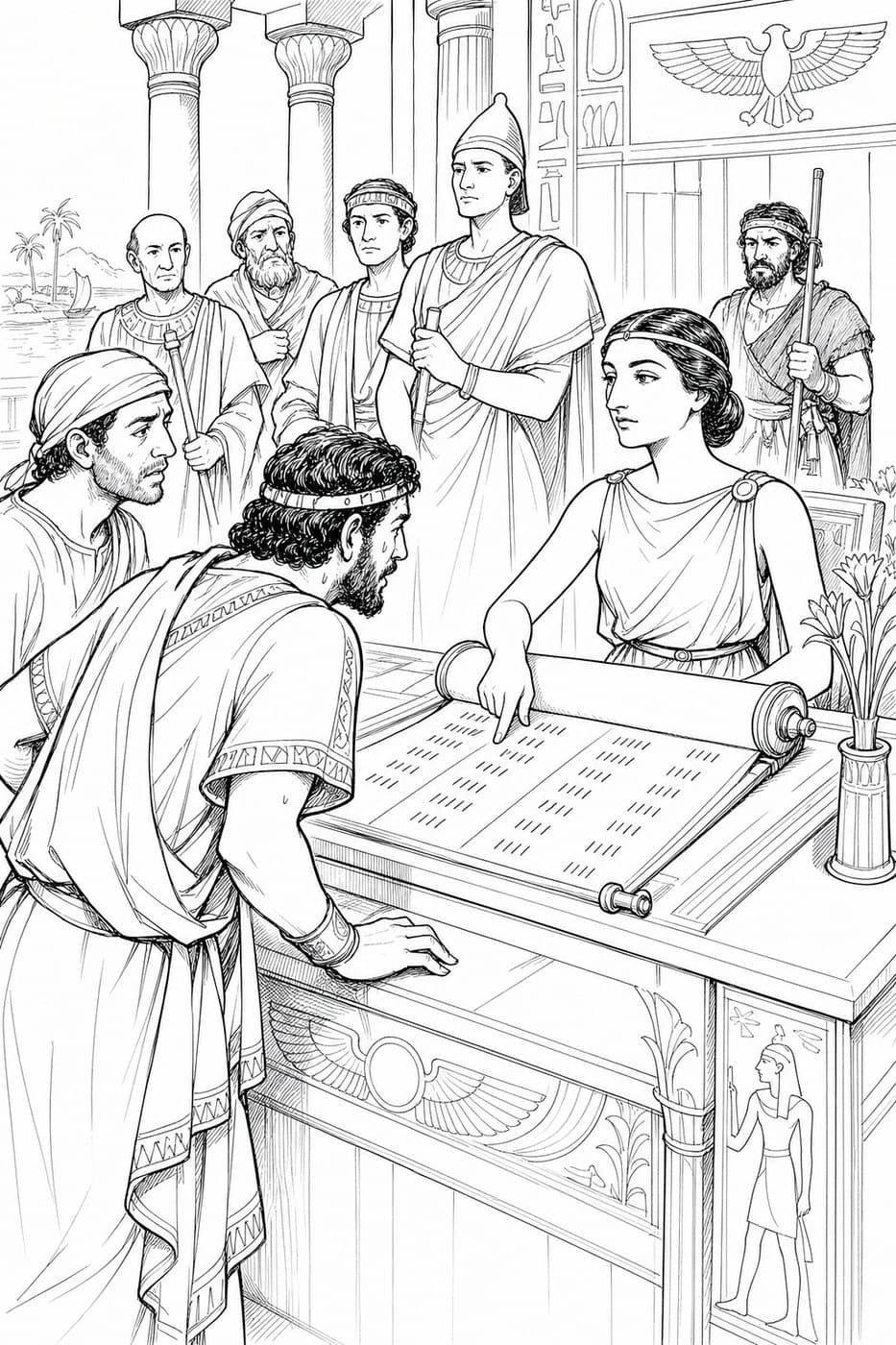
Cleopatra at a desk points along a long unrolled scroll while men lean in and officials wait behind, in black-and-white line art
Cleopatra had been raised on the Library's account books. She turned out to be exactly the ruler that desk demanded.
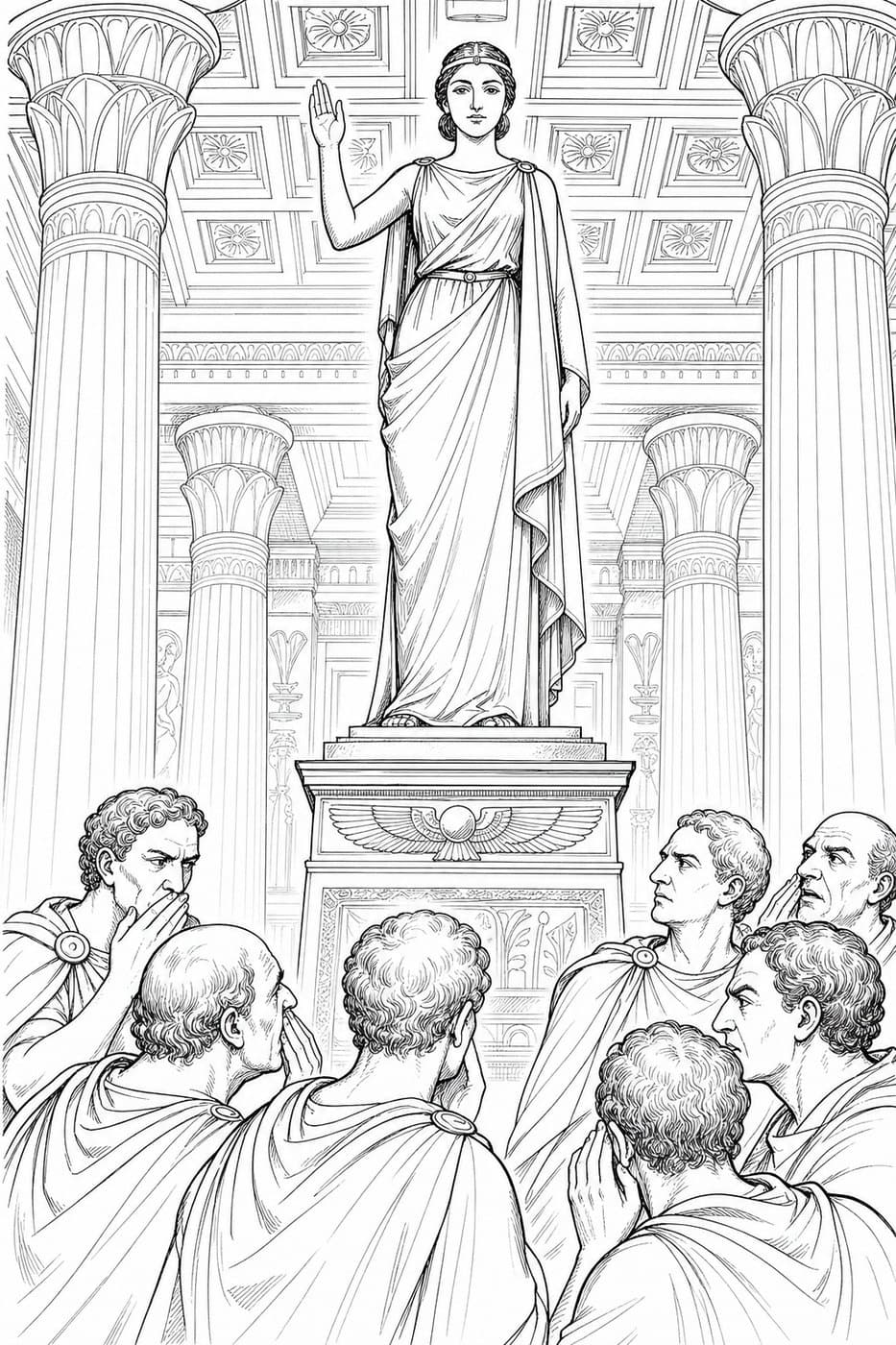
A statue of Cleopatra stands on a tall base between columns while men below look up and talk behind their hands, in black-and-white line art
Senators muttered about foreign queens. Caesar set up a gilded statue of her in one of his grandest new temples, an honor with no precedent.
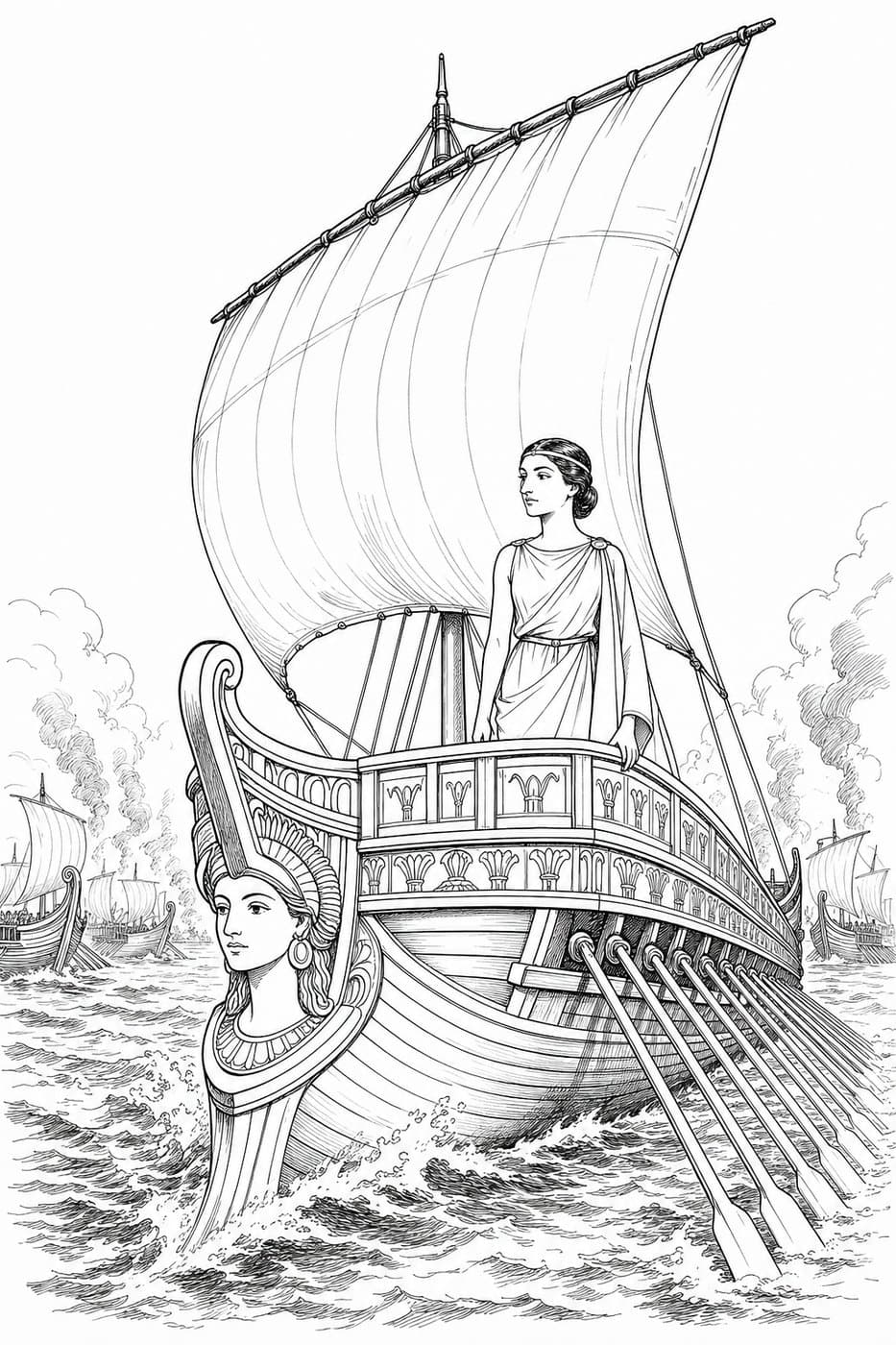
Cleopatra stands on the deck of a sailing warship with its oars out, as smoke rises from ships behind her, in black-and-white line art
As the line buckled, Cleopatra's squadron raised sail. It drove through the gap and broke for the open sea, the treasury safe in its hold.
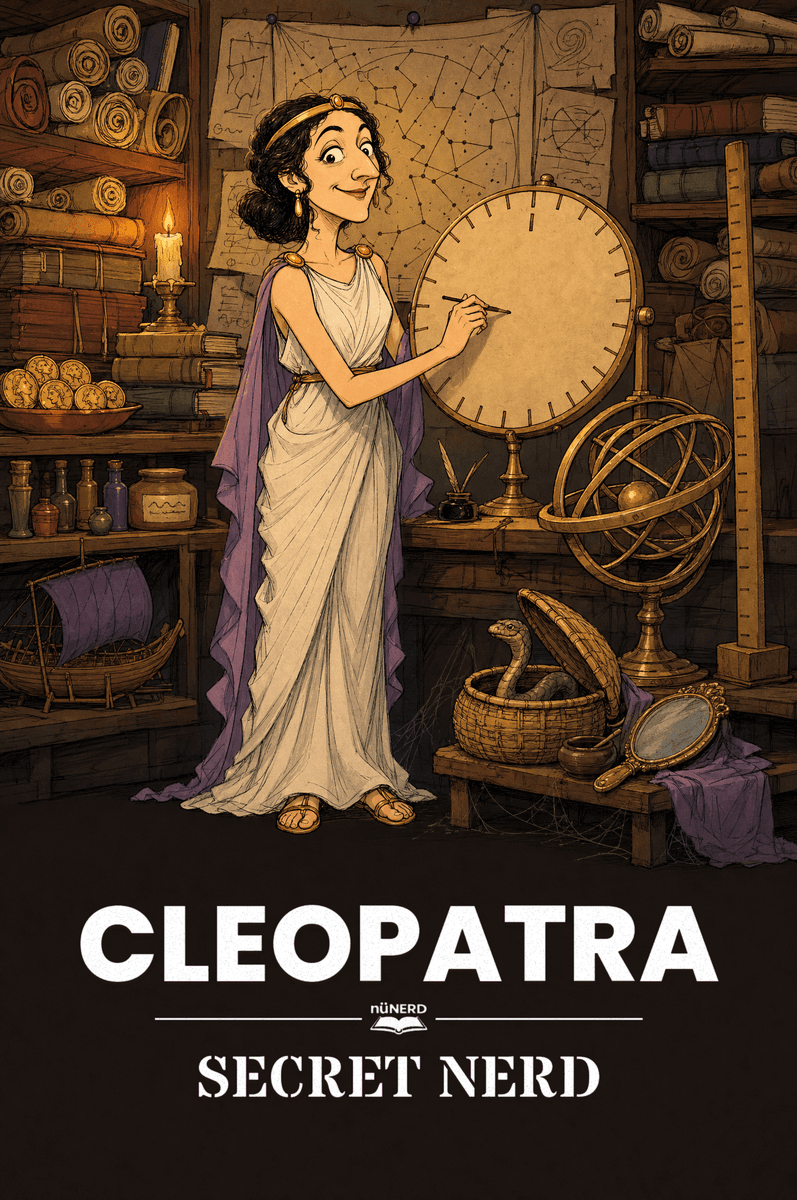
Cover of Cleopatra: Secret Nerd, for ages 9–12

Ages 9–12 · Secret Nerd book · They read it alone

Cleopatra: Secret Nerd

Told in her own dry, funny voice, this is the queen the eyeliner hides: the one who read the Nile's flood gauges to predict the harvest, whose city's astronomers shaped the calendar you still use, and whose name ancient doctors trusted on their cures. Then she shows you exactly how Rome built the legend that buried all of it, and hands you the trick for spotting the next too-neat story.

68 pages · about 6,400 words · 16 black-and-white cartoons

Good to know
The Secret Nerd companion: a funny book of real history in chapters, told by an invented first-person Cleopatra. She skips her life story, so there are no battle or death scenes, but hunger years, ancient doctors studying the body, and the Roman poets' insults ("The fatal monster") all come up.
Also inside
Real Alexandrian names worth looking up together: Callimachus and his library catalog, Aristophanes of Byzantium and his punctuation dots, the doctor Herophilus, and the astronomer Sosigenes.
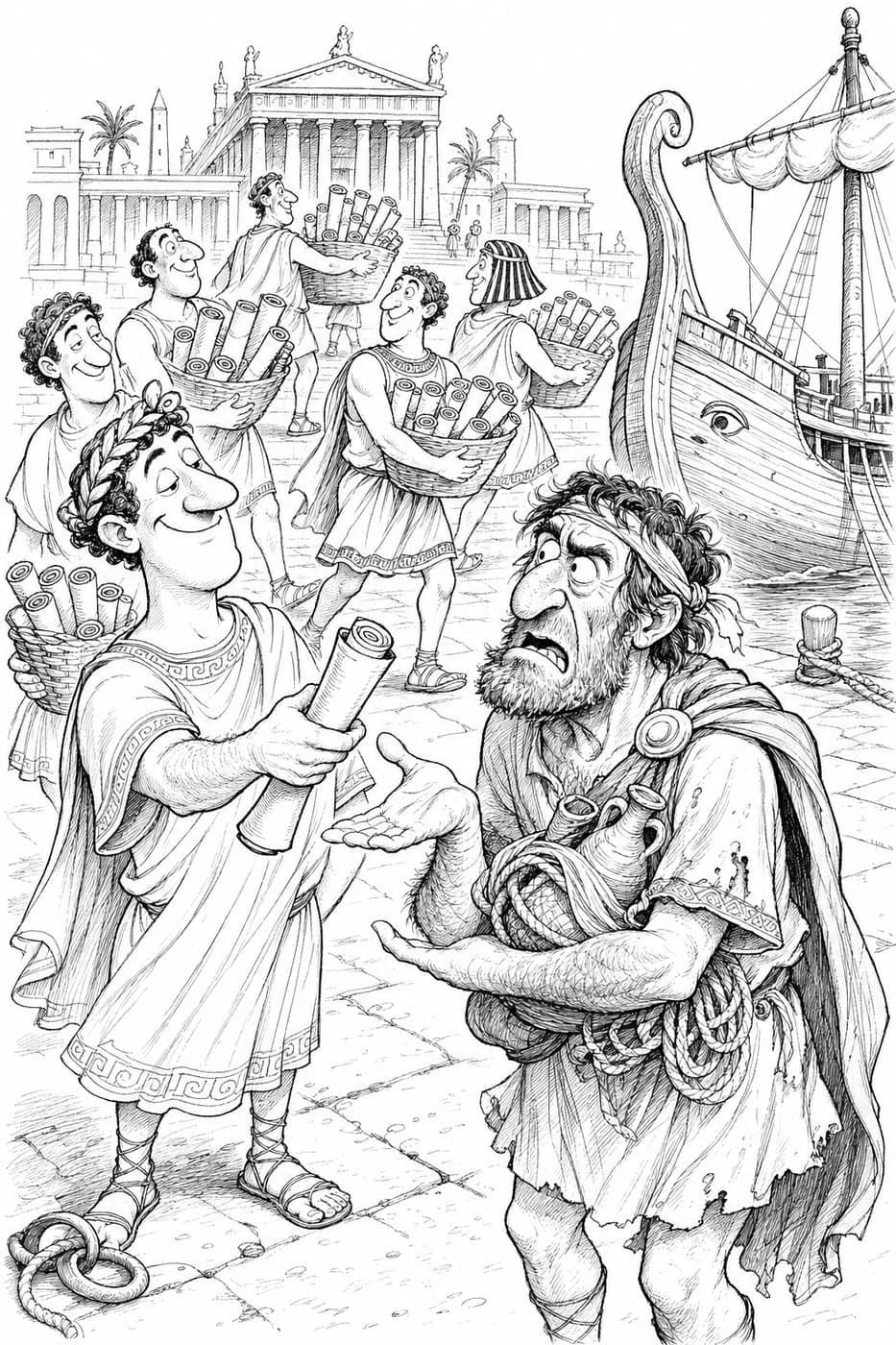
A smiling young official holds up a scroll to a scowling sailor on a busy dock, with a ship and men carrying baskets of scrolls behind, in black-and-white cartoon
Any ship that docked in Alexandria could be searched, not for weapons, but for BOOKS.
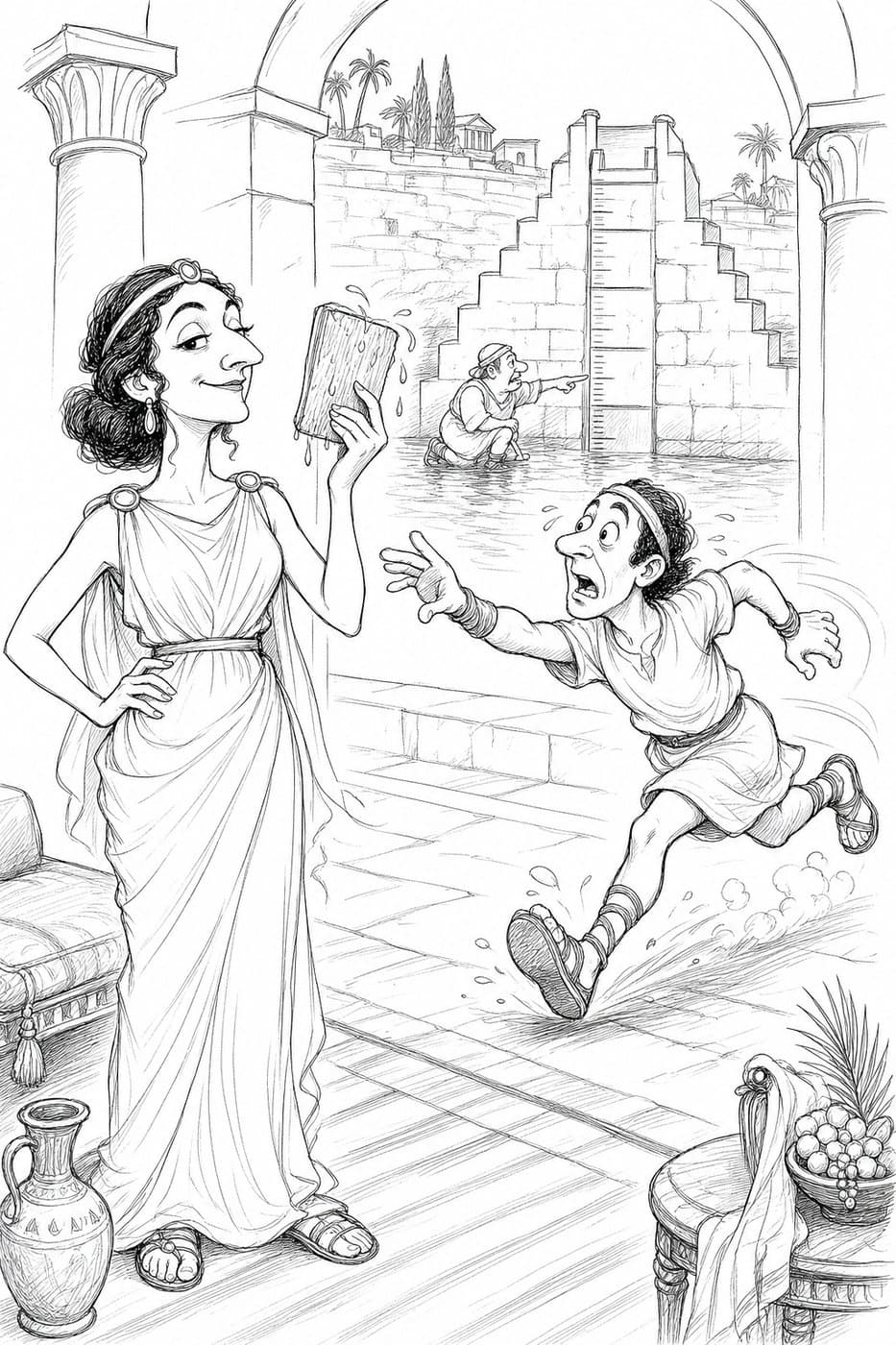
Cleopatra holds up a tablet as a messenger runs toward her, with a stone stairway leading down into the water behind, in black-and-white cartoon
We measured. Up and down the river stood nilometers (NY-lo-mee-ters): stone staircases and wells marked like giant rulers.
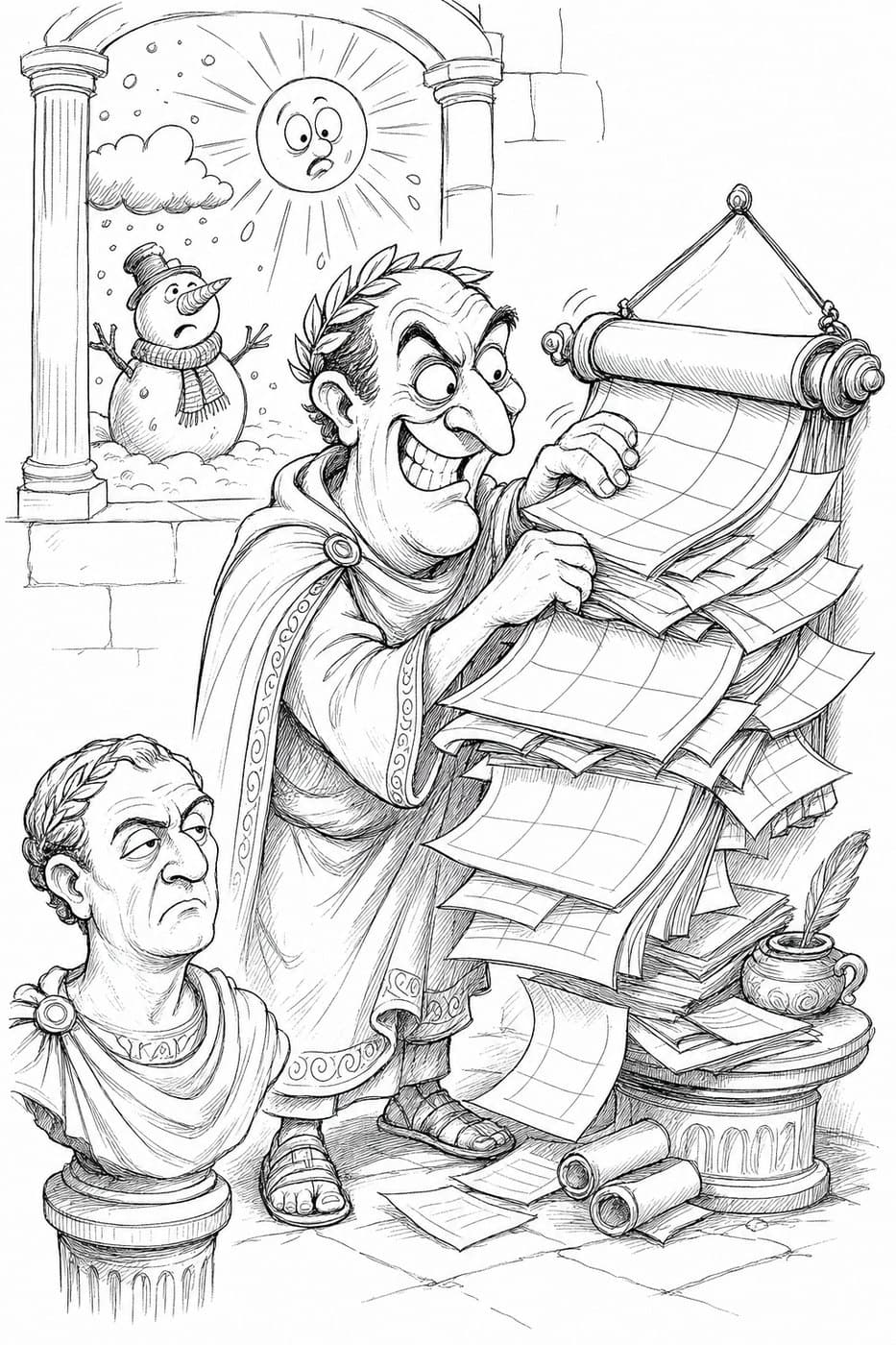
A grinning Roman unrolls a long calendar scroll beside a frowning bust, while the window behind him shows a sun above a snowman, in black-and-white cartoon
Harvest festivals landed nowhere near harvests. The calendar said spring; the weather said otherwise.

The original

The real Cleopatra

  • Cleopatra VII
  • 69–30 BC
  • Ruled Egypt 51–30 BC

She took the throne at eighteen and held it until Octavian captured Alexandria, after which Egypt became a Roman province. Most of what we know about her was written under Rome, above all by Plutarch in his Lives of Caesar and Antony, which our two books for older readers quote.

When you want more