Classic literature · Ages 0–10

The Count of Monte Cristo

Alexandre Dumas's novel runs to more than a thousand pages. At its center is a young sailor who loses everything to a lie, spends years in a prison on a rock in the sea, and gets out sewn into a dead man's burial sack.

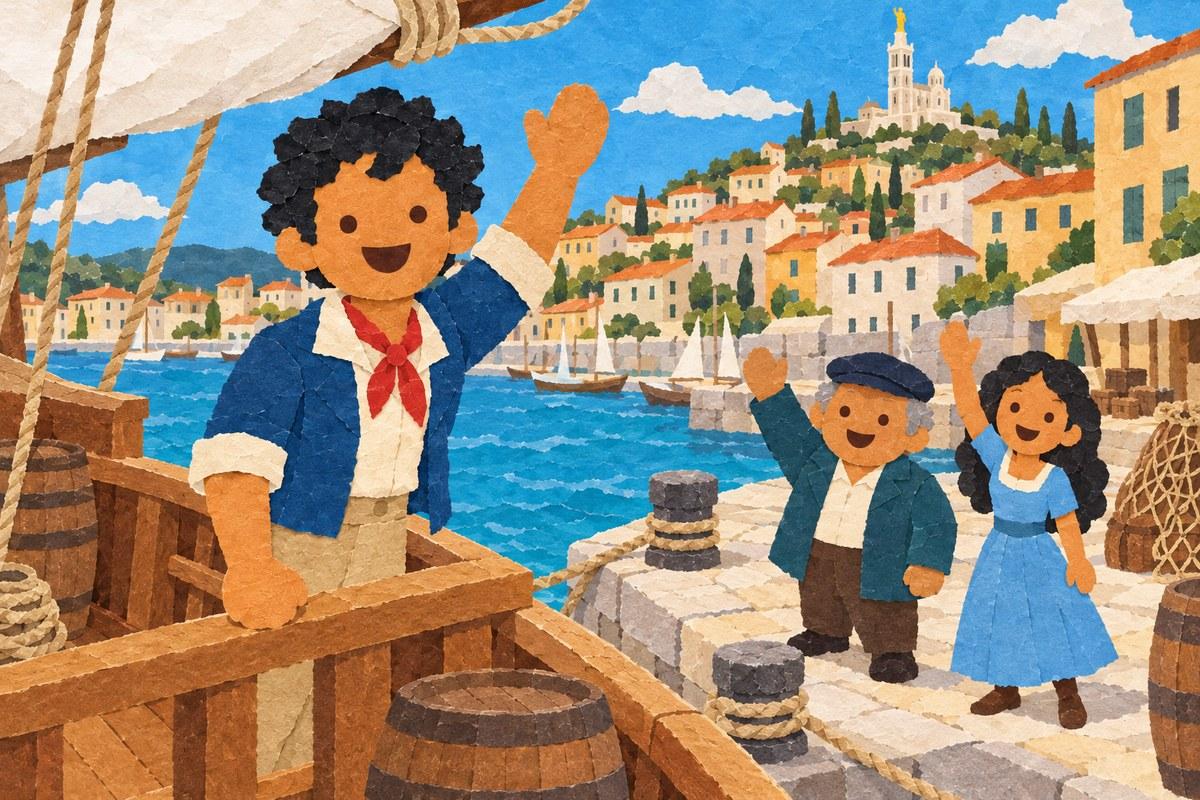
A smiling young sailor in a blue jacket and red neckerchief waves from the deck of a ship while an older man in a cap and a girl in a blue dress wave back from the stone dock, with sailboats in the harbor and a hillside town behind them, in cut-paper collage

A page from The Count of Monte Cristo: A Toddler Book

Why we love it

A friend through the wall.

Scratch, scratch, scratch: a toddler can say it along with the page, until an old man breaks through the stone wall and Edmond has a friend at last. In Dumas's novel he is the Abbé Faria, who has been digging a tunnel for years and becomes Edmond's teacher.

Toddler book, ages 0–4 ↓

Maps in the dust.

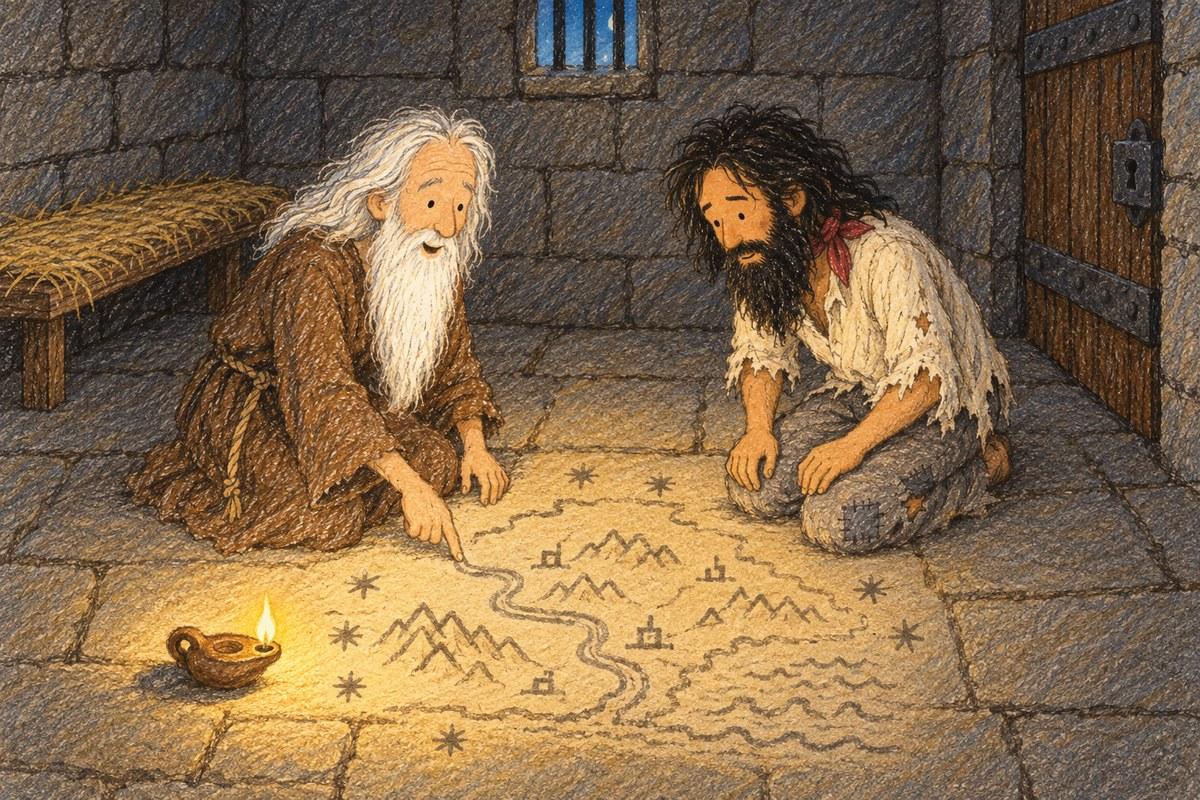
Chip, chip, chip, under the floor, and up comes an old man, dusty and smiling. By lamplight he draws Edmond maps of mountains, rivers, and stars, and for the first time in years Edmond laughs out loud.

Picture book, ages 3–7 ↓

He came to dinner.

The Count does not charge into Paris waving a sword. He sits at his enemies' own tables as the most welcome guest in the city, passes the salt, and listens, and walks out of each bright house knowing one thing more than when he walked in.

Chapter book, ages 6–10 ↓

Which book for your child?

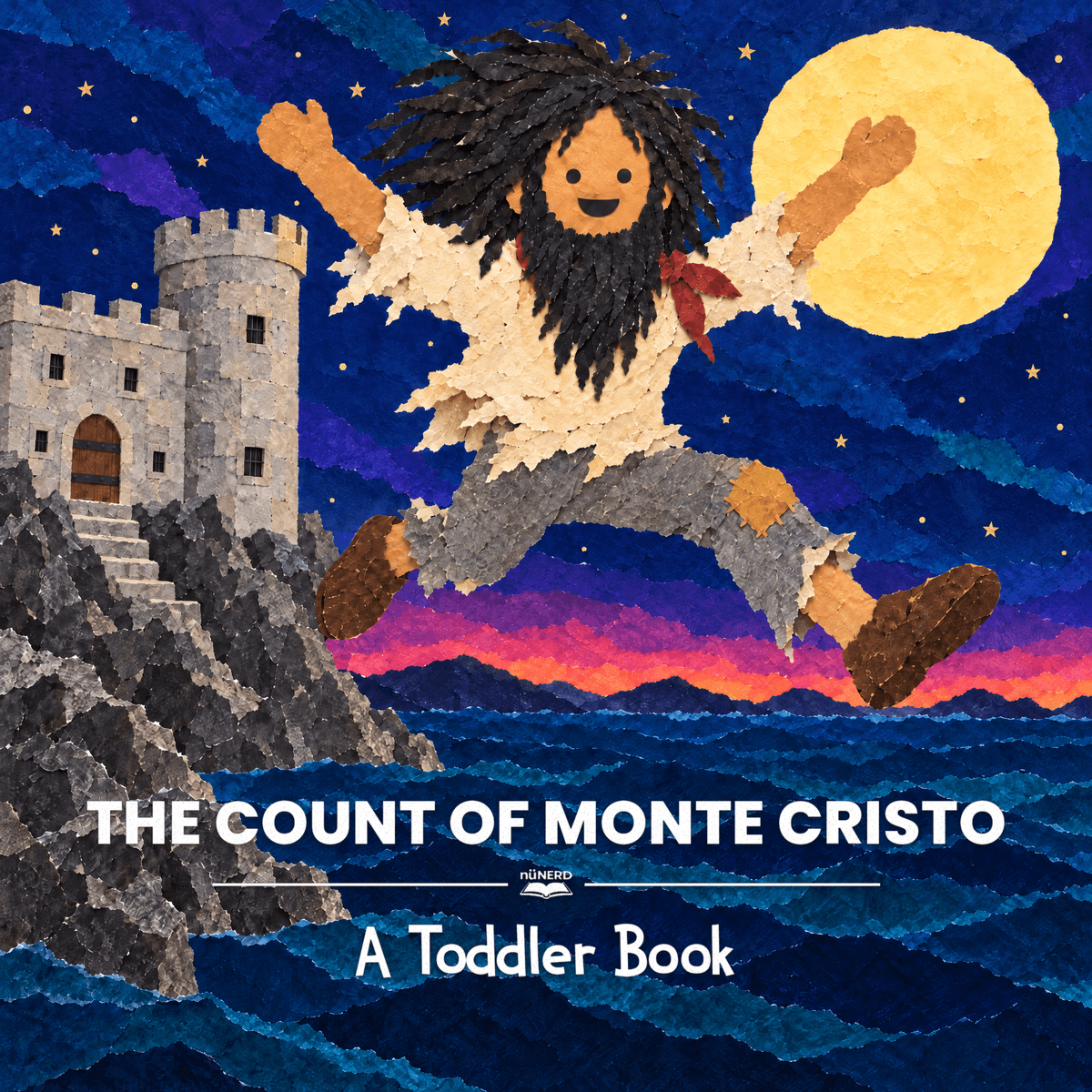
Cover of The Count of Monte Cristo: A Toddler Book, for ages 0–4

Ages 0–4 · Toddler book · Read to them

The Count of Monte Cristo: A Toddler Book

Sounds to shout along with: a BOOM as the tower door shuts, scratch, scratch, scratch at the stone wall, and a SPLASH as Edmond comes up out of the dark sea. Edmond's feelings are named plainly. He is sad and angry in the tower, and when he comes home with a new name, he wants the men who lied to be as alone as he was.

24 pages · about 350 words · cut-paper collage

Good to know
A toddler retelling of Dumas's story. Soldiers take Edmond away because of a lie and shut him in a tower, where he is sad and angry for a long time. He escapes through cold, dark water. Later the men who lied look very afraid, and nobody at a party will sit with them.
For grown-ups
Monte Cristo is a real island off the coast of Tuscany, and Dumas's prison, the Château d'If, still stands on its island off Marseille.
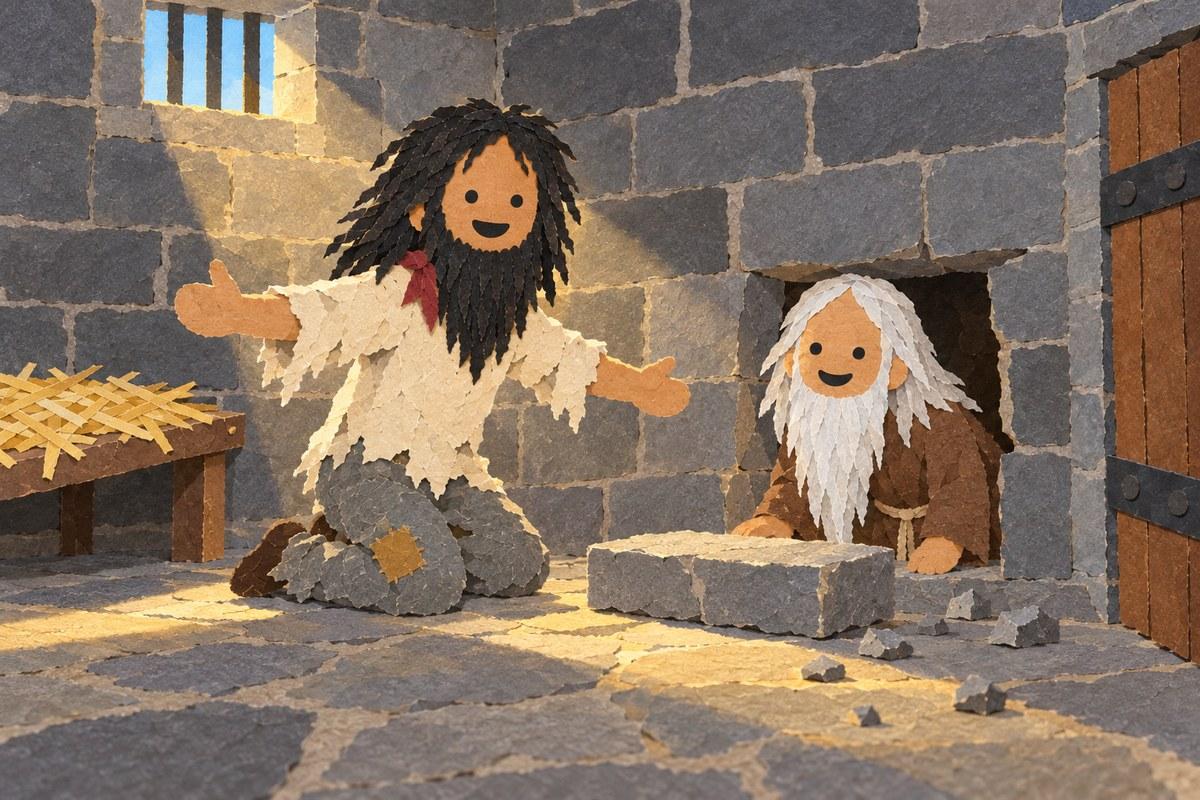
A long-haired, bearded man in a torn shirt kneels on a stone cell floor and holds out his arms to a smiling white-bearded old man looking out of a hole low in the wall, a loose stone block and rubble on the floor and sunlight from a barred window, in cut-paper collage
An old man breaks through the stone wall. A friend, at last!
A smiling long-haired, bearded man bursts up out of dark blue waves in a splash of white spray under a starry night sky with a pink glow along the horizon, in cut-paper collage
Down through the cold, dark water. Then up, up, up. SPLASH! Air! Sky! Edmond is free.
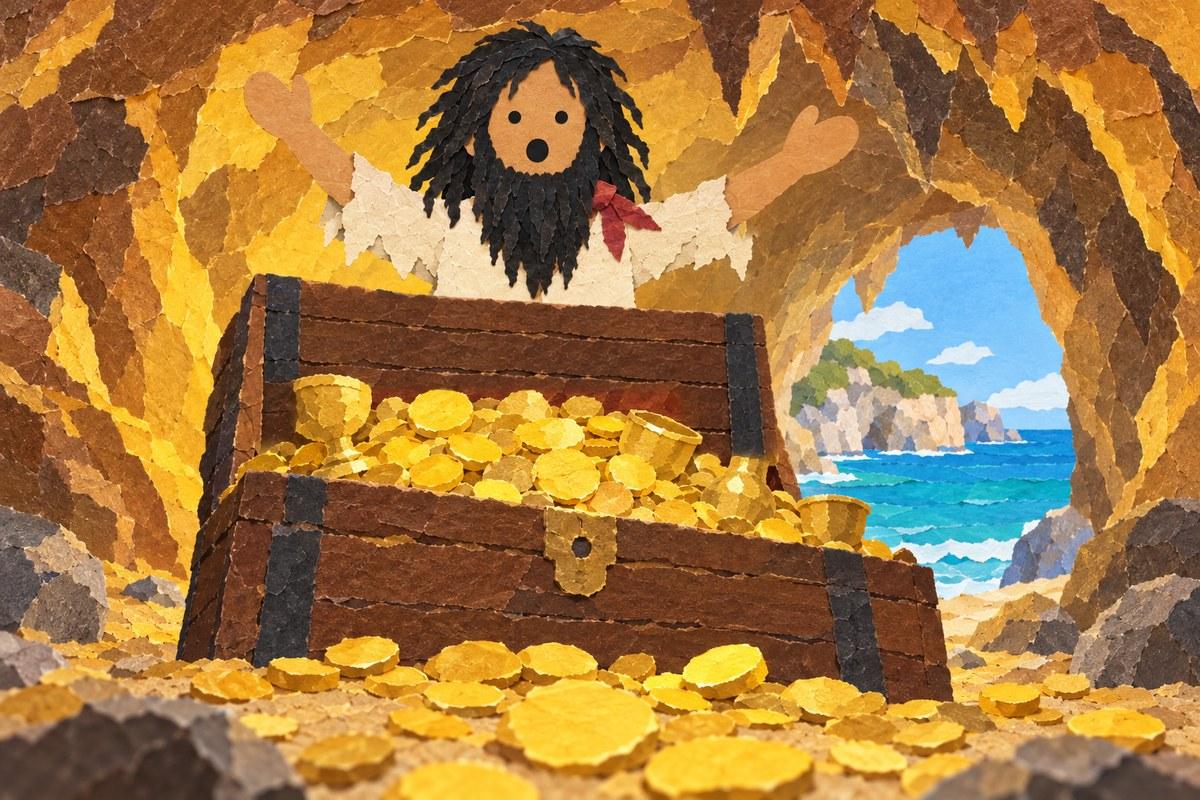
A long-haired, bearded man throws up his arms in open-mouthed surprise behind an open chest heaped with gold coins and cups, more coins spilled across the floor, in a golden cave that opens onto the sea, in cut-paper collage
He finds the island. He finds the cave. Gold, and gold, and more gold!
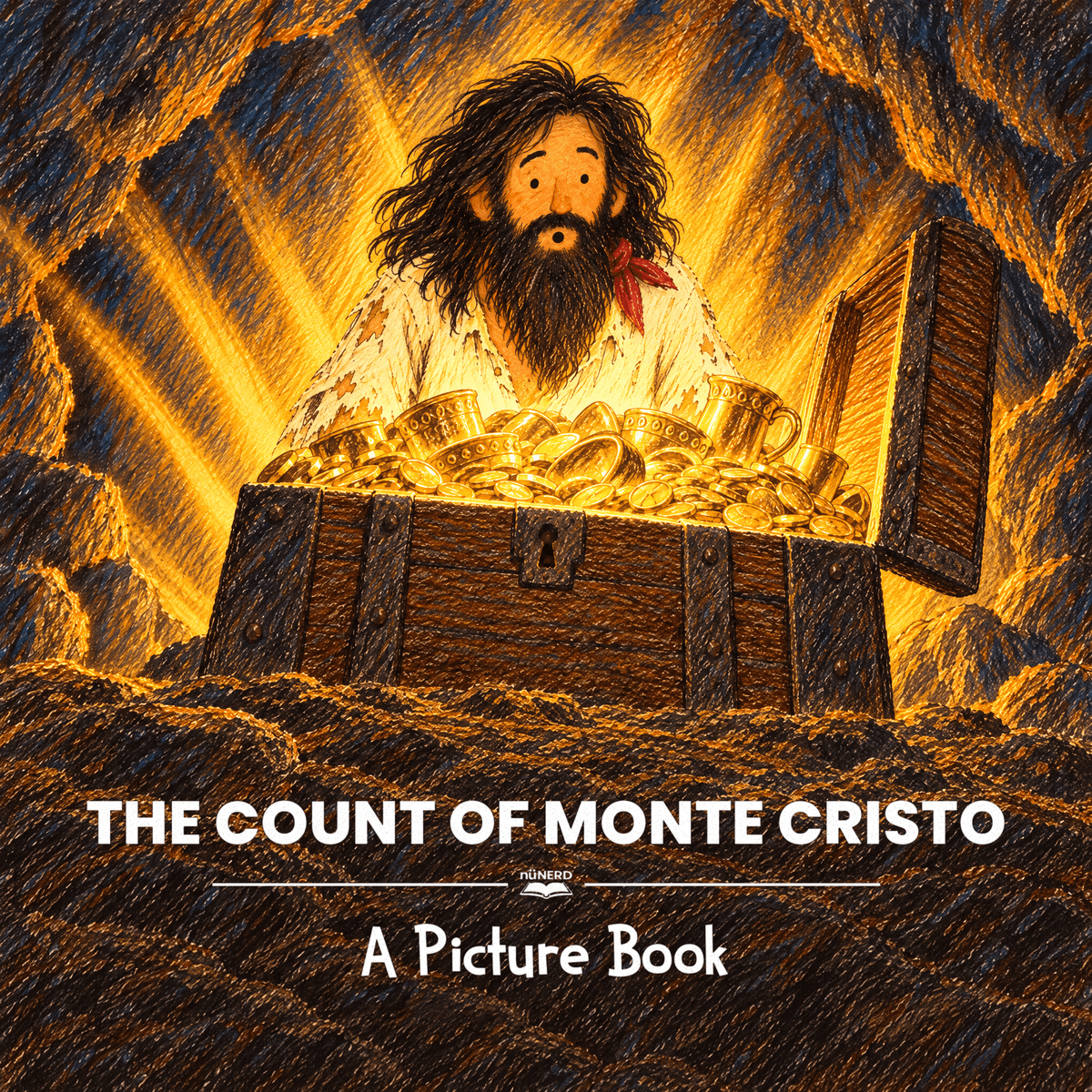
Cover of The Count of Monte Cristo: A Picture Book, for ages 3–7

Ages 3–7 · Picture book · Read together

The Count of Monte Cristo: A Picture Book

A picture book for ages 3 to 7 that keeps both halves of the novel: the long years in prison, and what Edmond does when he comes home rich and unrecognized. Built on sounds and pictures that come back (the big key, the thin thread of light, Edmond whistling into the morning), it lets a young reader watch Edmond get even, and then decide what to do with the last man.

36 pages · about 830 words · soft crayon

Good to know
A picture-book retelling of Dumas's novel that keeps both halves: the prison and the return. Edmond's father dies while he is away, and his old friend dies in the prison, each told in a sentence. No one fights, and no one is struck. The Count tricks the last of the three men out of his money, and a bandit makes him pay a hundred thousand coins for a chicken.
What we changed
In Dumas, Edmond escapes sewn into his dead friend's burial sack and thrown into the sea; here he digs out through his friend's tunnel. The truth about two of the three men comes out, and that is all. The bandit cell and the hundred-thousand-coin chicken come from Dumas.
In a lamp-lit stone cell, an old man with a long white beard kneels and points at a map of mountains, a river, and stars drawn on the dusty floor while a bearded young man in a torn shirt kneels beside him, watching, in soft crayon
By lamplight, the two became friends. The old man drew maps in the dust: mountains, rivers, cities, stars. Edmond learned every one.
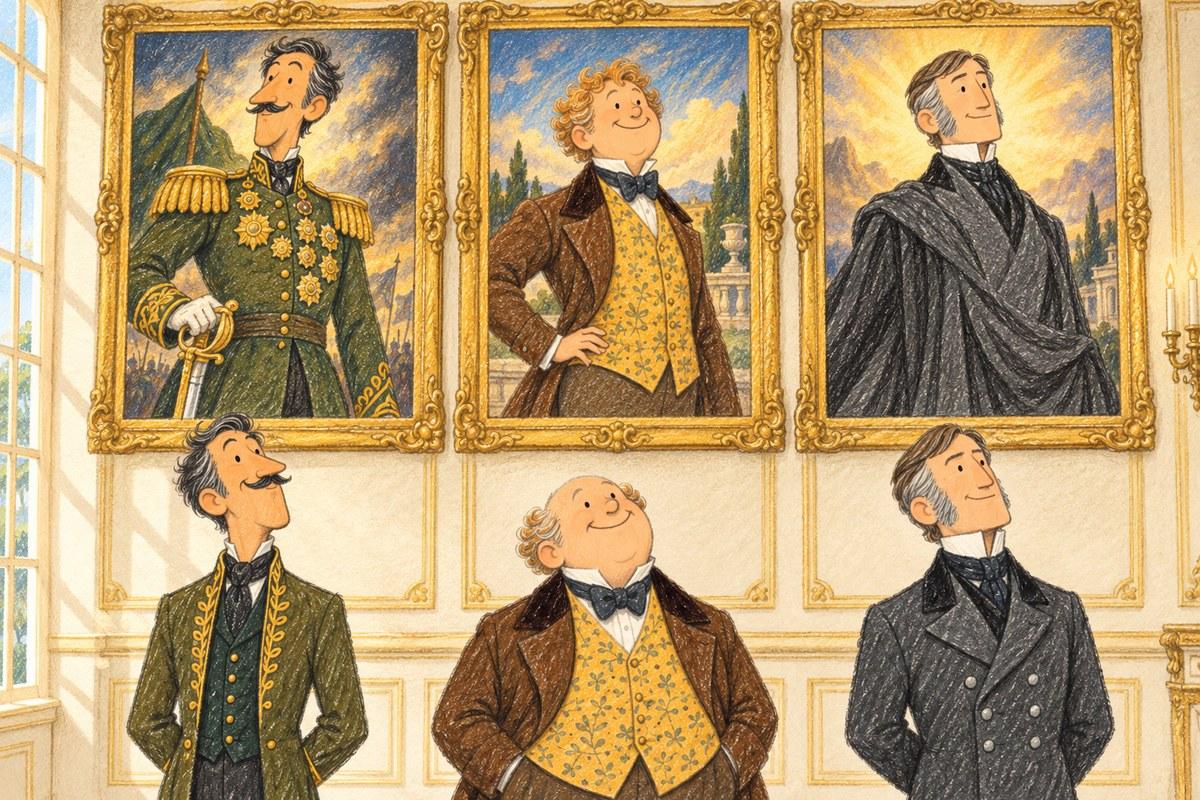
Three men in fine coats stand gazing up at three huge gold-framed portraits of themselves, each painting much grander than the man below it: a uniform covered in medals, a full head of curls on a bald man, a sweeping cloak against a blazing sky, in soft crayon
And the three men? Rich now, each hung a giant painting of himself. The paintings were much handsomer than the men.
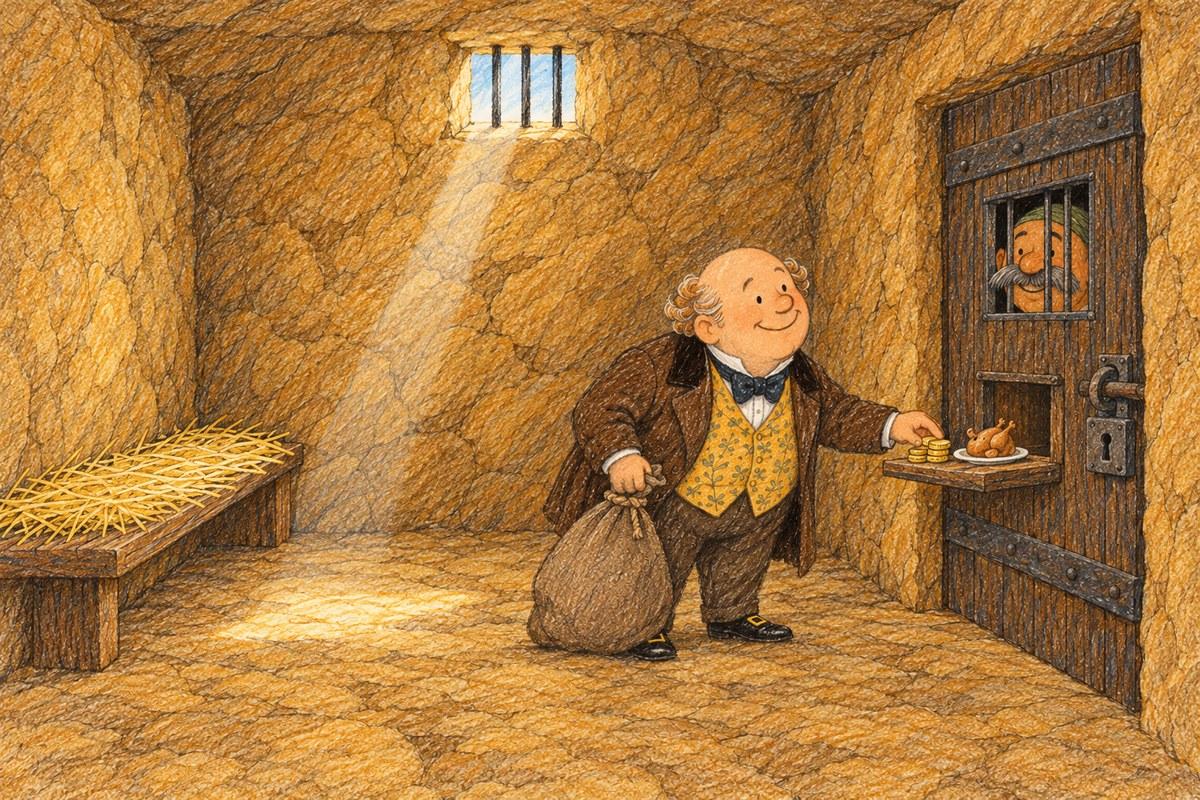
A round, balding man in a fine coat, holding a sack in one hand, smiles as he sets a stack of gold coins on the hatch shelf of a rock cell door beside a plate with a roast chicken, while a mustached guard peers through the grille above, in soft crayon
"Hungry?" said a bandit. "A chicken costs a hundred thousand coins." The man was very hungry. He paid.
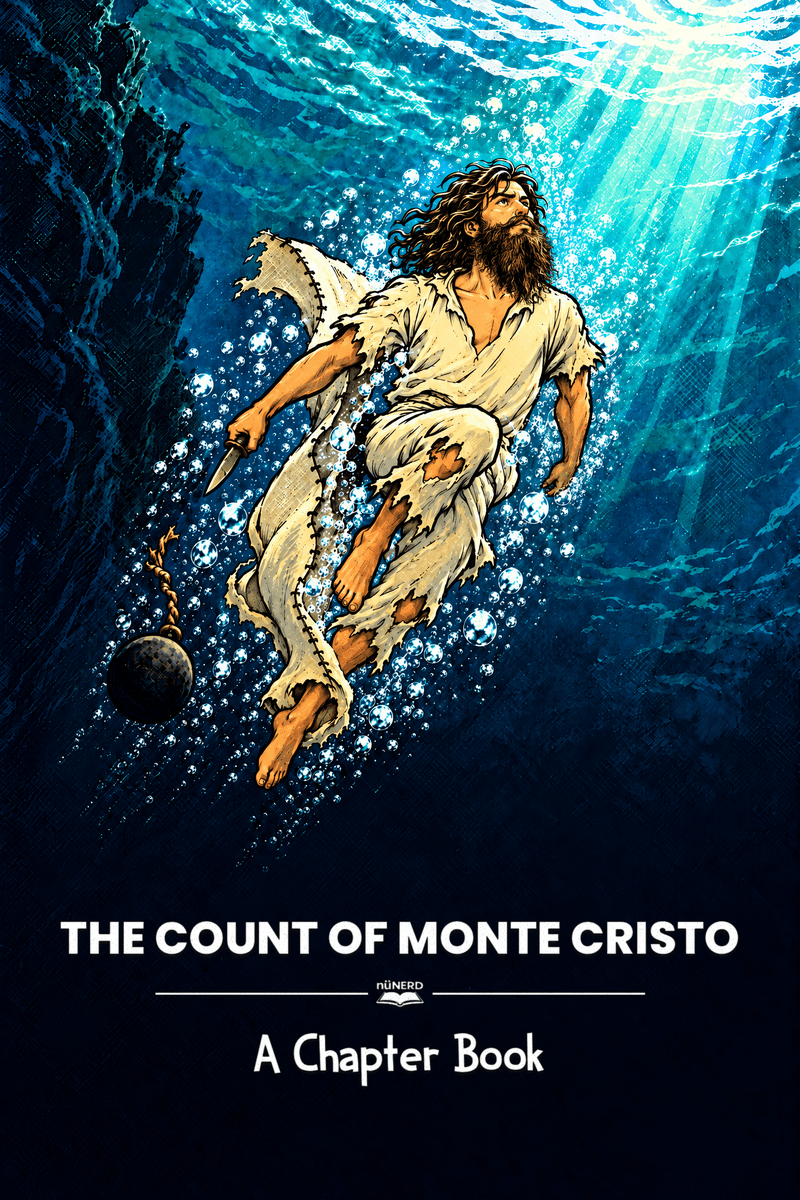
Cover of The Count of Monte Cristo: A Chapter Book, for ages 6–10

Ages 6–10 · Chapter book · They start reading alone

The Count of Monte Cristo: A Chapter Book

A chapter book for ages 6 to 10 that tells the revenge much as Dumas did, lets a young reader cheer the Count on, and then asks whether he had the right. Pronunciations for the hard names, a foreword that introduces the story and its big question, and an afterword on Dumas himself.

112 pages · about 11,600 words · 24 black-and-white drawings

Good to know
The closest of our three books to the novel, told in fifteen short chapters. It includes prison, the deaths of Edmond's father and his old friend, a murder during a burglary, poisonings and the death of a child, and a girl sold into slavery, all told plainly and without graphic detail.
What we changed
Some of the villains' endings are gentler than Dumas's, and one of Mercédès's lines is ours. The bandits who hold Danglars are here, but their chief Luigi Vampa, the Rome chapters, and the duel as Dumas wrote it are left for the novel.
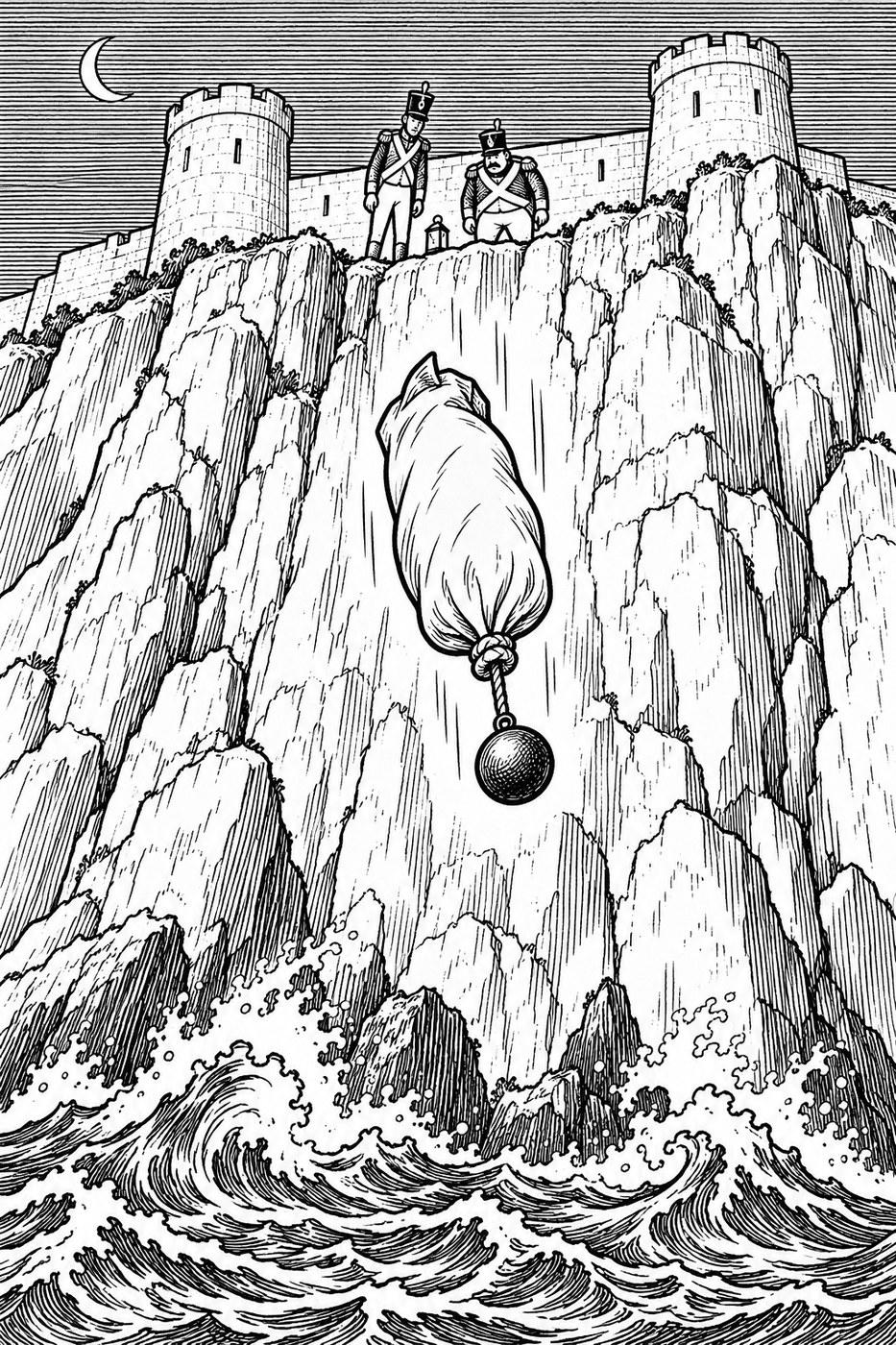
A sewn-up sack with a cannonball tied to one end falls down the face of a towering cliff toward crashing waves, while two small soldiers in tall hats look down from beside a fortress with two round towers, under a night sky of fine lines and a crescent moon, in black-and-white line art
They swung the sack and flung it out over the cliff, and Edmond fell through the dark and struck the water and plunged down, dragged deep by the iron ball at his feet, into the cold black sea.
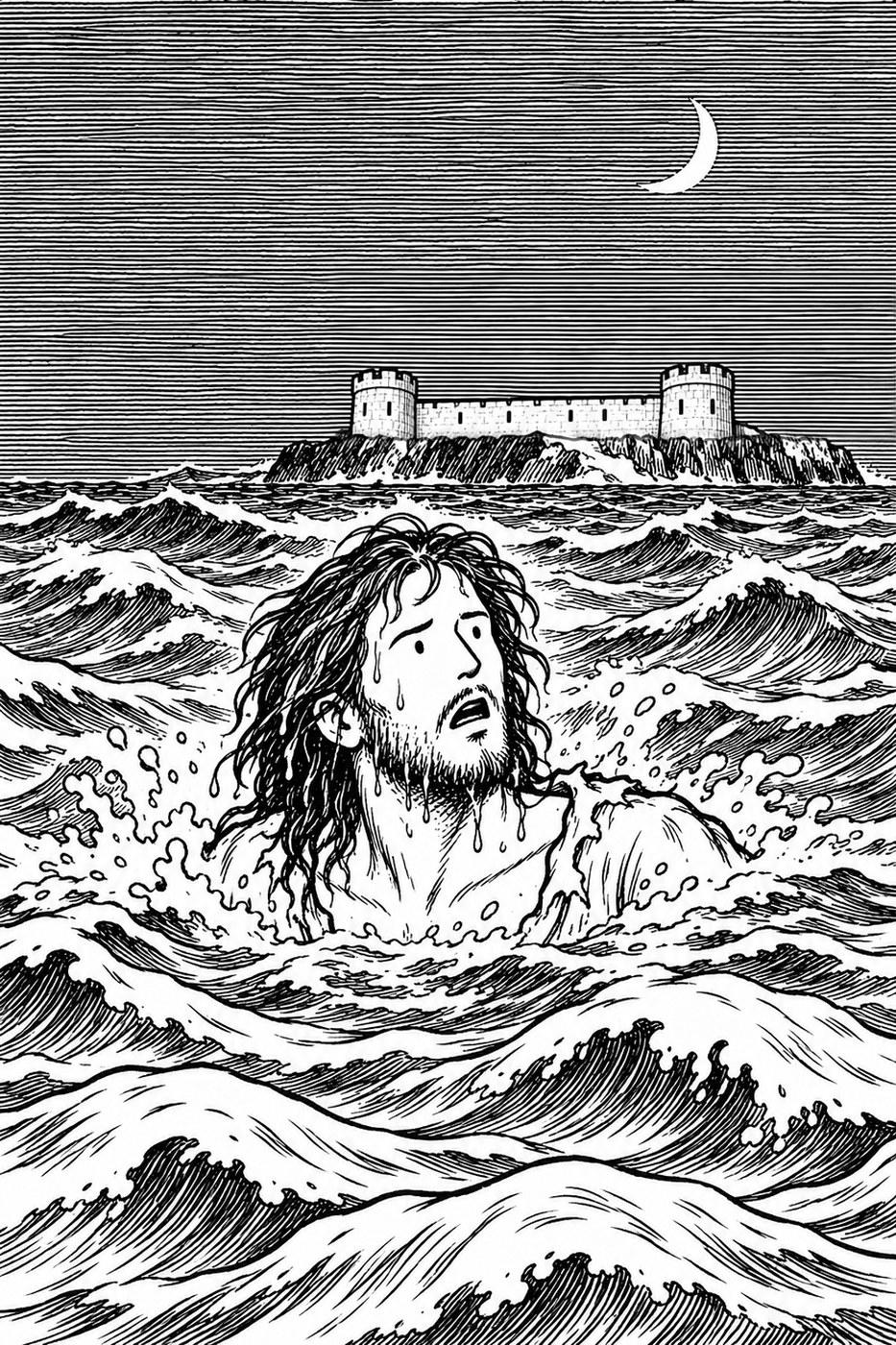
A long-haired, bearded man bursts up out of rough waves at night, mouth open, water streaming from his hair, with a fortress with two round towers on a rocky island behind him and a crescent moon above, in black-and-white line art
Then he kicked, and kicked, up toward the faint gray light far above him, until his head broke the surface and he gasped in the beautiful, salty sea air.
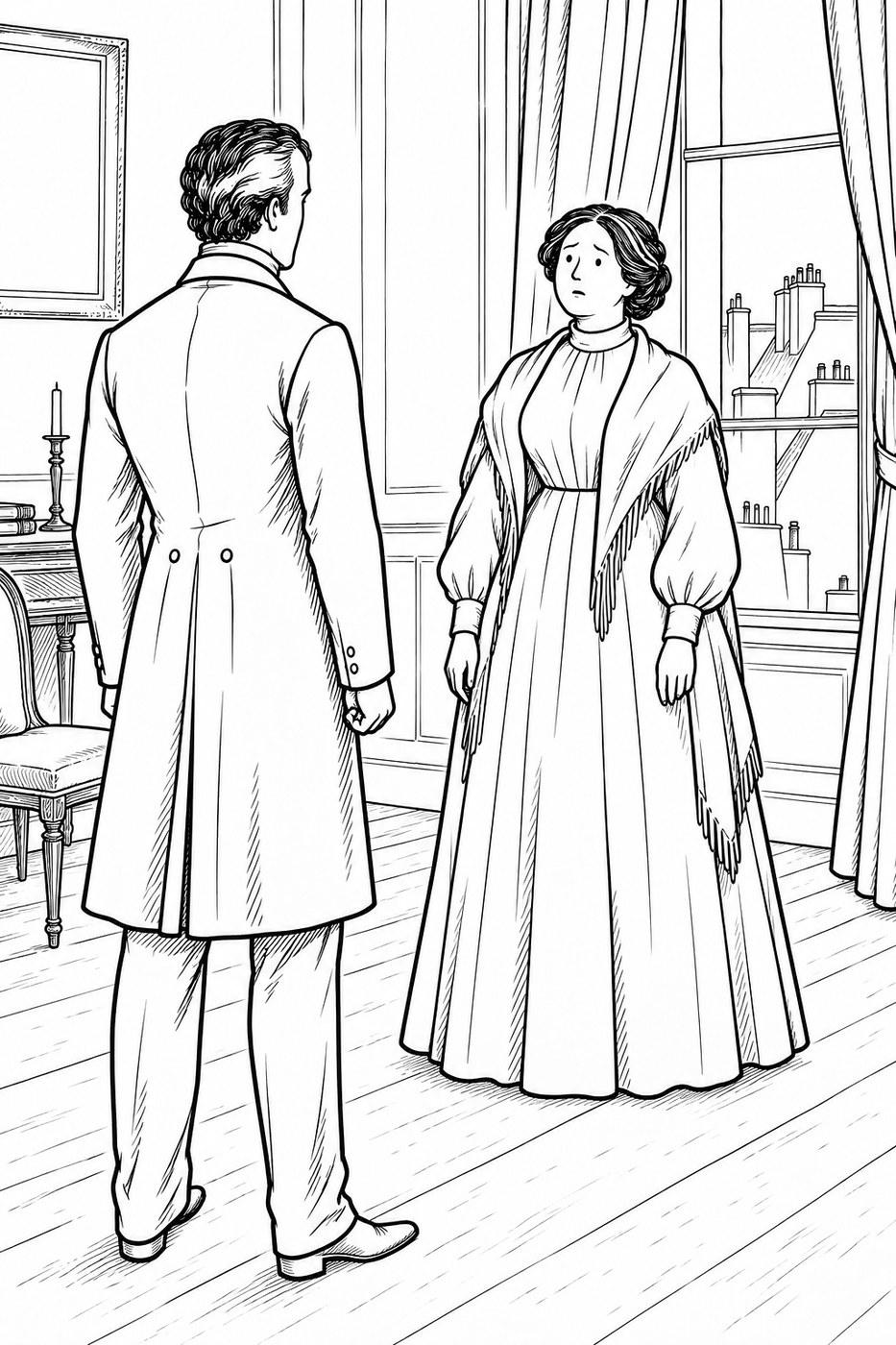
A worried-looking woman in a long high-necked dress and a fringed shawl stands facing a man in a long coat, seen from behind, in a room with a tall curtained window and rooftops outside, in black-and-white line art
Edmond. Who gave you the right? You have decided who is guilty and who must fall, and you call it justice.

The original

The original novel

  • Alexandre Dumas
  • Serialized 1844 to 1846
  • More than 1,000 pages

Edmond Dantès, a young sailor from Marseille, is sent to the Château d'If, an island prison, on a false charge. A fellow prisoner, the Abbé Faria, tunnels into his cell and tells him of a treasure on the island of Monte Cristo. Years later he turns up in Paris as the rich, mysterious Count of Monte Cristo. Dumas wrote it with Auguste Maquet.

When you want more