August 9, 2026
Plutarch for Middle Schoolers and Teens: The Prep Books
The nüNERD prep books bring Plutarch to middle schoolers and young teens: one book for ages 10 to 14 for each pair in Plutarch's Lives for Kids, subtitled "A Plutarch Prep Book." Each takes a pair from Plutarch's Parallel Lives, a famous Greek and a famous Roman he set side by side, and compares the two lives question by question, the way Plutarch built the pair to be read, until the reader can reach a verdict of their own. The prep books so far cover Alexander & Caesar, Theseus & Romulus, Lycurgus & Numa, Demosthenes & Cicero, and Pyrrhus & Marius. A parent can also read one as a primer before teaching the pair.
What is a Plutarch prep book?
It does not retell the two lives scene by scene. It teaches Plutarch's own method: comparison, or synkrisis, the discipline of setting two lives side by side and asking what each reveals about the other. The Alexander & Caesar prep book runs on four questions: what each man was handed and what he built for himself, how each used power over people who could not fight back, what story each told the world about himself, and what lived on after each one died. Plutarch's comparison of Alexander and Caesar is one of four that did not survive, so the verdict is left to the reader.
Every topic, its own book at each reading level
History, philosophy, and classic literature for kids ages 0–14.
Can parents use these to prep for homeschooling?
Yes. A parent can read a whole prep book in an evening and come to the lesson knowing what the two lives cover, the questions the comparison turns on, and, where Plutarch's own verdict survives, where it lands. Charlotte Mason curricula usually bring Plutarch in around age nine or ten, and many classical programs later.
Inside the prep books
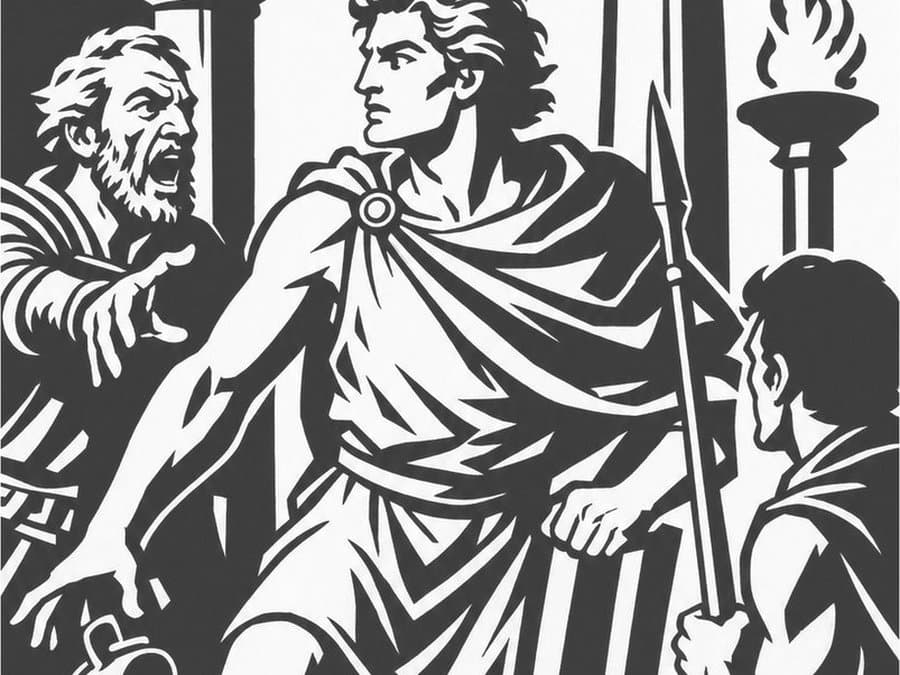
Alexander & Caesar · Prep book, ages 10–14
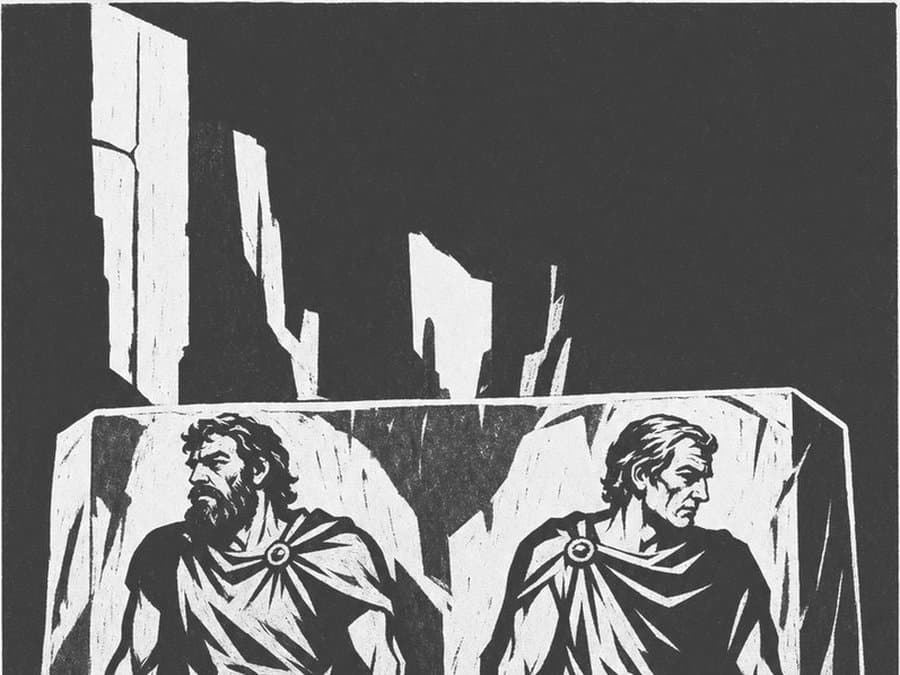
Theseus & Romulus · Prep book, ages 10–14
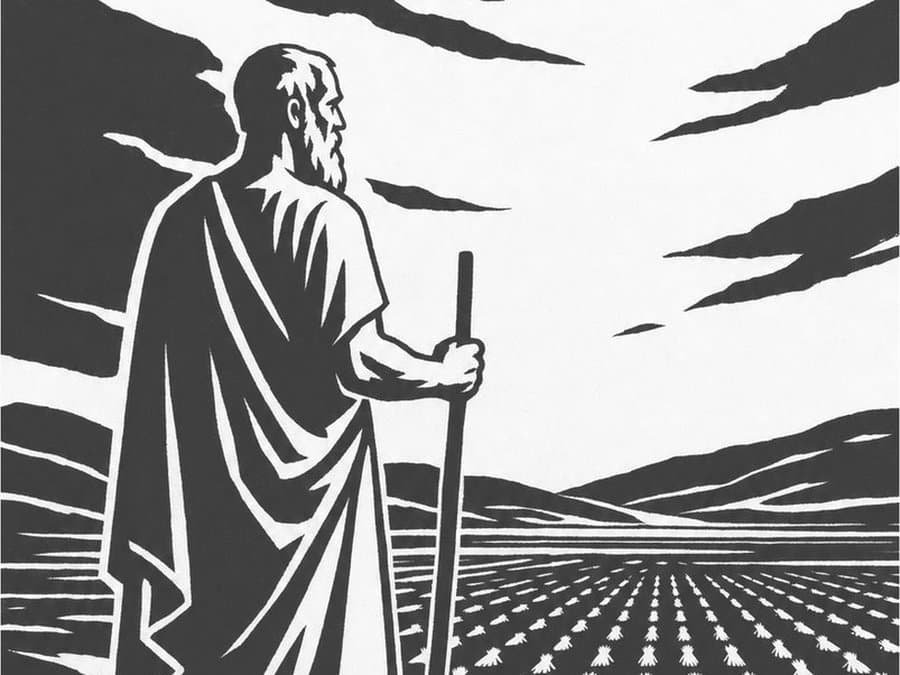
Lycurgus & Numa · Prep book, ages 10–14
How does nüNERD handle the hard parts of Plutarch?
By age. The Lives are full of ambition, war and hard endings. The youngest books stop short of the worst of it, and the chapter and prep books tell it plainly.
In Theseus & Romulus, each founder's story has a cruelty in it. Theseus sails home and leaves Ariadne, the girl who saved his life, asleep on an island. Remus dies in a quarrel over the first wall of Rome, killed by Romulus or by one of his men; Plutarch will not settle which. The toddler and picture books stop before either moment. The chapter and prep books include them, so an older reader has to set each founder's greatness against what he did.
In Lycurgus & Numa, the prep book names the Helots, the enslaved people whose forced labor freed every Spartan man to train for war. And in Alexander & Caesar, Caesar's climb ends with him stabbed to death by men he called friends. In the older books none of it is gruesome, and none of it is hidden.
What about the classic children's Plutarchs?
They are worth reading. One is F. J. Gould's "The Children's Plutarch," published in 1910 with Walter Crane's illustrations and an introduction by W. D. Howells. It is plainly written. The Greek volume, "Tales of the Greeks," has twenty-one chapters, from Lycurgus and Solon to Pyrrhus and Philopoemen, and a companion, "Tales of the Romans," does the same for Rome. Gould says in his preface that he wrote for readers of about ten to fourteen. W. H. Weston's "Plutarch's Lives for Boys and Girls" is a slimmer selection: a dozen lives, six Greeks and six Romans, with the Gracchi brothers getting a chapter each. Both are public domain and easy to find free online. What neither does is keep Plutarch's pairs together. We keep them, and carry each pair from toddler to teen, so a kindergartner and an eighth-grader can be on the same pair at once. For the whole plan by age, see our guide to reading Plutarch with kids, age by age.
Which Plutarch pair should a family start with?
Start with the kind of story your reader likes. Alexander & Caesar is the conquerors' pair: Caesar measured himself against Alexander, and Napoleon studied both. Theseus & Romulus, who each gathered scattered people into one city, Athens and Rome, is the pair printed first in most editions, and Plutarch's closing comparison of the two men survives, so a teen can reach their own conclusion and then argue with his. Lycurgus & Numa pairs Sparta's lawgiver with Rome's and asks what kind of laws make a good city. Demosthenes & Cicero suits a reader who likes an argument: two great speakers, and both died for what they said. Pyrrhus & Marius has no surviving comparison at all, so the verdict is the reader's to write. Free translations and audiobooks of the originals are collected on our Plutarch resources page.
Like the Plutarch pairs, our classic-literature books give each reading level its own book: Don Quixote and Beowulf each come as a toddler book, a picture book and a chapter book.
Frequently asked questions
What age is Plutarch appropriate for?
nüNERD's Plutarch books start with a toddler book for ages 0–4 and run through a prep book for ages 10–14, one book built for each reading level. The prep book is for middle schoolers and young teens, ages 10 to 14. The younger books let a child meet the names before a curriculum reaches Plutarch.
Is there a Plutarch for middle schoolers specifically?
Yes. The ages 10–14 prep book is aimed at middle schoolers and young teens. It compares the two lives question by question using Plutarch's own method, so a middle schooler learns to weigh evidence and reach a verdict of their own.
Do I need to have read Plutarch myself to teach it?
No. Every book stands alone and carries its own context, and a parent new to Plutarch can read the prep book in an evening and know what the pair covers and the questions the comparison turns on.
Does this fit a Charlotte Mason or classical homeschool curriculum?
Yes. Plutarch is a fixture of Charlotte Mason schooling and turns up in many classical programs. The prep book is written for ages 10 to 14, to get a reader ready for the two lives in Plutarch's own text, and the younger reading levels let a whole household work on the same pair at once, each at their own level.
Where can I read Plutarch's Parallel Lives for free?
The Parallel Lives are public domain. Full translations are free at LacusCurtius and Project Gutenberg, and free audiobooks are on LibriVox. Links are collected on our Plutarch resources page.